Visual discrimination Extra Challenge Worksheets
3 filtered results
-
From - To
Enhance your child's visual discrimination skills with our Extra Challenge Worksheets! Designed for early learners, these worksheets provide engaging and interactive activities that help children identify differences and similarities among various objects, shapes, and patterns. As they progress through each task, they will develop important observational skills critical for reading and mathematics. Our Extra Challenge Worksheets are perfect for reinforcing classroom learning or providing additional practice at home. With fun themes and illustrations, your child will enjoy the process while building essential cognitive abilities. Explore our collection of worksheets today and spark your child's curiosity and critical thinking skills!
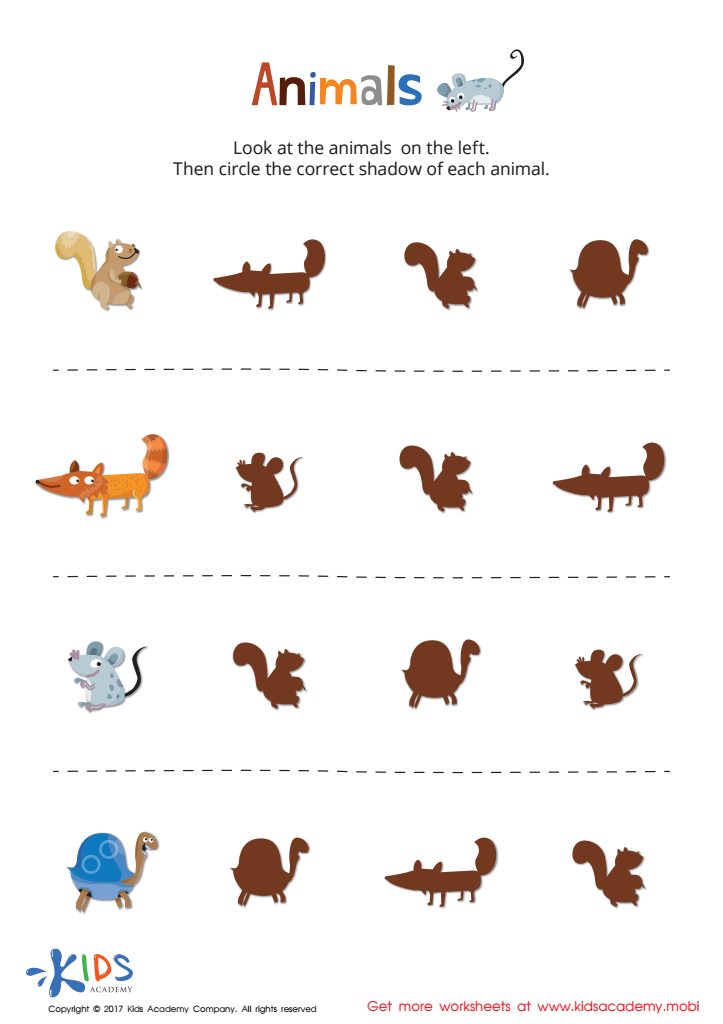
Animal Shadows Sorting Worksheet
 Assign to My Students
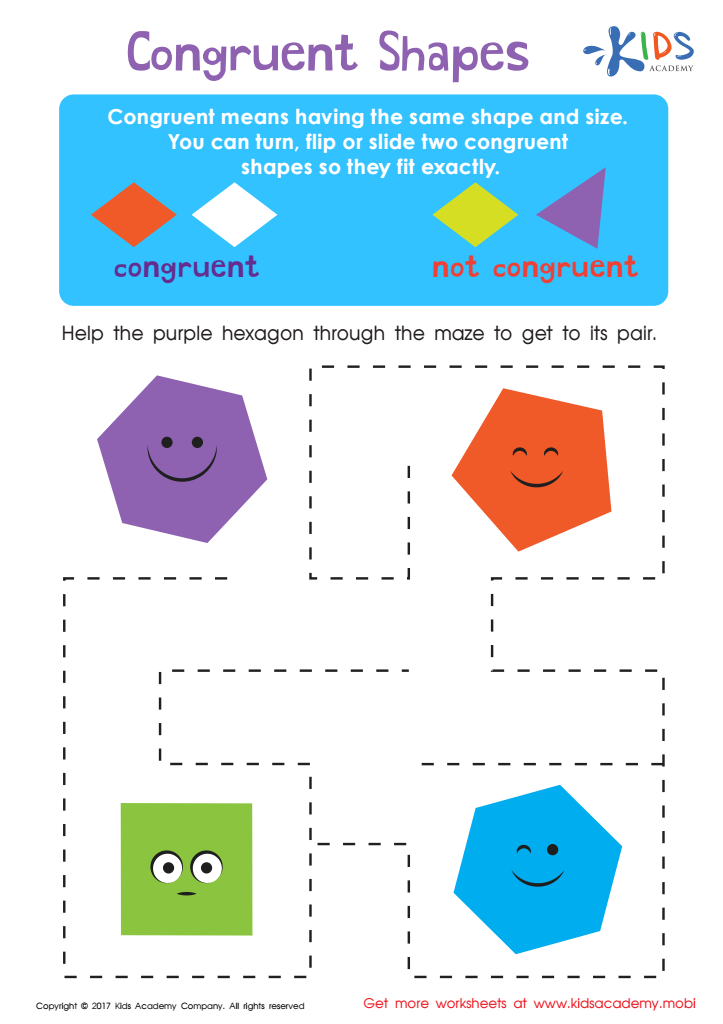
Congruent Shapes Worksheet
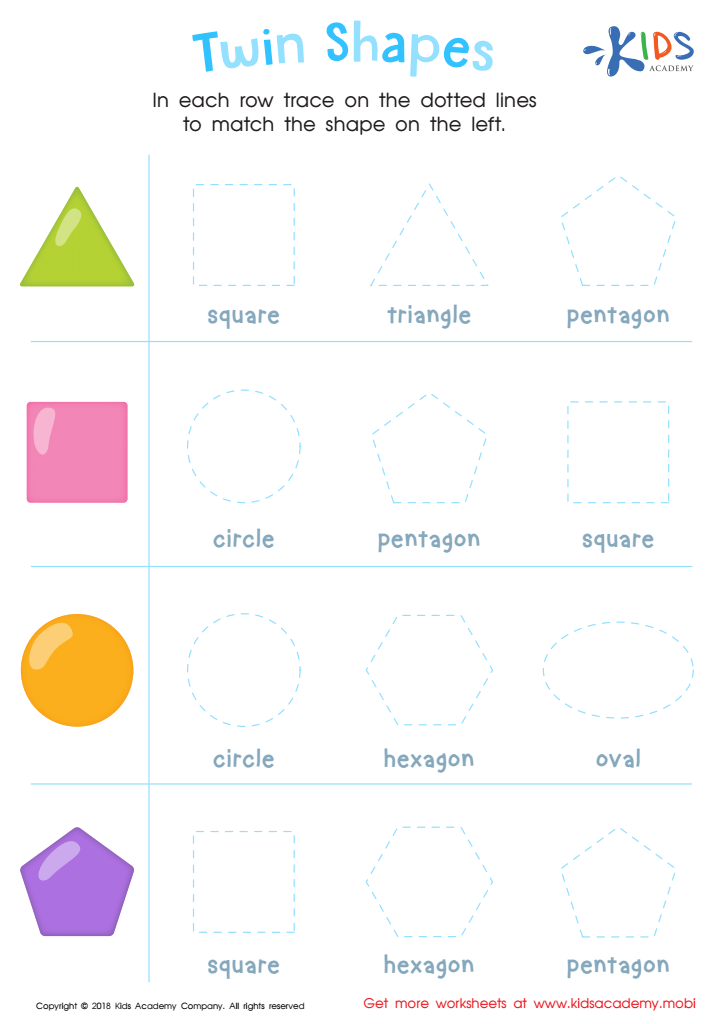
Twin Shapes Dot-to-Dot Worksheet








Visual discrimination is the ability to perceive differences and similarities in visual stimuli, including shapes, letters, and numbers. For parents and teachers, fostering this skill is crucial because it underpins many academic and developmental milestones. Children use visual discrimination to recognize letters in reading, distinguish between similar numbers in math, and identify shapes in art, all of which are foundational skills for lifelong learning.
By developing visual discrimination skills, children can improve their attention to detail, enhance their problem-solving abilities, and build confidence as they navigate their educational journey. Enhanced visual skills can also prevent future learning difficulties, such as dyslexia or other processing challenges, making early intervention significant. This exposure allows children to acquire the tools necessary for effective learning and communication.
Moreover, engaging children in activities that build visual discrimination—such as puzzles, matching games, or drawing—provides a fun, interactive way to support cognitive development. Parents and teachers should prioritize these activities, as they promote skill-building while also nurturing a child's creativity and critical thinking. Ultimately, a strong foundation in visual discrimination leads to improved academic performance and prepares children for various challenges in school and beyond.








