Understanding bar graphs Extra Challenge Grade 3 Worksheets
3 filtered results
Difficulty Level
Grade
Age
-
From - To
Subject
Activity
Standards
Enhance your third grader's math skills with our "Understanding Bar Graphs Extra Challenge Worksheets." Specifically designed for Grade 3, these engaging worksheets provide extra practice in interpreting and creating bar graphs. Students will work on complex data sets, improving their ability to analyze information and draw conclusions. With a variety of challenging problems, these worksheets make learning fun while reinforcing essential skills required for math mastery. Perfect for independent study or classroom activities, our worksheets ensure that young learners gain confidence and proficiency in understanding bar graphs. Download now and let your child explore the world of data in a clear and enjoyable way!
Favorites
With answer key
Interactive
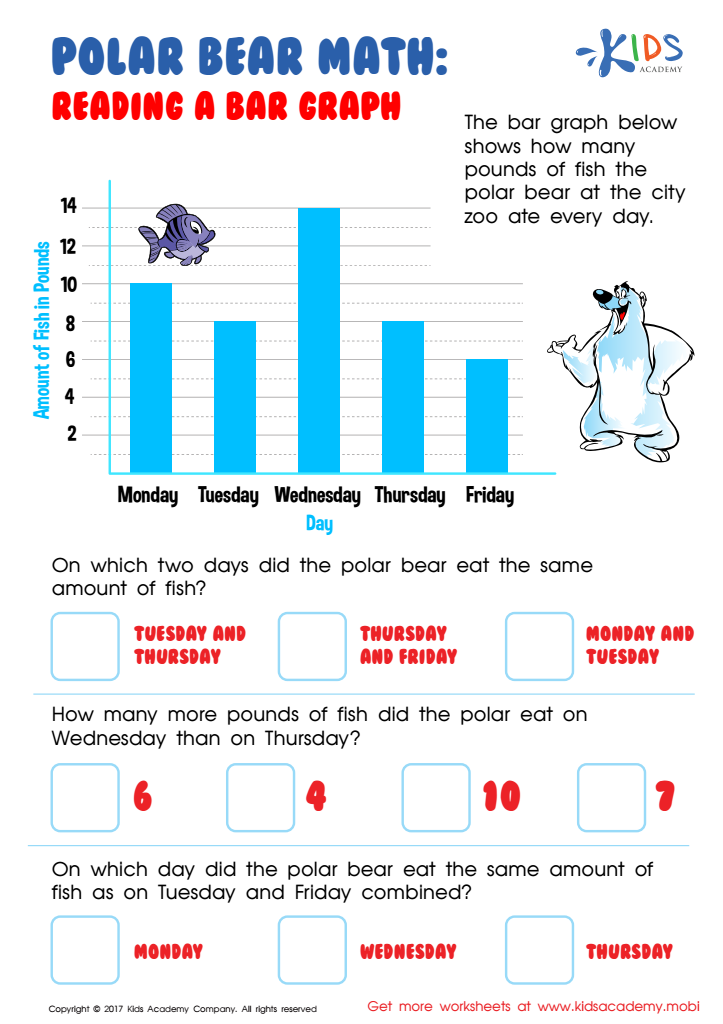
Reading Bar Graph Worksheet
Take your child north to practice data reading with a polar bear friend! This worksheet challenges 3rd graders to interpret data on a graph and solve related math problems.
 Assign to My Students
Reading Bar Graph Worksheet
Worksheet
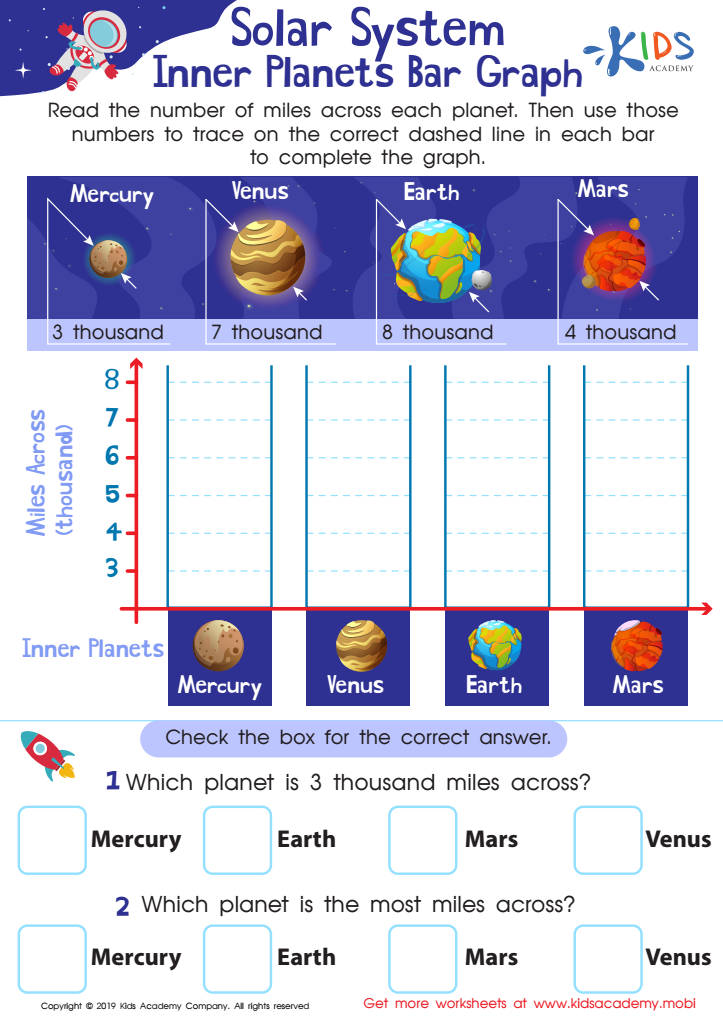
Planets Bar Graph Worksheet
With this fun, educational worksheet, kids can learn about bar graphs and the solar system simultaneously. Introduce them to the concept by reading out the number of miles for each planet, then help them trace the dashed lines in each bar to complete the graph.
Planets Bar Graph Worksheet
Worksheet
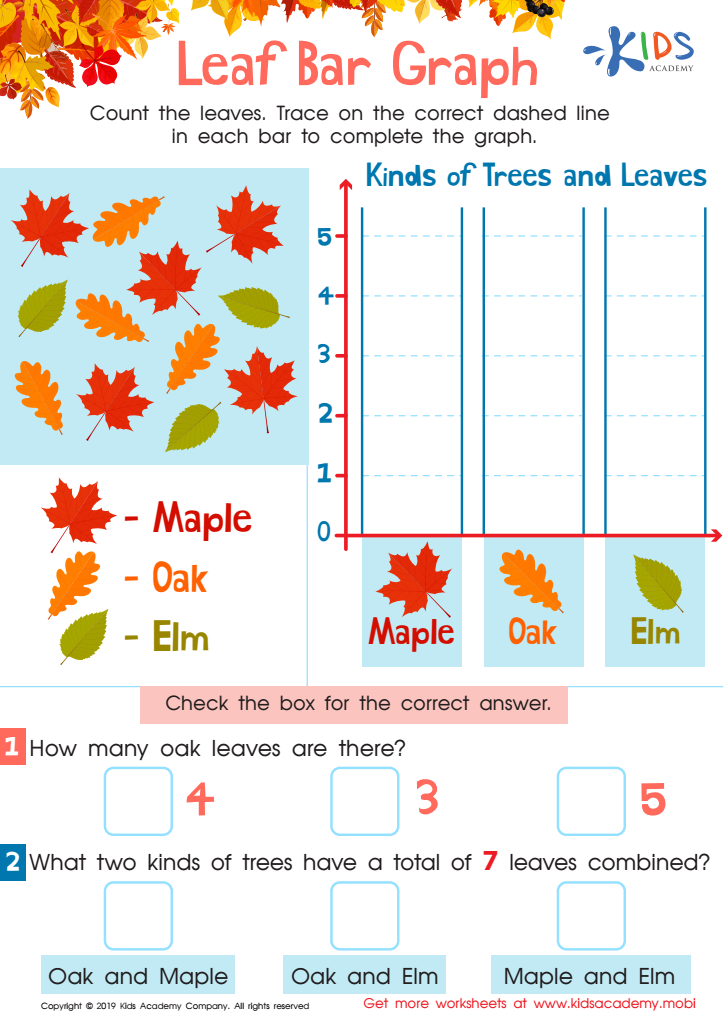
Leaf Bar Graph Worksheet
You can help your kids make learning easier and more enjoyable. While their teachers provide lessons and homework, you can take their education further. This worksheet can assist them in mastering bar charts. Count the leaves, then trace the correct line for each bar to complete the graph.
Leaf Bar Graph Worksheet
Worksheet
Join Kids Academy for Free
Who is primarily going to use this learning content?


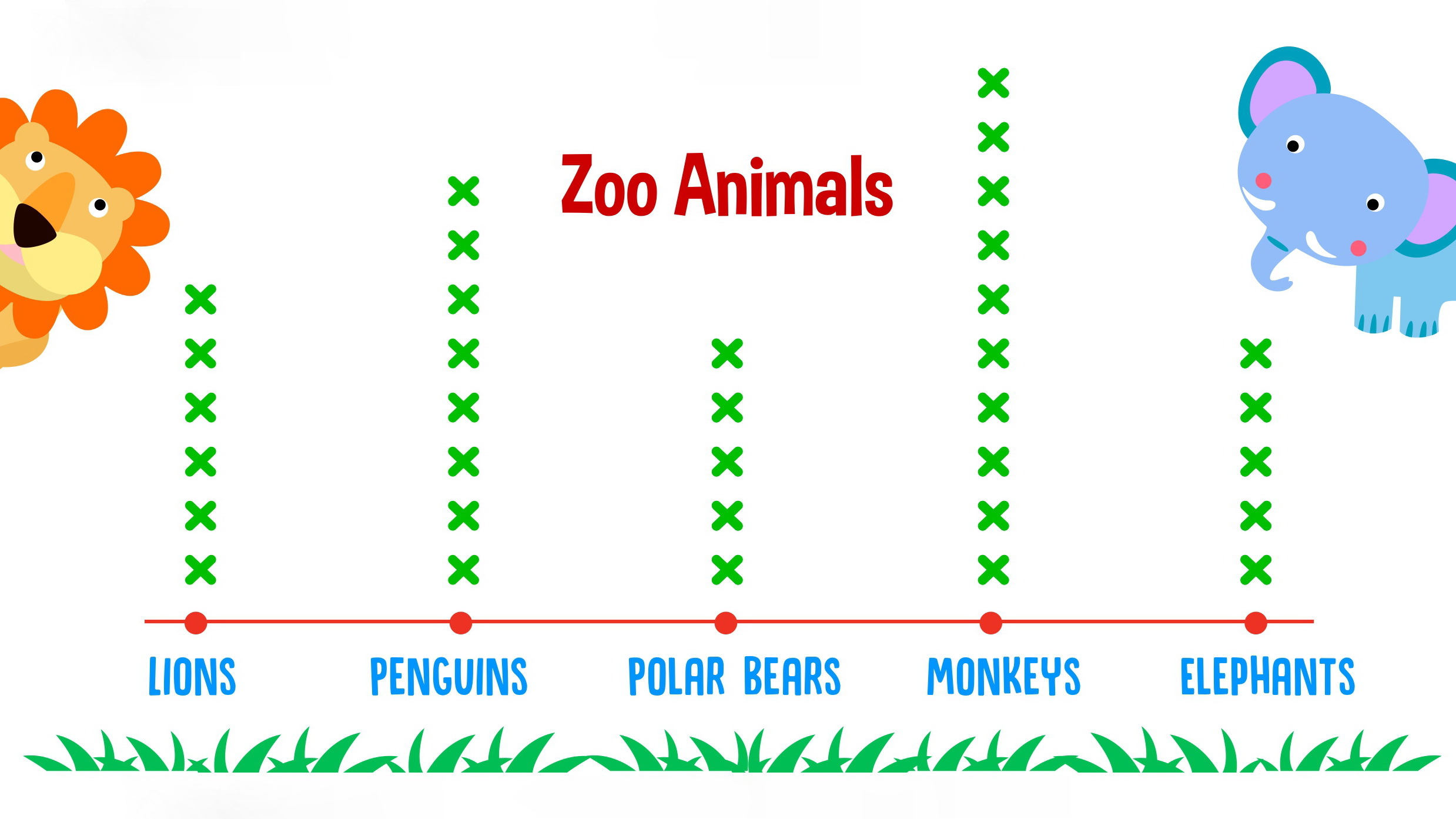


Understanding bar graphs is crucial for both parents and teachers when it comes to educating third graders. Bar graphs are a foundational tool in mathematics that simplify complex data, making it accessible and visual for young learners. By grasping how to read and interpret bar graphs, students develop essential analytical skills that extend beyond math.
When parents engage with their children in understanding bar graphs, they foster a collaborative learning environment, helping to reinforce concepts learned in school. This connection not only enhances their child's critical thinking skills but also cultivates confidence in handling data.
For teachers, bar graphs represent an opportunity to integrate various subjects, such as science and social studies. Analyzing data through bar graphs can help students develop patterns of thinking essential for interpreting real-world information. Encouraging students to create their own bar graphs fosters creativity while also teaching them to collect and organize data systematically.
Ultimately, understanding bar graphs equips third graders with essential skills applicable throughout their educational journey and their everyday lives. With the support of parents and teachers, children can fully appreciate the importance of data representation, paving the way for stronger mathematical foundations and informed decision-making in the future.