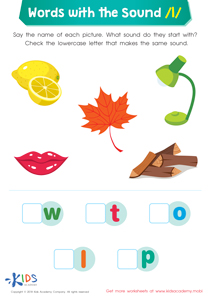
Letter tracing skills Kindergarten Uppercase Letters Worksheets
3 filtered results
Difficulty Level
Grade
Age
-
From - To
Subject
Activity
Standards
Enhance your kindergartener's handwriting skills with our engaging Letter Tracing Skills Kindergarten Uppercase Letters Worksheets. Perfectly crafted to develop fine motor skills and letter recognition, these worksheets provide interactive tracing activities for every uppercase letter in the alphabet. With fun, colorful designs and easy-to-follow instructions, children will enjoy practicing each letter, building confidence, and mastering their ABCs. Ideal for teachers and parents looking for effective, educational resources to support early learners in writing proficiency while keeping learning exciting and enjoyable. Unlock your child's potential with these essential tracing tools today!
Favorites
With answer key
Interactive
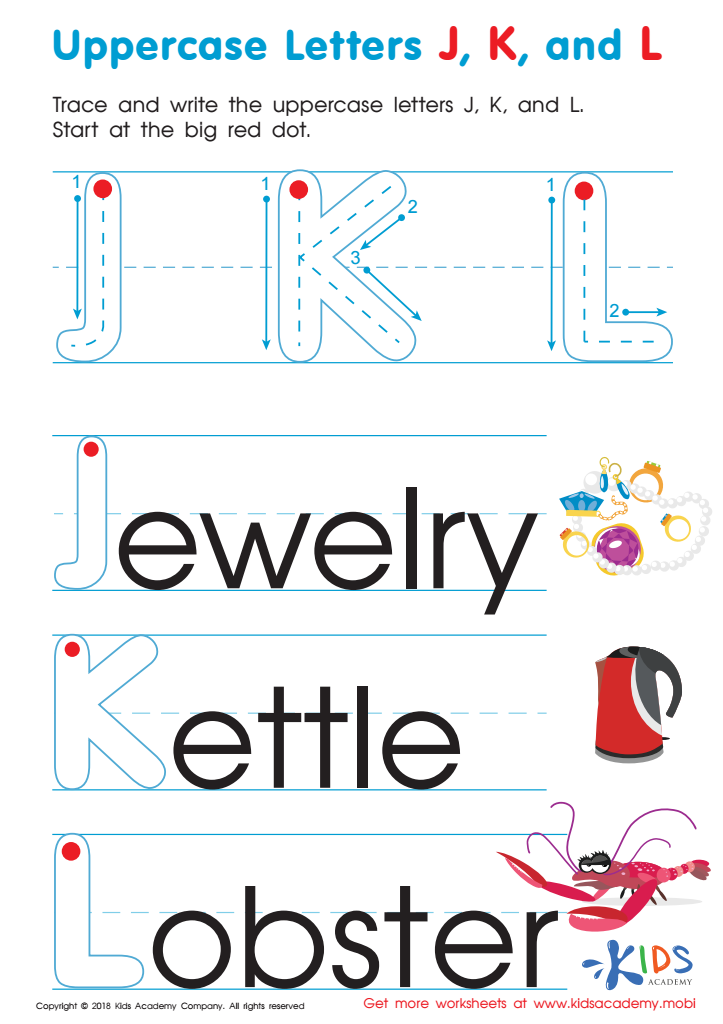
Uppercase Letters J, K, and L Worksheet
Jewelry, kettle and lobster share a common trait: their names start with J, K and L, 3 letter neighbors found in the middle of the alphabet. This traceable worksheet helps kids learn letter sounds and practice writing. Arrows and tracing lines make it easy to form neat pencil strokes. Red dot shows where kids should start. Perfect for preschoolers and kindergarteners!
 Assign to My Students
Uppercase Letters J, K, and L Worksheet
Worksheet
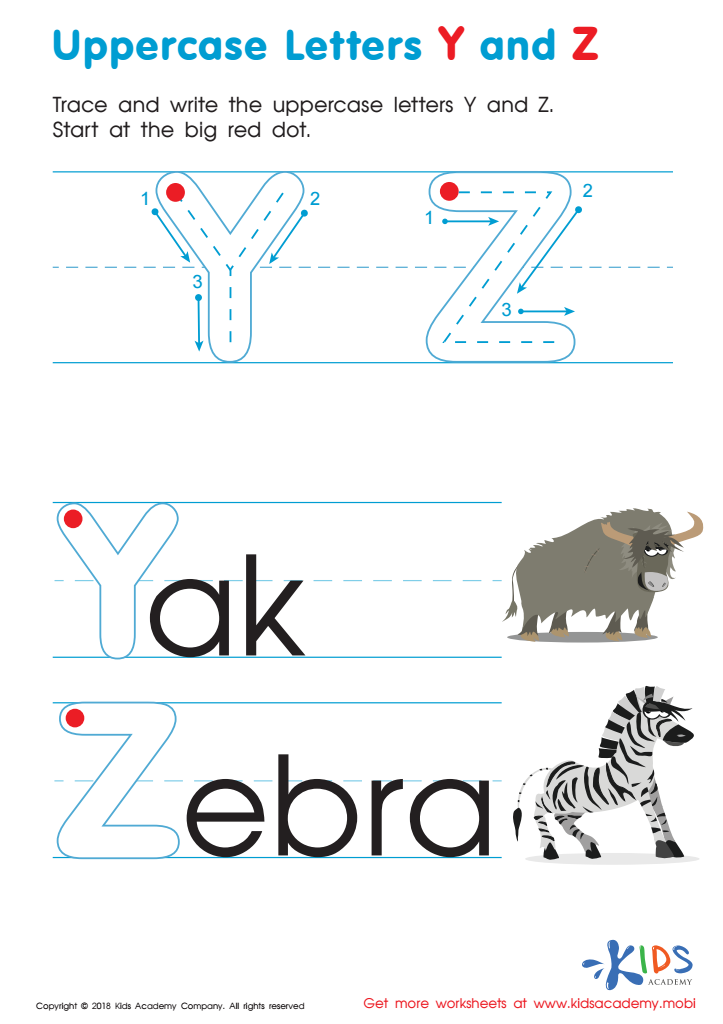
Uppercase Letters Y Z Worksheet
Help your child learn their ABCs with this fun tracing activity! They must trace and write Y and Z in uppercase form, starting from the red dot. Kids will love the fun images for extra engagement. Guiding their hand carefully will help them practice and perfect their writing skills.
Uppercase Letters Y Z Worksheet
Worksheet

Uppercase Letters V, W, and X Worksheet
This worksheet is perfect for kids struggling to write uppercase letters V, W, and X. Warm up their brains first by having them name words starting with these letters. Then, help them trace and write each letter from the big red dot. With your assistance, they will quickly sharpen their writing skills.
Uppercase Letters V, W, and X Worksheet
Worksheet
Join Kids Academy for Free
Who is primarily going to use this learning content?






Parents and teachers should prioritize letter tracing skills in kindergarten, particularly uppercase letters, because it lays the foundation for literacy and academic success. Learning to trace shapes in young children teaches essential fine motor skills necessary for writing, thereby enhancing hand-eye coordination, muscle memory, and overall dexterity.
Letter tracing specifically gives children a hands-on approach to recognizing and memorizing different shapes and patterns that form letters. Focusing on uppercase letters helps simplify this process, as uppercase letters tend to have more distinct and straightforward lines, reducing the cognitive load when starting out. This fosters early familiarity and confidence with the alphabet, easing the transition to reading and writing independently.
On a broader scale, tracing activities offer beginners auditory and visual reinforcement, especially when paired with spoken letter sounds and names. These multi-sensory experiences solidify foundational language skills, setting the stage for effective phonics, spelling, and comprehension instruction in the future. Moreover, successfully identifying and forming uppercase letters promotes a child's sense of achievement, boosting their motivation and self-esteem.
Overall, prioritizing letter tracing activities in early education supports the personal and academic development of children, equipping them with the essential skills for lifelong learning and communication.