Associative learning Kindergarten Worksheets
3 filtered results
-
From - To
Discover our engaging Associative Learning Kindergarten Worksheets, designed to enhance your child's cognitive skills! These thoughtfully crafted worksheets introduce young learners to the concept of making connections between different ideas and objects, fostering critical thinking and problem-solving abilities. With a variety of activities, including matching exercises, visual aids, and fun games, children will enjoy developing their associative learning skills while reinforcing their knowledge of colors, shapes, and numbers. Perfect for both classroom and at-home learning, our worksheets are suitable for preschool and kindergarten aged children. Explore our collection today to help ignite your child's passion for learning through exploration and play!
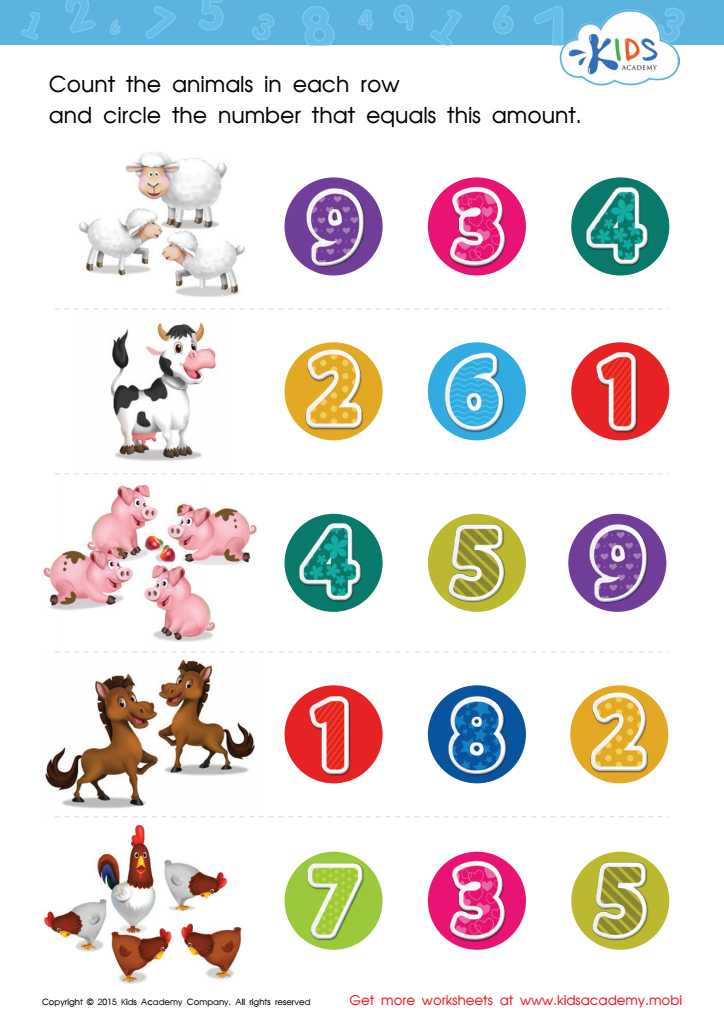
Count and Match 1 – 5 Math Worksheet
 Assign to My Students
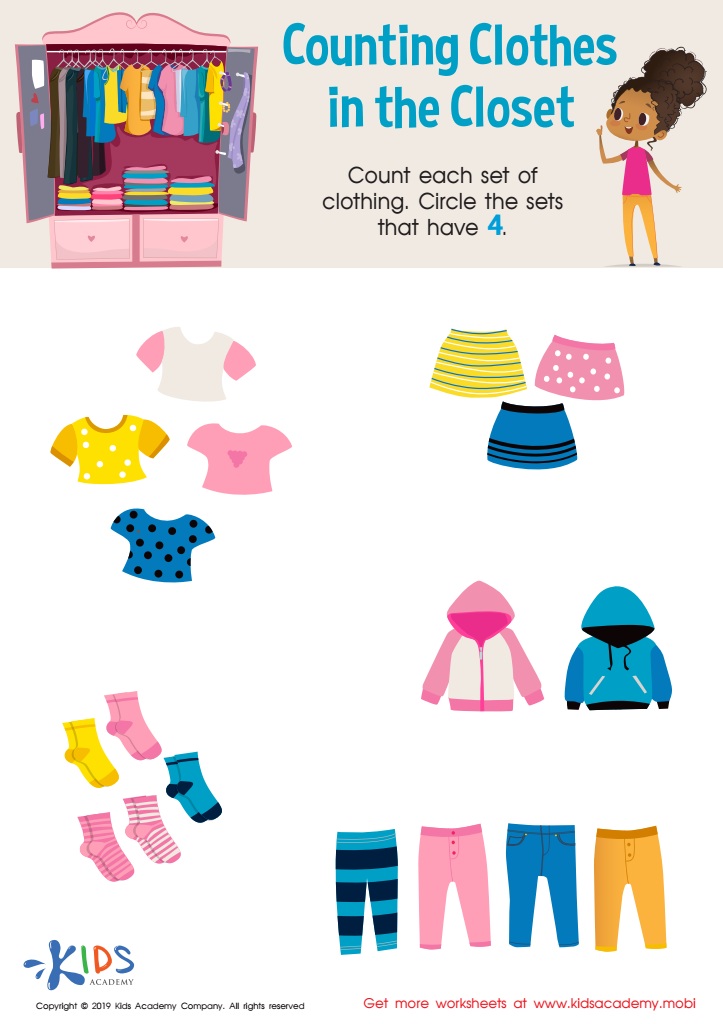
Counting Clothes Worksheet







Associative learning is a fundamental cognitive process where children learn to make connections between ideas, experiences, or stimuli. For parents and teachers of kindergarteners, understanding the importance of associative learning is crucial for several reasons.
Firstly, it fosters language and literacy development. When children associate words with their meanings, they begin to grasp new vocabulary and improve their communication skills. This early foundation is vital for reading comprehension later on.
Secondly, associative learning enhances problem-solving abilities. By linking concepts, young learners can transfer knowledge across different contexts, which promotes critical thinking and adaptability. For instance, if a child learns that a square is a shape with four equal sides in one setting, they can apply that knowledge when they encounter squares in various contexts—for art, math, or nature.
Moreover, positive experiences associated with learning can instill a lifelong love of education. Engaging lessons that create meaningful relationships between new material and a child's interests can motivate further exploration.
Lastly, nurturing associative learning assists in social interactions. When children recognize patterns in social situations, such as sharing and cooperation, they develop empathy and emotional intelligence.
In essence, fostering associative learning lays the groundwork for a child's holistic development, ensuring they succeed academically and socially.








