Comparing sizes Kindergarten Worksheets
7 filtered results
-
From - To
Our "Comparing Sizes Kindergarten Worksheets" are designed to introduce young learners to the concept of size comparison through engaging and age-appropriate activities. These printable worksheets help children practice identifying, comparing, and categorizing objects by their size - small, medium, and large. Featuring fun illustrations and familiar objects, the activities are perfect for helping children develop essential observational and analytical skills. Ideal for both classroom and home use, our worksheets support early math learning in a fun and interactive way, laying a solid foundation for future educational success. Download today to start your child on the path to learning and growth!
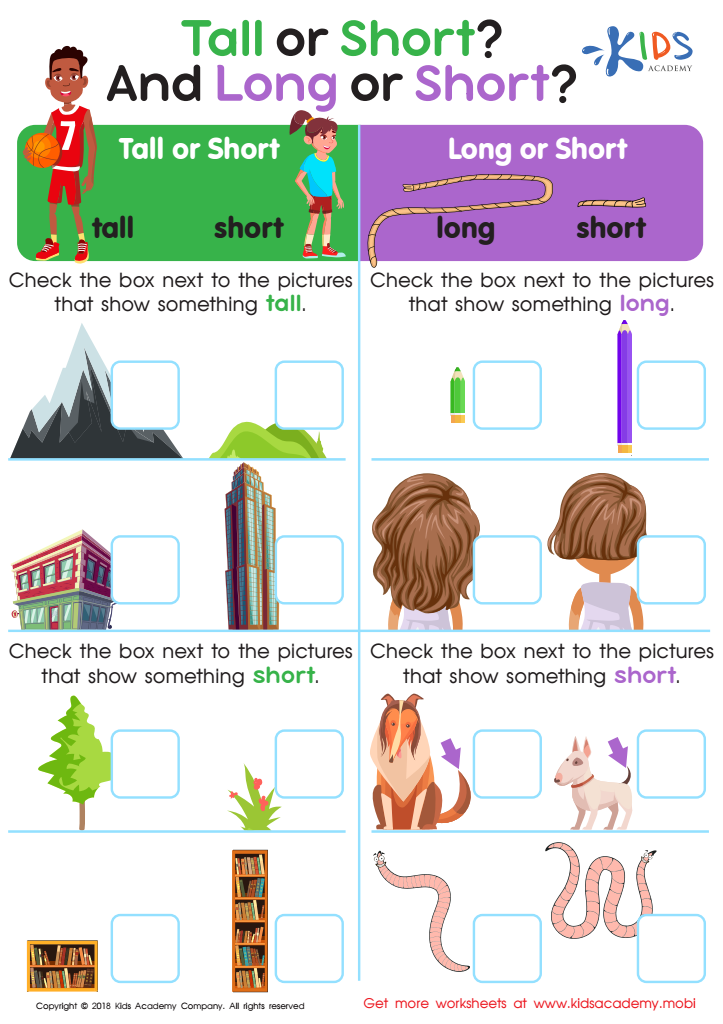
Tall or Short and Long or Short? Worksheet
 Assign to My Students
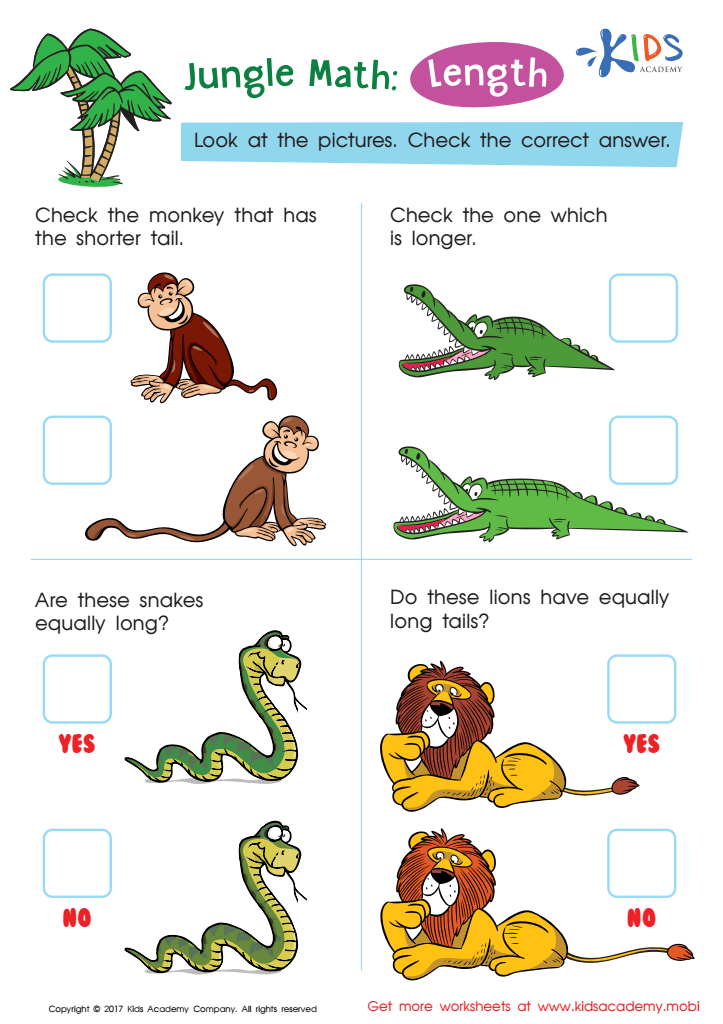
Which One Is Longer - Length Worksheet
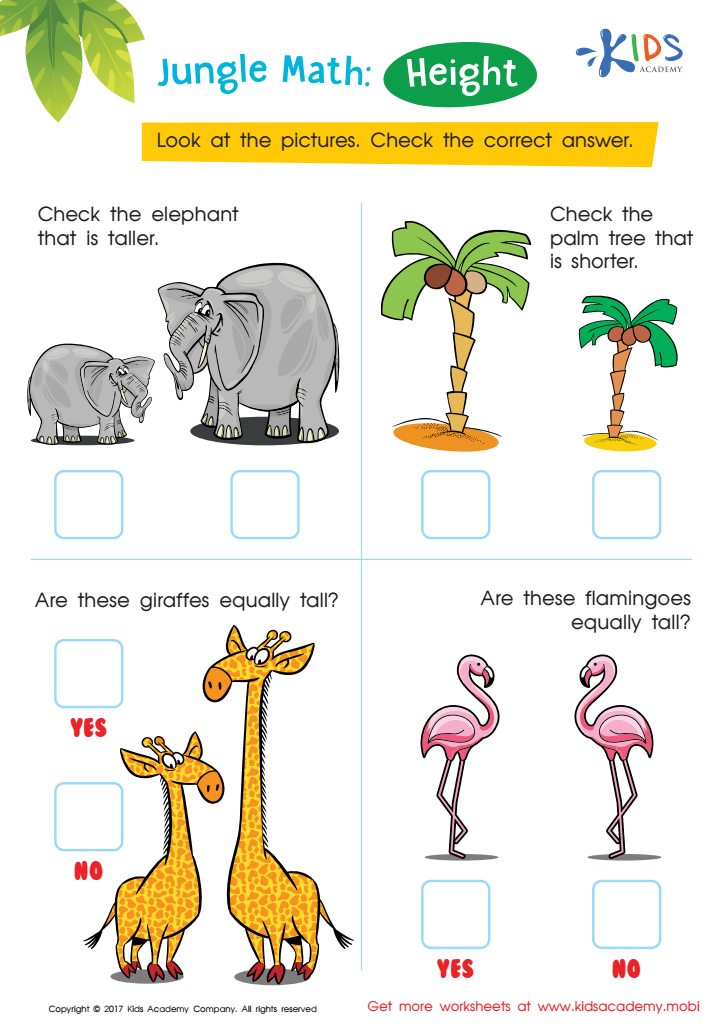
Which Is Taller Worksheet
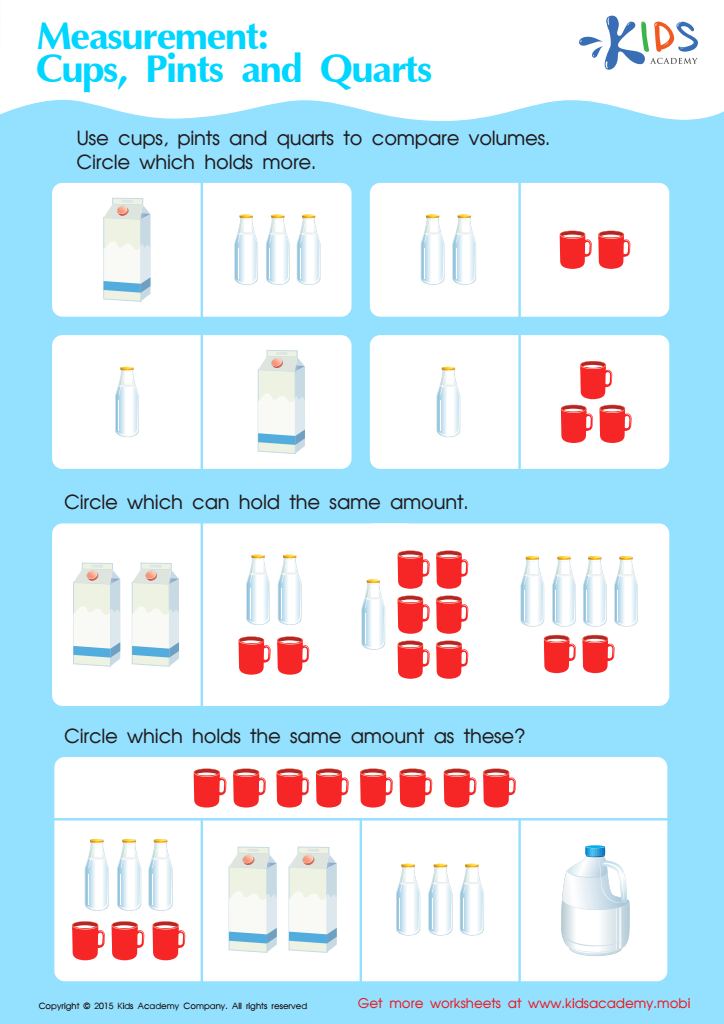
Measurement: Compare Volumes Worksheet
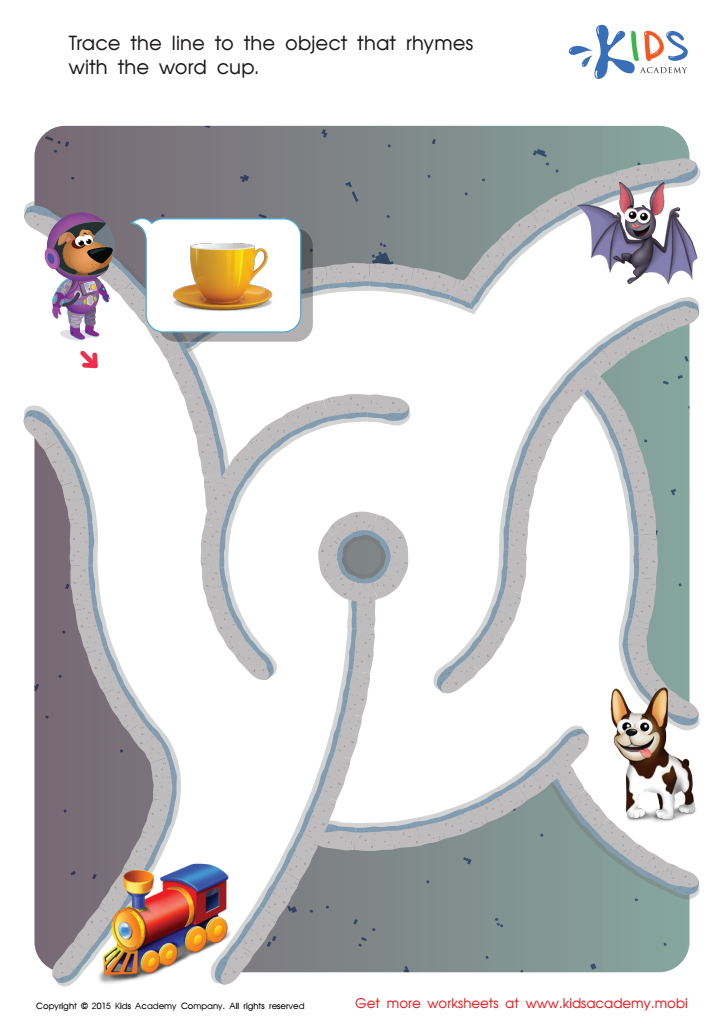
Cup Rhyming Words Worksheet
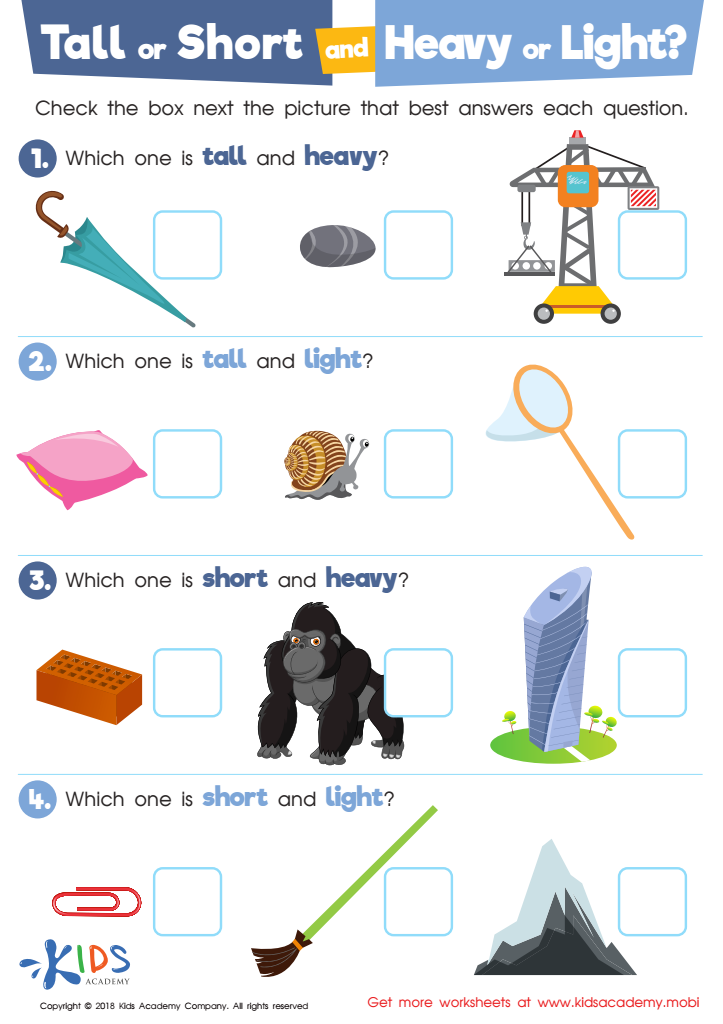
Tall or Short and Heavy or Light? Worksheet
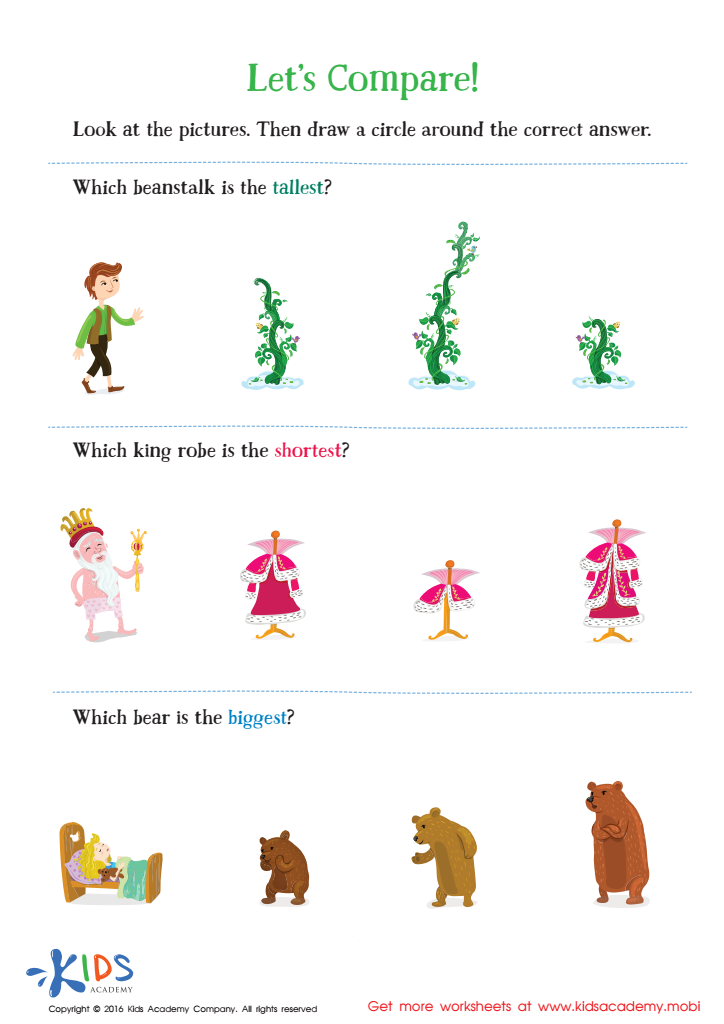
Fairy Tale Worksheet: Let's Compare



Parents and teachers play a crucial role in a child's early educational development, and introducing concepts like comparing sizes in kindergarten is fundamental for multiple reasons. Firstly, comparing sizes enhances a child's understanding of basic math concepts such as measurement, estimation, and spatial awareness. When children compare sizes, they learn to differentiate between "big" and "small," "short" and "long," which forms the foundation for more complex mathematical reasoning required in later grades.
Secondly, these activities help develop cognitive and language skills. Children improve their vocabulary by using terms related to size and can strengthen their descriptive language abilities. Phrases like "bigger than," "smaller than," or "equal to" become part of their lexicon, enhancing their ability to express and understand abstract concepts.
Additionally, comparing sizes promotes critical thinking and problem-solving skills. When children are asked to organize objects by size, they employ observational skills and make decisions based on their analysis. This kind of active engagement aids cognitive development and prepares them for more advanced scientific and logical reasoning.
Lastly, practical, hands-on activities related to comparing sizes can be incredibly engaging and fun, fostering a love for learning. Whether through sorting toys, cutting paper shapes, or playing with building blocks, these interactive experiences make education enjoyable and deeply impactful, contributing to a lifelong affinity for learning.








