Money counting skills Kindergarten Worksheets
3 filtered results
-
From - To
Develop essential money counting skills with our Kindergarten Worksheets! Perfect for young learners, these engaging activities teach children to recognize and count coins. Our worksheets cover pennies, nickels, dimes, and quarters, helping kids understand their value and perform basic addition. Bright visuals and fun exercises make learning enjoyable and effective. Boost your child's financial literacy from an early age, fostering confidence with money in real-life scenarios. Ideal for classroom use or at-home practice, these worksheets lay the foundation for lifelong budgeting skills. Start now to turn money counting into a fun and rewarding experience for your little ones!
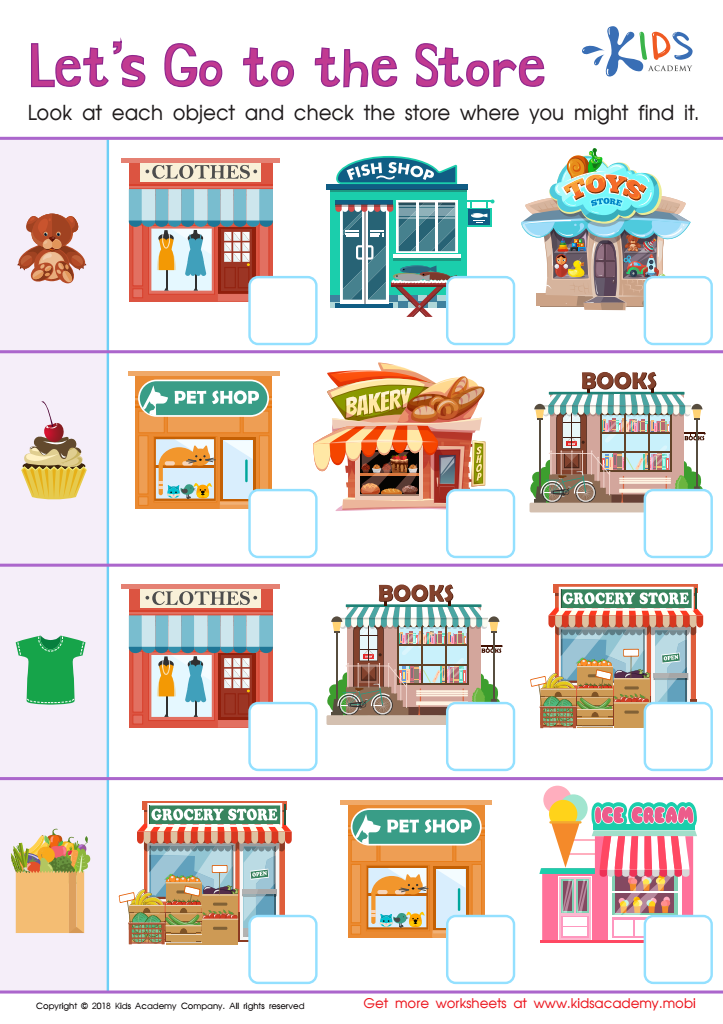
Let's Go to the Store! Worksheet
 Assign to My Students
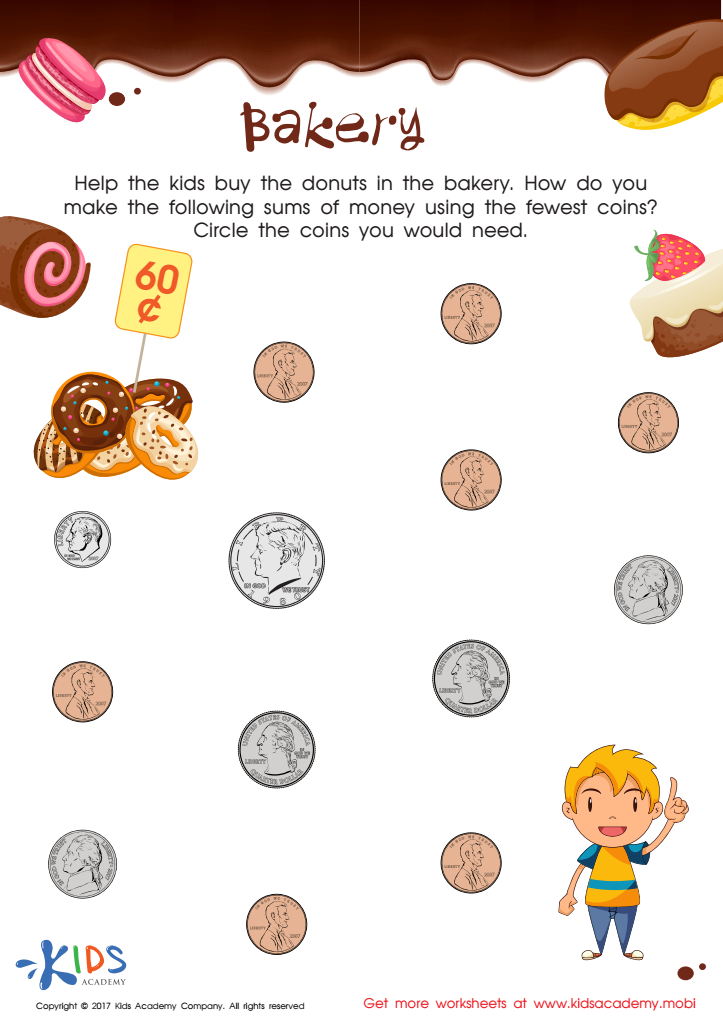
Counting Coins Worksheet
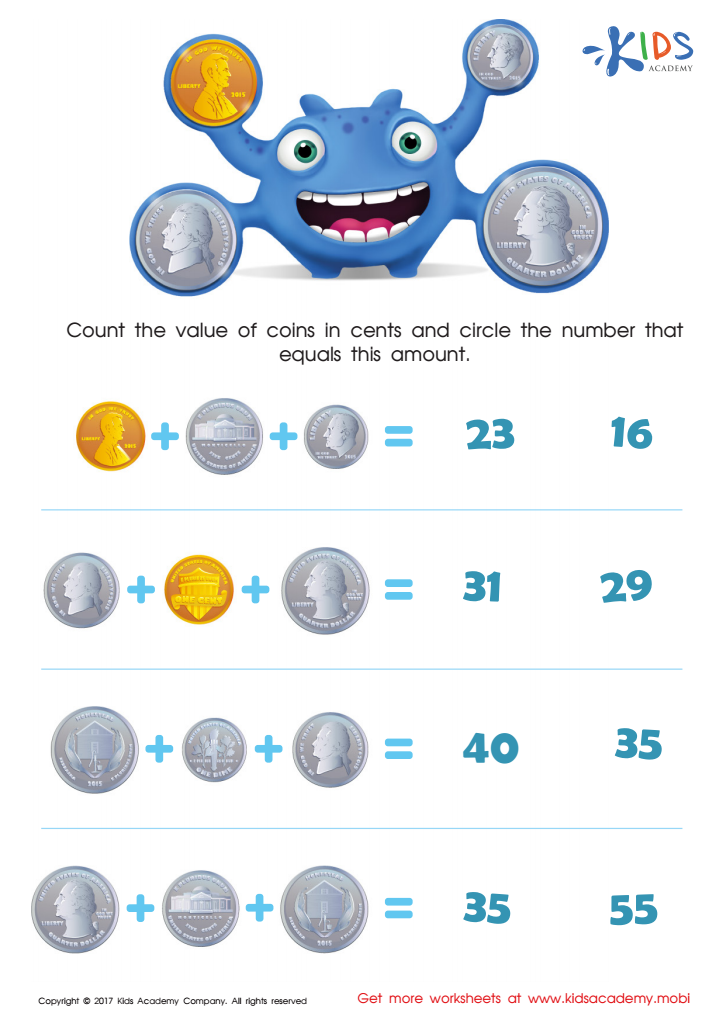
Counting the Coins Money Worksheet






.jpg)

Understanding money counting skills in kindergarten is vital for a child's development for several reasons. Firstly, these skills lay the foundation for basic math proficiency. When kids learn to count coins and bills, they also practice addition, which reinforces their numerical understanding. Mastering these early math skills can boost their confidence and make more advanced math concepts easier to grasp in the future.
Secondly, money counting teaches essential life skills. In today's world, financial literacy is crucial for making informed consumer decisions, understanding spending and saving, planning budgets, and more. Introducing these concepts early helps children develop a sound understanding of money, making them more financially responsible as they grow.
Furthermore, money counting incorporates lessons in responsibility and Independence. As children learn to manage money—whether by pretending to buy items in a classroom market or saving their allowance—they learn the value of earning, spending, and saving money, crucial skills for their adult lives.
Finally, enhancing money-counting skills can be a fun and interactive way to engage young minds. Games, songs, and hands-on activities related to money can make learning enjoyable, thereby encouraging continuous academic engagement. For these reasons, parents and teachers should prioritize money counting skills in kindergarten.








