Money recognition Kindergarten Worksheets
6 filtered results
-
From - To
Welcome to our Money Recognition Kindergarten Worksheets page! Here, you'll find engaging and educational resources designed to help young learners develop essential money recognition skills. Our printable worksheets feature colorful graphics and interactive activities that encourage kids to identify coins and bills, understand their values, and practice basic counting skills. These resources are perfect for classroom use or at-home learning, making financial literacy fun and accessible for kindergarteners. Explore our diverse collection of worksheets that cater to various learning styles and pave the way for your child's confidence in handling money. Start your child's financial journey today!
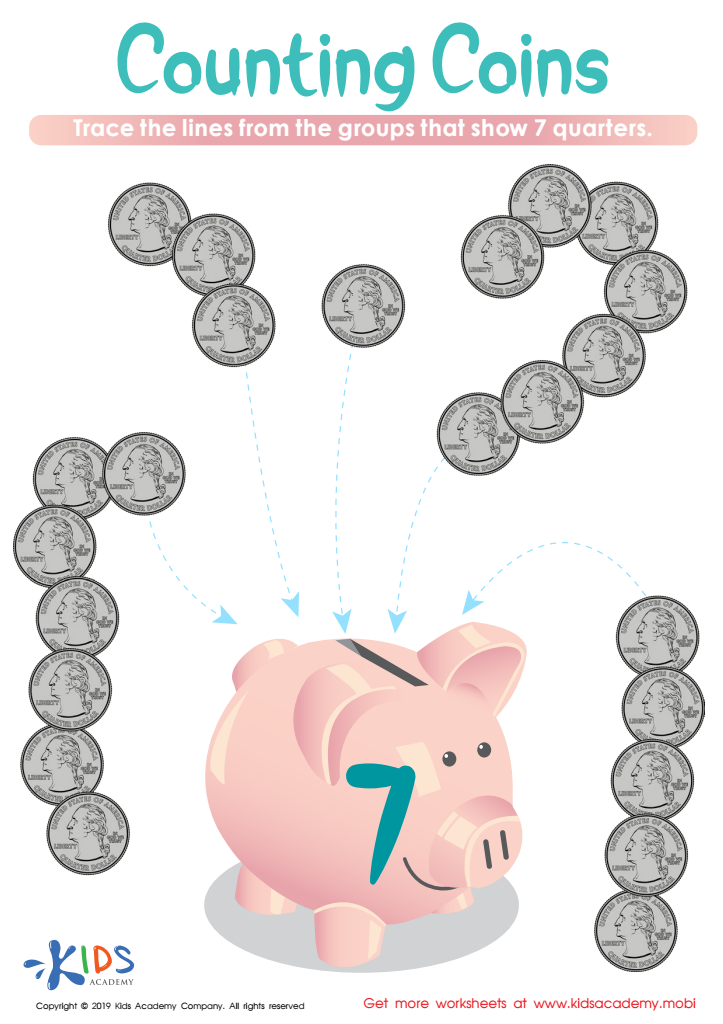
Counting Coins Worksheet
 Assign to My Students
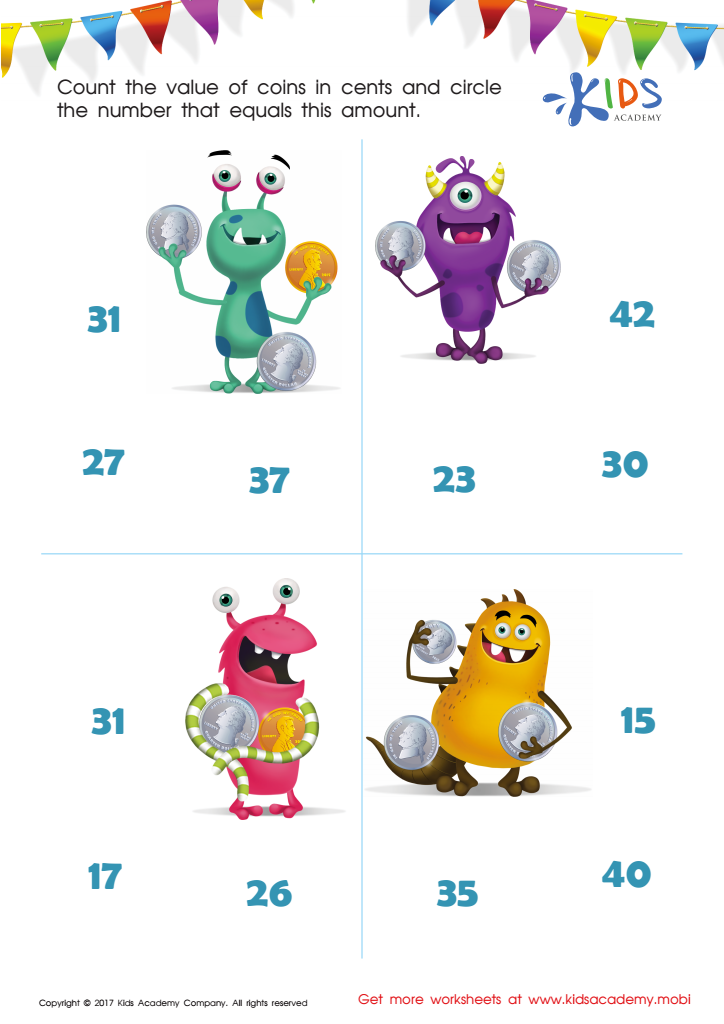
How Many Coins Money Worksheet
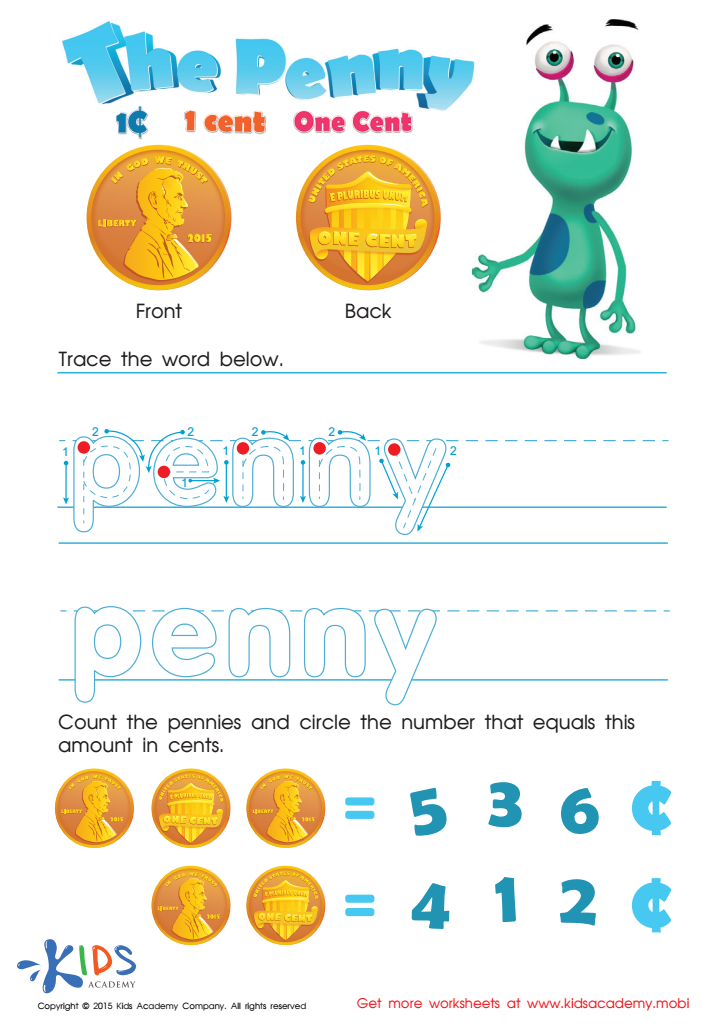
One Cent or the Penny Money Worksheet
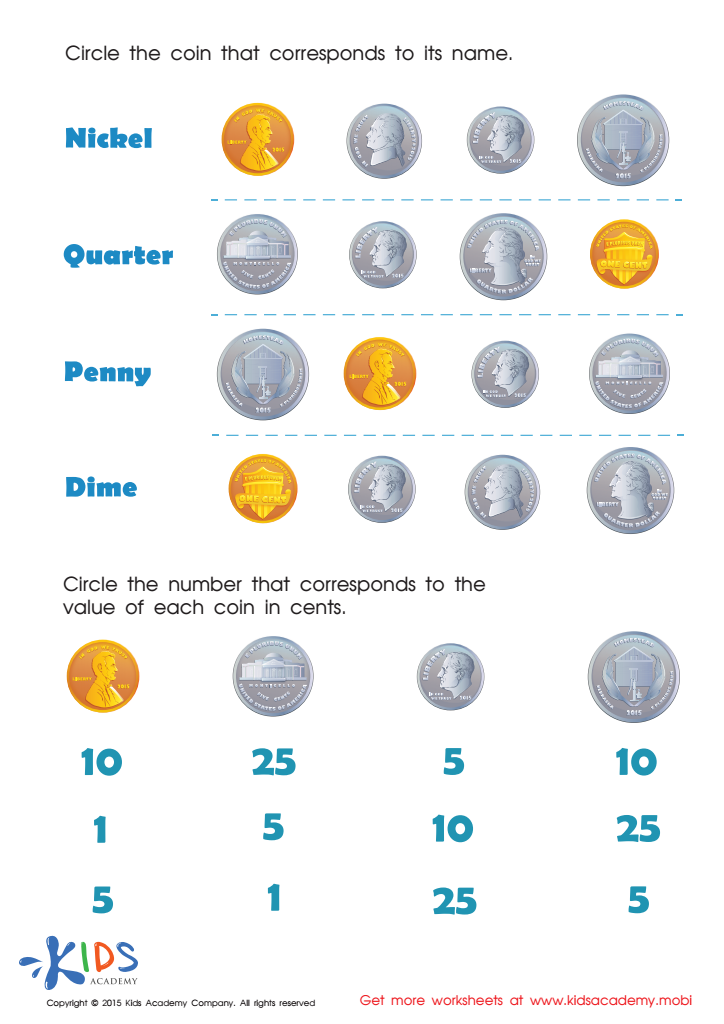
Coin Names and Values Money Worksheet
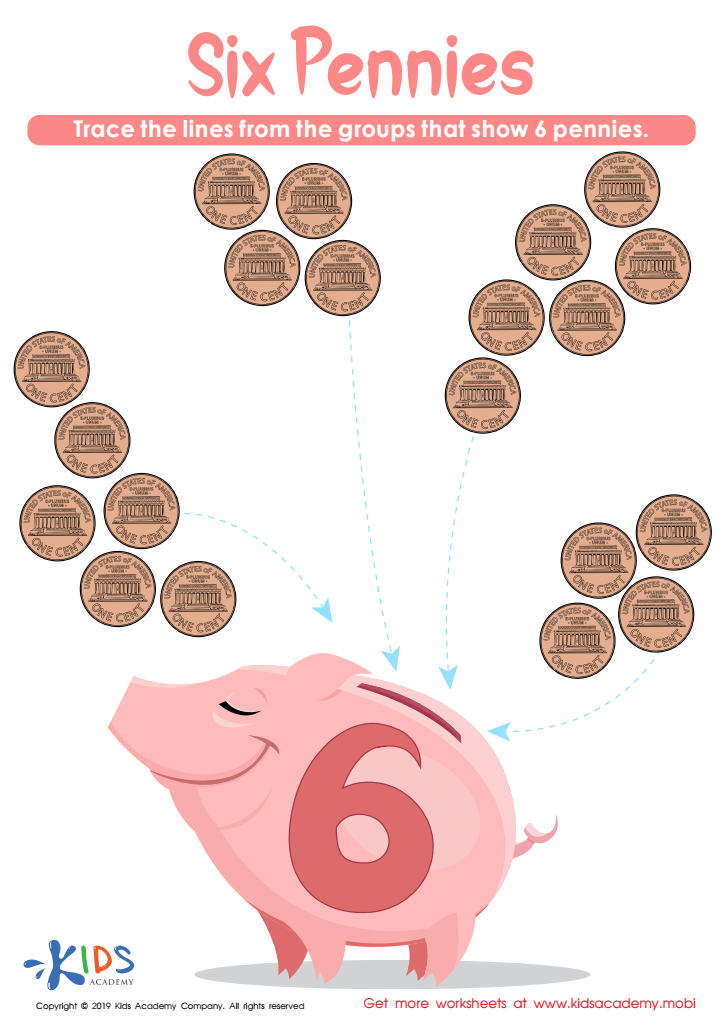
Six Pennies Worksheet
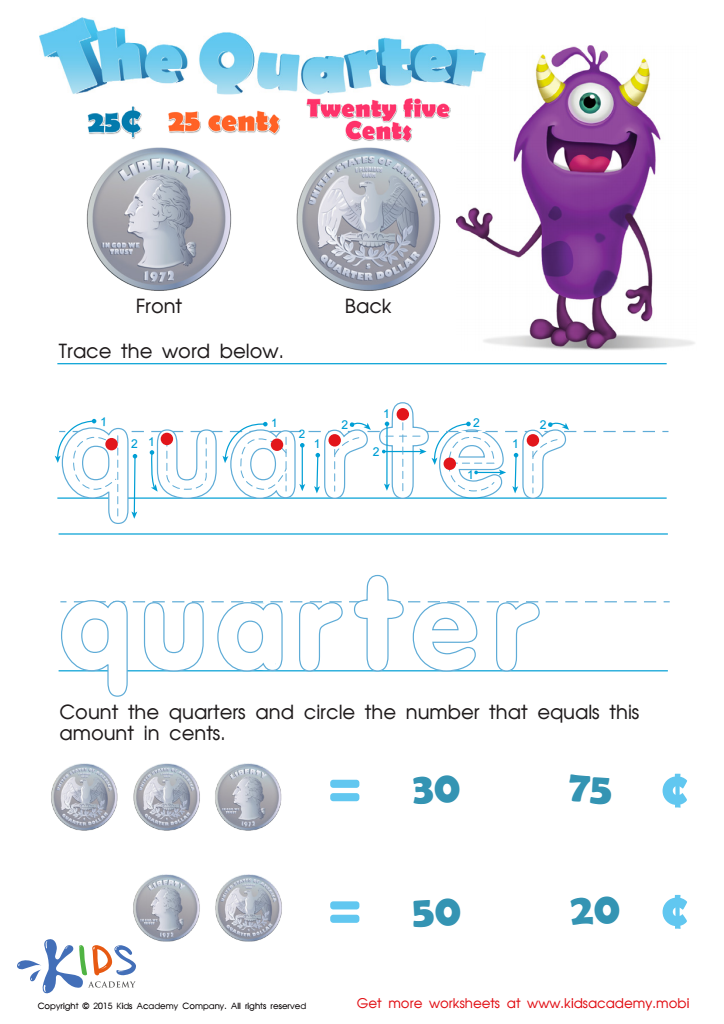
Twenty Five Cents or the Quarter Money Worksheet








Money recognition is a vital skill for young learners in kindergarten as it lays the foundation for financial literacy and responsibility. Understanding money helps children comprehend basic economic concepts and develop their mathematical skills.
When parents and teachers prioritize money recognition, they empower children to become confident in managing personal finances as they grow. Familiarity with different coins and bills enhances counting and sorting abilities, which are crucial components of early math education.
Additionally, money recognition serves as a practical life skill that promotes independence. By learning to identify and use money, children can participate in everyday activities, such as shopping or saving, fostering a sense of accomplishment and ownership over their finances.
Moreover, instilling a sense of value around money can initiate crucial discussions about needs versus wants, budgeting, and the importance of saving early on. These conversations will pose the groundwork for informed decision-making in the future.
Ultimately, investing time in teaching money recognition not only equips children with essential skills but also nurtures responsible, financially literate citizens who can navigate the complexities of money management in adulthood. Parents and teachers play a crucial role in ensuring that children acquire these life skills in an engaging and age-appropriate manner.