Phonics recognition Kindergarten Worksheets
9 filtered results
-
From - To
Discover our engaging and educational Phonics Recognition Kindergarten Worksheets, designed to help your child excel in early reading skills. Our expertly crafted worksheets focus on phonemic awareness, sound-letter correspondence, and decoding skills. By utilizing fun illustrations and interactive exercises, we aim to make learning an enjoyable experience for your little ones. Perfect for teachers and parents alike, these printables support foundational literacy development and set the stage for reading success. Empower your kindergartener with the confidence to recognize sounds and letters with our comprehensive collection of phonics worksheets today! Find free, printable resources at kidsacademy.mobi.
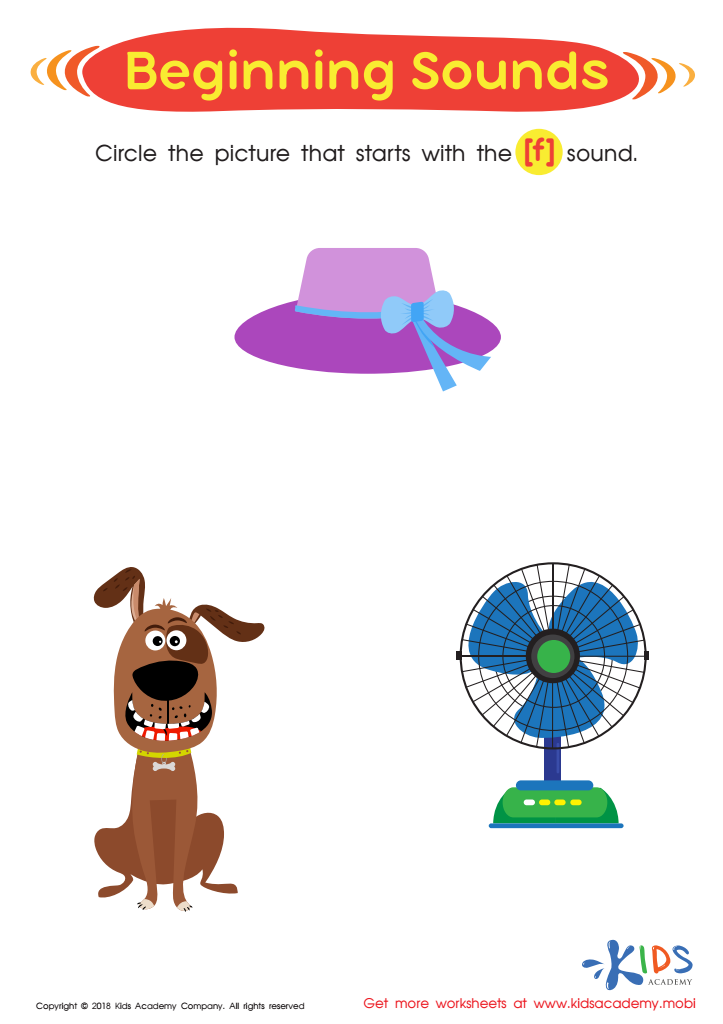
Beginning Sounds Assessment Printable
 Assign to My Students
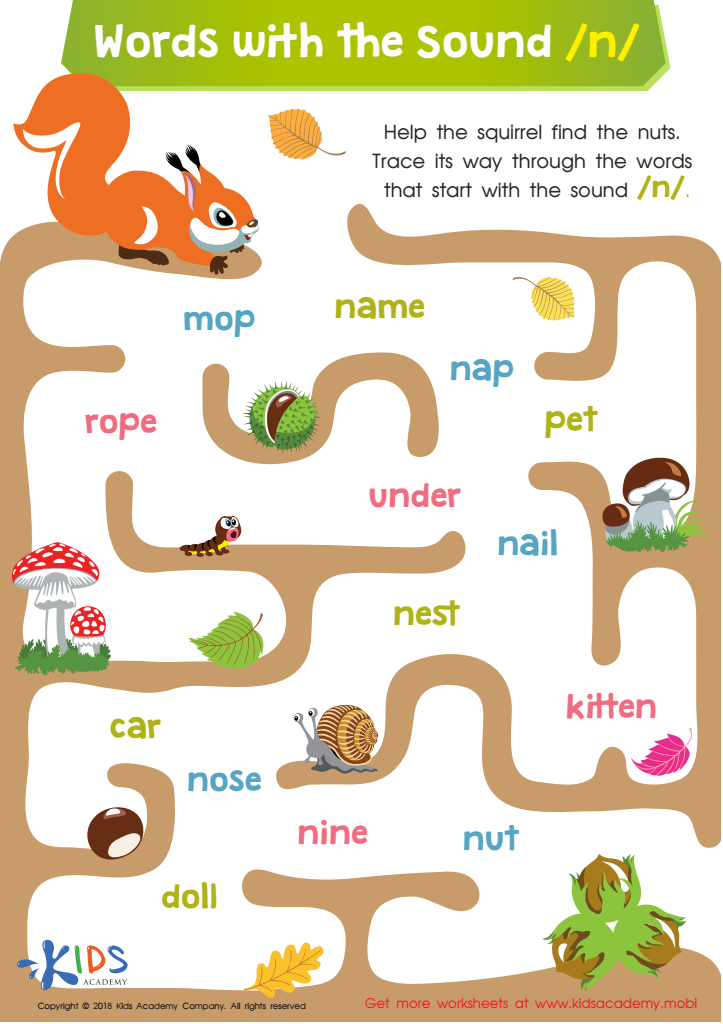
Words with Sound N Reading Worksheet
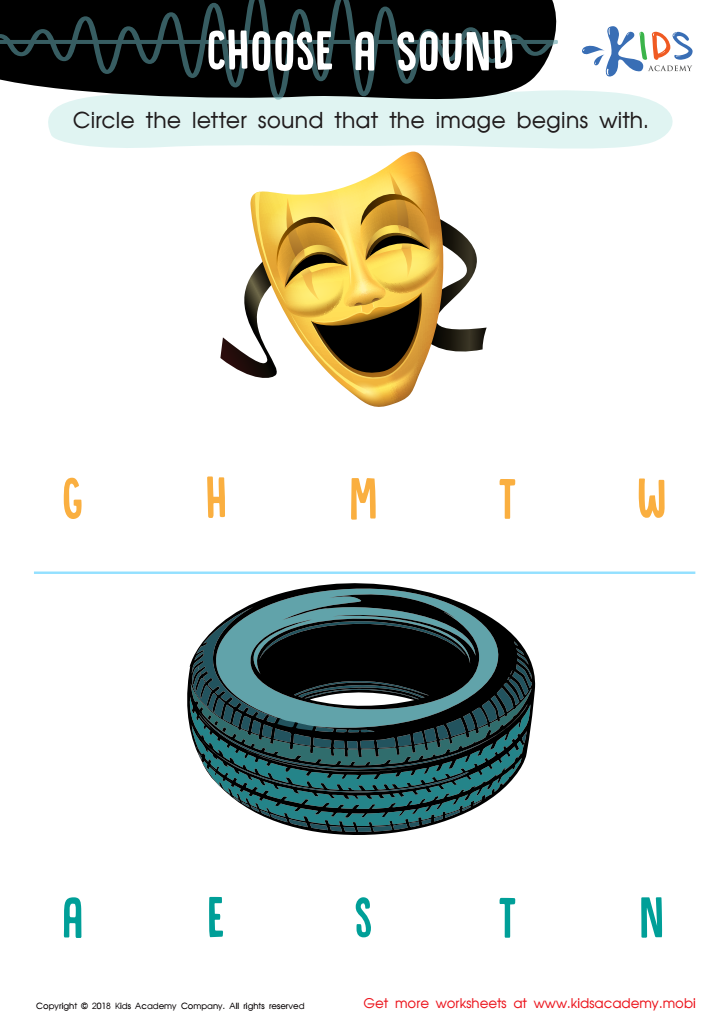
Choose a Sound Worksheet
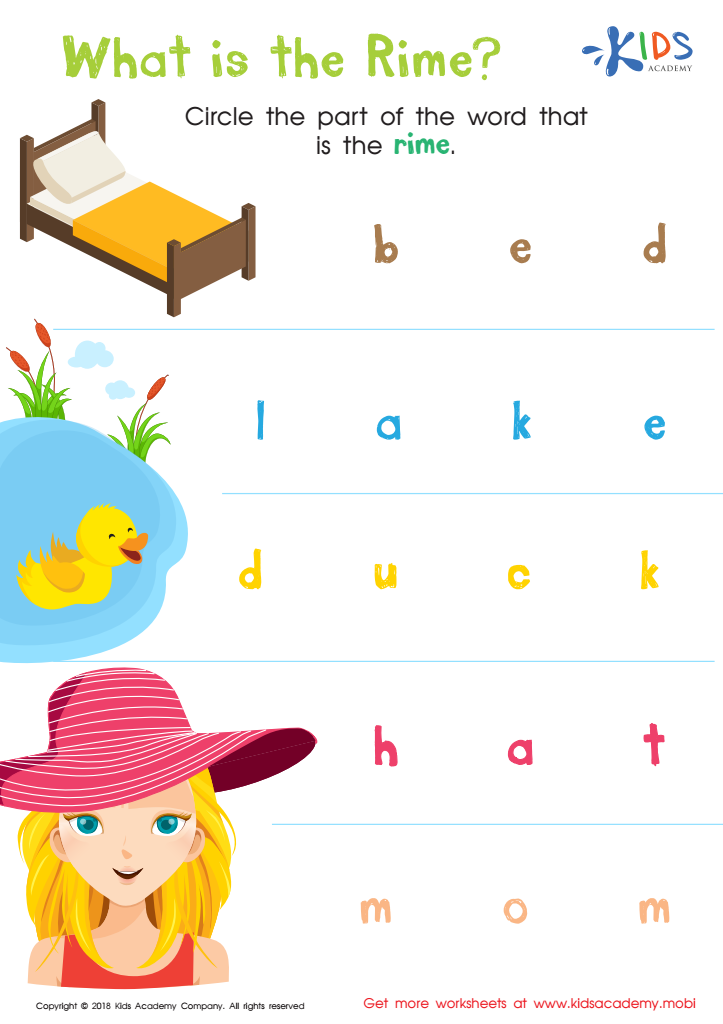
What Is the Rime? Worksheet
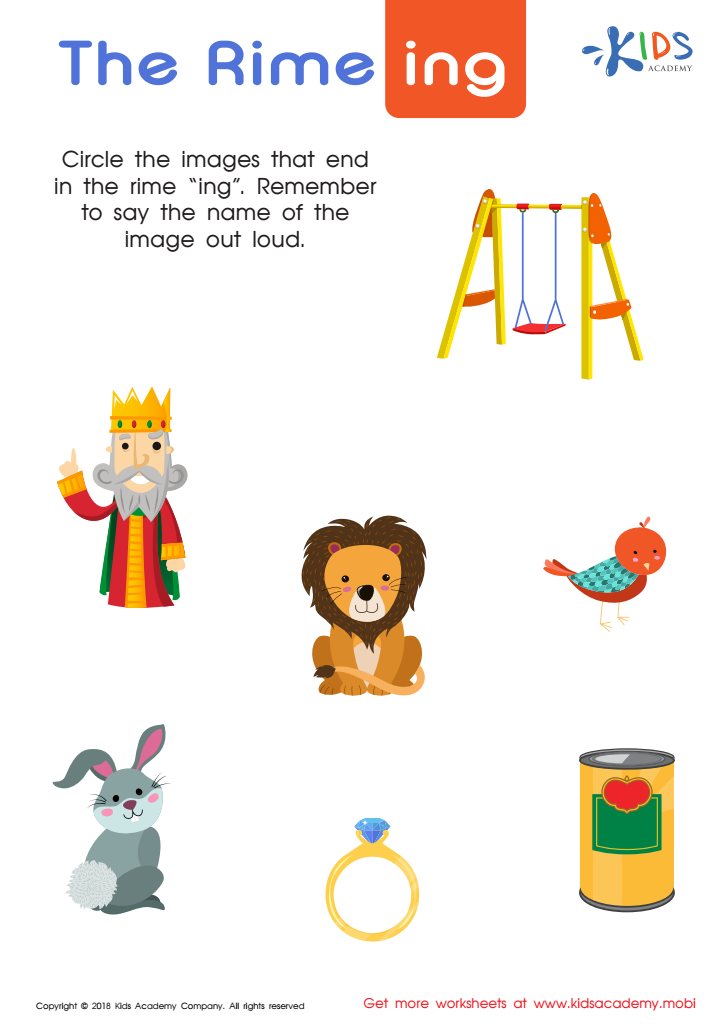
The Rime "ing" Worksheet
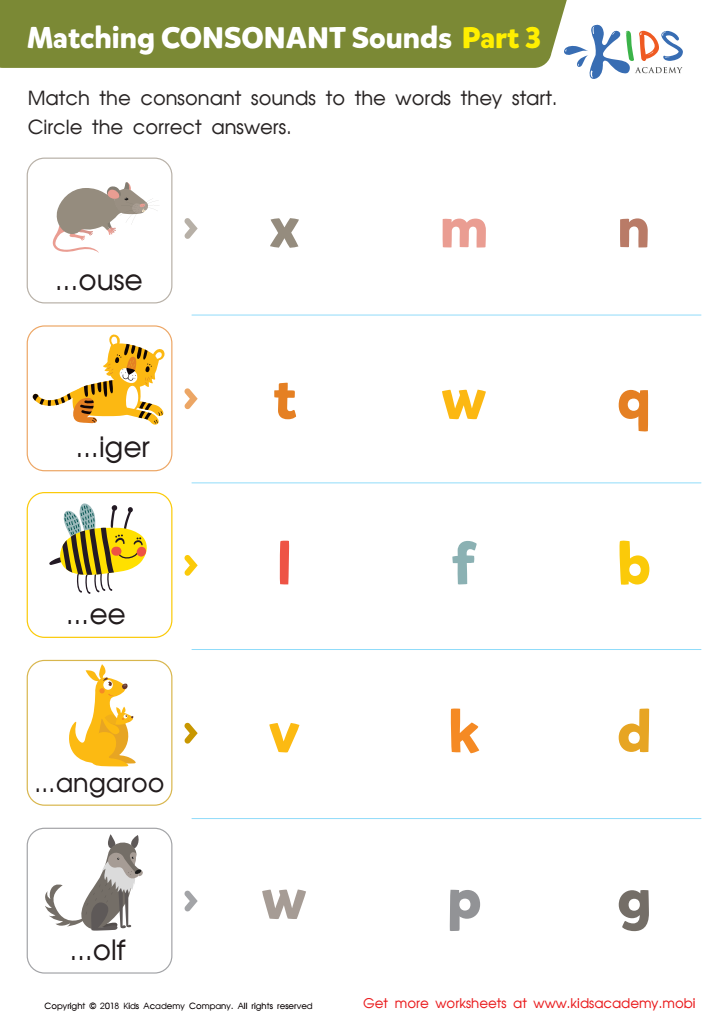
Matching Consonant Sounds: Part 3 Worksheet
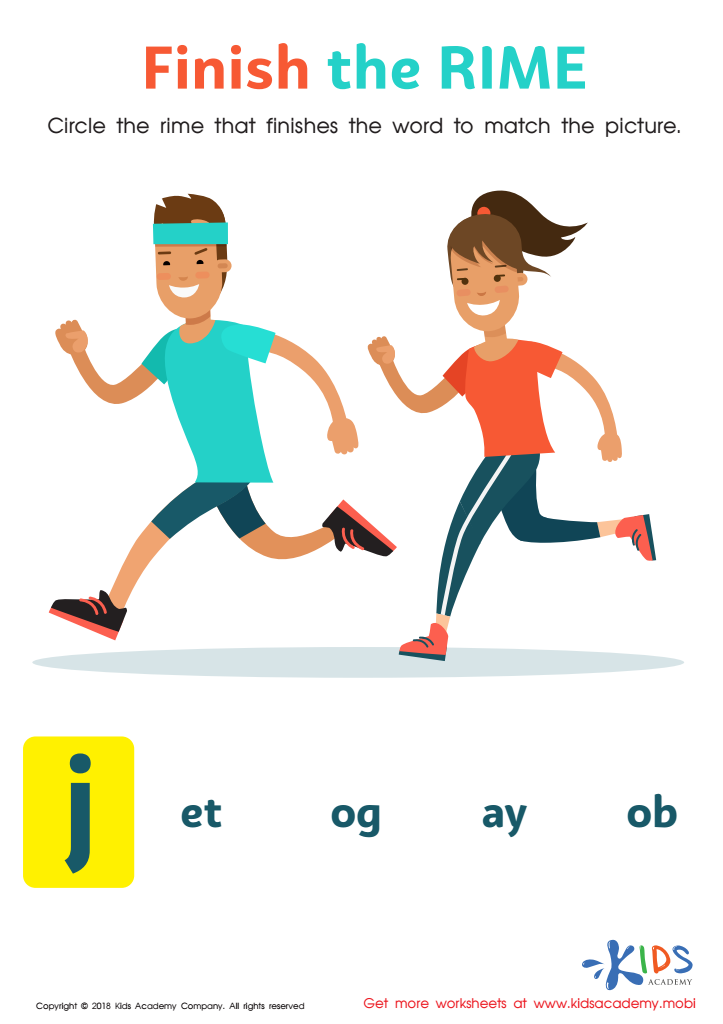
Finish the Rime Worksheet
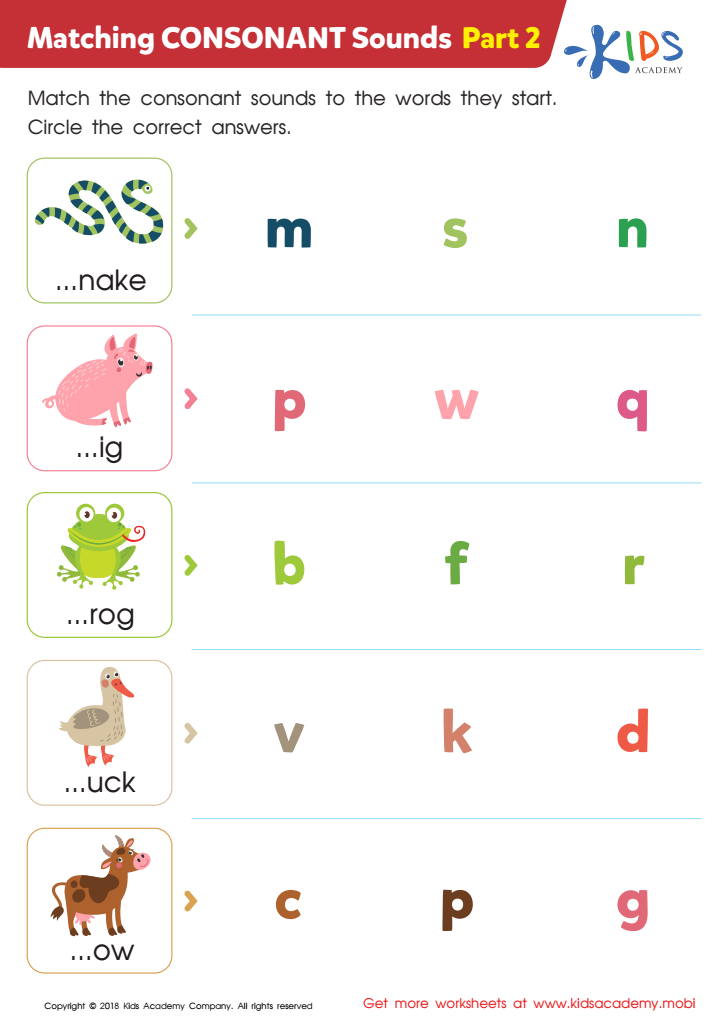
Matching Consonant Sounds: Part 2 Worksheet
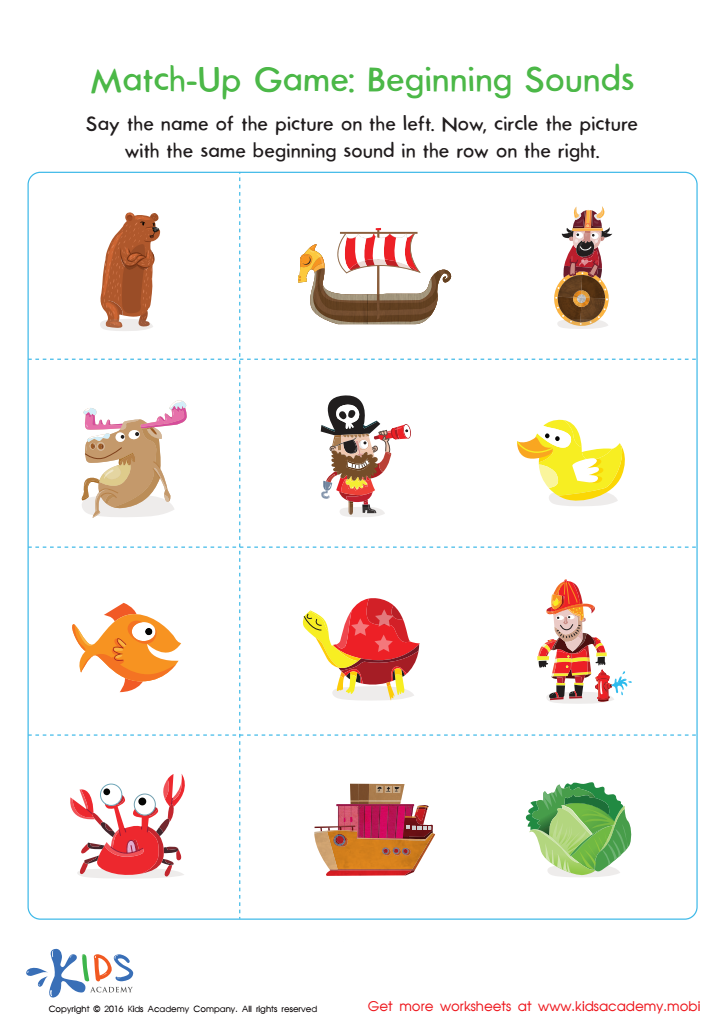
Match–Up Game: Beginning Sounds Worksheet







Phonics recognition is a crucial building block in early childhood education because it lays the foundation for reading and writing skills. When parents and teachers prioritize phonics in kindergarten, they help children develop an understanding of the relationship between letters and sounds, which is essential for decoding unfamiliar words. This skill is vital not just for reading fluently, but also for spelling and writing accurately.
By focusing on phonics, educators can help young learners improve their phonemic awareness, which is the ability to hear, identify, and manipulate individual sounds in spoken words. This awareness is key in developing reading skills, as it allows children to break down words into manageable parts, making it easier for them to read complex texts as they progress in their education.
Moreover, early phonic recognition boosts self-confidence. When children can successfully read new words on their own, their excitement and interest in reading grow, fostering a lifelong love of learning. On the other hand, struggling with phonics can lead to frustration and disinterest in reading, which can negatively impact their overall academic performance.
Investing time and resources in phonics recognition at the kindergarten level is not just about immediate academic success; it forms the cornerstone of effective, literate communication skills vital for future study and everyday life.








