Plant identification Kindergarten Worksheets
3 filtered results
-
From - To
Discover the world of nature with our Plant Identification Kindergarten Worksheets! Designed to engage young minds, these worksheets introduce children to various plants through colorful visuals and interactive activities. Kids will learn to recognize and name different plants, enhancing their observational skills and fostering a love for nature. The activities are tailored to support early learning standards, making them perfect for classroom use or at-home learning. With easy-to-follow instructions, these engaging worksheets provide a fun and educational experience for preschoolers and kindergarteners alike. Spark curiosity and inspire budding botanists with our Plant Identification Worksheets today!
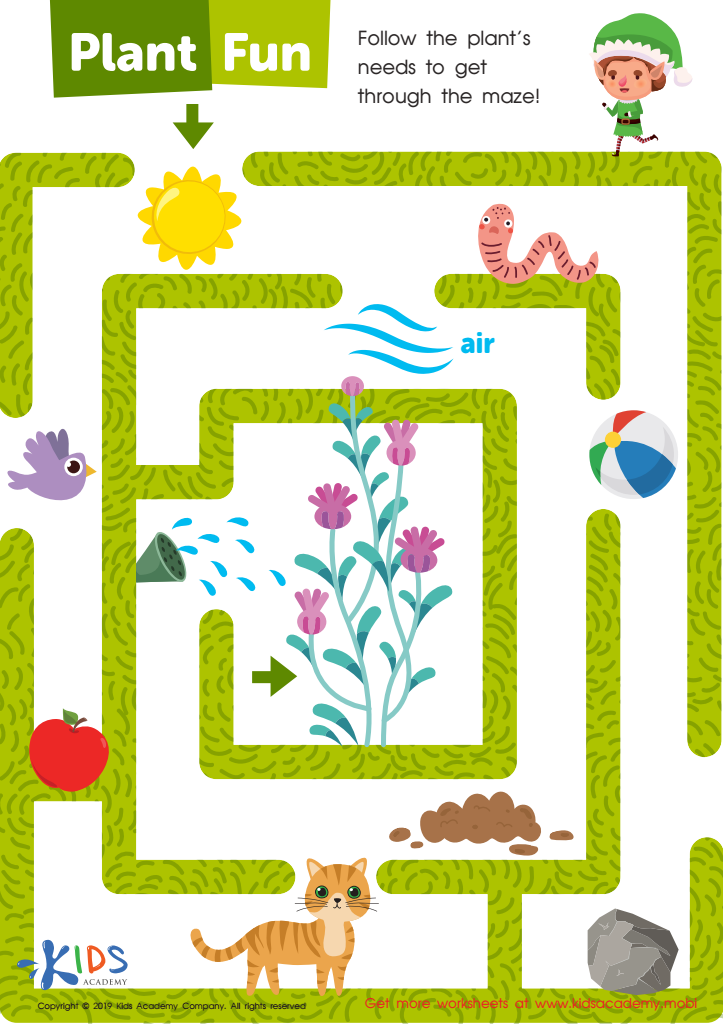
Plant Fun Worksheet
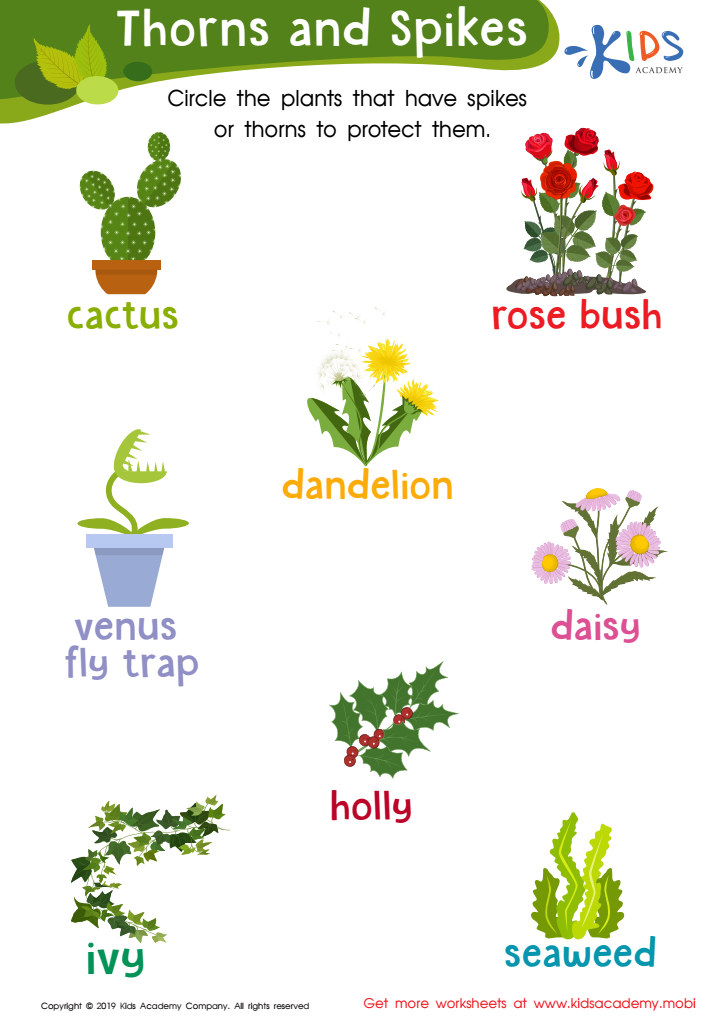
Thorns and Spikes Worksheet
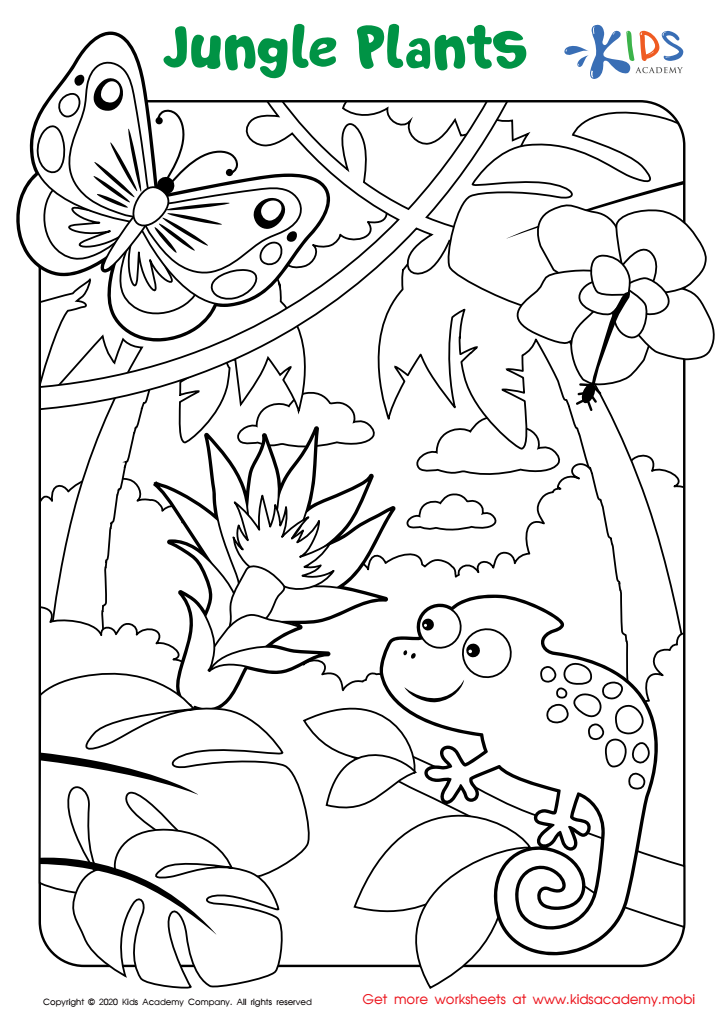
Jungle Plants Worksheet
 Assign to My Students








Introducing plant identification to kindergarteners is crucial for several reasons. First, it enhances children's connection to nature, fostering a sense of wonder and curiosity about their environment. When young learners can identify different plants, they develop observational skills that feed their scientific thinking and promote inquiry-based learning. Understanding plant life also introduces them to concepts of ecology and the importance of biodiversity, laying the foundation for environmental stewardship.
Moreover, plant identification promotes physical and cognitive development. Engaging in outdoor activities helps children improve their motor skills, as they touch, observe, and sometimes even create crafts from leaves or flowers. This hands-on approach to learning encourages active exploration and enhances memory retention.
Culturally, plants are linked to traditions and practices, making plant identification a pathway to discussing heritage and storytelling. It celebrates diversity in an engaging way.
Furthermore, incorporating plant identification into the curriculum nurtures responsibility as children learn how to care for living things. By teaching them about the importance of plants in our daily lives, such as food sources, clean air, and natural beauty, we empower children to appreciate and protect their natural world now and in the future. All these factors illustrate why educators and parents should prioritize this learning aspect.








