
Rhyming skills development Kindergarten Worksheets
3 filtered results
Difficulty Level
Grade
Age
-
From - To
Subject
Activity
Standards
Enhance your child's language abilities with our Kindergarten Rhyming Skills Development Worksheets! These fun and engaging worksheets are designed to introduce young learners to the world of rhyming while supporting essential early reading skills. Through playful activities and colorful illustrations, children will learn to recognize and match rhyming words, boosting their phonemic awareness. Our worksheets cater to different learning styles, making it easy for teachers and parents to guide children through foundational literacy concepts. Help your kindergartner master rhyming patterns, improve vocabulary, and get a head start on their reading journey with our expertly crafted resources.
Favorites
With answer key
Interactive
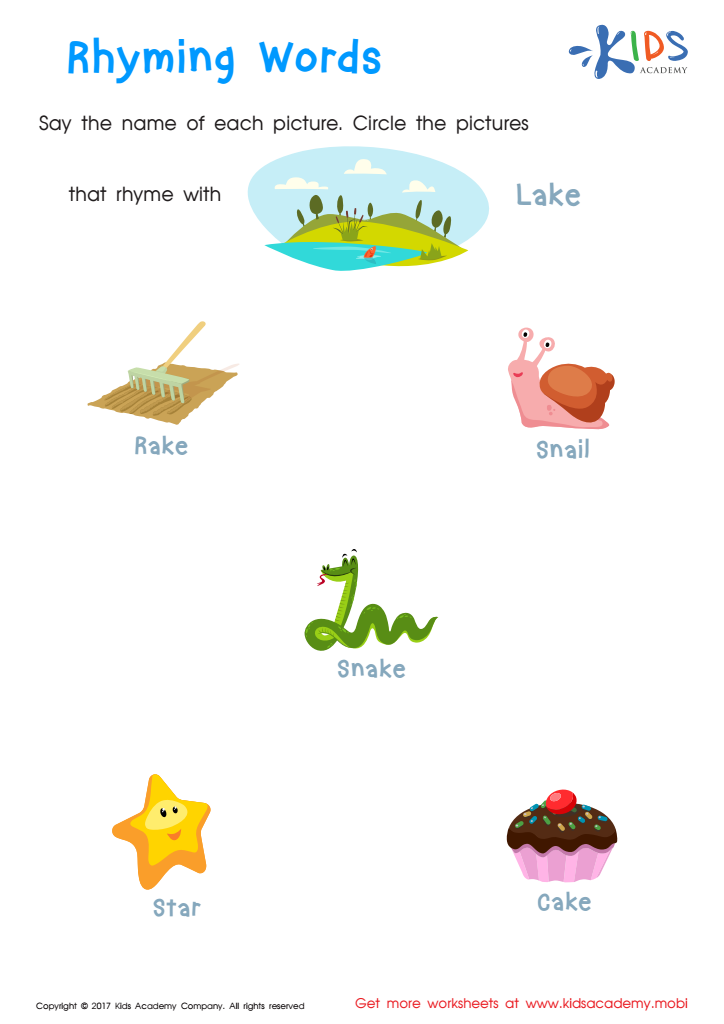
Rhyming Words Rhyming Worksheet
This worksheet is great for honing pre-reading skills. It helps kids make connections between pictures and written words, use problem-solving, and recognize sounds and words that rhyme. Have fun exploring rhyming words with your child, and they'll be rhyming in no time!
 Assign to My Students
Rhyming Words Rhyming Worksheet
Worksheet
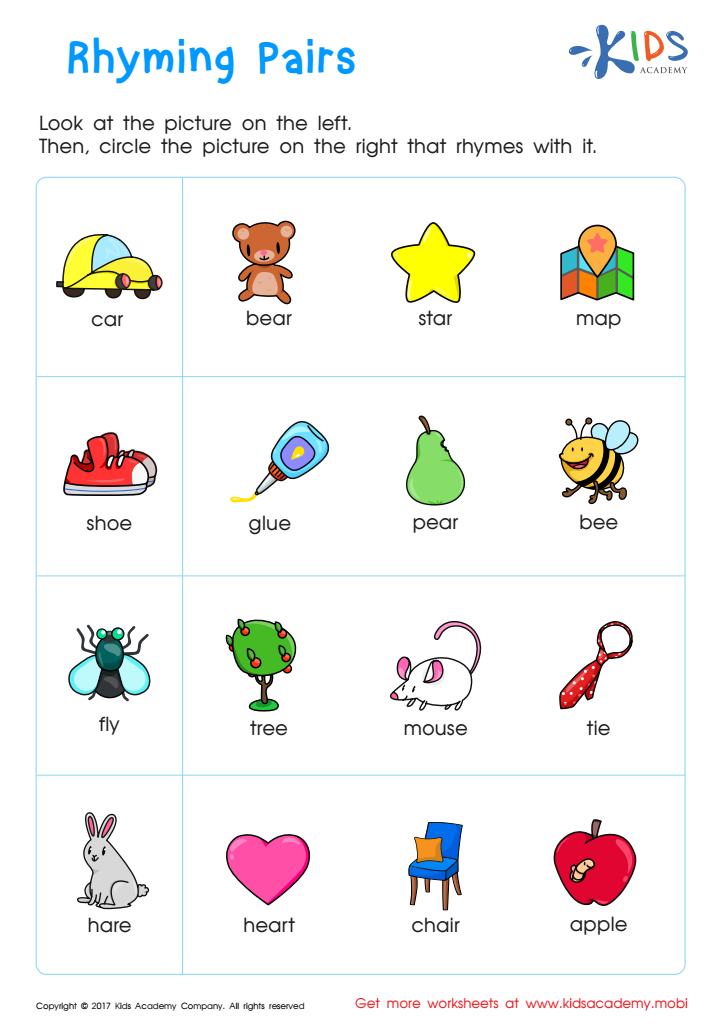
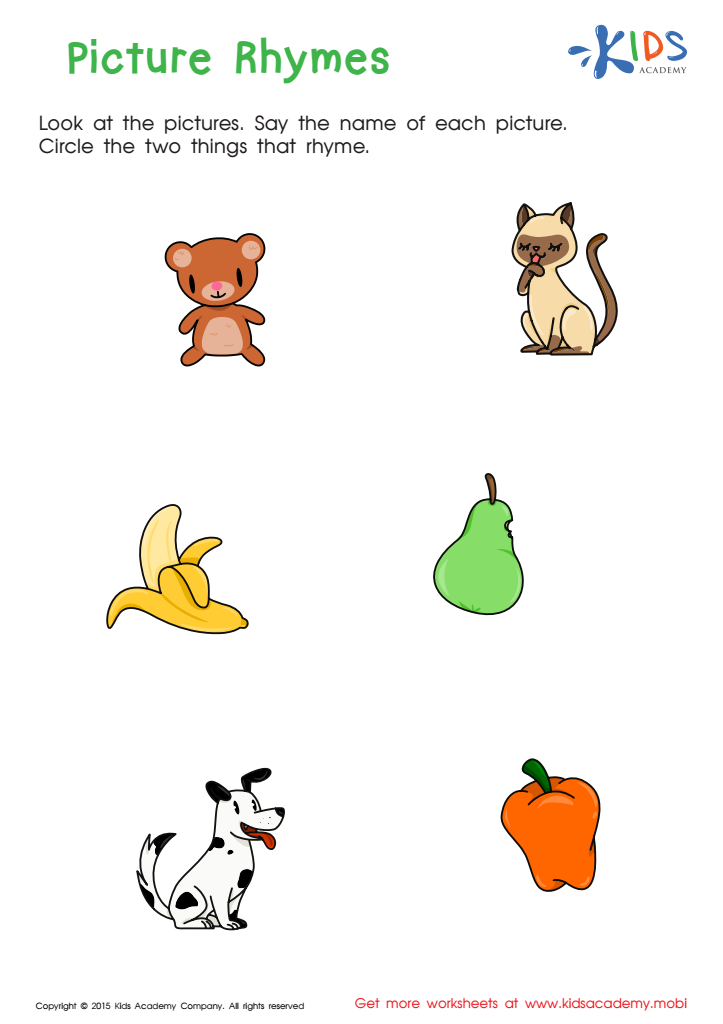
First Words: Picture Rhymes Worksheet
Rhyming helps kids understand language, read and write better. This printable worksheet boosts problem-solving and cognitive skills with vibrant pictures. It teaches kids to identify words, recognize rhymes, complete mental tasks and write words. An extra activity: show them how rhyming words share some of the same letters.
First Words: Picture Rhymes Worksheet
Worksheet
Join Kids Academy for Free
Who is primarily going to use this learning content?








Developing rhyming skills in kindergarten is crucial for young learners' linguistic and cognitive development. Rhyming enhances phonemic awareness, which refers to a child's ability to recognize and manipulate the individual sounds in words. This foundational skill is a precursor to more advanced literacy capabilities such as reading and spelling. By recognizing rhyming patterns, children become adept at predicting word families and constructing new words, thus expanding their vocabulary.
Additionally, rhyming engages children in playful and engaging linguistic exercises, fostering a love for language early on. The rhythmic and repetitive nature of rhymes also aids in memory retention; children who frequently hear and participate in rhyming activities tend to remember new words and concepts more easily. Rhyming can also help with other critical skills such as listening, concentration, and auditory discrimination.
In a social context, participating in rhyming games or songs can boost children's confidence and encourage cooperative learning experiences. Group activities centered around rhyming can improve verbal communication skills and peer bonding. Parents and teachers should therefore prioritize rhyming skills development to provide a solid cognitive and social foundation, positioning children for future academic success. The joy and creativity fostered by rhyming activities make learning enjoyable, encouraging a lifelong love of language and reading.








