Explore our engaging Sound Recognition Kindergarten Worksheets designed to enhance your child's auditory learning skills! These interactive printables provide a fun and effective way for young learners to identify and associate sounds with objects, letters, and words. Our worksheets include a variety of activities such as matching sounds to images, coloring exercises, and phonemic awareness tasks, perfect for supporting early literacy development. By integrating sound recognition practice into your child's daily routine, you'll help build the foundation for reading success. Download our free worksheets now and watch as your little one transforms into a confident, sound-savvy learner!

Check out this FREE Kindergarten "Sound recognition" Trial Lesson!

Rhyming Words

Favorites
With answer key
Interactive
  • Kindergarten
  • Sound recognition
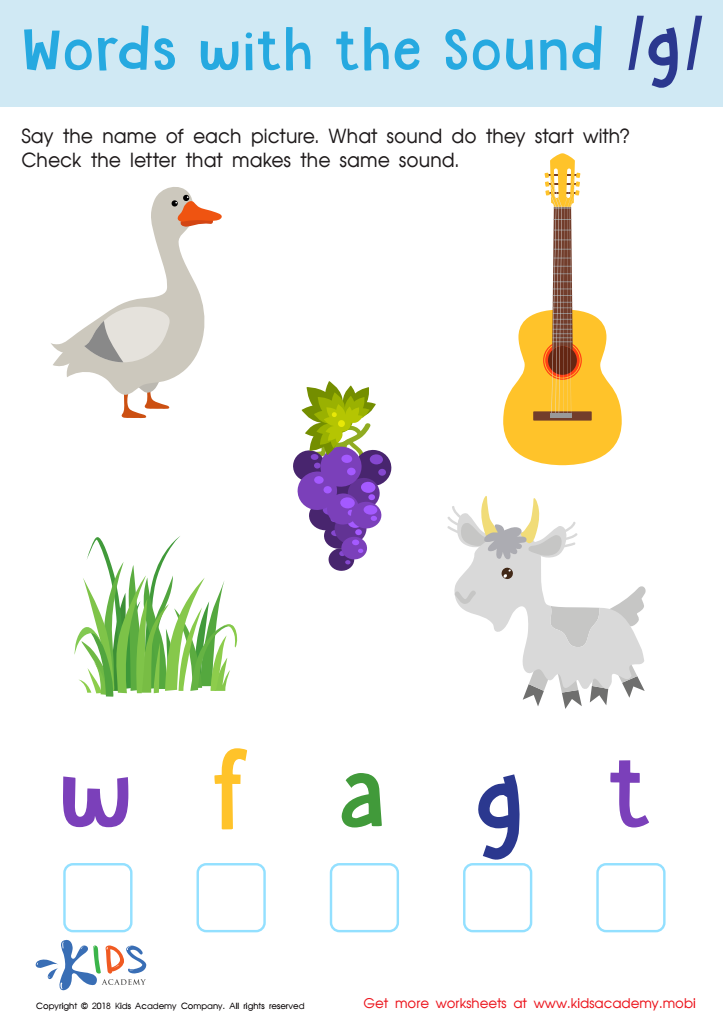
Words with sound g Reading Worksheet

Words with sound g Reading Worksheet

Help your child learn the soft "g" sound with this phonics worksheet. Ask them to name each picture, then identify the letter sound it begins with. If it's "g", they can check the box. Have them repeat each word, listening for the soft "g" sound before moving on to the next page.
Words with sound g Reading Worksheet
Worksheet
Rhyming Words Worksheet PDF

Rhyming Words Rhyming Worksheet

This worksheet is great for honing pre-reading skills. It helps kids make connections between pictures and written words, use problem-solving, and recognize sounds and words that rhyme. Have fun exploring rhyming words with your child, and they'll be rhyming in no time!
Rhyming Words Rhyming Worksheet
Worksheet
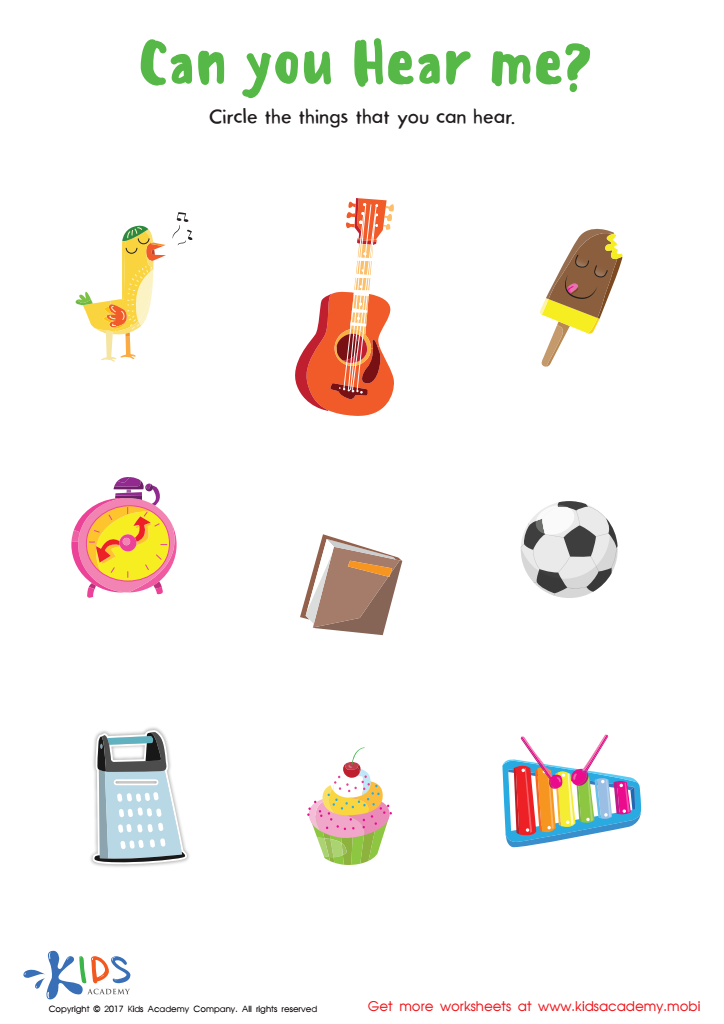
Can You Hear Me Worksheet

Can You Hear Me Worksheet

Challenge your child's thinking and help them learn by using this cute "Can You Hear Me?" worksheet. It encourages use of prior knowledge to identify objects that make sounds, developing critical thinking skills. As they imagine balls and cupcakes making sounds, your child will have plenty of laughs. Extend learning by talking about the sounds and why certain objects make them.
Can You Hear Me Worksheet
Worksheet
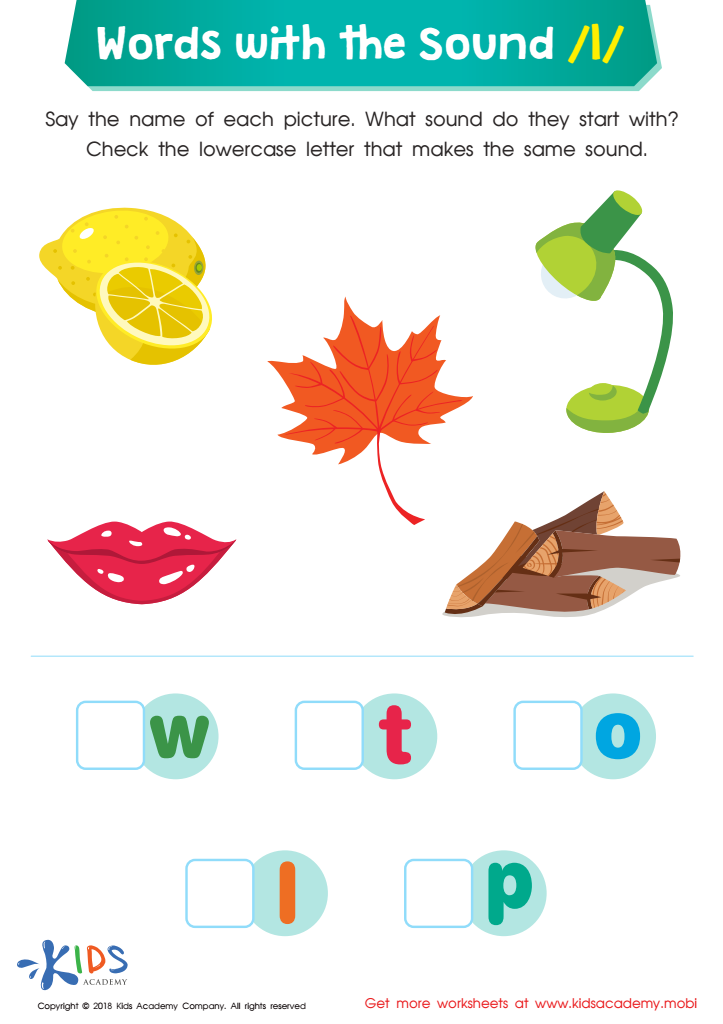
Words with Sound L Reading Worksheet

Words with Sound L Reading Worksheet

This PDF worksheet is great for helping emerging readers isolate initial sounds. Kids name familiar pictures, then identify the correct letter for the "l" sound. This worksheet strengthens fine motor skills, plus builds visual discernment. It's fun and colorful too!
Words with Sound L Reading Worksheet
Worksheet
Long and Short U Worksheet

Long and Short U Worksheet

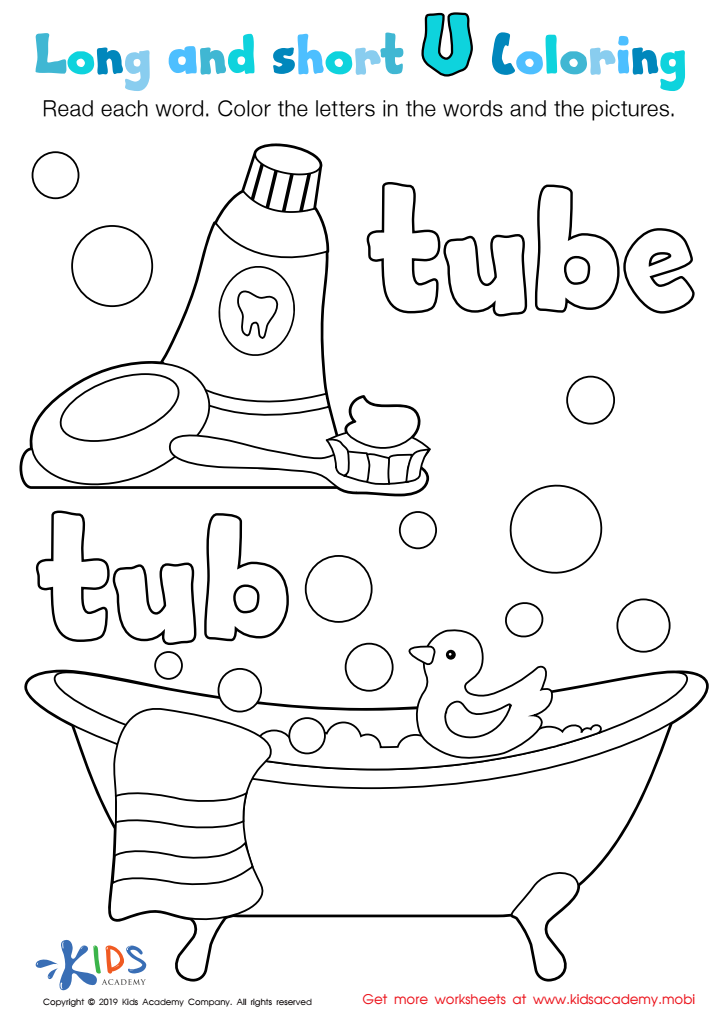
Revised: Spice up your lesson on long and short vowels with this fun printout! Kids read the words "tube" and "tub," then reinforce the sound by coloring in the words and pictures. It's a great way to make phonics class enjoyable!
Download (PDF)
Assign to My Students
Long and Short U Worksheet
Worksheet
Picture Rhymes Printable

First Words: Picture Rhymes Worksheet
Rhyming helps kids understand language, read and write better. This printable worksheet boosts problem-solving and cognitive skills with vibrant pictures. It teaches kids to identify words, recognize rhymes, complete mental tasks and write words. An extra activity: show them how rhyming words share some of the same letters.
First Words: Picture Rhymes Worksheet
Worksheet
Matching Consonant Sounds - Part 1 Worksheet Preview

Matching Consonant Sounds: Part 1 Worksheet

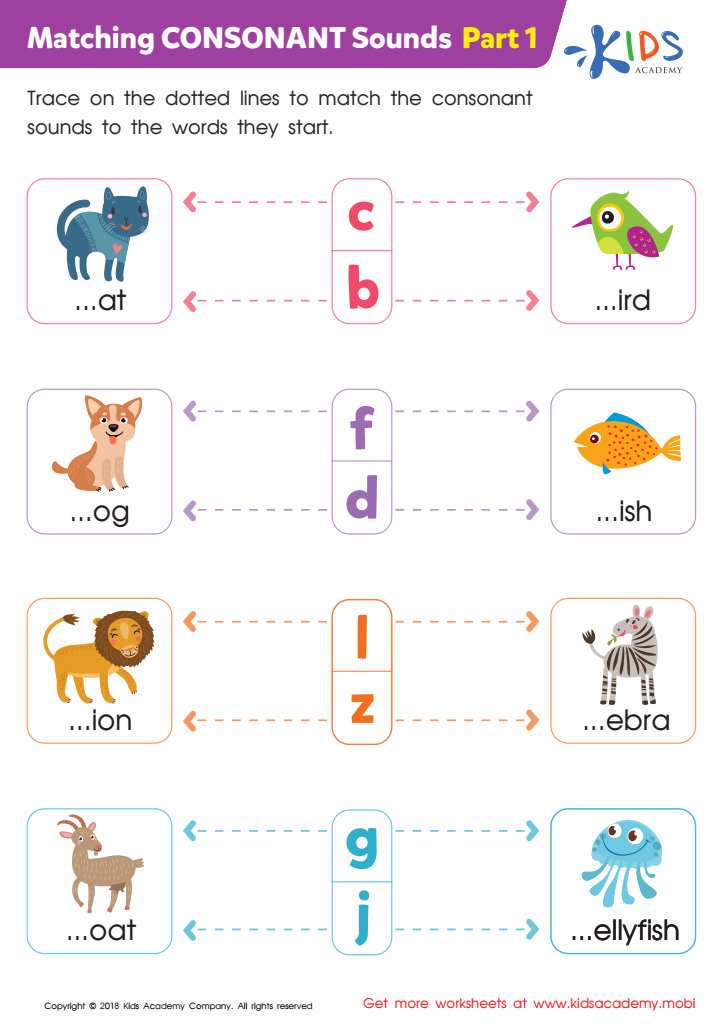
Decide which letter matches each word and picture in this fun phonics worksheet. Slide your finger over each word, trying out each letter to check for matches. Once each pair is solved, trace the dotted lines with pencil to complete the printable. Who knew learning could be so enjoyable?
Matching Consonant Sounds: Part 1 Worksheet

Worksheet


Sound recognition in kindergarten is a fundamental skill that plays a crucial role in early literacy development. Parents and teachers should care about this aspect of education for several reasons. Firstly, recognizing sounds helps children develop phonemic awareness, a critical building block for reading. When children can identify and manipulate sounds within words, they are better equipped to decode and spell, leading to improved reading proficiency.

Secondly, sound recognition enhances listening skills, which are essential for effective communication and comprehension. Children learn to focus on verbal instructions and engage in conversations, which builds their overall language proficiency.

Furthermore, strong sound recognition skills support cognitive development. Activities involving sound can improve memory, attention, and auditory processing, crucial for learning across all subjects.

Additionally, encouraging sound recognition fosters a love for learning. When children engage in fun, interactive sound activities, they develop positive associations with literacy, which nurtures a lifelong love for reading and learning.

Lastly, early intervention is key. Identifying and addressing any sound recognition challenges early on can prevent future academic difficulties, ensuring that all children have a strong foundation for success in school. Therefore, both parents and teachers should prioritize sound recognition in kindergarten for holistic child development.