Understanding sizes Kindergarten Worksheets
3 filtered results
-
From - To
Explore our engaging "Understanding Sizes Kindergarten Worksheets" designed to help young learners grasp the concept of size comparison! These interactive worksheets introduce colors, shapes, and objects, fostering early math skills through fun activities. Children will enjoy sorting, matching, and labeling different items by size, enhancing their understanding of concepts like big, small, more, and less. Perfect for classroom reinforcement or at-home learning, these worksheets encourage hands-on exploration while promoting fine motor skills. Dive into the world of sizes with captivating visuals and easy-to-follow instructions that make learning enjoyable and effective for kindergarten students! Download them today to enrich your child's learning journey!
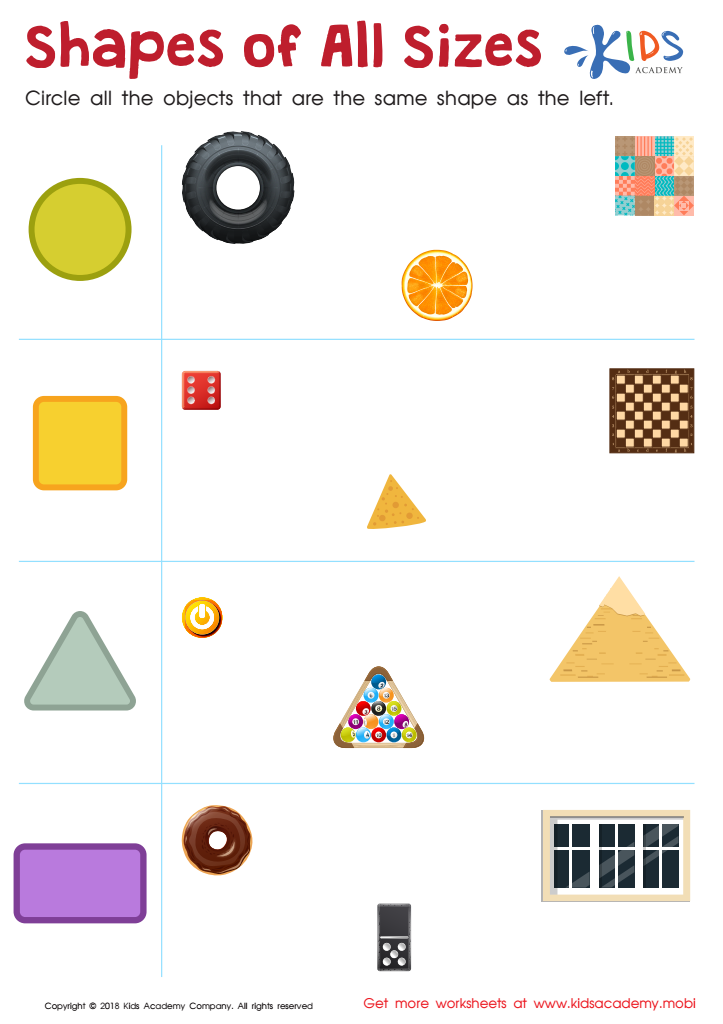
Shapes of All Sizes Worksheet
 Assign to My Students
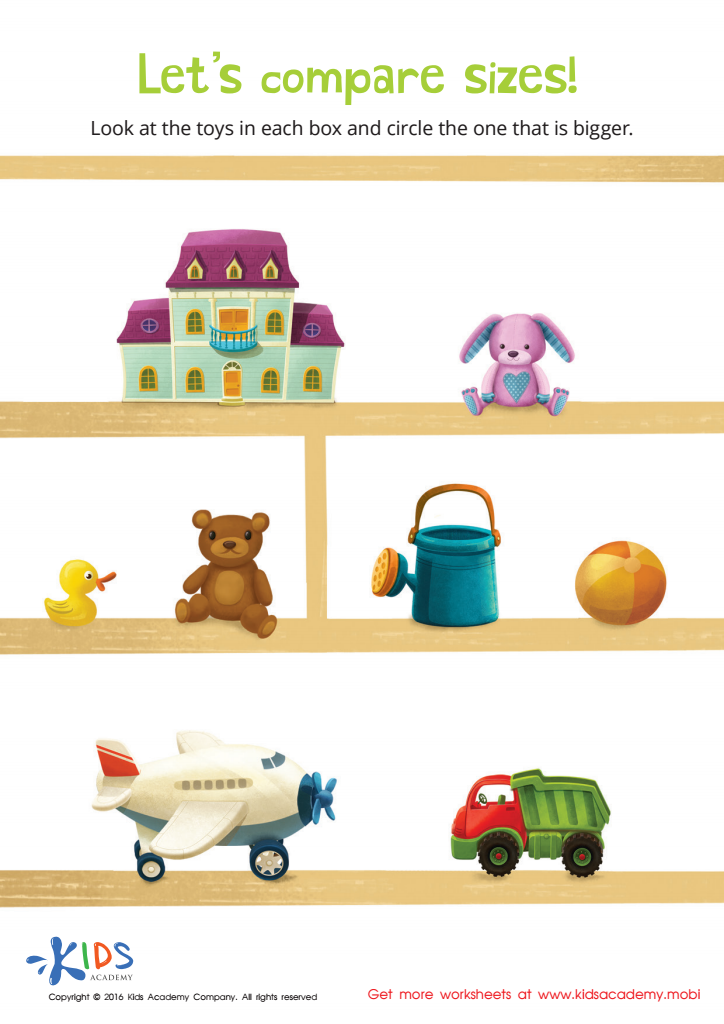
Classifying by Size Sorting Worksheet
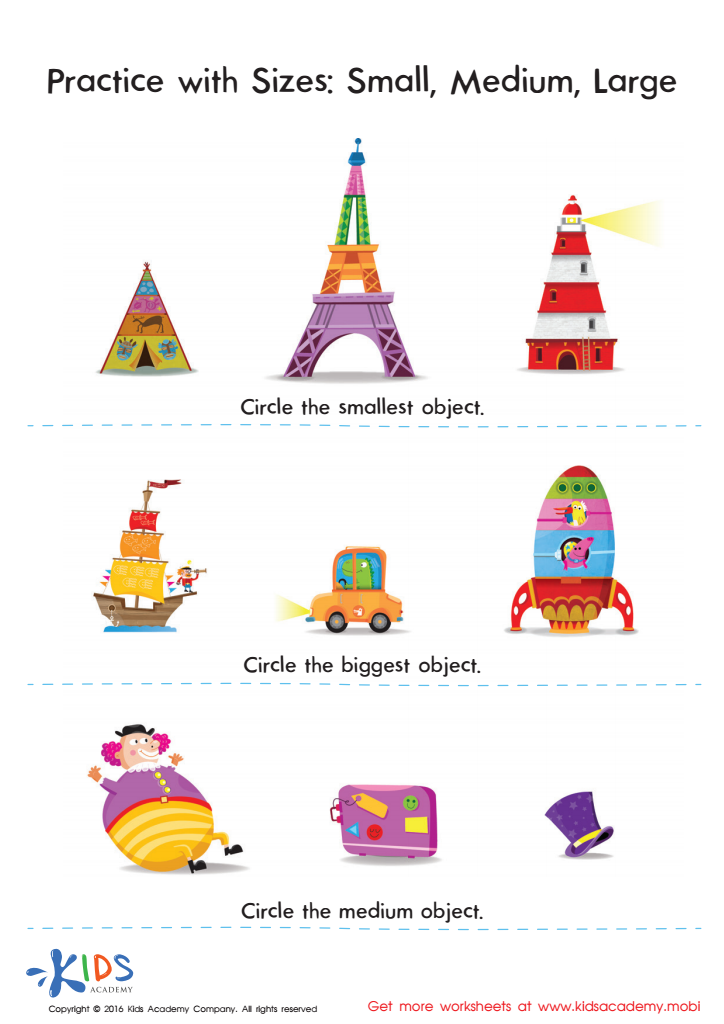








Understanding sizes is a foundational concept in early education that plays a crucial role in a child's cognitive and social development. For both parents and teachers, being attentive to children's grasp of sizes helps them lay the groundwork for important mathematical concepts, supporting skills such as measurement, comparison, and categorization. Recognizing different sizes helps children develop problem-solving skills and logical reasoning.
In a broader context, children who understand sizes can better navigate the world around them, growing more adept at expressing needs and making decisions. Furthermore, learning about sizes fosters vocabulary expansion as children learn to describe their observations accurately. This knowledge spills over into everyday life; whether sorting toys, sharing snacks, or dressing themselves, size comprehension is an essential part of daily activities.
Teachers and parents can harness this understanding to encourage cooperative play and exploration, supporting emotional and social skills as children interact with peers around questions of size. This understanding not only prepares them for more advanced mathematical concepts in the future but also builds confidence and independence. Ultimately, caring about and nurturing this aspect of development equips children with essential skills needed for lifelong learning and success.