Basic geometry understanding Kindergarten 2D Shapes Worksheets
3 filtered results
-
From - To
Explore our engaging Basic Geometry Understanding Kindergarten 2D Shapes Worksheets, designed to introduce young learners to the world of shapes! These worksheets help children identify, sort, and classify essential 2D shapes such as squares, circles, triangles, and rectangles. By making shapes relatable through fun activities, colorful visuals, and interactive exercises, kids will develop foundational geometry skills in a playful environment. Our worksheets foster critical thinking, fine motor skills, and encourage creativity while exploring basic geometric concepts. Perfect for classroom or home use, these resources make learning shapes enjoyable and effective, setting the groundwork for future mathematical proficiency. Start shaping knowledge today!
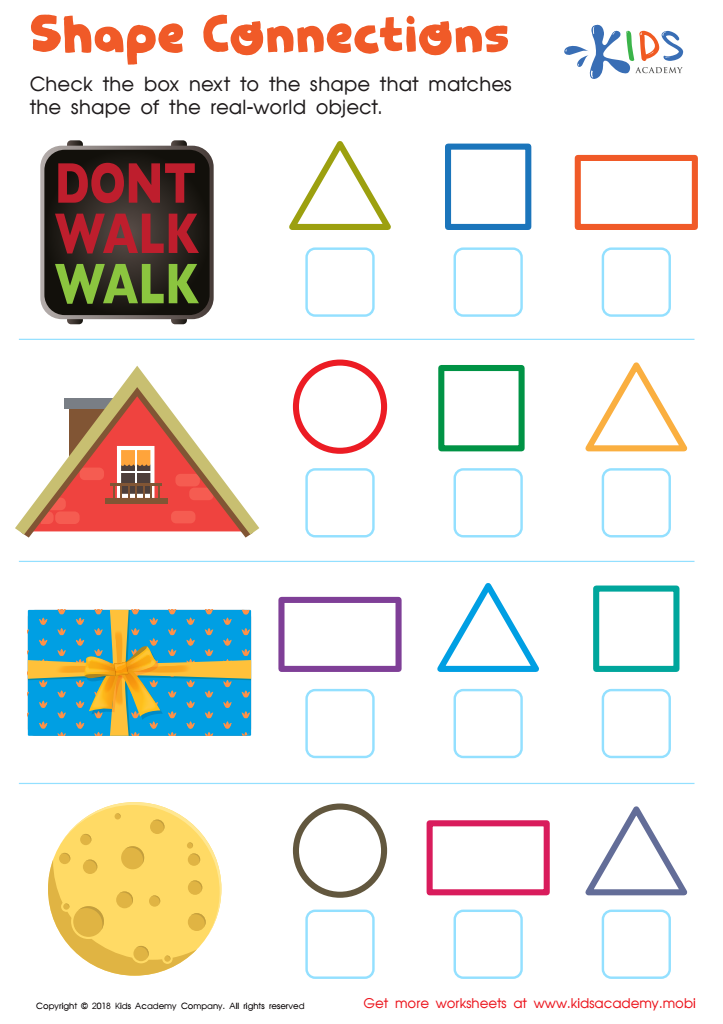
Shape Connections Worksheet
 Assign to My Students
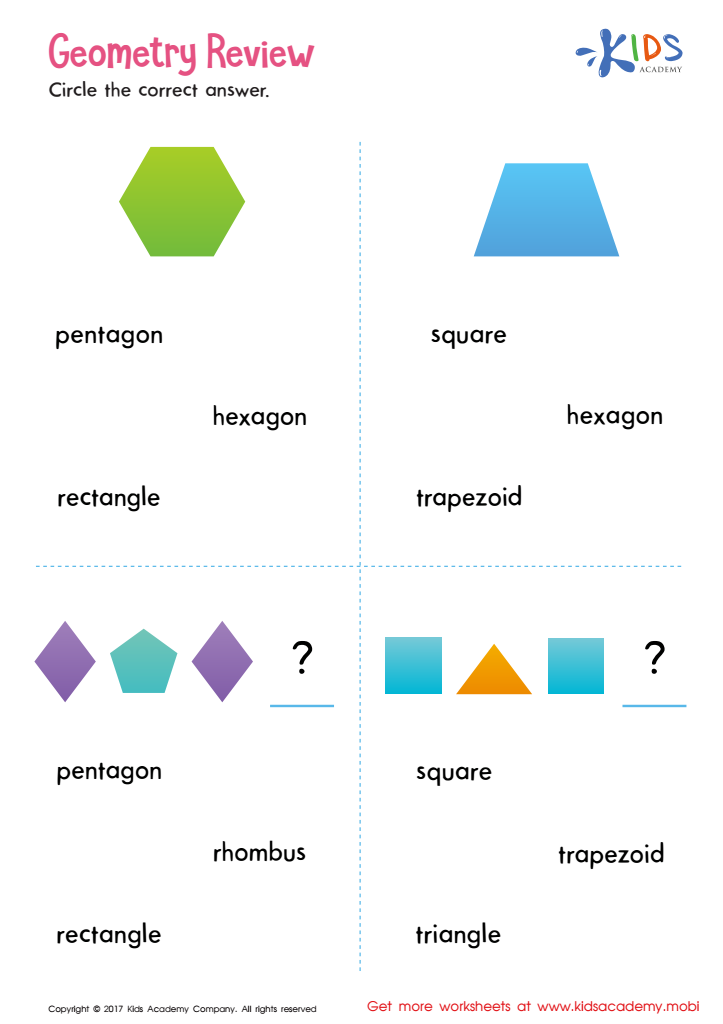
Geometry Review Printable
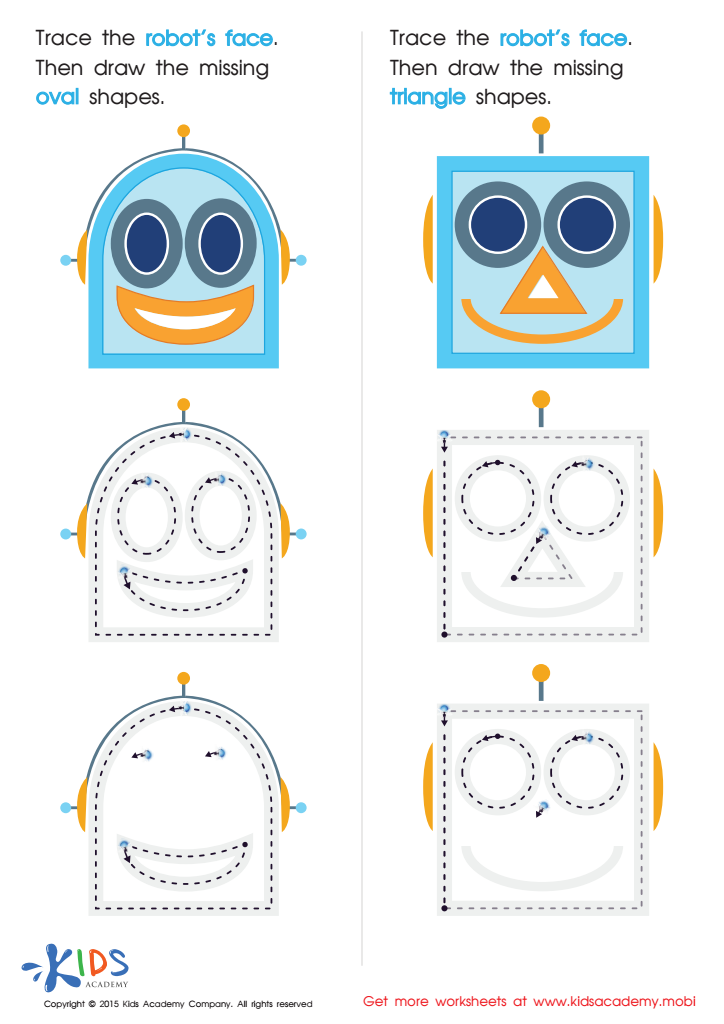
Drawing Ovals And Triangles with Fun Printable






Understanding basic geometry and 2D shapes is crucial for children in kindergarten as it lays a strong foundation for their overall mathematical development. At this stage, children are beginning to recognize, describe, and categorize geometric shapes like circles, squares, triangles, and rectangles, which helps them make sense of the world around them.
Firstly, knowledge of 2D shapes enhances children's spatial awareness, allowing them to identify and relate shapes to objects in their environment. This recognition is essential not only for geometry but also for future learning in mathematics, art, and even daily life activities such as building or crafting.
Additionally, learning about shapes supports cognitive development, encouraging problem-solving and critical thinking. When children classify and compare shapes, they cultivate analytical skills that are invaluable in all academic areas.
Finally, understanding shapes promotes vocabulary development, as children learn shape names and associated characteristics, thereby expanding their language skills. For parents and teachers, fostering a solid grasp of basic geometry by engaging children with fun activities and real-life applications ensures they build confidence and competency in math—essential assets in their future academic journeys and everyday experiences.








