Hand-eye Coordination Kindergarten Addition & Subtraction Worksheets
6 filtered results
-
From - To
Enhance your child's learning experience with our Hand-eye Coordination Kindergarten Addition & Subtraction Worksheets! These engaging and interactive worksheets are designed to help young learners develop crucial hand-eye coordination skills while mastering basic math concepts. Each worksheet features fun activities that combine counting, problem-solving, and fine motor skills, ensuring a comprehensive approach to early math education. Perfect for at-home learning or supplemental classroom activities, our worksheets encourage children to practice addition and subtraction in a playful, hands-on manner. Explore our collection today to support your child's growth in both math proficiency and coordination skills, setting a strong foundation for future success!
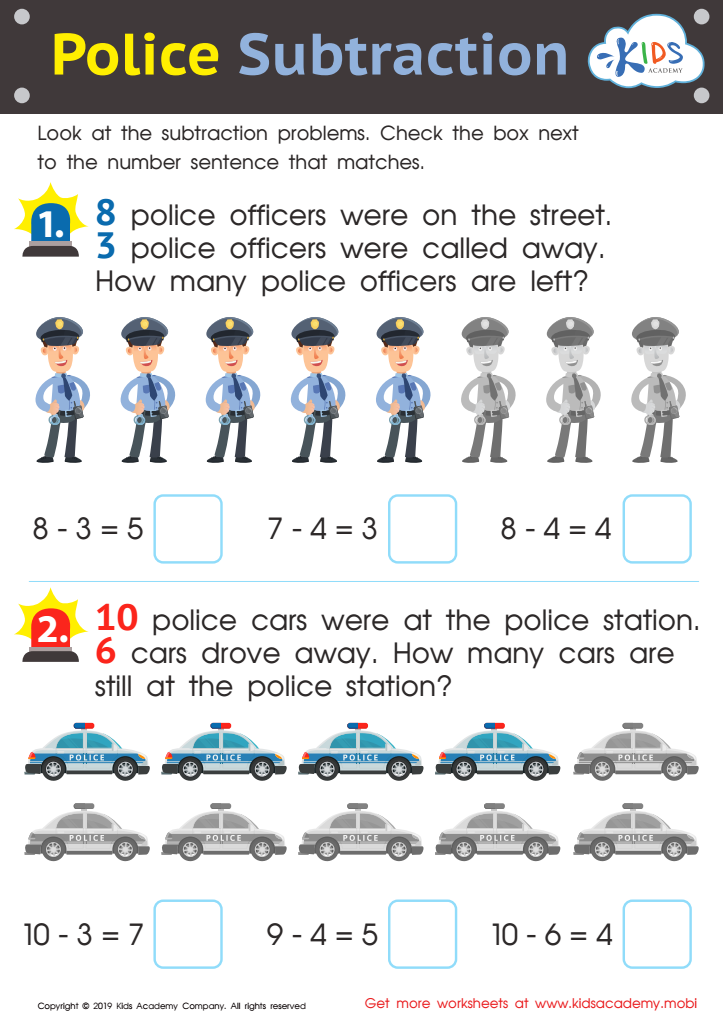
Police Subtraction Worksheet
 Assign to My Students
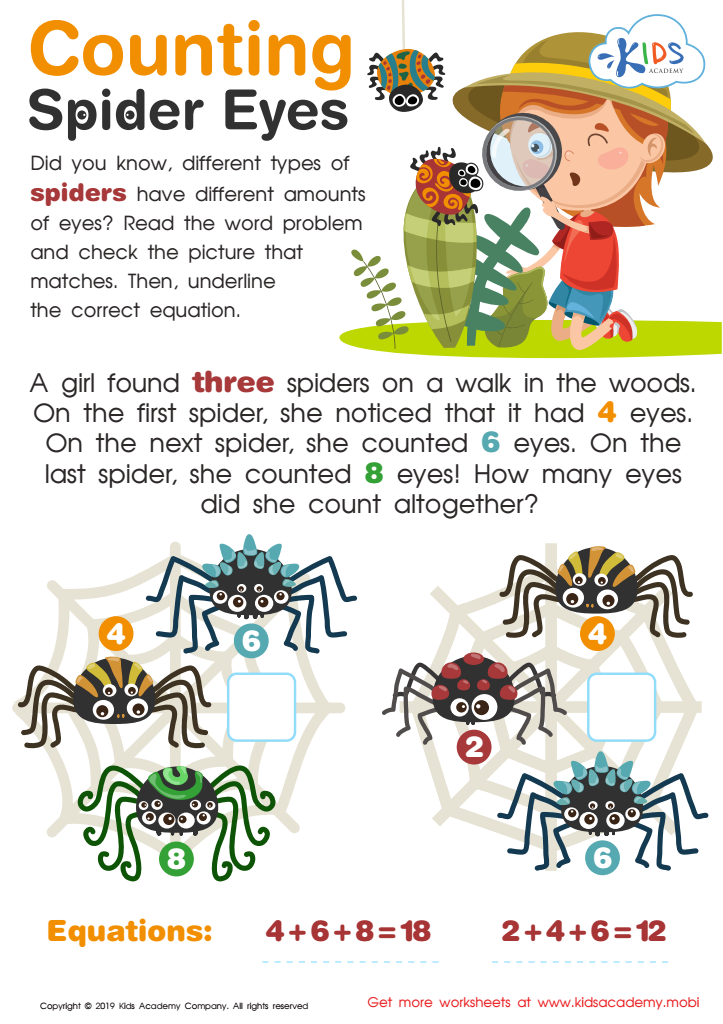
Counting Spider Eyes Worksheet
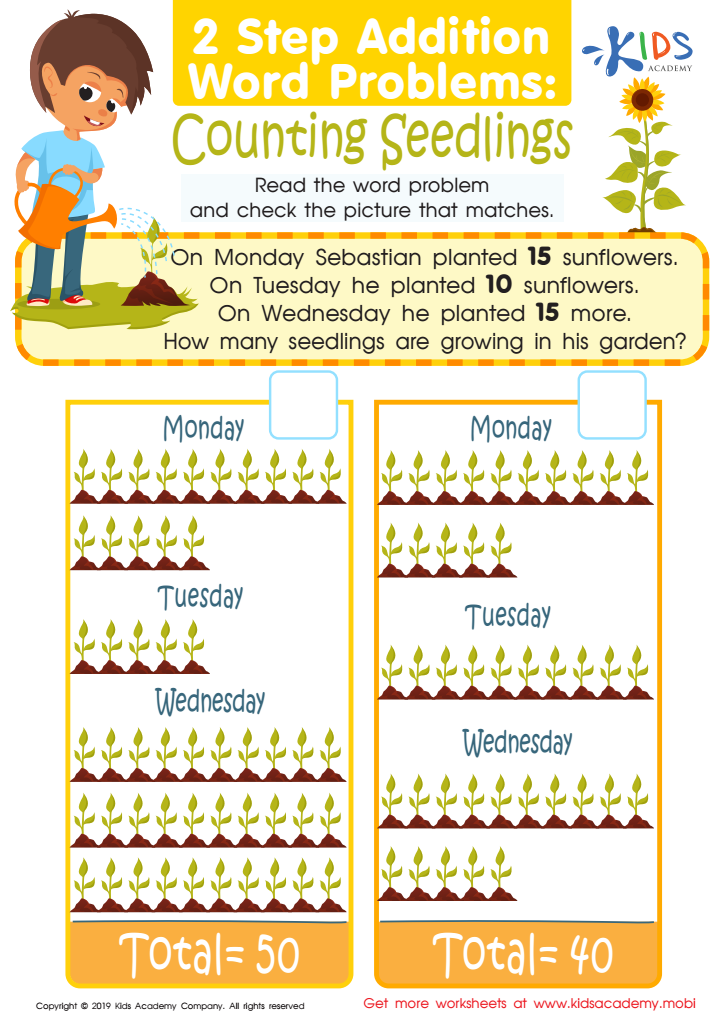
Counting Seedlings Worksheet
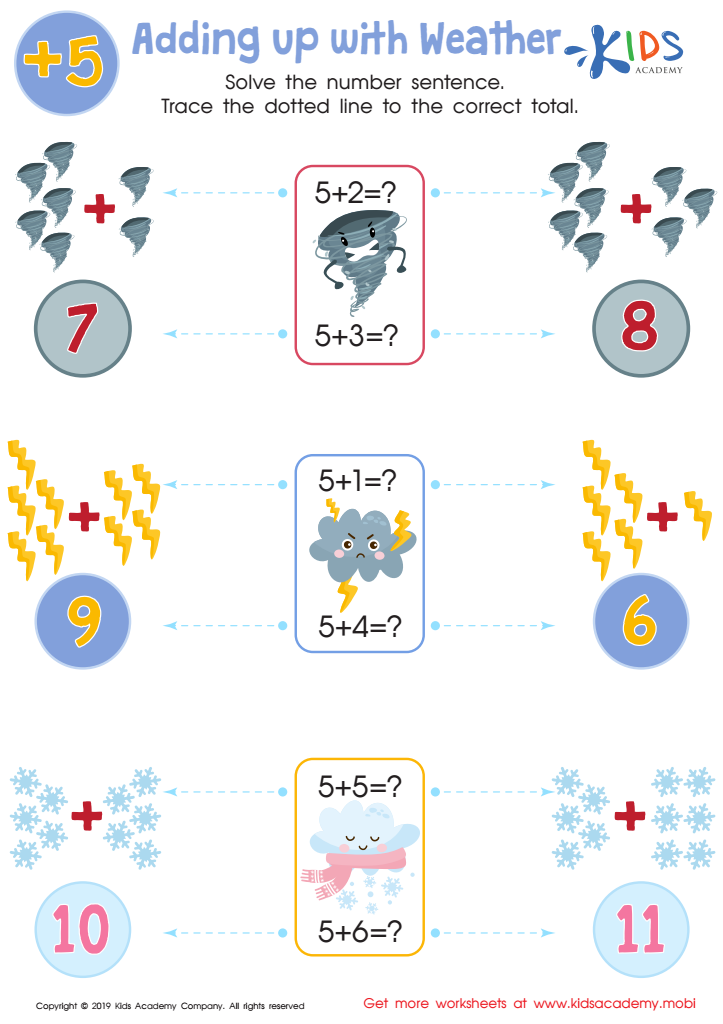
Adding up With Water Worksheet
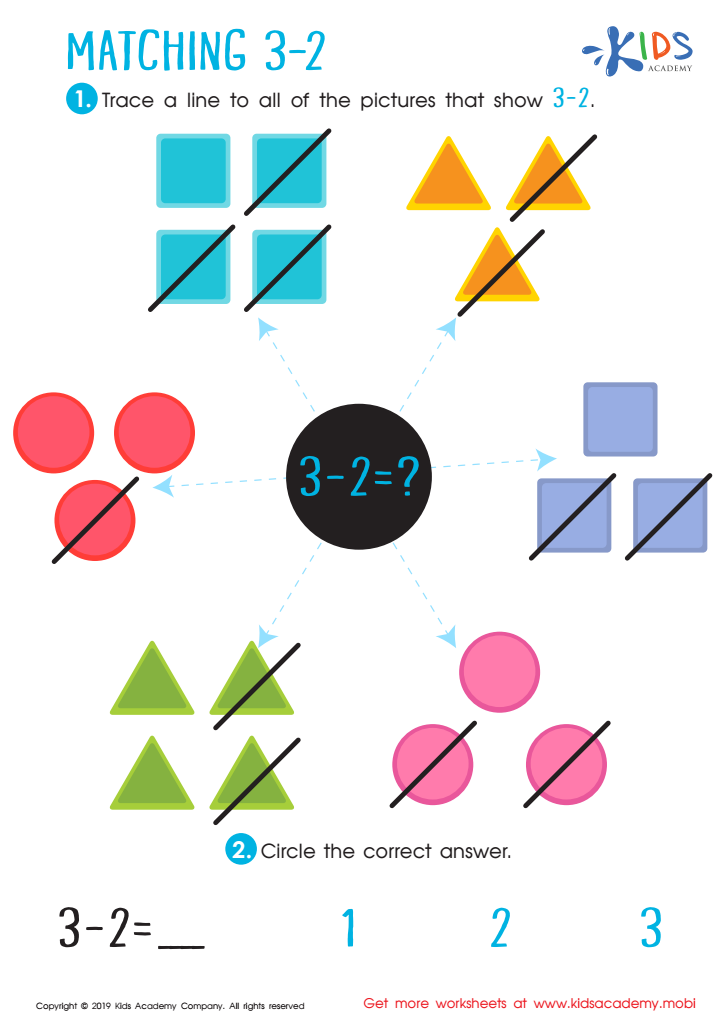
Matching 3-2 Worksheet
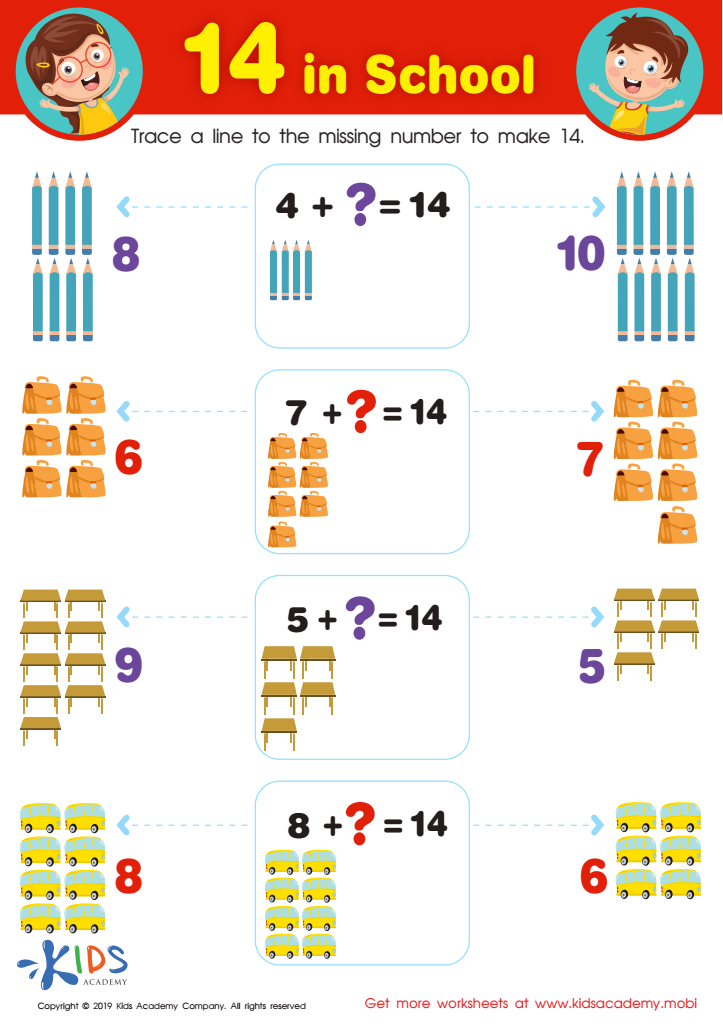
14 in School Worksheet








Hand-eye coordination is crucial in early childhood development, particularly for kindergarten learners engaging with foundational math skills like addition and subtraction. It refers to the ability to synchronize visual input with physical movements, essential for children as they manipulate objects, such as counting blocks or beads while solving math problems.
Developing hand-eye coordination in the context of adding and subtracting enhances fine motor skills, which are vital for writing and other academic tasks. This physical engagement with math helps solidify abstract concepts, making addition and subtraction more tangible and visually understandable for young learners. Moreover, activities that promote hand-eye coordination—like using manipulatives or interactive games—foster active learning, prompting curiosity and encouraging problem-solving skills.
Teachers and parents should prioritize these skills, as they not only support cognitive growth but also contribute to a child's confidence and independence in learning. The integration of movement with math learning can also make the experience enjoyable, helping to foster a lifelong love for learning. Ultimately, nurturing hand-eye coordination in kindergarten can lay a strong foundation for future academic success and everyday skills required as children continue their educational journey.








