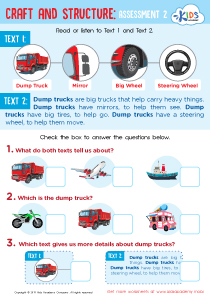
Cognitive Development Kindergarten Reading Fiction Worksheets
2 filtered results
-
From - To
Our Cognitive Development Kindergarten Reading Fiction Worksheets are expertly designed to enhance young learners' critical thinking and imagination. These engaging printable worksheets feature vibrant illustrations and captivating stories, fostering essential skills such as comprehension, vocabulary, and sequencing. Tailored for kindergartners, they encourage children to analyze characters, predict outcomes, and draw conclusions. By integrating cognitive development exercises, our worksheets make learning to read an exciting adventure, laying a strong foundation for future reading success. Perfect for at-home practice or classroom use, these resources support educators and parents in nurturing a love for reading and critical thinking in their children.
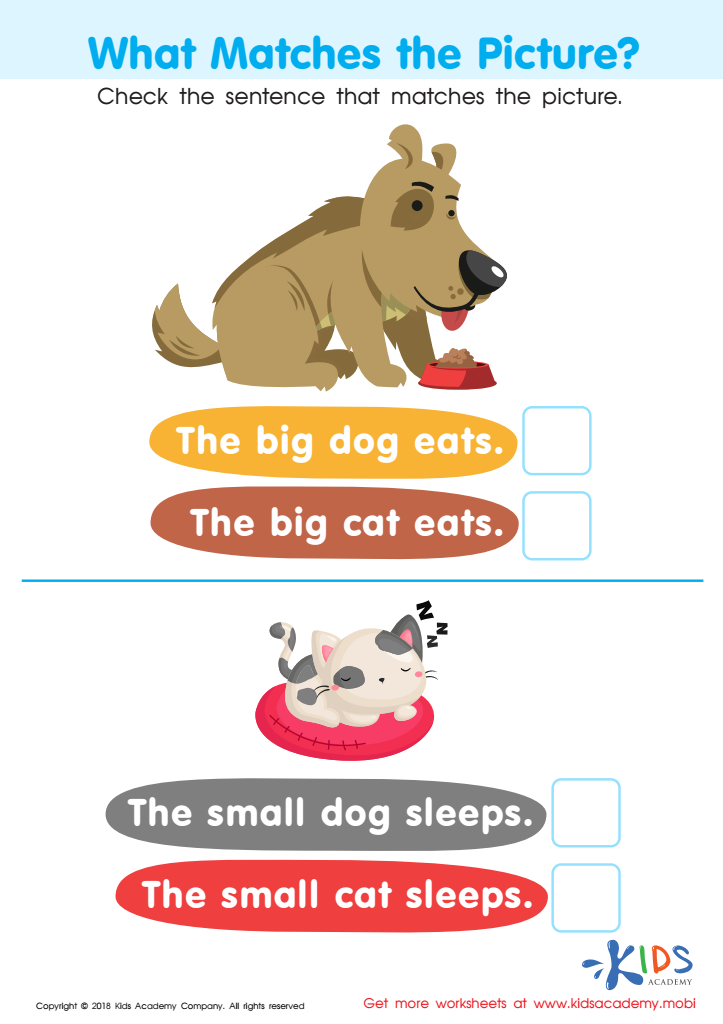
What Matches the Picture? Worksheet
 Assign to My Students
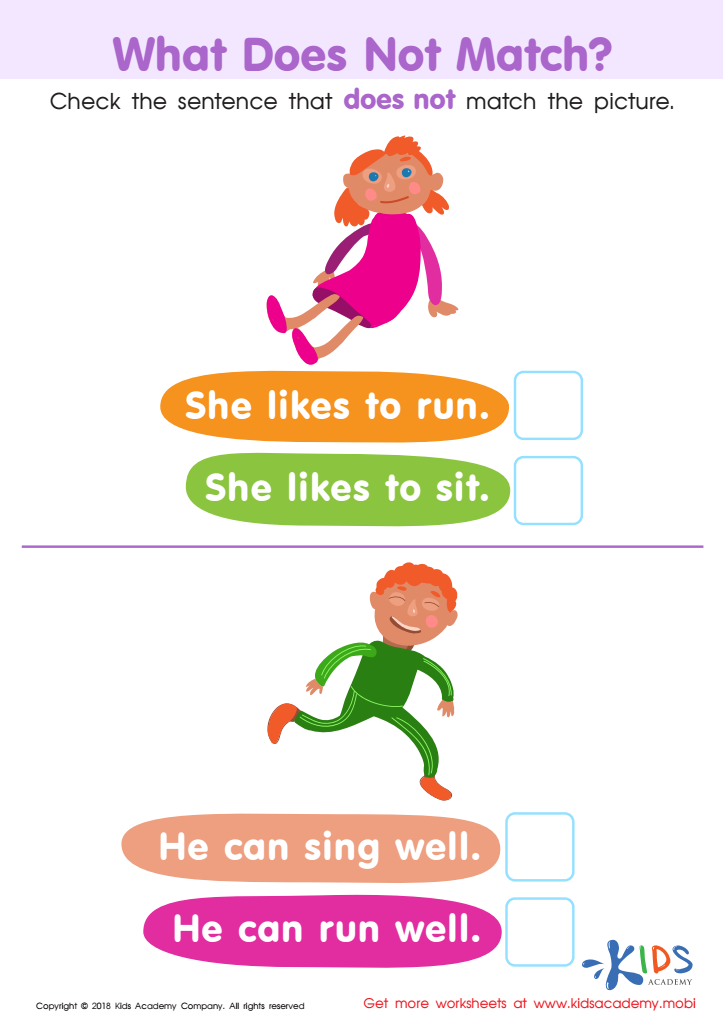
What Does Not Match? Worksheet







Parents and teachers should care deeply about cognitive development in kindergarten, especially through reading fiction, because it lays the critical foundation for a child's overall academic and personal growth. At this age, children's brains are highly malleable; engaging with fiction nurtures their imagination, language, and comprehension skills. Reading stories introduces them to a variety of vocabulary and sentence structures, aiding in linguistic development.
Furthermore, fiction often contains moral lessons and complex social scenarios, helping children develop empathy and problem-solving skills. As they identify with characters and navigate through plots, they enhance their emotional intelligence and understanding of the world around them.
Cognitive development through fiction also promotes critical thinking. Children learn to make predictions, understand cause and effect, and recognize patterns within stories. This analytical capacity is crucial for tackling more complex subjects later in their education.
Parents and teachers play a pivotal role in facilitating this process by providing access to quality fiction and encouraging discussions about the stories. Their enthusiasm can fuel a child's love for reading, fostering a lifelong habit that supports continuous cognitive development. Hence, prioritizing cognitive development via reading fiction in kindergarten builds a robust foundation for future learning and emotional well-being.