Basic arithmetic learning Worksheets for Kids
1 filtered results
-
From - To
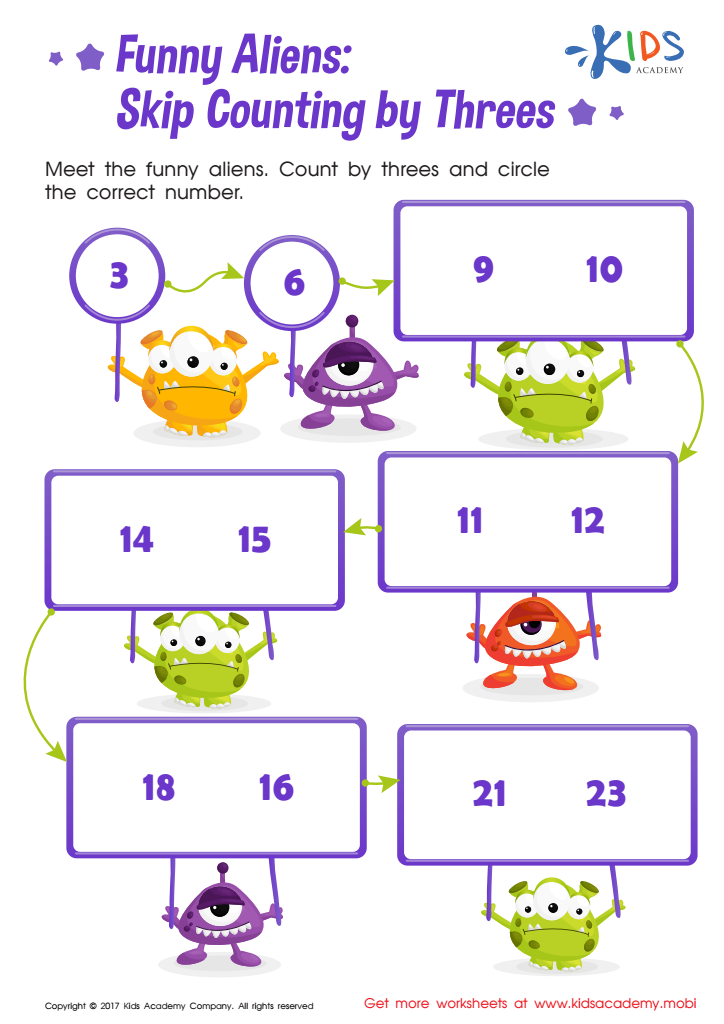
Skip Counting by 3s: Funny Aliens Printable
 Assign to My Students
Question/Answer

What does the Basic arithmetic learning skill mean when it comes to Grade 1 Numbers learning?
Basic arithmetic learning skill in Grade 1 Numbers learning involves understanding and performing simple mathematical operations such as addition and subtraction within 20. It includes recognizing numbers, counting, comparing numbers (more than, less than, or equal to), and solving basic word problems. This foundational skill sets the stage for more advanced arithmetic in subsequent grades.
How to train the Basic arithmetic learning skill in Grade 1 students learning about Numbers?
To train basic arithmetic skills in Grade 1, start with concrete objects for counting, addition, and subtraction to build understanding. Use games and visual aids like number lines or counting blocks. Incorporate storytelling with math problems to make learning engaging. Practice with simple worksheets, and provide positive feedback to encourage their progress.
What are some effective activities to train students’ Basic arithmetic learning skill when teaching them about Numbers?
Effective activities for training students in basic arithmetic skills include using manipulatives (like blocks and counters) for hands-on learning, interactive games that reinforce addition, subtraction, multiplication, and division, flashcards for quick recall, math puzzles and word problems to apply concepts in real-world scenarios, and timed quizzes to improve speed and accuracy.