Practice phonics Worksheets for Kids
1 filtered results
-
From - To
Question/Answer

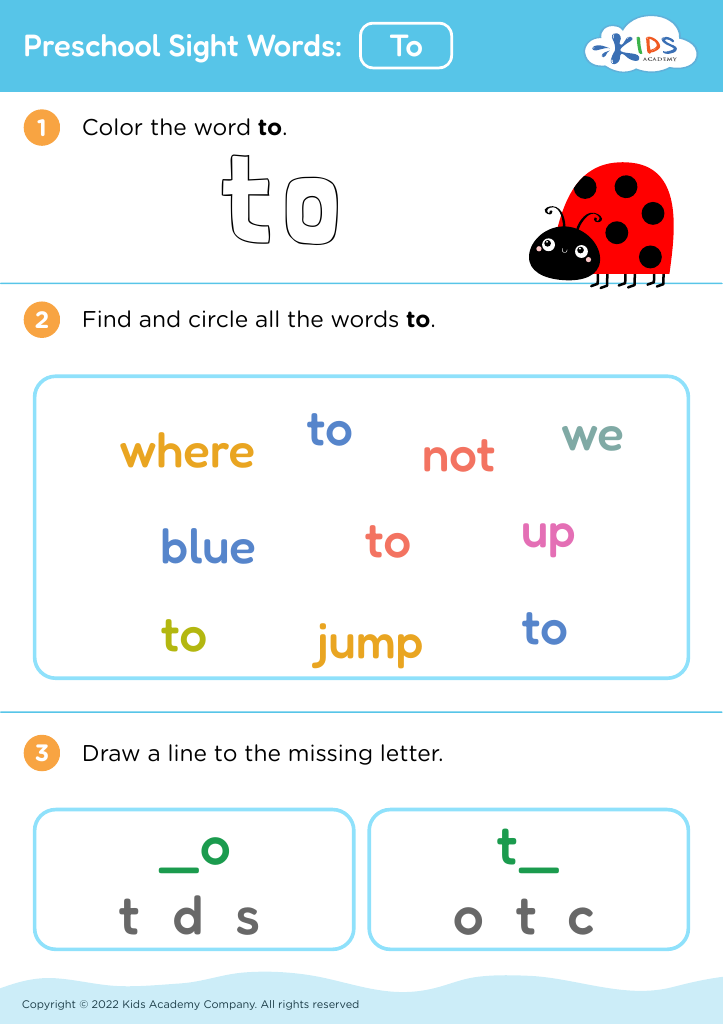
What does the Practice phonics skill mean when it comes to Preschool Sight Words learning?
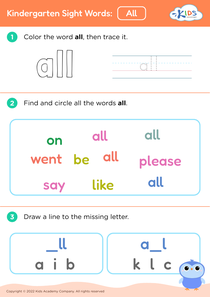
Practicing phonics skills in the context of preschool sight words learning involves teaching children the sounds that letters and combinations of letters make. It helps them decode unfamiliar words by sounding them out, thus building a foundational skill for reading both sight words and other vocabulary they encounter.
What are some effective activities to train students’ Practice phonics skill when teaching them about Sight Words?
Effective activities for training students in phonics skills when teaching Sight Words include using flashcards for quick recognition, engaging in interactive games like bingo or memory match, incorporating multisensory approaches like writing words in sand or with finger paint, and utilizing technology-based apps or programs that focus on phonics and sight word recognition.
Why is the Practice phonics skill important for Preschool students?
Practicing phonics is crucial for preschool students because it lays the foundational skills for reading and writing. It helps them understand the relationship between letters and sounds, enabling them to decode words. This early literacy skill boosts their ability to recognize words, enhances spelling, and fosters a love for reading, setting the stage for academic success.