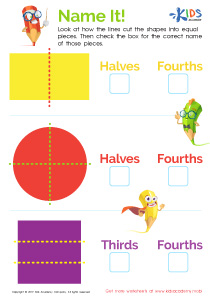
Critical Thinking 2D Shapes Worksheets
5 filtered results
-
From - To
Enhance your child's understanding of 2D shapes with our engaging Critical Thinking 2D Shapes Worksheets. Designed for early learners, these printable activities challenge students to apply their knowledge creatively. Each worksheet encourages critical thinking through fun exercises such as shape identification, comparisons, and pattern recognition. Perfect for at-home learning or classroom activities, our resources promote essential math skills while igniting curiosity. Watch as your child develops confidence and a deeper appreciation for geometry. Empower them with the tools to succeed in mathematics with our thoughtfully crafted worksheets, designed to make learning about shapes exciting and interactive! Download and start exploring today!
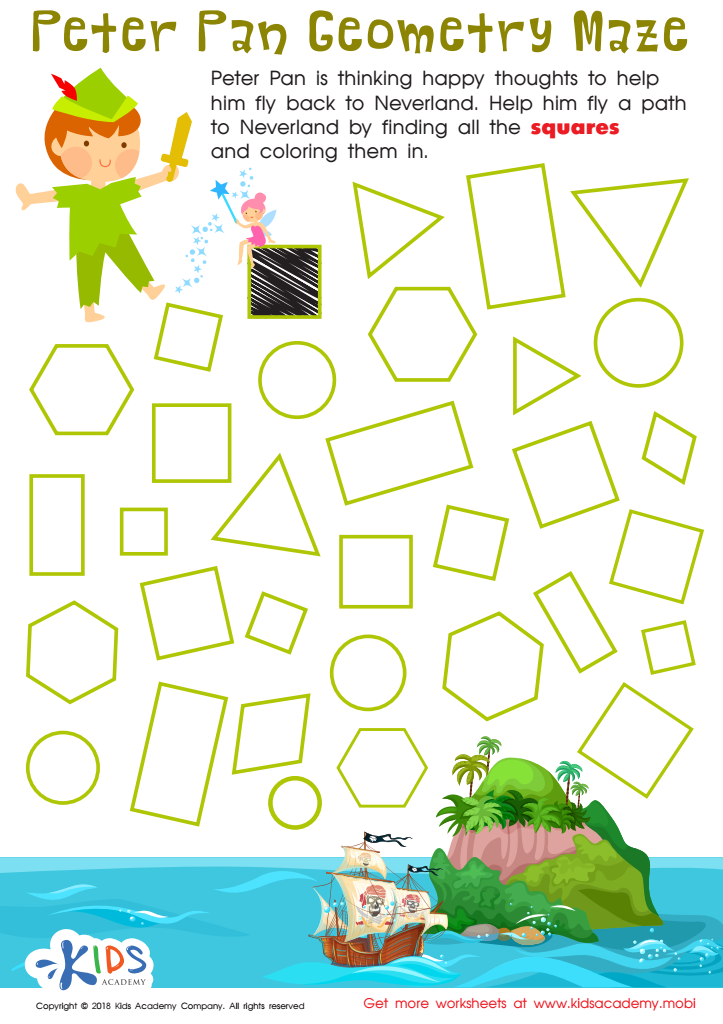
Peter Pan Worksheet
 Assign to My Students


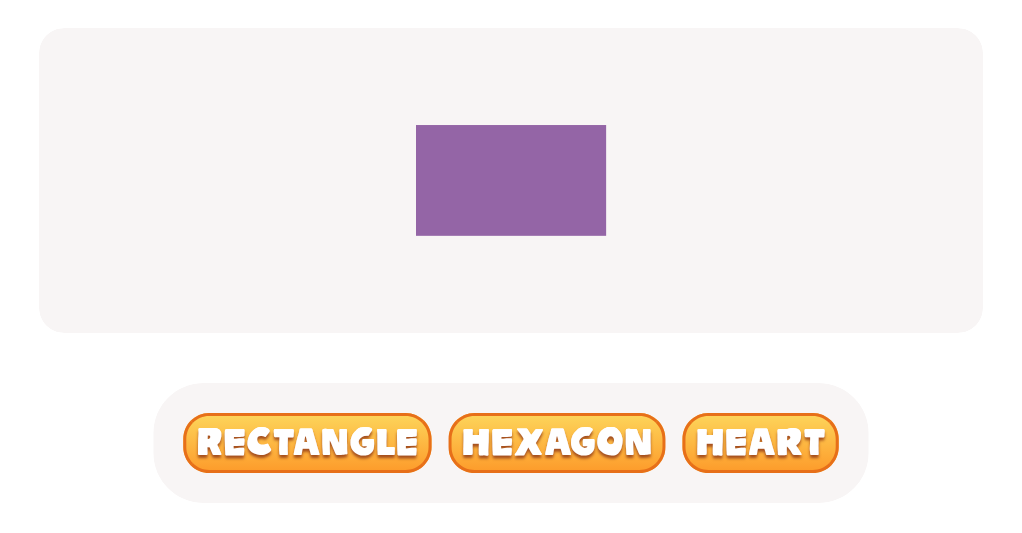
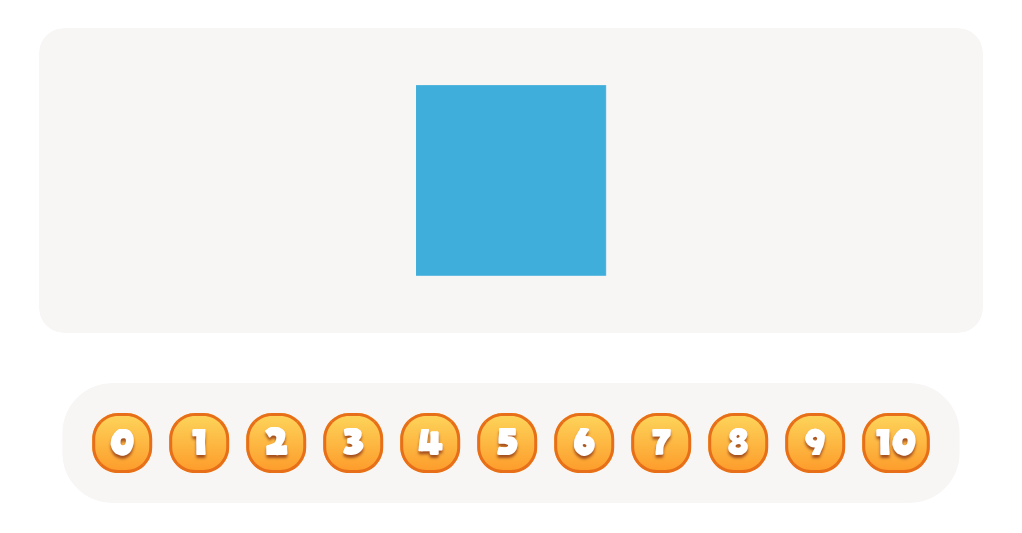
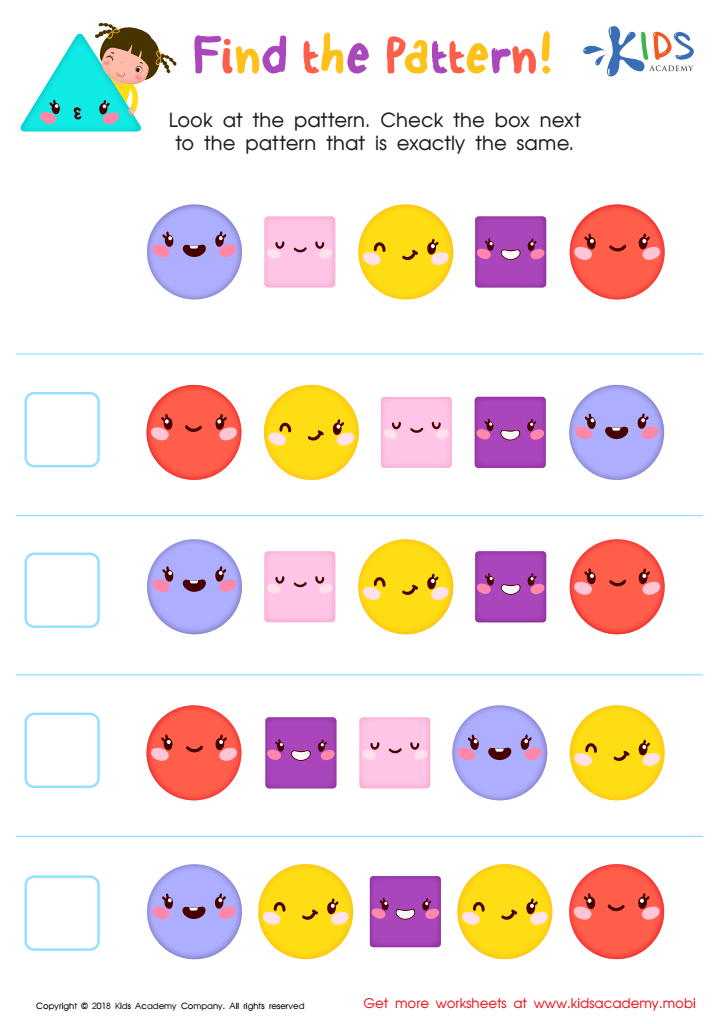
Find the Pattern Worksheet
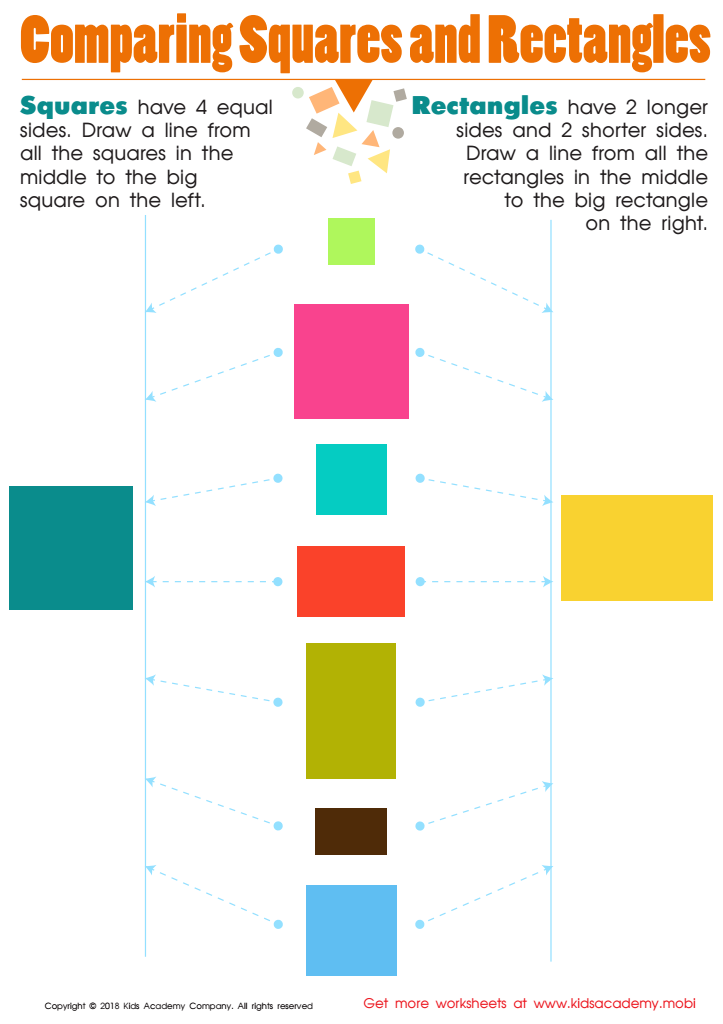
Comparing Squares Rectangles Worksheet
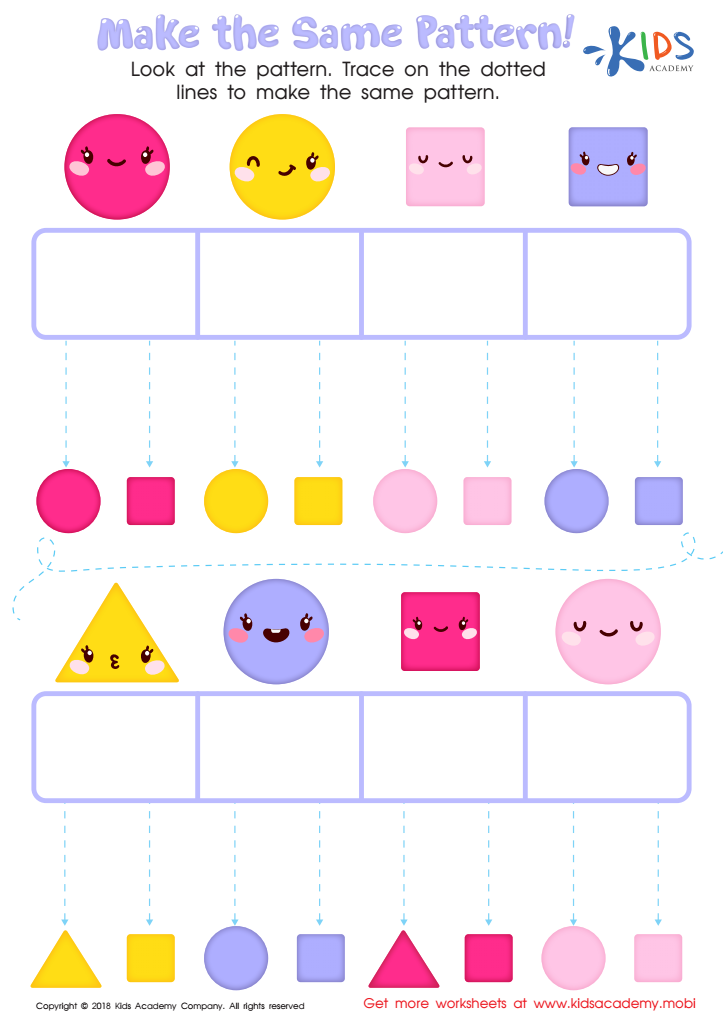
Make the Same Pattern Worksheet
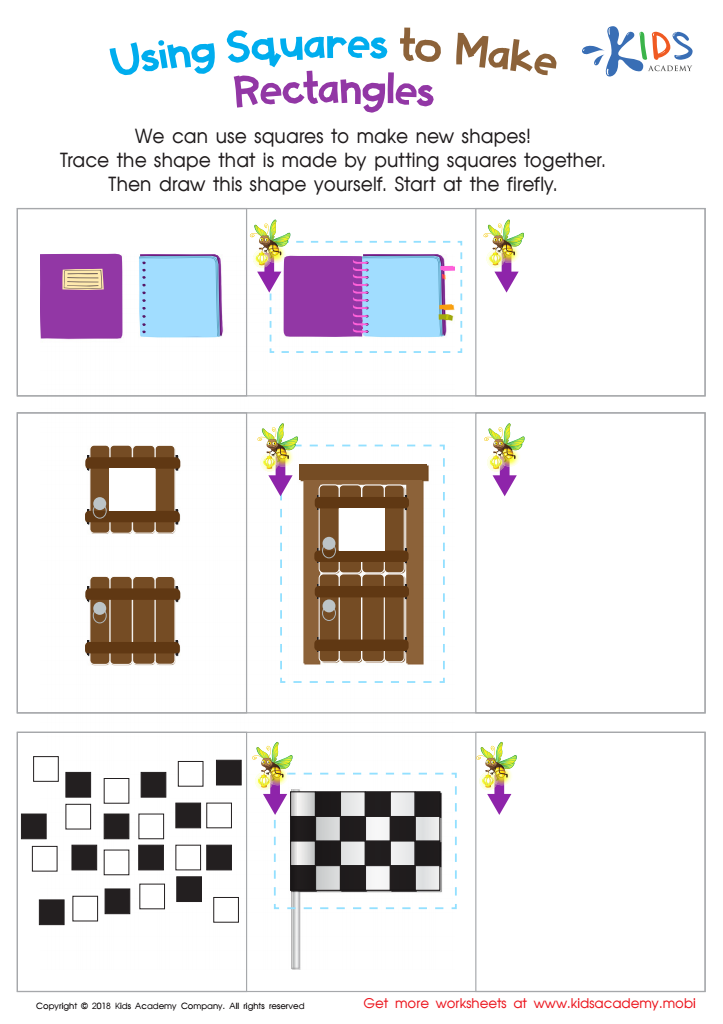
Using Squares to Make Rectangles Worksheet








Critical thinking in the context of 2D shapes is essential for young learners, as it not only fosters mathematical understanding but also enhances overall cognitive development. When parents and teachers emphasize critical thinking in geometry, children learn to analyze, compare, and differentiate shapes, which instills problem-solving skills essential for real-world applications.
Understanding shapes goes beyond mere recognition; it cultivates spatial awareness and boosts creativity, enabling children to visualize and manipulate objects in various contexts. This foundational knowledge prepares students for more complex mathematical concepts later on, reinforcing a progressive learning trajectory.
Moreover, by engaging in discussions about the properties and uses of different 2D shapes, children develop communication skills and learn to articulate their reasoning. This interaction fosters a deeper comprehension of logic and reasoning processes, which are crucial for success in any field.
Parents can support this learning by incorporating everyday experiences, such as identifying shapes in their environment or using art and design projects. Teachers can design activities that challenge students to think critically about 2D shapes, making learning dynamic and engaging. By caring about critical thinking in 2D shapes, adults empower children with essential life skills that extend far beyond the math classroom.