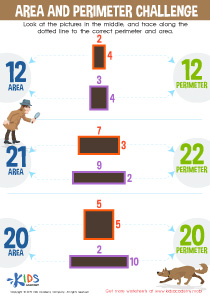
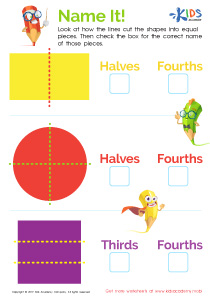
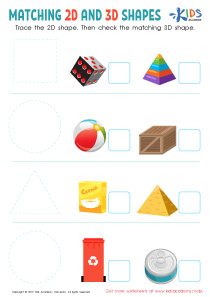
Visual Perception Skills 2D Shapes Worksheets
3 filtered results
-
From - To
Our "Visual Perception Skills 2D Shapes Worksheets" are designed to enhance young learners' ability to recognize, distinguish, and interpret various 2D shapes. These engaging worksheets support essential early math skills while simultaneously developing critical-thinking and problem-solving abilities. Tailored for preschool and kindergarten students, each activity is curated to blend fun with education, making learning both effective and enjoyable. By incorporating vibrant illustrations and interactive tasks, these worksheets help children better understand geometric concepts while also boosting their visual discrimination. Perfect for classroom settings, homeschooling, or supplementary practice, these worksheets offer a well-rounded approach to early childhood education.
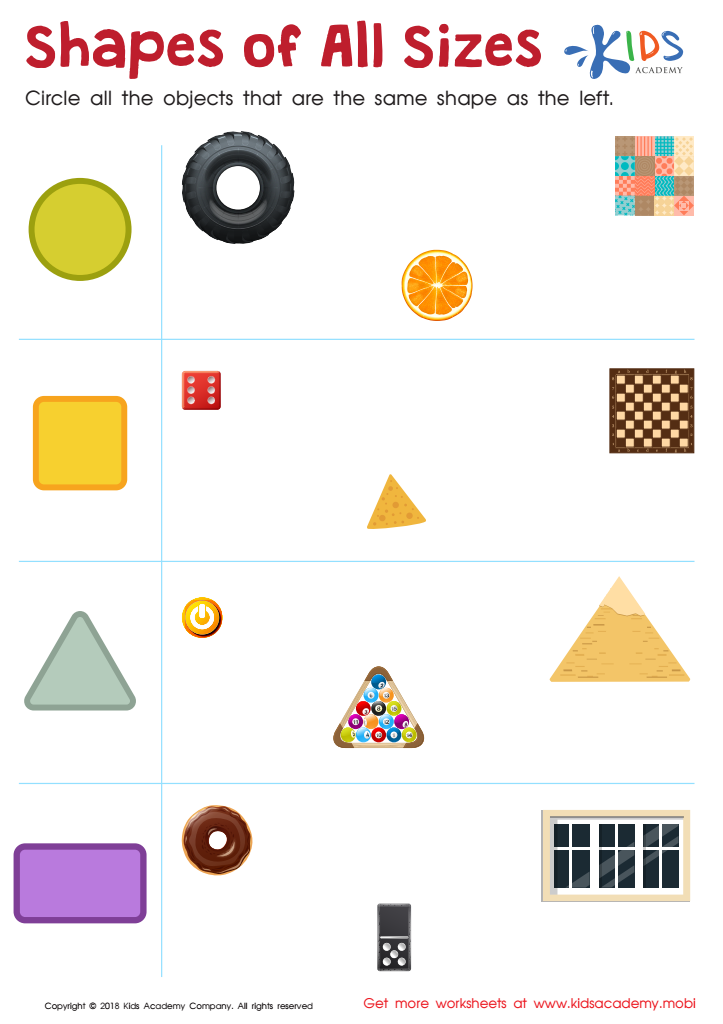
Shapes of All Sizes Worksheet
 Assign to My Students


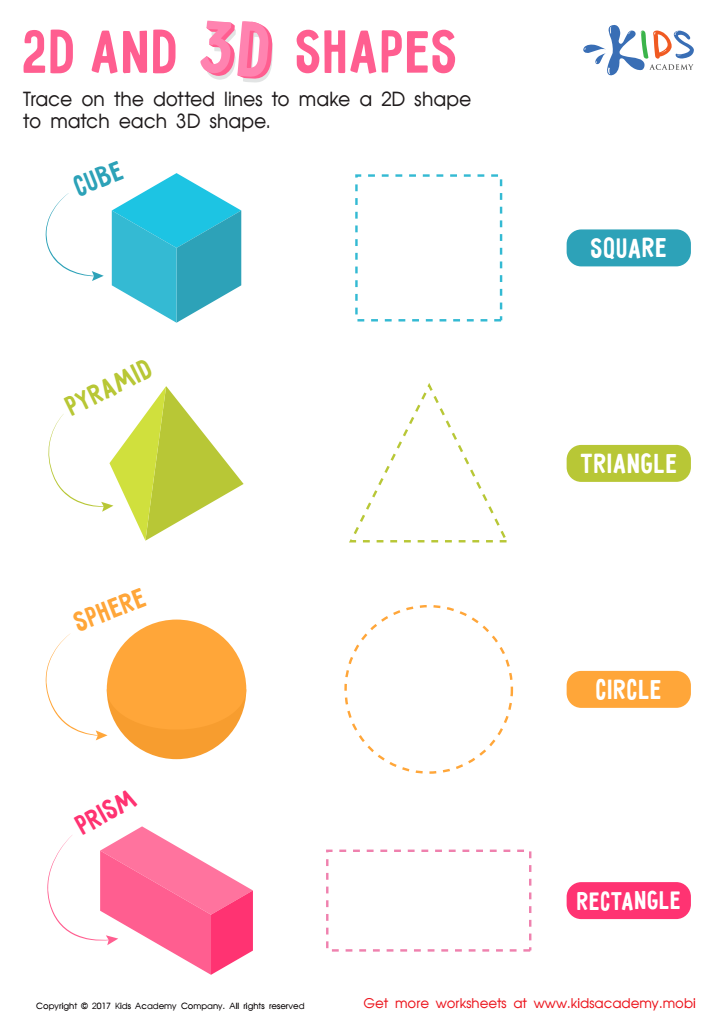
2D and 3D Shapes Worksheet
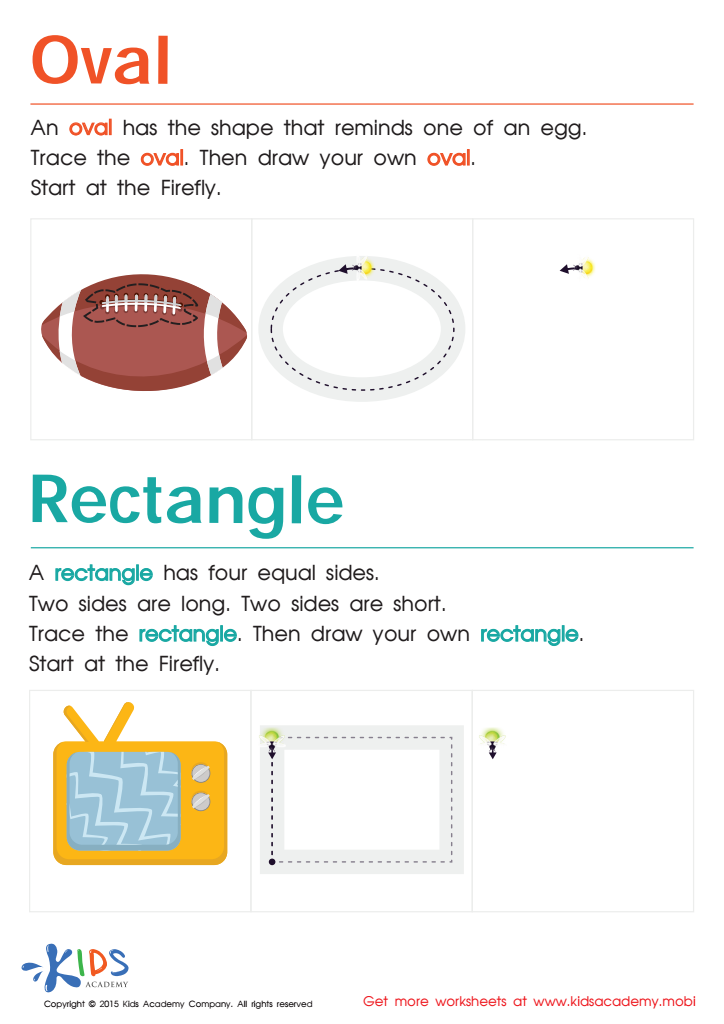
Easy Drawing of Ovals And Rectangles Worksheet








Parents and teachers should care about visual perception skills, especially recognizing 2D shapes, because they are foundational to children's learning and development. Visual perception skills allow children to make sense of visual information and understand their environment, which is vital in both academic and everyday contexts.
Being able to identify and work with 2D shapes enhances spatial awareness and geometric understanding, crucial components of early math skills. These skills help children develop the ability to differentiate shapes and patterns, playing a significant role in problem-solving and reasoning. Furthermore, visual perception skills assist in reading and writing. Recognizing the shapes of letters and their orientation on a page is necessary for literacy, and understanding different shapes and their properties boosts children’s confidence in technical drawing and handwriting.
Outside of academics, strong visual perception skills improve children’s coordination and ability to navigate their physical world. Young learners who can easily interpret shapes are more adept at tasks like building puzzles and are often better at understanding abstract symbols representing real-world objects.
In essence, nurturing visual perception and 2D shape-recognition skills provides a more robust foundation for future learning, aids in core academic skills, and enhances practical abilities, contributing to well-rounded cognitive and physical development for children.