Visual Learning Adding in the Sea Worksheets
18 filtered results
-
From - To
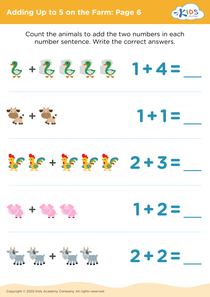
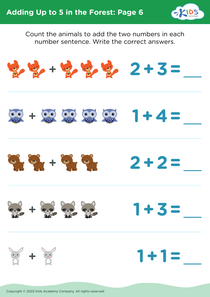
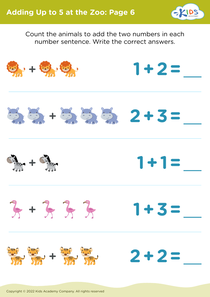
Dive into a fun learning adventure with our "Visual Learning Adding in the Sea" worksheets! These captivating resources are designed to help children strengthen their addition skills through vibrant sea-themed visuals. Each worksheet transforms basic math practice into an engaging activity, making learning both effective and enjoyable. Ideal for early graders, these printables support visual learning by illustrating mathematical concepts with playful ocean creatures and colorful aquatic scenes. Perfect for classroom use or at-home practice, our worksheets ensure that math becomes a thrilling underwater exploration rather than a chore. Equip your young learners with the tools they need to succeed with these charming and educational worksheets!
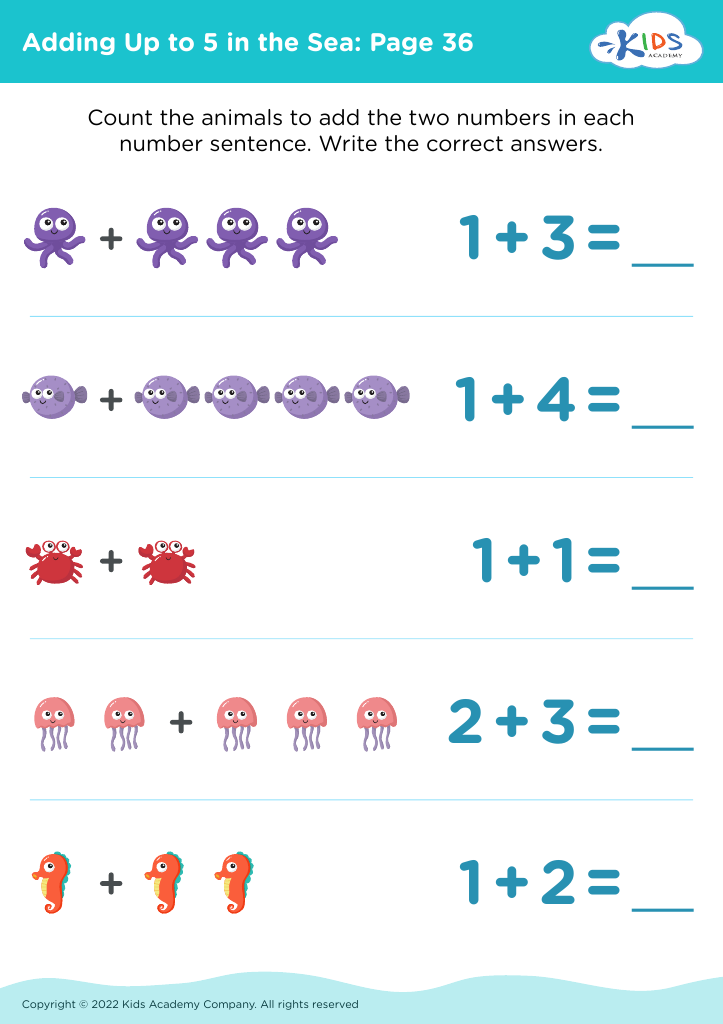
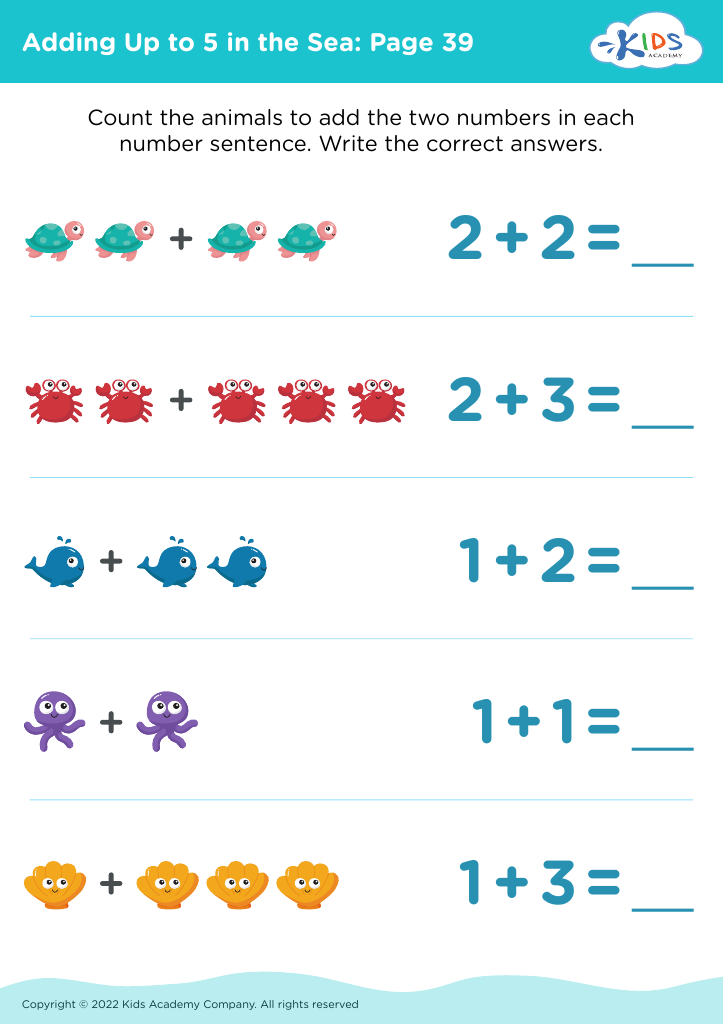
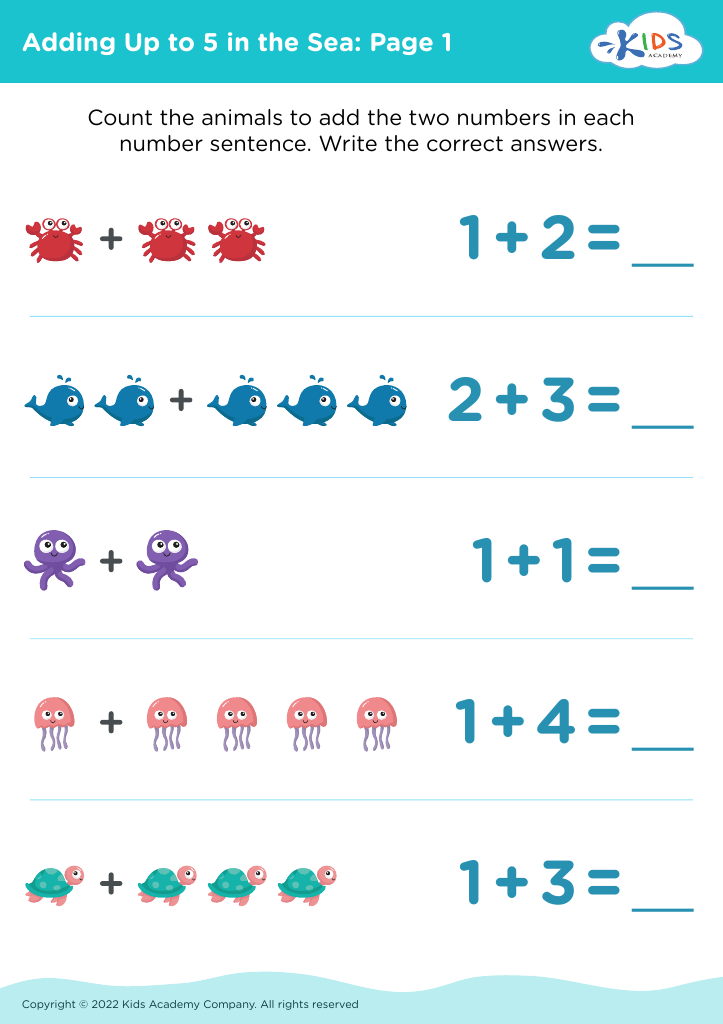
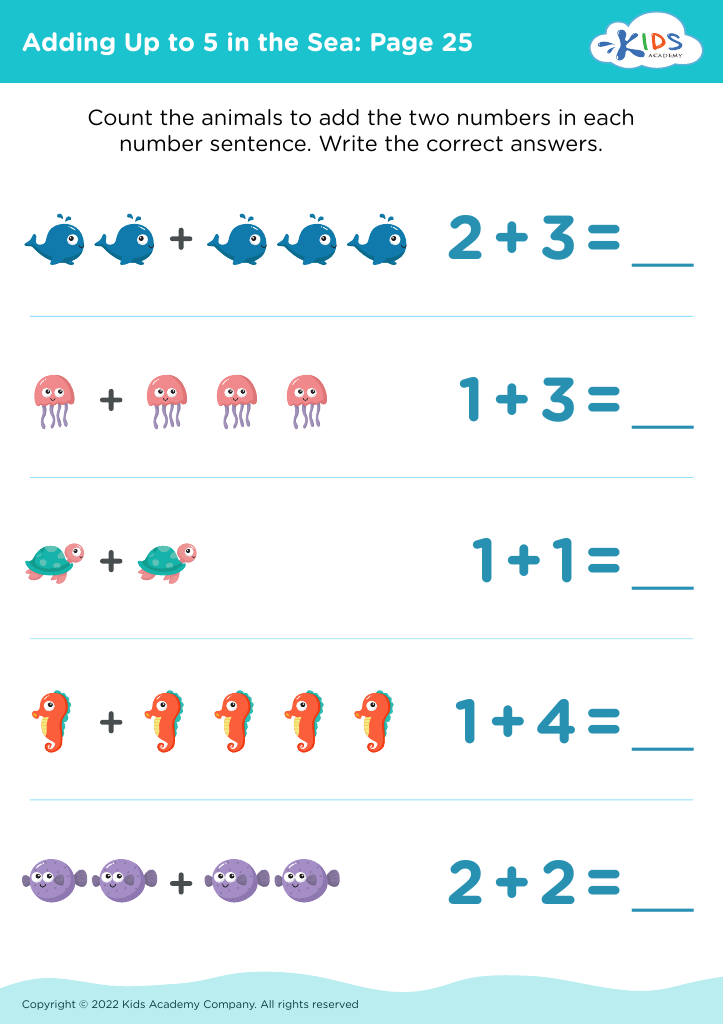
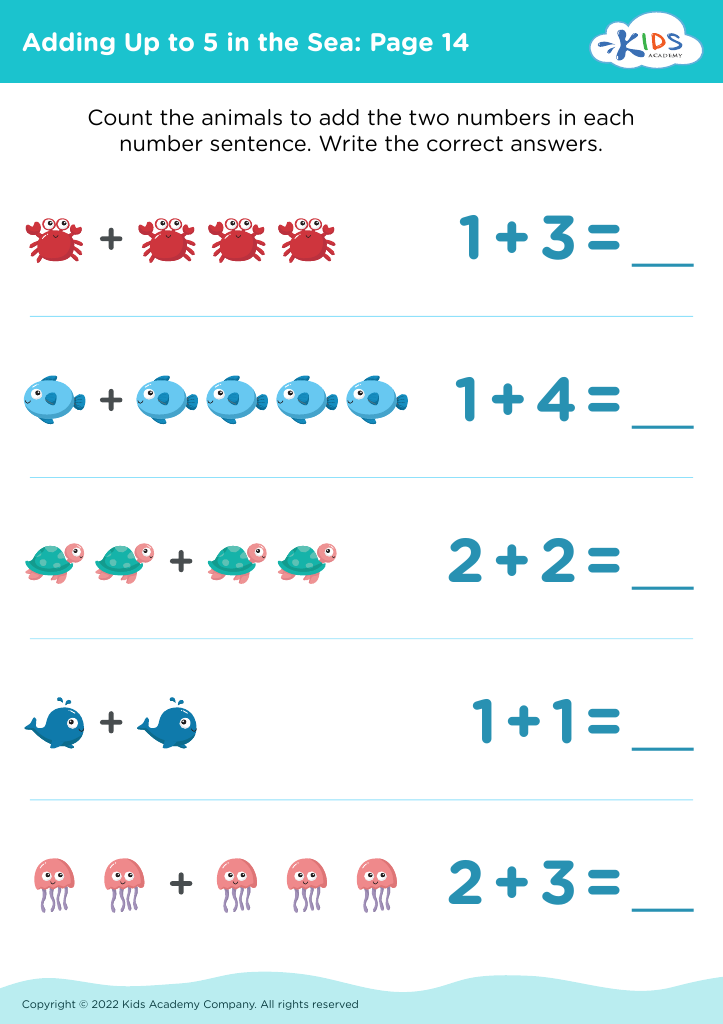
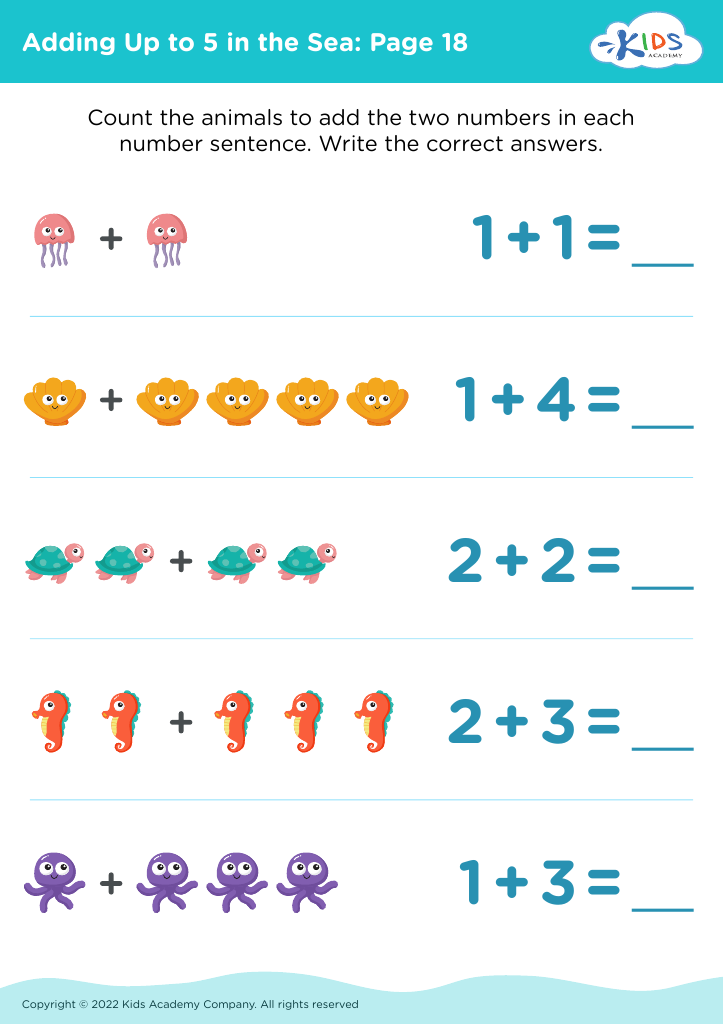
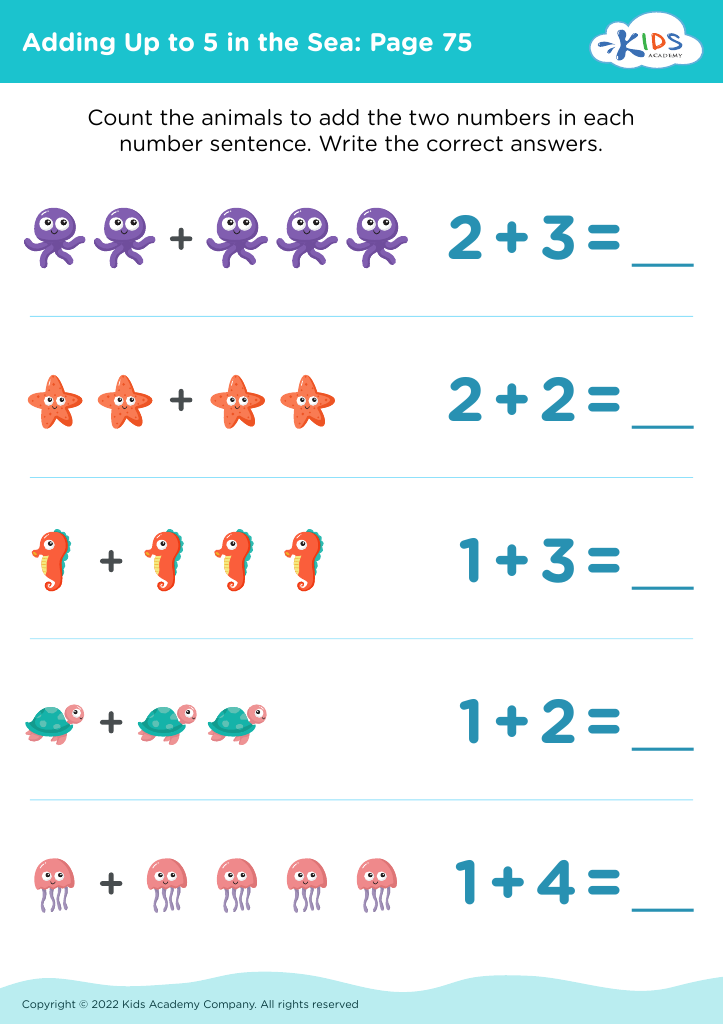
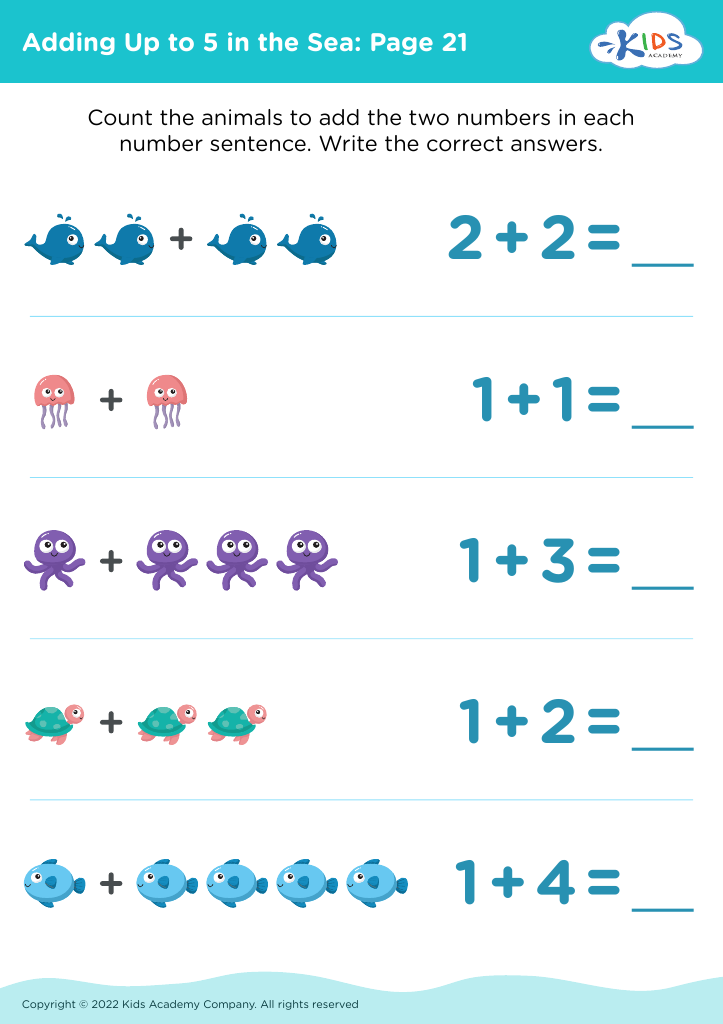
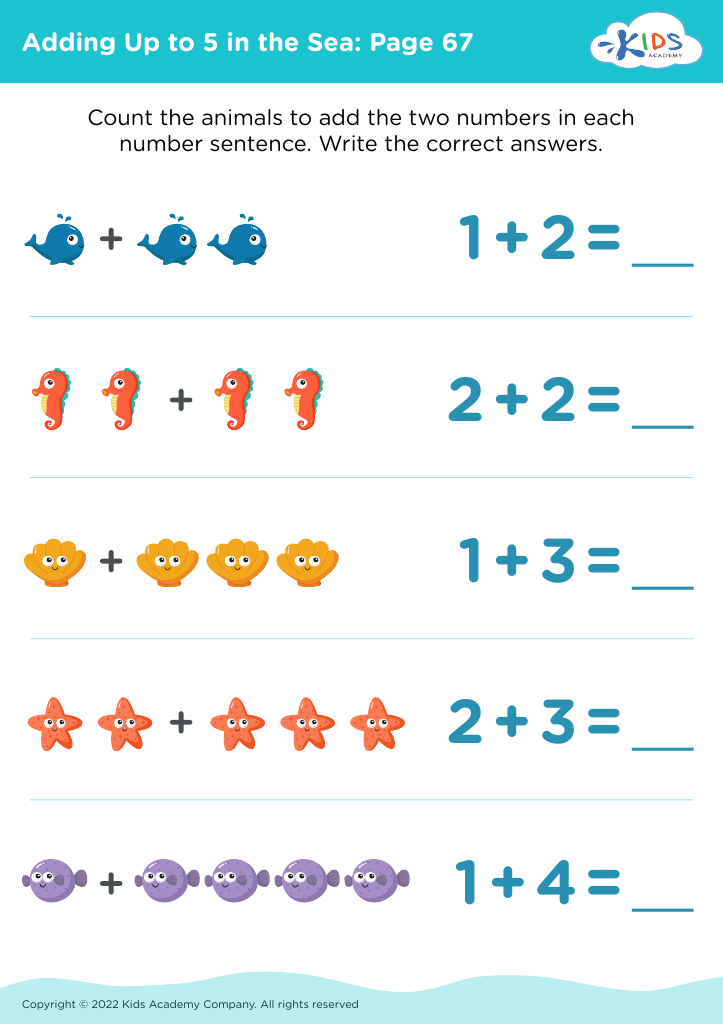
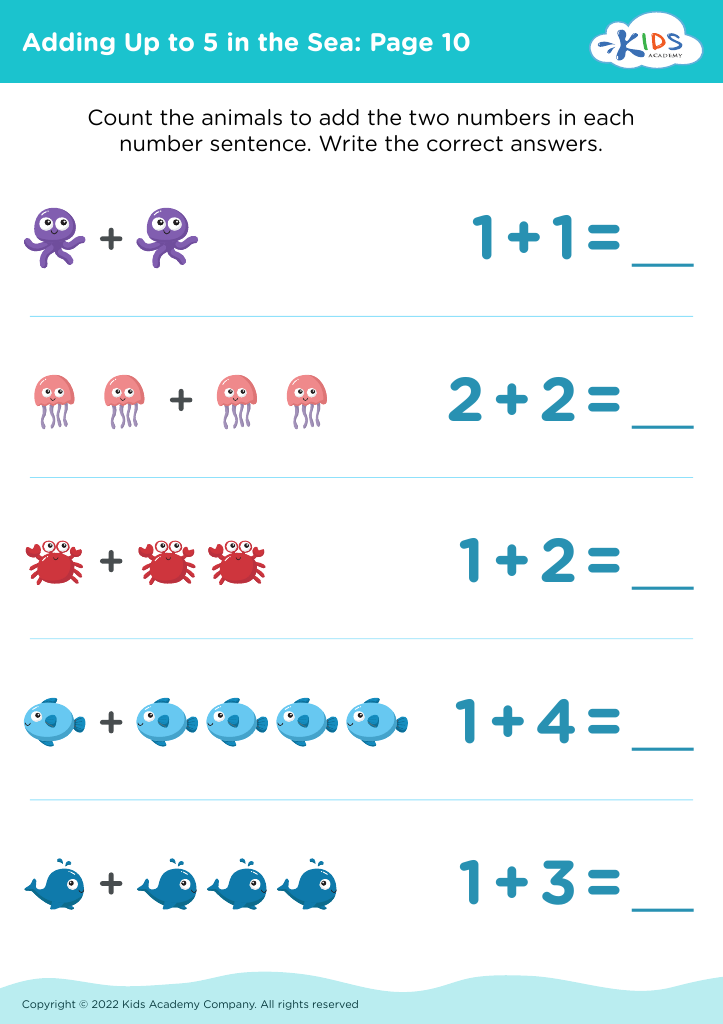
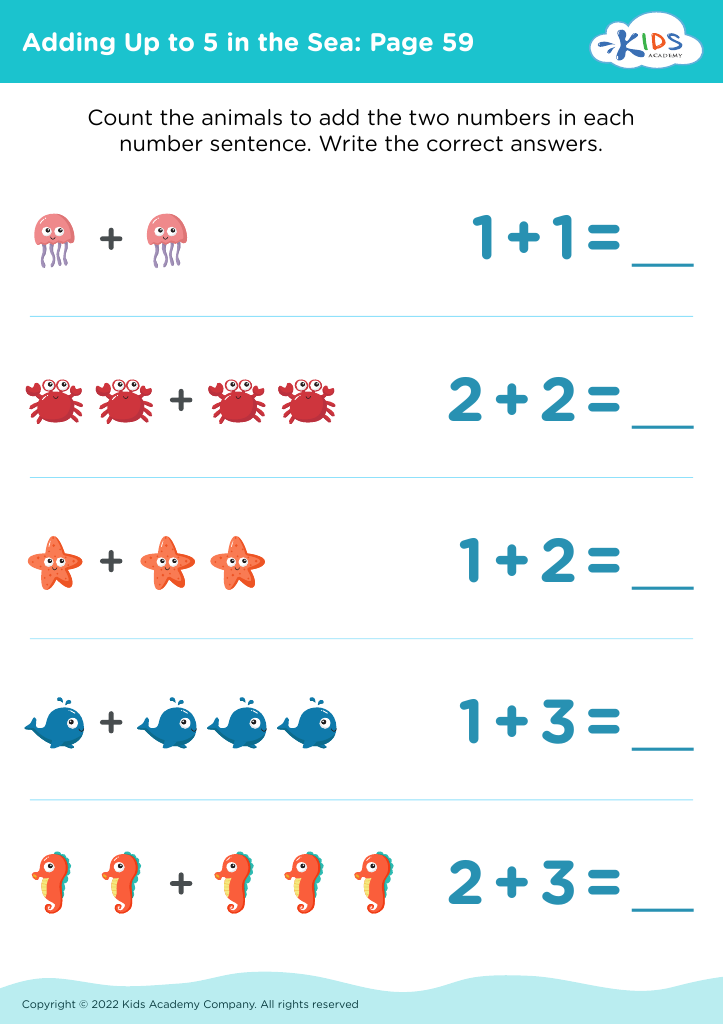
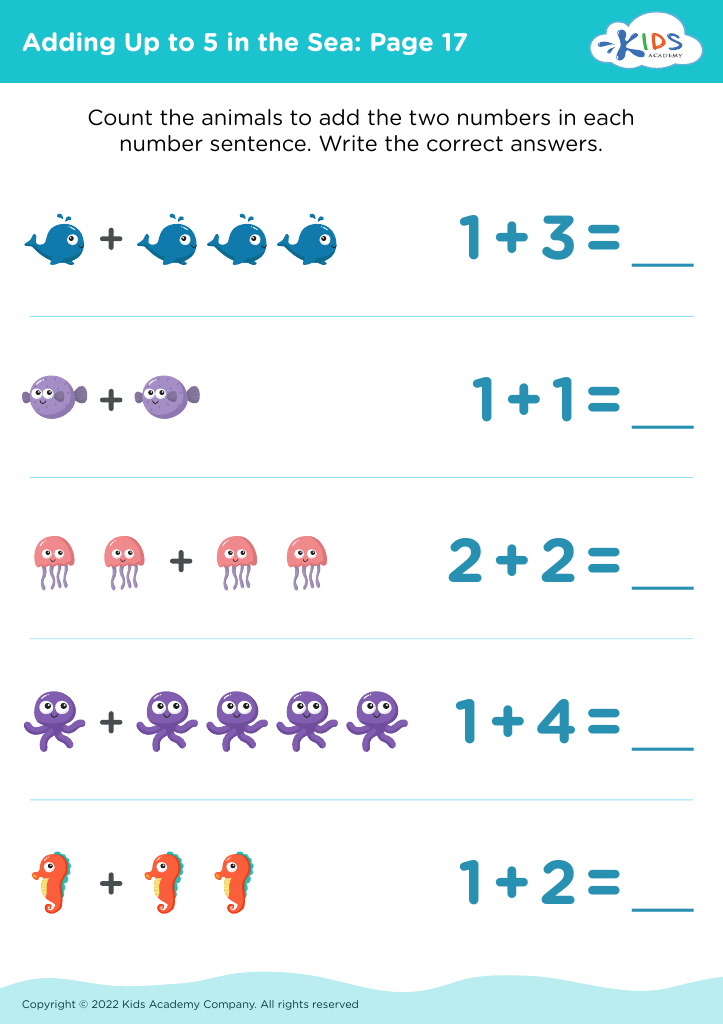
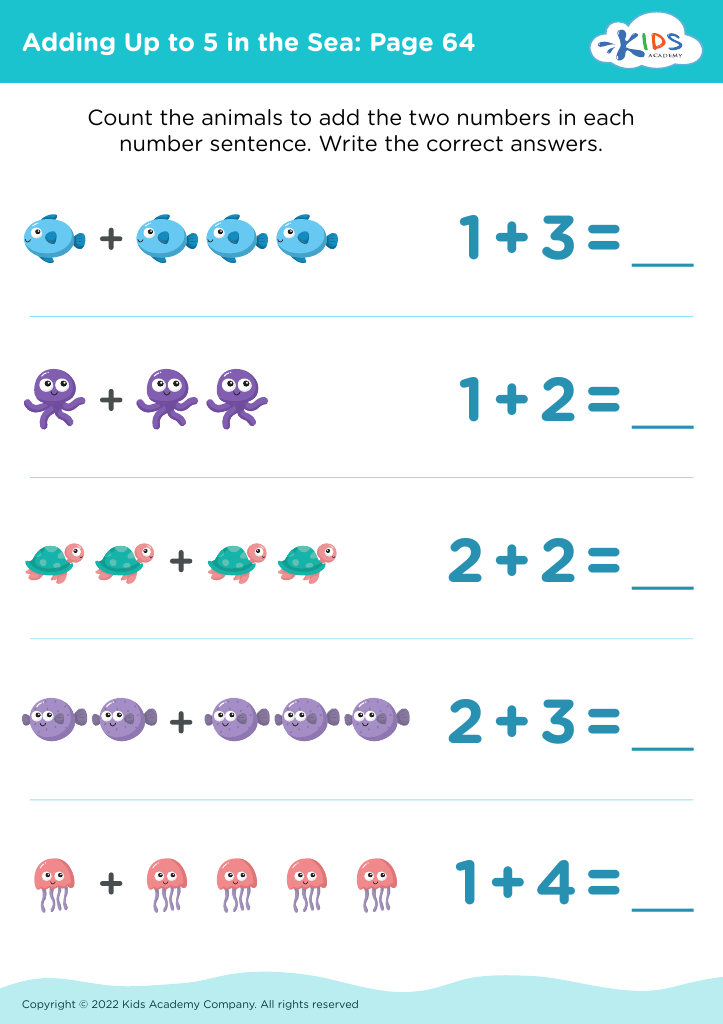
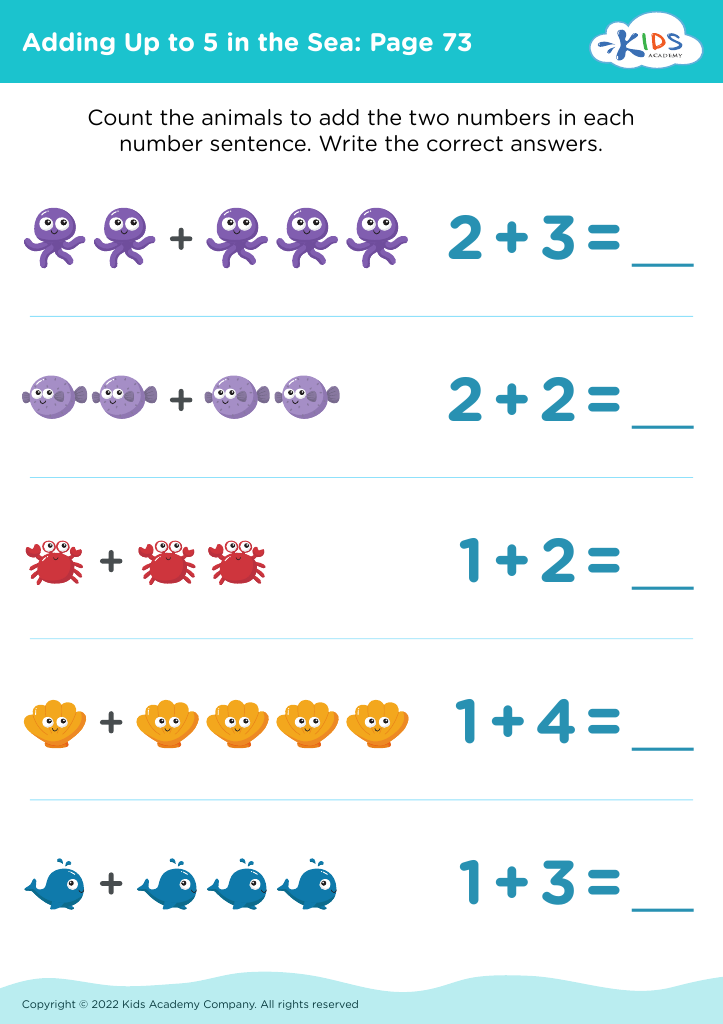
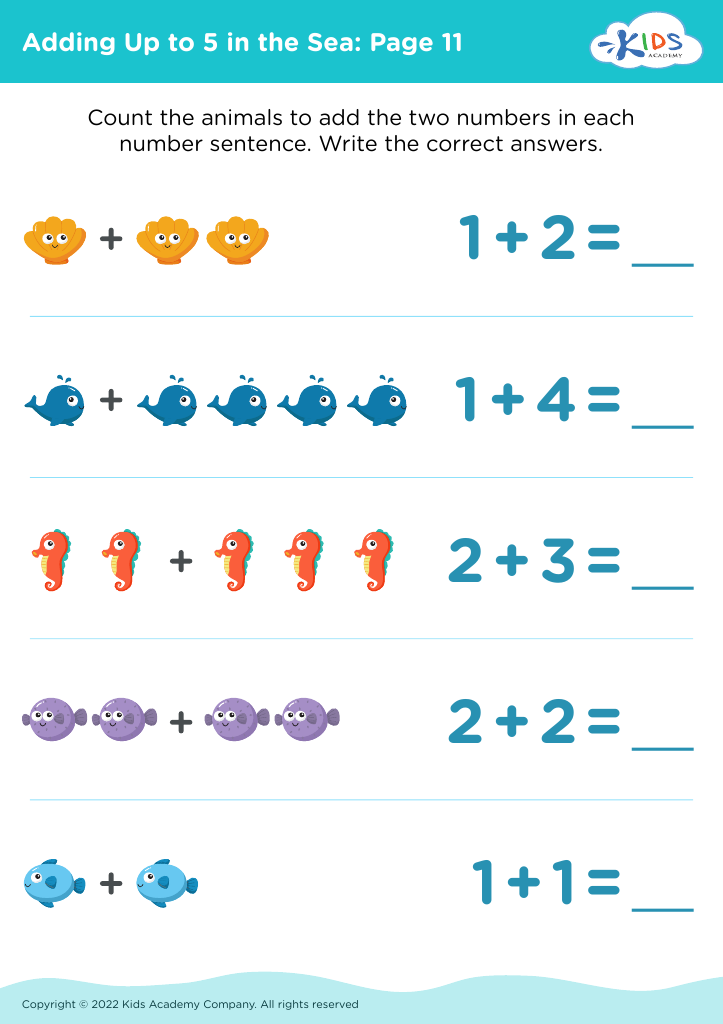
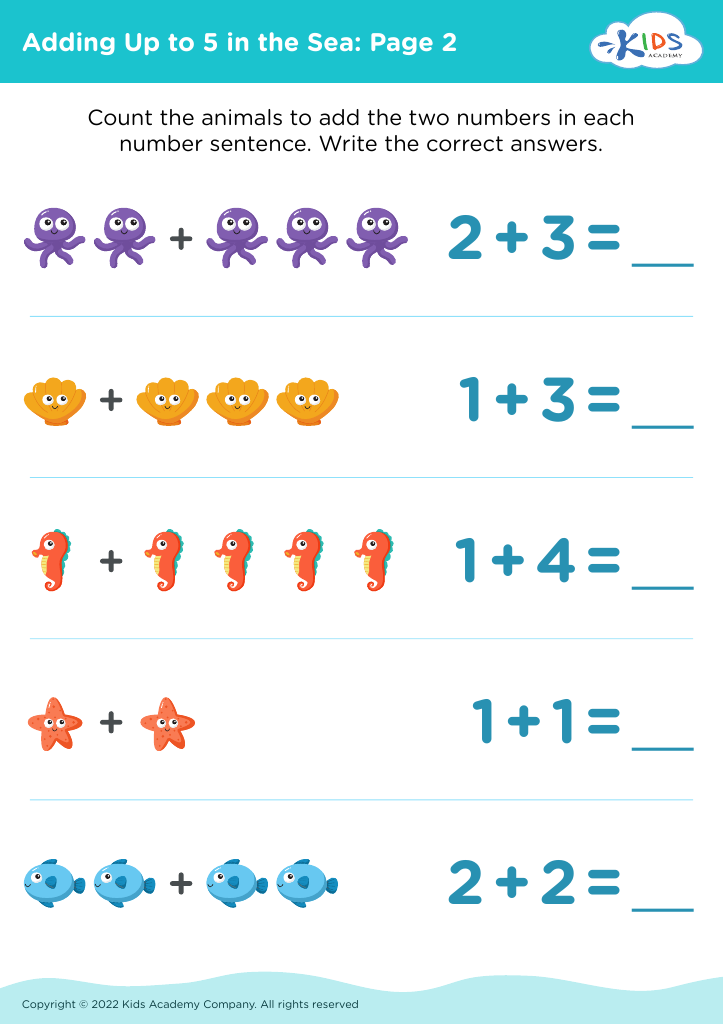
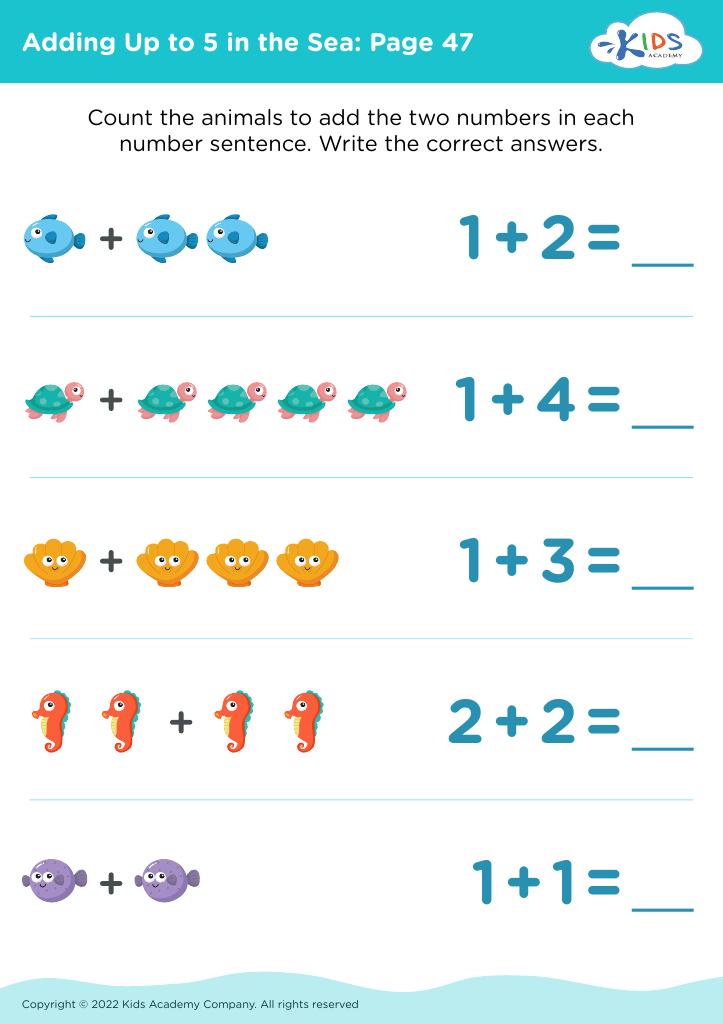
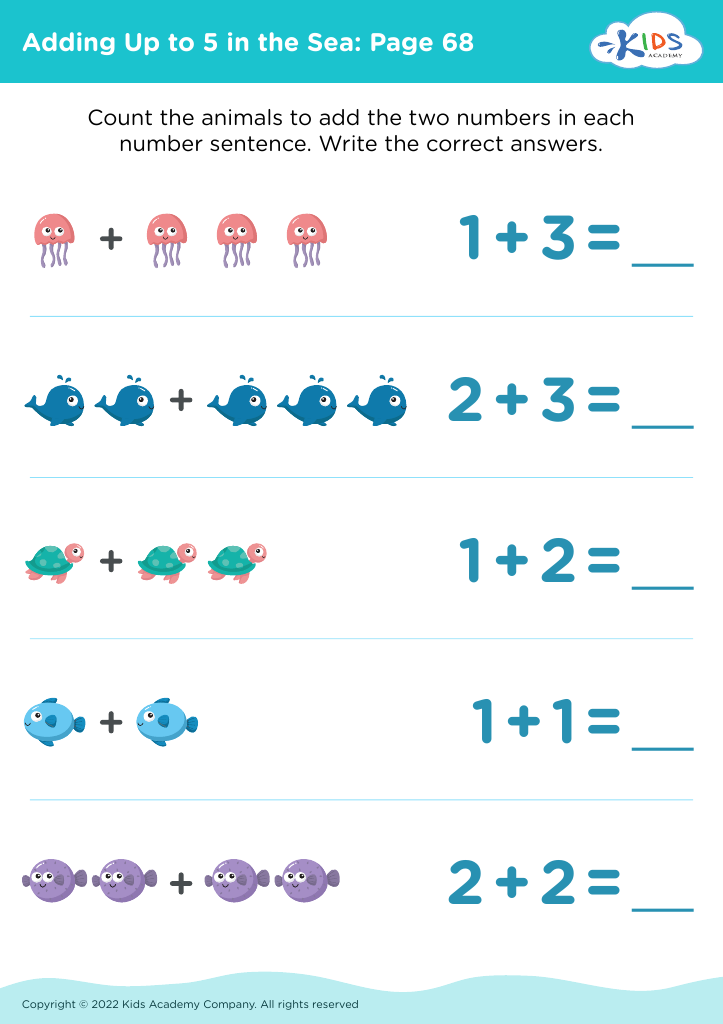



Visual Learning Adding in the Sea is a vital educational approach that parents and teachers should prioritize for several reasons. Firstly, it harnesses the power of visual aids, which simplifies complex mathematical concepts like addition. When children see visual representations of sums, such as colorful fish adding together, they can more easily grasp the ideas being taught.
Additionally, the sea theme sparks curiosity and addresses varied learning styles. Many children are naturally captivated by marine life, and integrating sea imagery keeps them engaged and motivated. This strategy ensures that lessons aren't merely abstract numbers but meaningful, memorable experiences.
Visual learning also helps with memory retention and long-term concept understanding. Children are more likely to remember a lesson involving playful sea creatures than simple arithmetic drills. Furthermore, the interactive nature of visual aids often leads to increased participation and collaboration among students.
For teachers and parents, employing Visual Learning Adding in the Sea allows for adaptability. It can be used across diverse skill levels and learning speeds, providing individualized support. Finally, this method promotes a positive attitude towards learning and mathematics. By making learning fun and visually stimulating, students are less likely to develop anxiety around math and more likely to excel academically.