Recognizing shapes Adding up to 100 Worksheets
8 filtered results
-
From - To
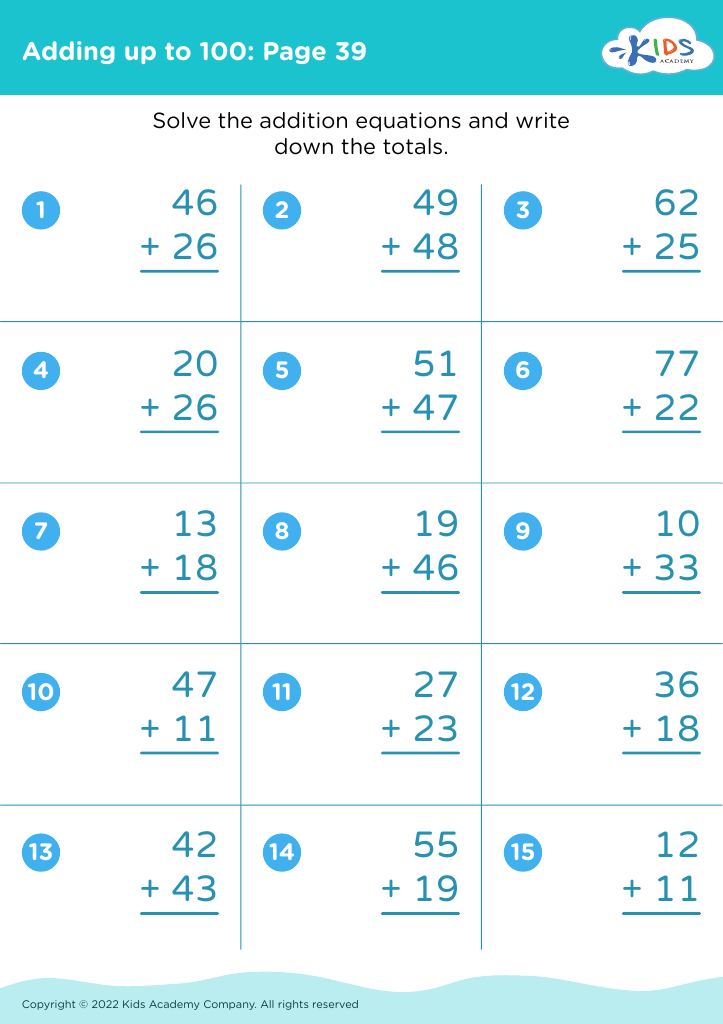
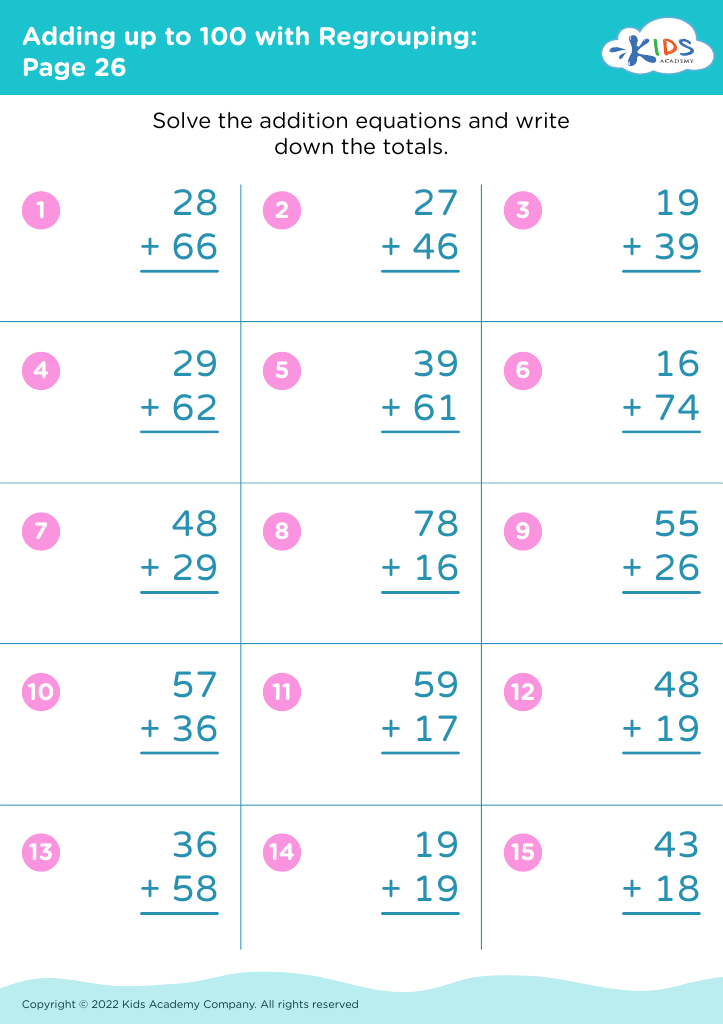
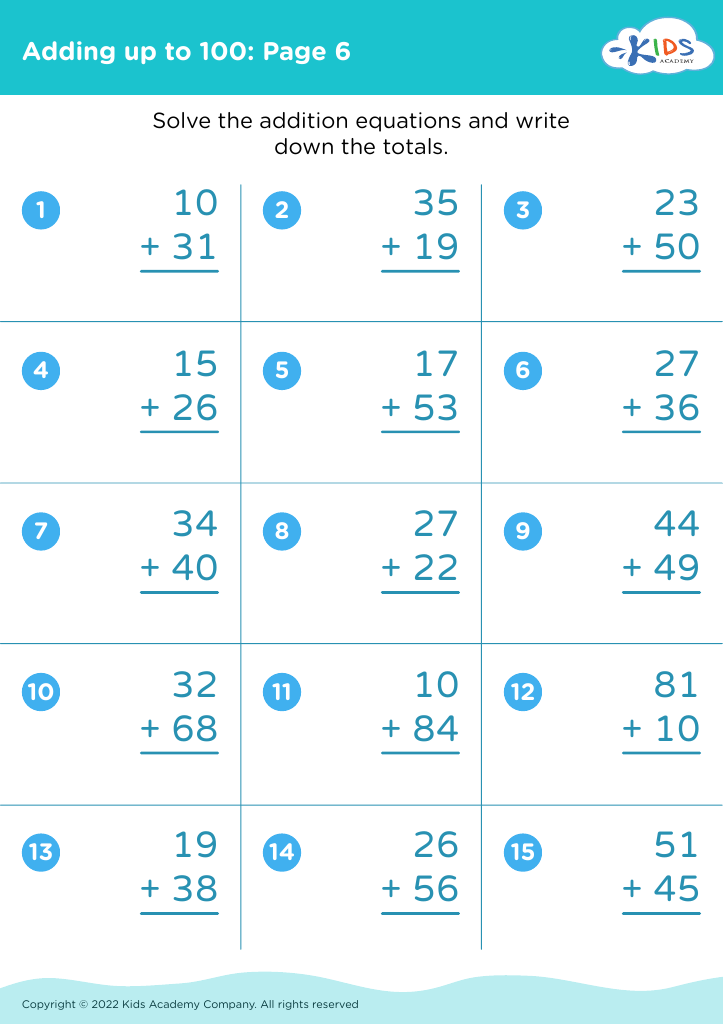
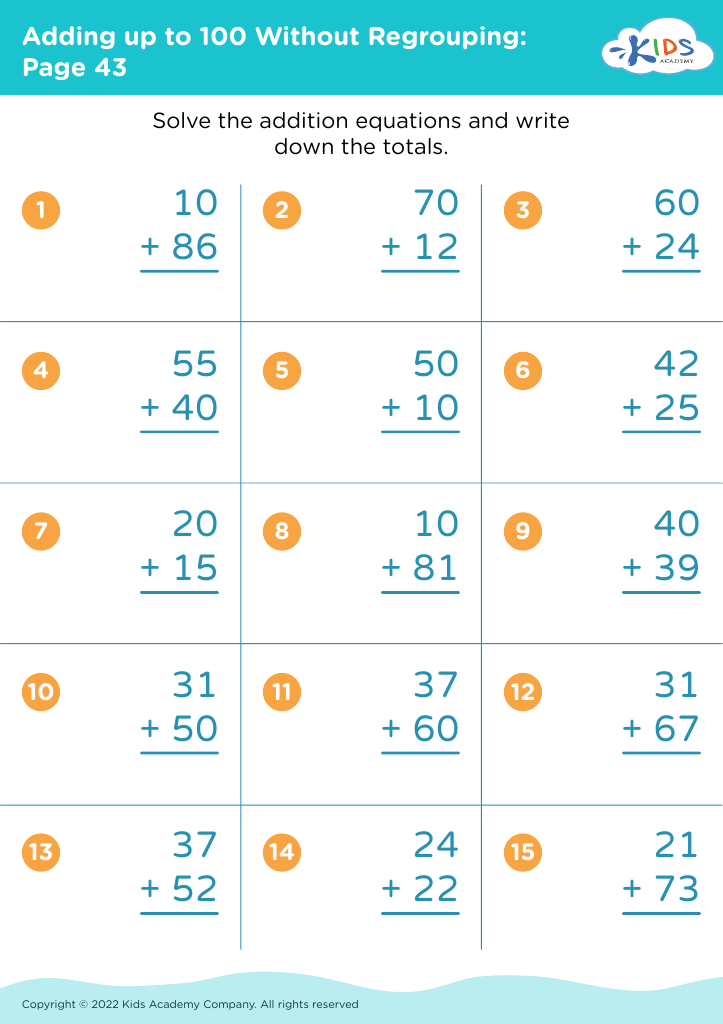
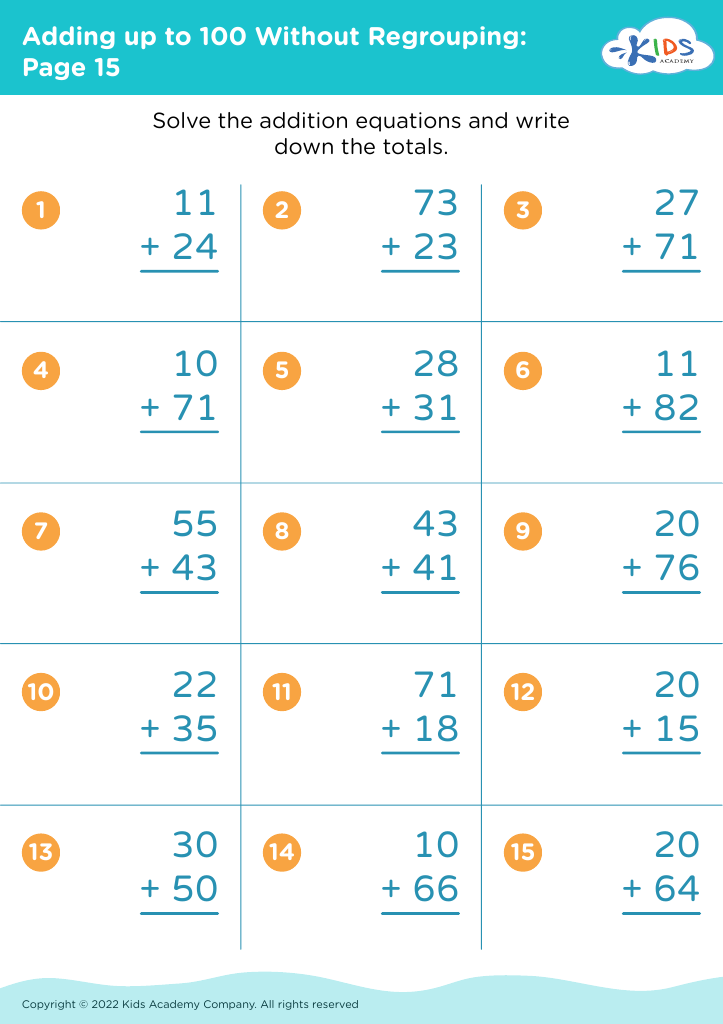
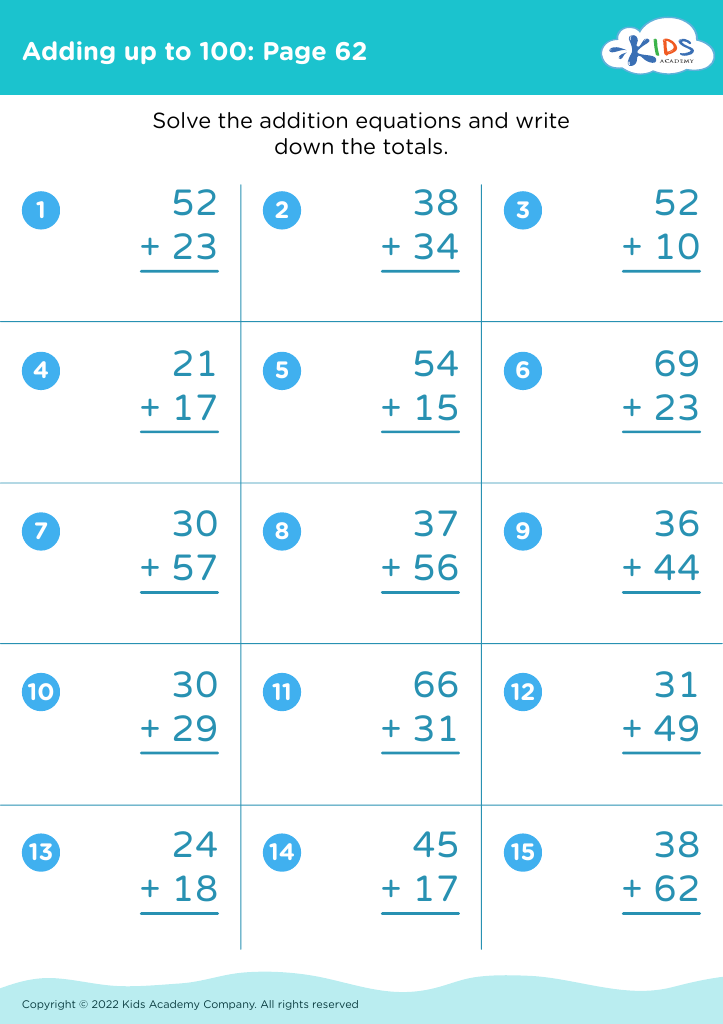
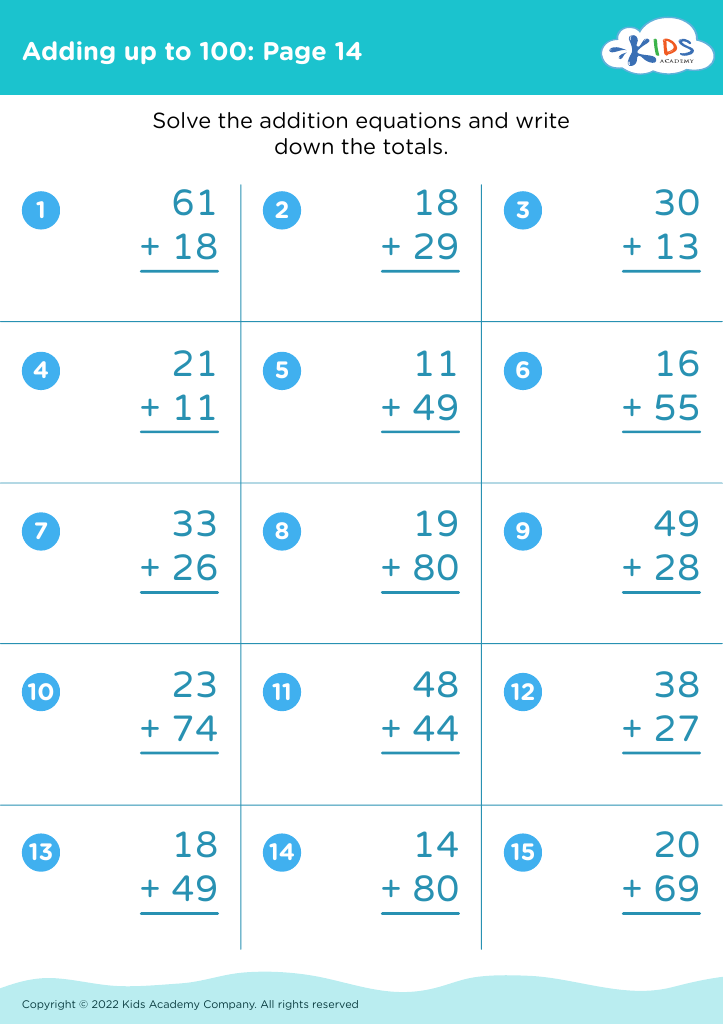
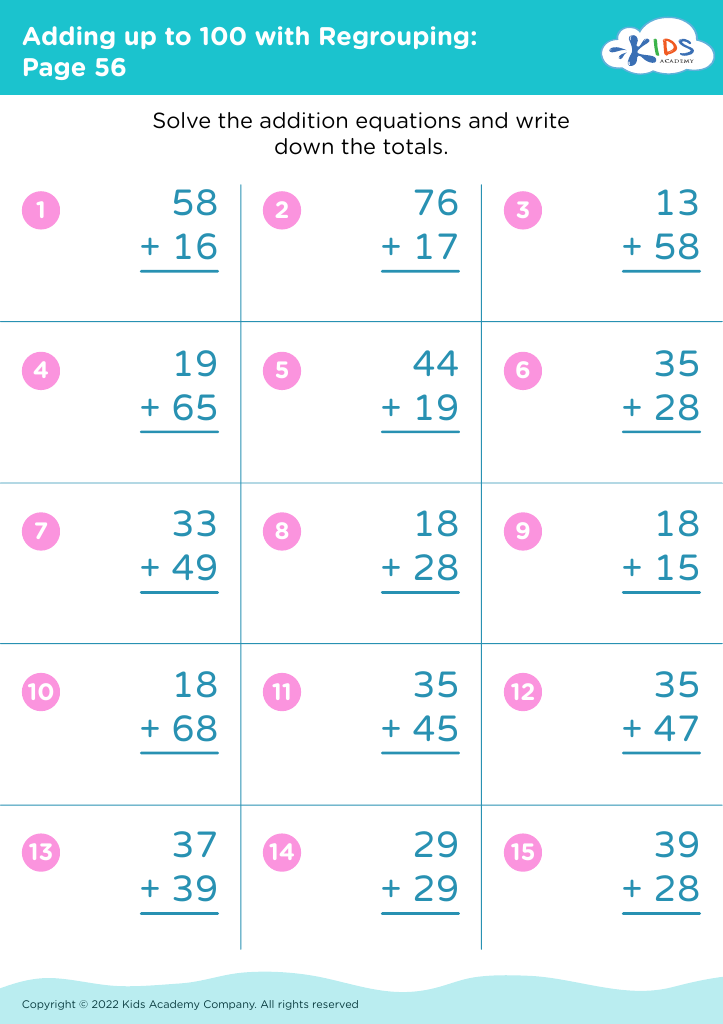
Enhance your child's math skills with our "Recognizing Shapes Adding up to 100 Worksheets." These engaging resources combine shape recognition and addition in fun and interactive ways, perfect for young learners. Your kids will explore various geometric shapes while honing their addition skills as they work towards the sum of 100. Each worksheet is designed to develop critical thinking and boost confidence in math through creative exercises. With vibrant visuals and age-appropriate challenges, these worksheets will make learning an enjoyable experience. Download and print them today to support your child's mathematical journey while they discover the world of shapes!


%20(1).jpg)




Recognizing shapes and understanding the concept of adding up to 100 are fundamental skills that play a crucial role in early mathematical development for children. Parents and teachers should care about these skills because they form the building blocks for more complex mathematical reasoning and problem-solving abilities that students will encounter later in their education.
Recognizing shapes develops spatial awareness, an essential skill that not only influences mathematical understanding but also impacts everyday activities like navigating the environment and engaging in arts and crafts. When children can identify and manipulate shapes, they start to see patterns and relationships, fostering critical thinking.
Adding up to 100 is equally important, as it helps children grasp the concept of number sense, place value, and basic arithmetic operations. Mastery of these skills provides a solid foundation for more advanced topics such as multiplication, division, and even algebra.
Moreover, early competency in these areas can boost a child's confidence in math, making them more likely to enjoy learning and pursue further challenges. When parents and teachers prioritize these skills, they equip children with the fundamental tools necessary for academic success and everyday problem-solving, preparing them for future educational endeavors and real-world applications.








