Filters

232 filtered results

Clear all filters
Favorites
With answer key
Interactive

232 filtered results

Difficulty Level

Grade


Check out this FREE Trial Lesson on Adding Up to 5!

Match Exactly the Same

Favorites
With answer key
Interactive
  • Counting practice
  • Adding Up to 5
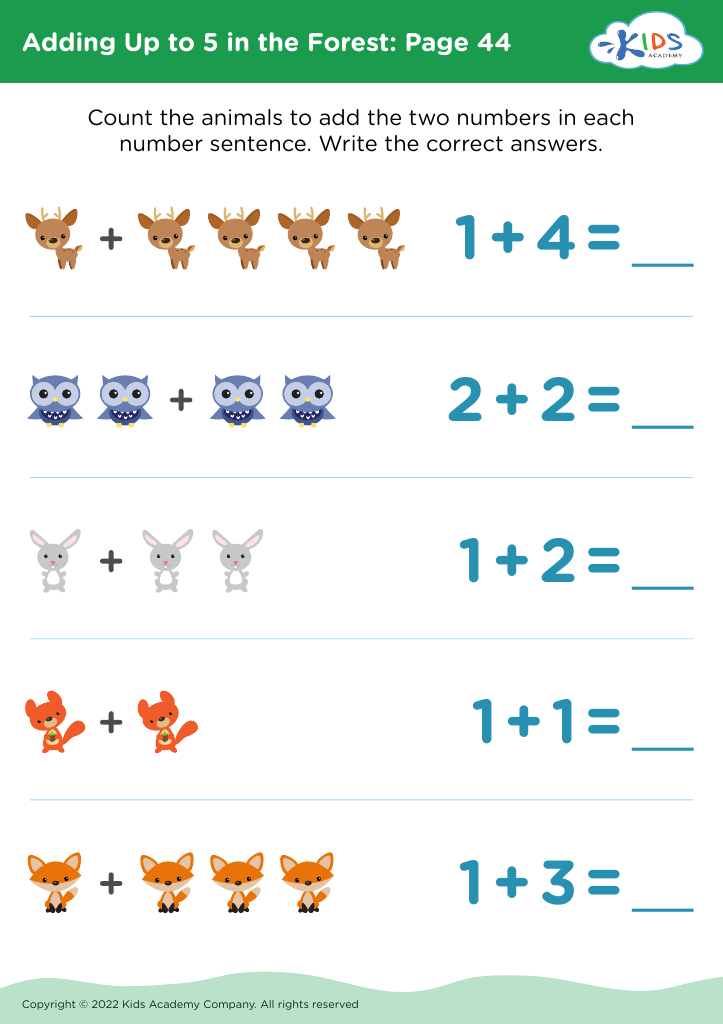
Adding Up to 5 in the Forest: Page 44
Worksheet
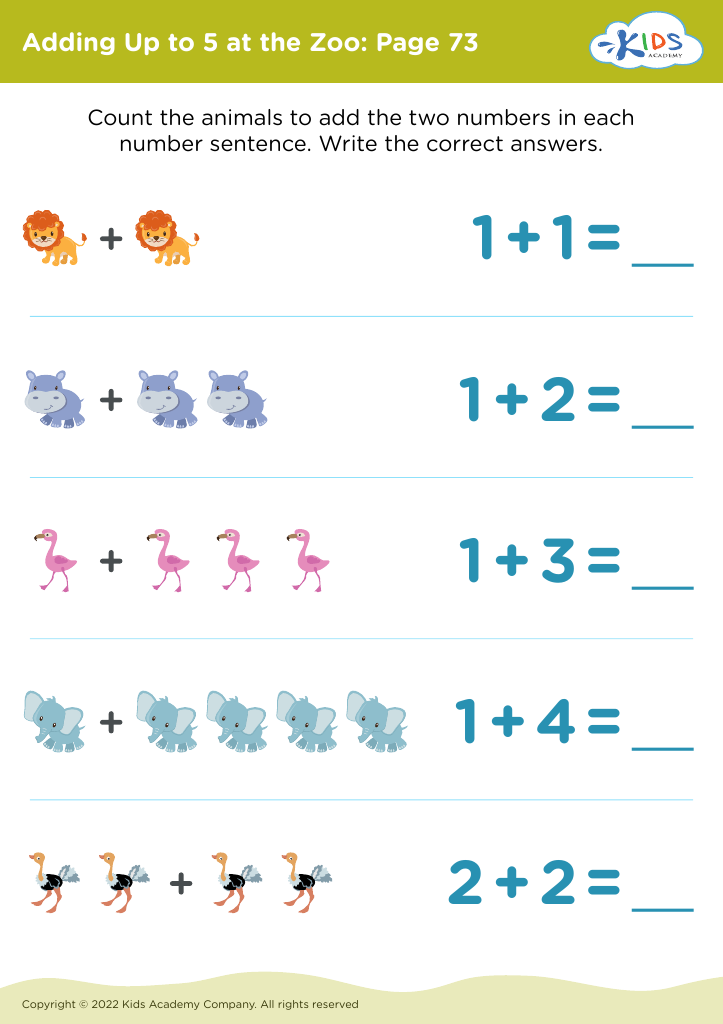
Adding Up to 5 at the Zoo: Page 73
Worksheet
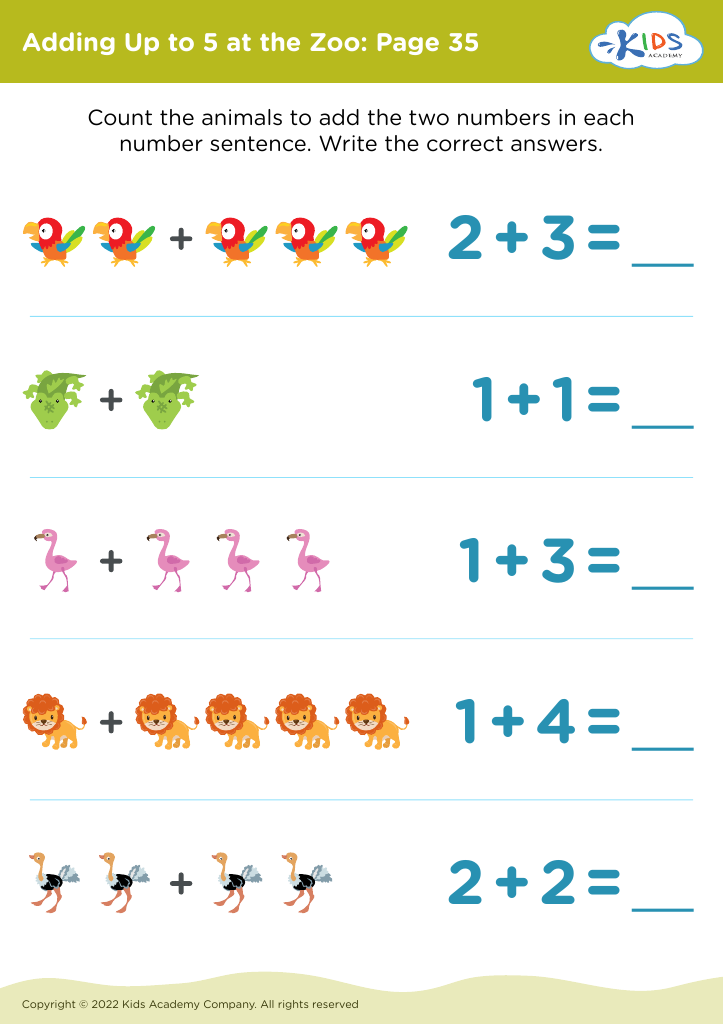
Adding Up to 5 at the Zoo: Page 35
Worksheet
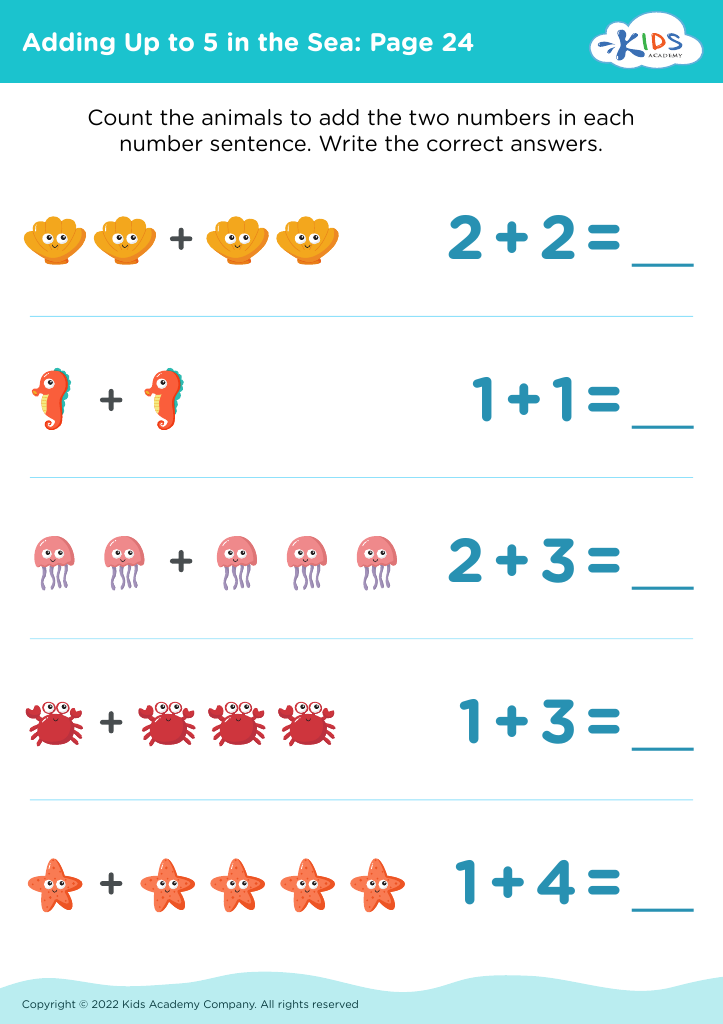
Adding Up to 5 in the Sea: Page 24
Worksheet
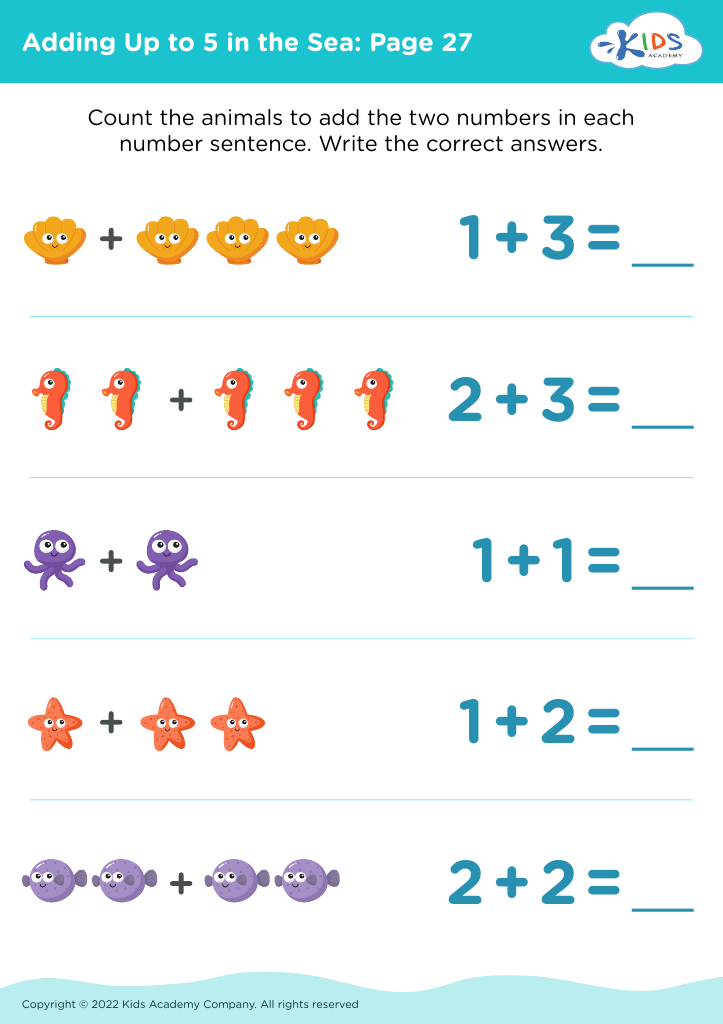
Adding Up to 5 in the Sea: Page 27
Worksheet
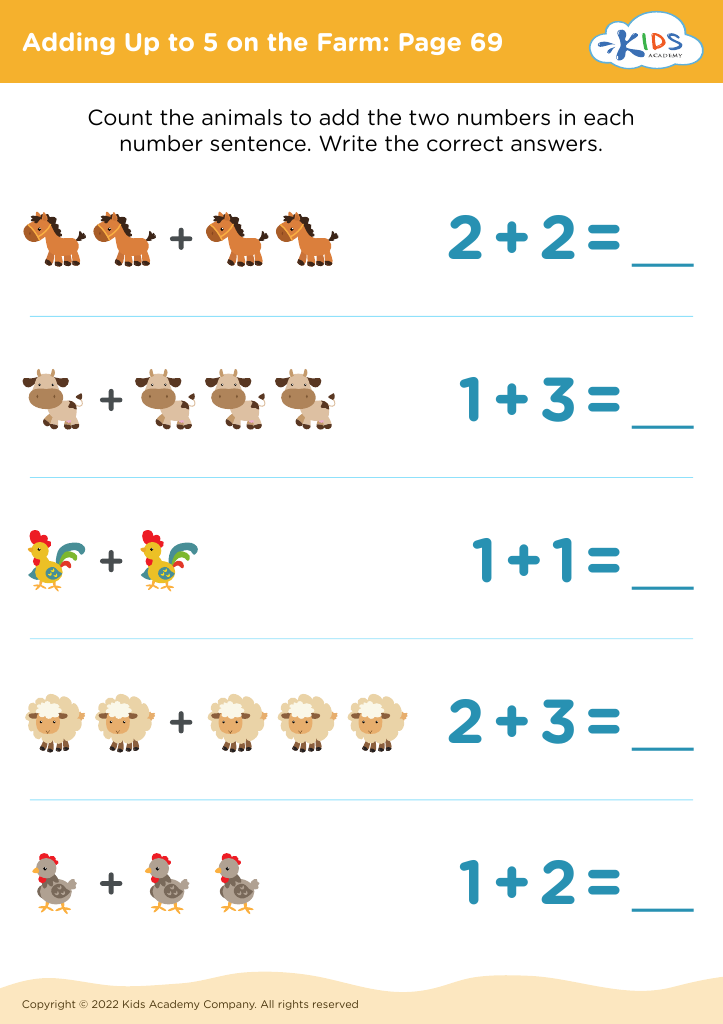
Adding Up to 5 on the Farm: Page 69
Worksheet
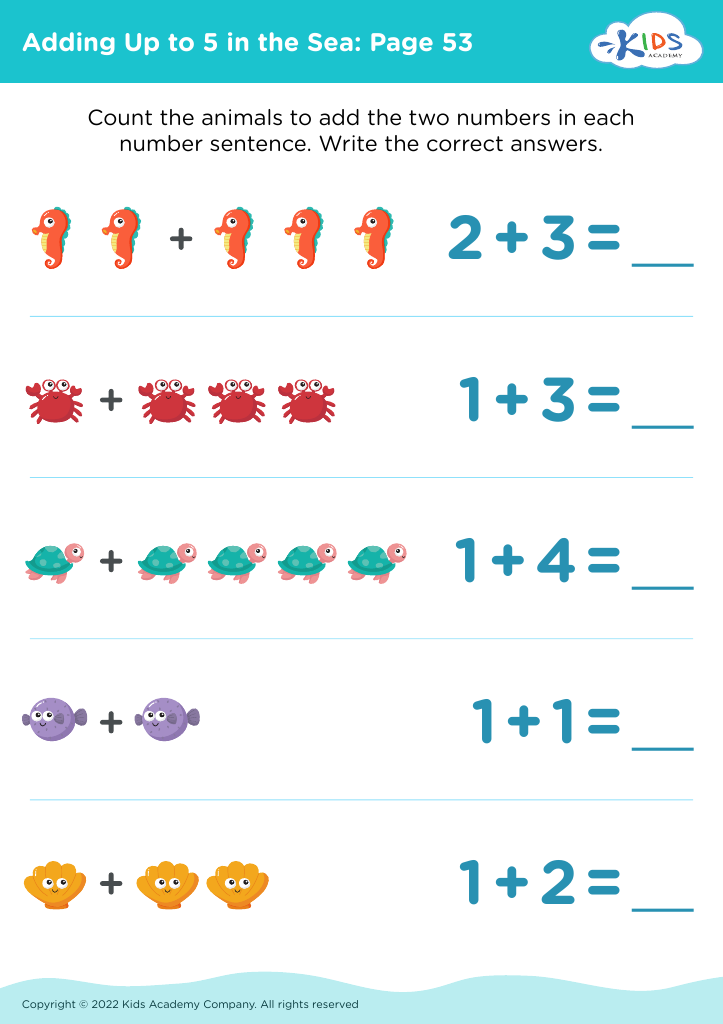
Adding Up to 5 in the Sea: Page 53
Worksheet
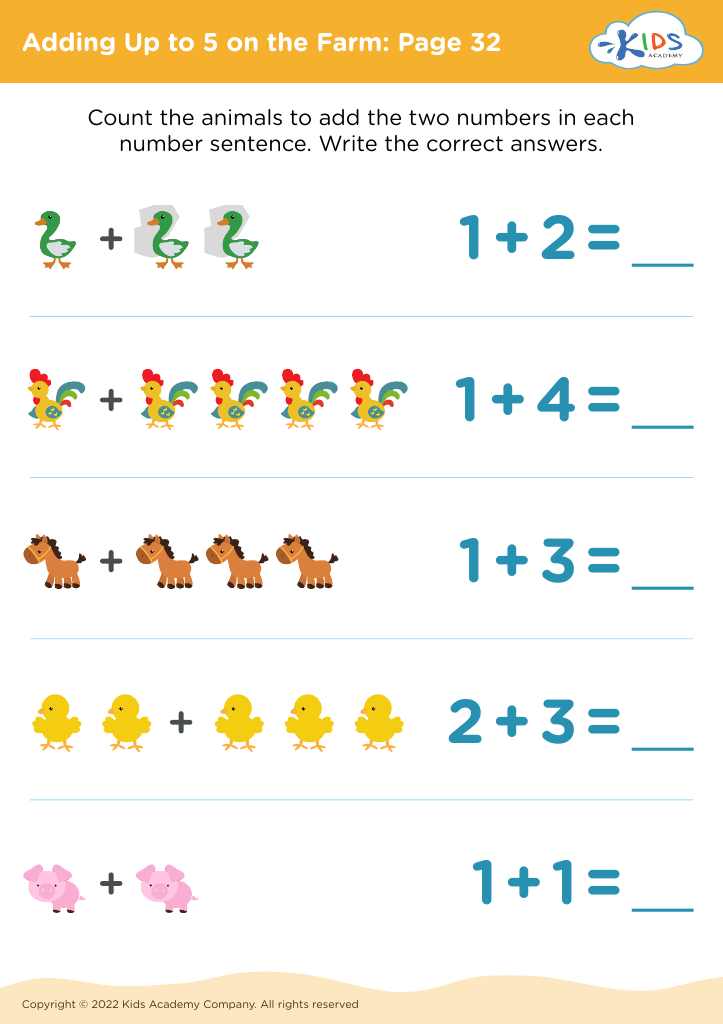
Adding Up to 5 on the Farm: Page 32
Worksheet
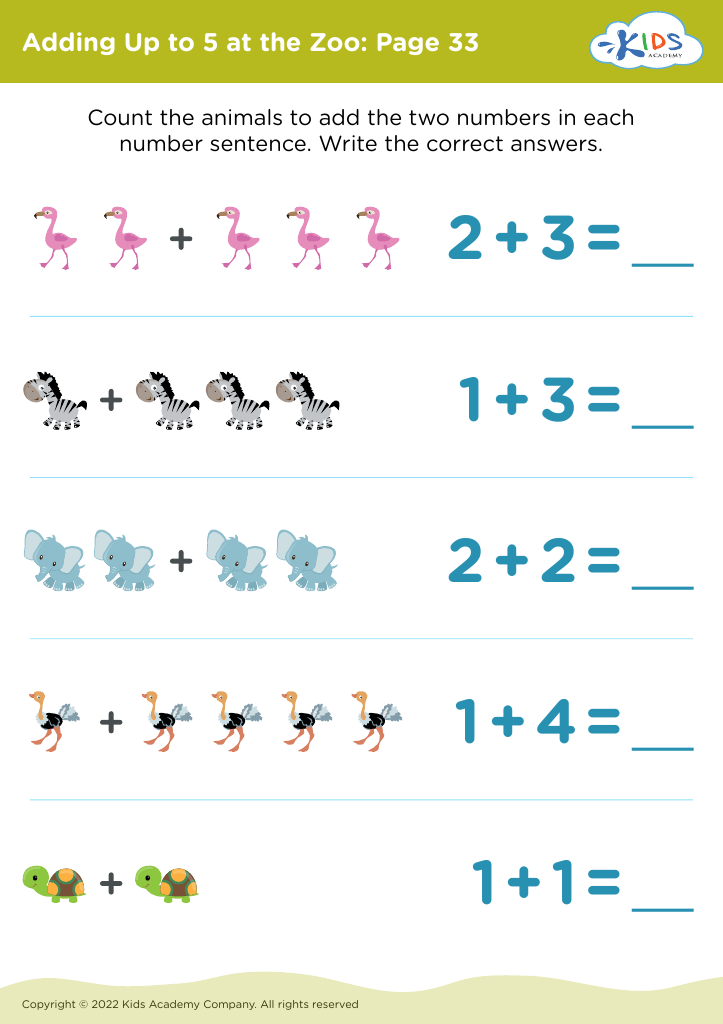
Adding Up to 5 at the Zoo: Page 33
Worksheet
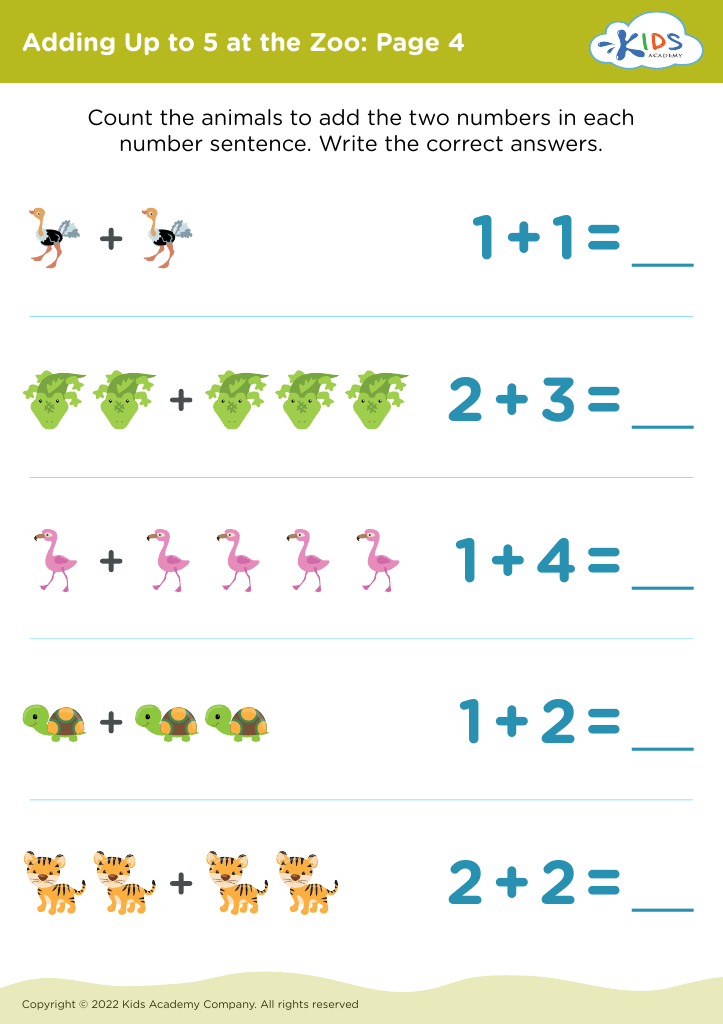
Adding Up to 5 at the Zoo: Page 4

Adding Up to 5 at the Zoo: Page 4

Adding Up to 5 at the Zoo: Page 4
Worksheet
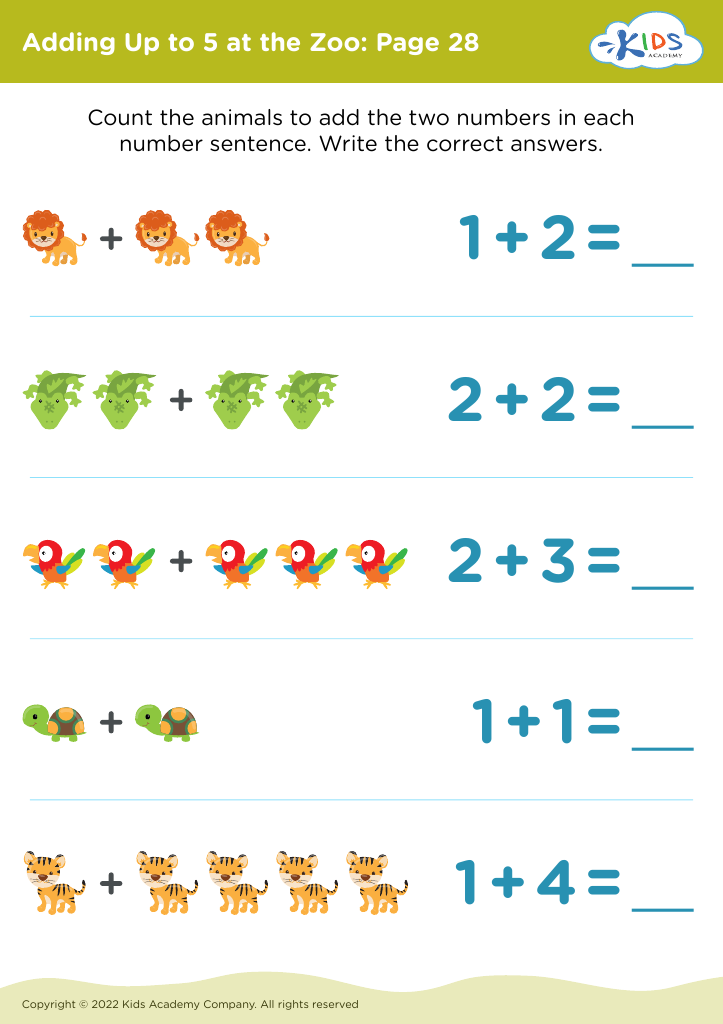
Adding Up to 5 at the Zoo: Page 28
Worksheet
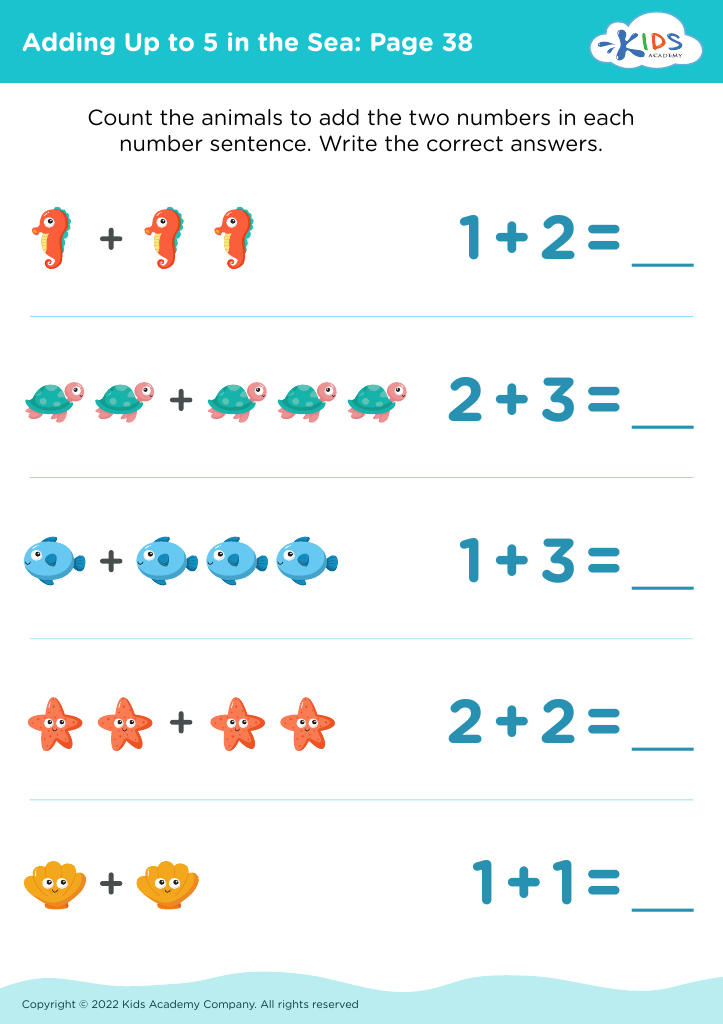
Adding Up to 5 in the Sea: Page 38
Worksheet
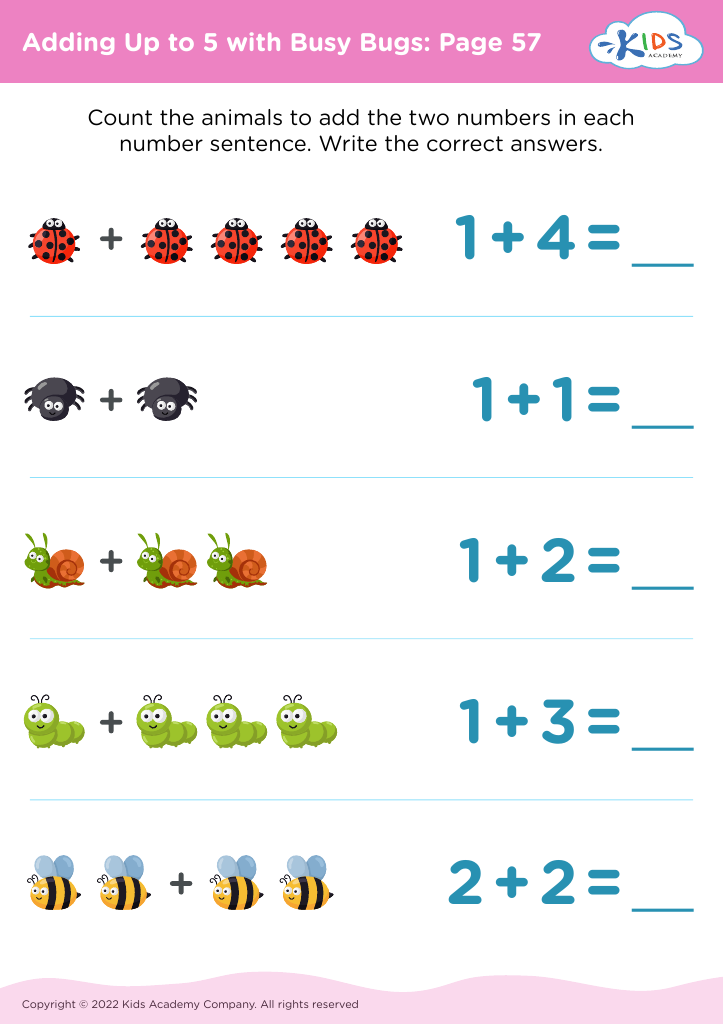
Adding Up to 5 with Busy Bugs: Page 57
Worksheet
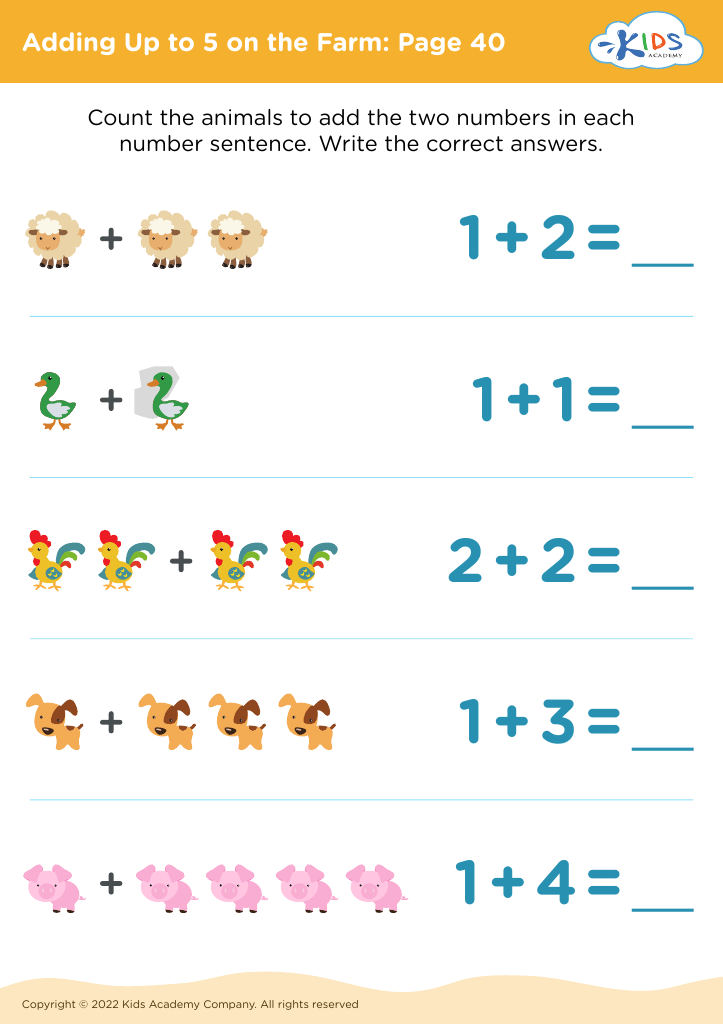
Adding Up to 5 on the Farm: Page 40
Worksheet
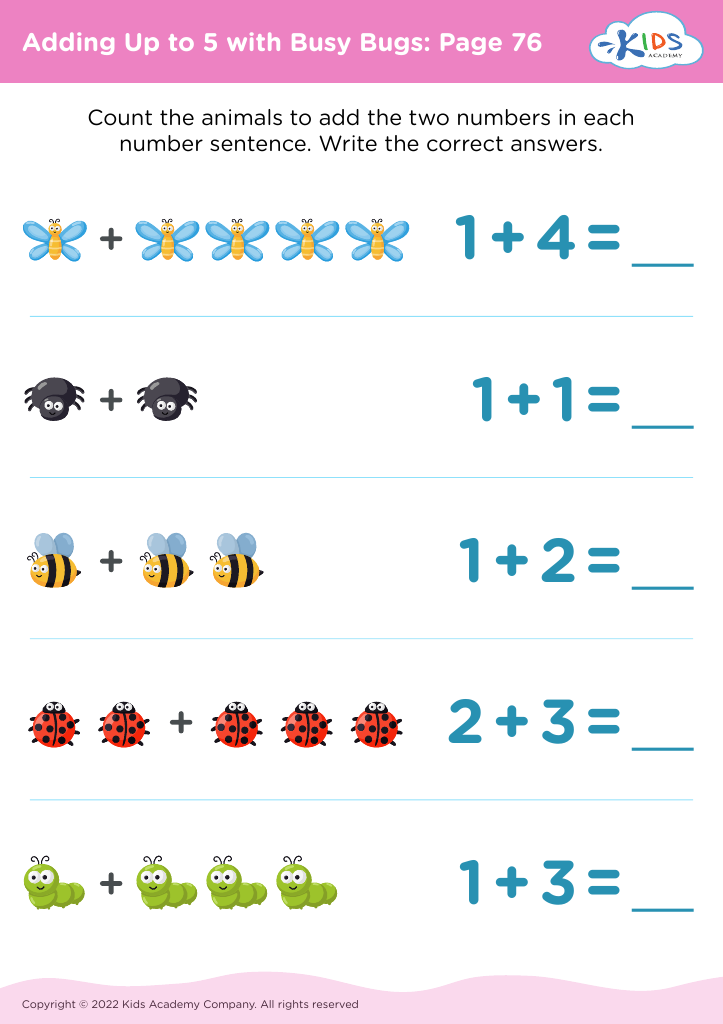
Adding Up to 5 with Busy Bugs: Page 76
Worksheet
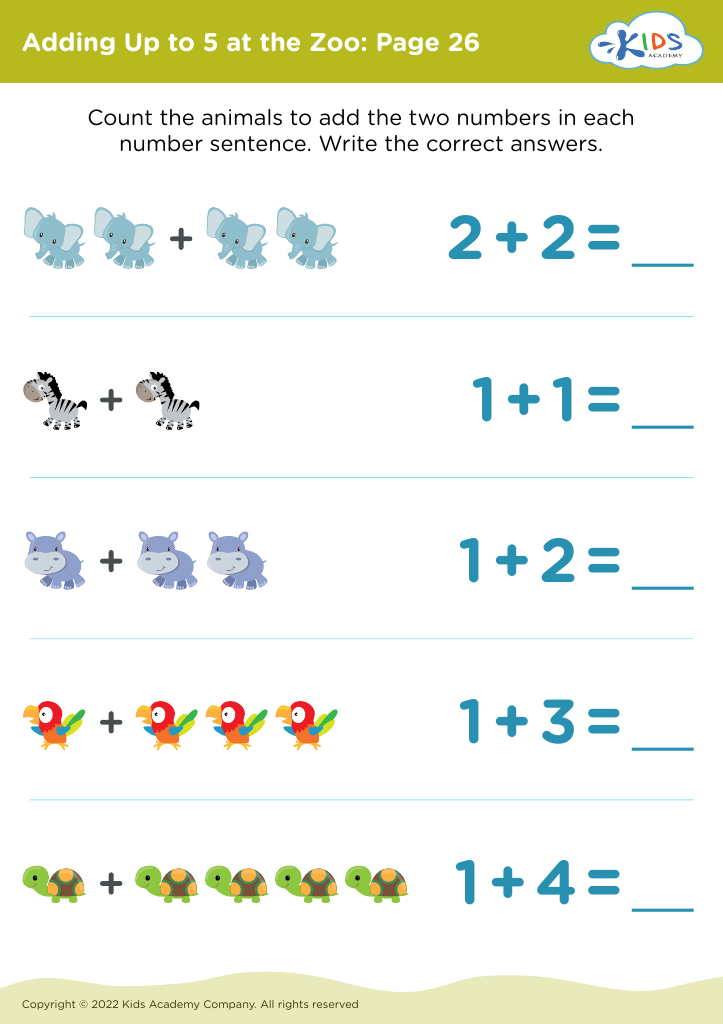
Adding Up to 5 at the Zoo: Page 26
Worksheet
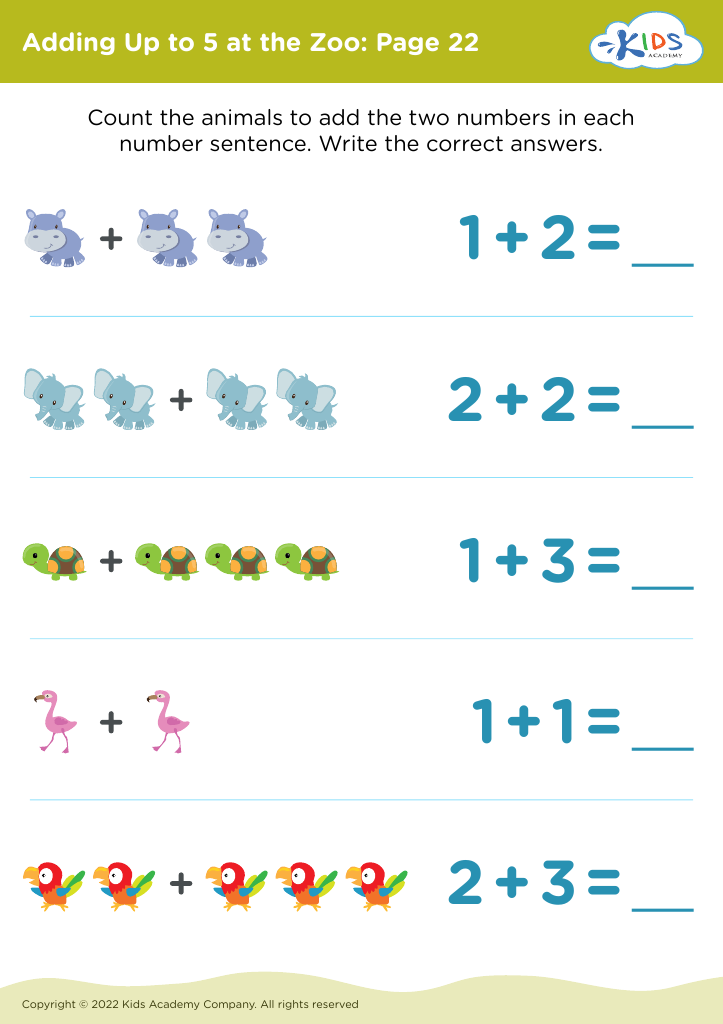
Adding Up to 5 at the Zoo: Page 22
Worksheet
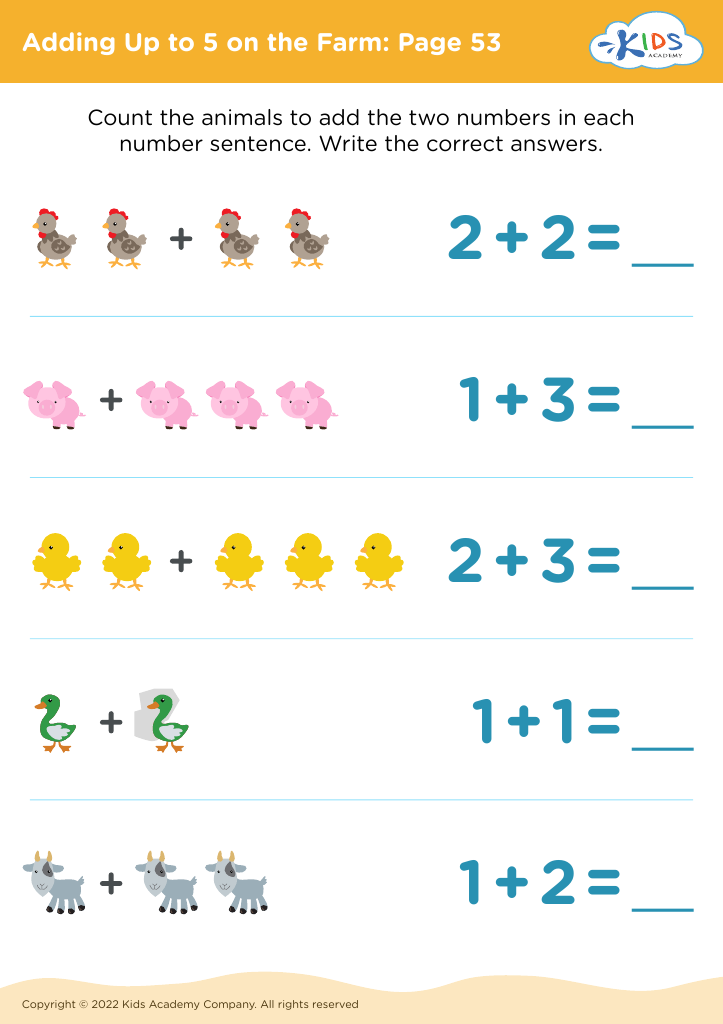
Adding Up to 5 on the Farm: Page 53
Worksheet
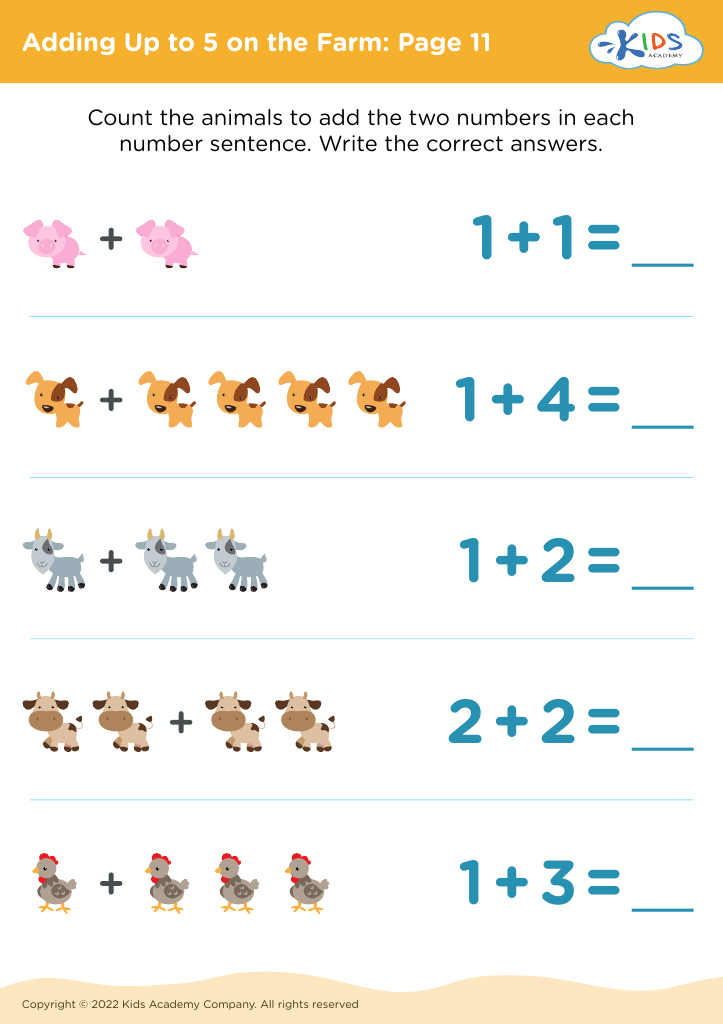
Adding Up to 5 on the Farm: Page 11
Worksheet
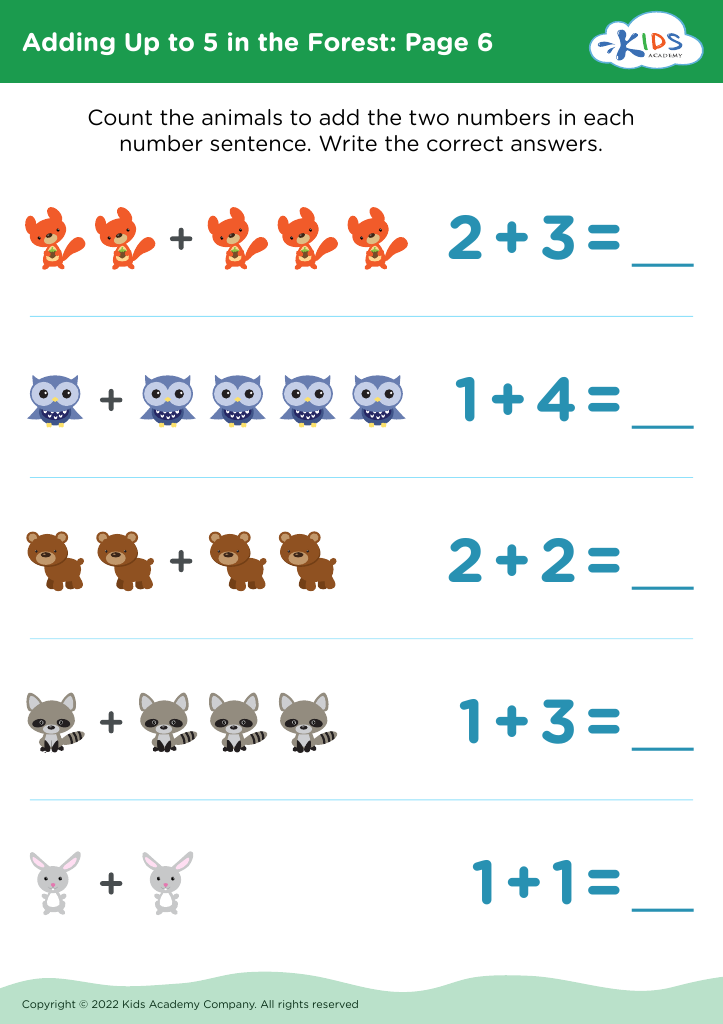
Adding Up to 5 in the Forest: Page 6
Worksheet
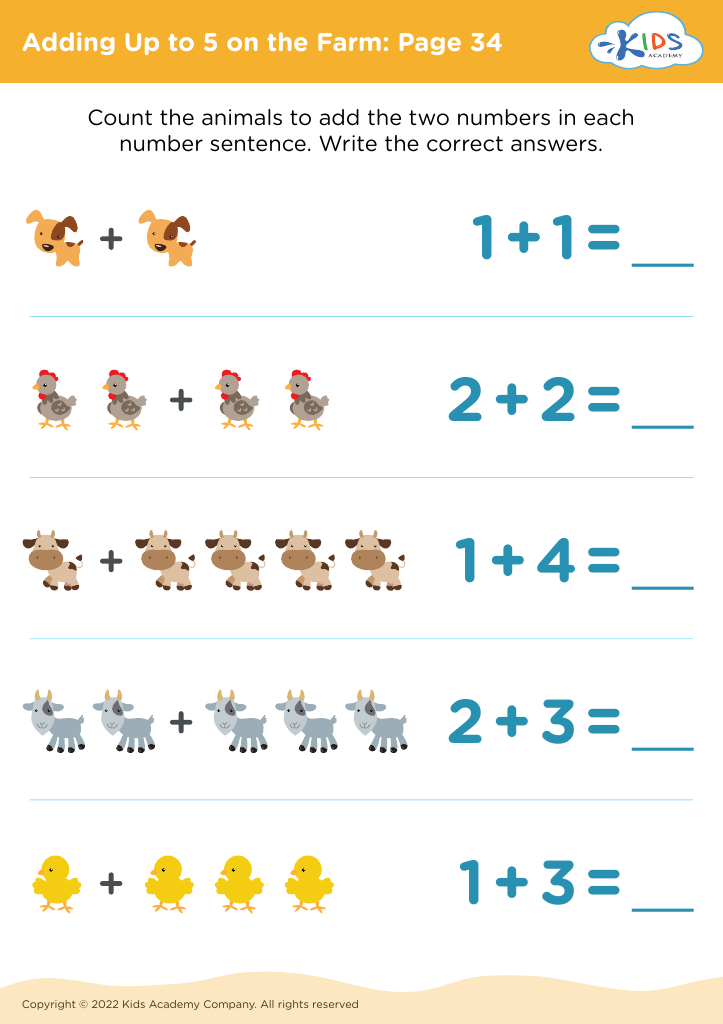
Adding Up to 5 on the Farm: Page 34
Worksheet
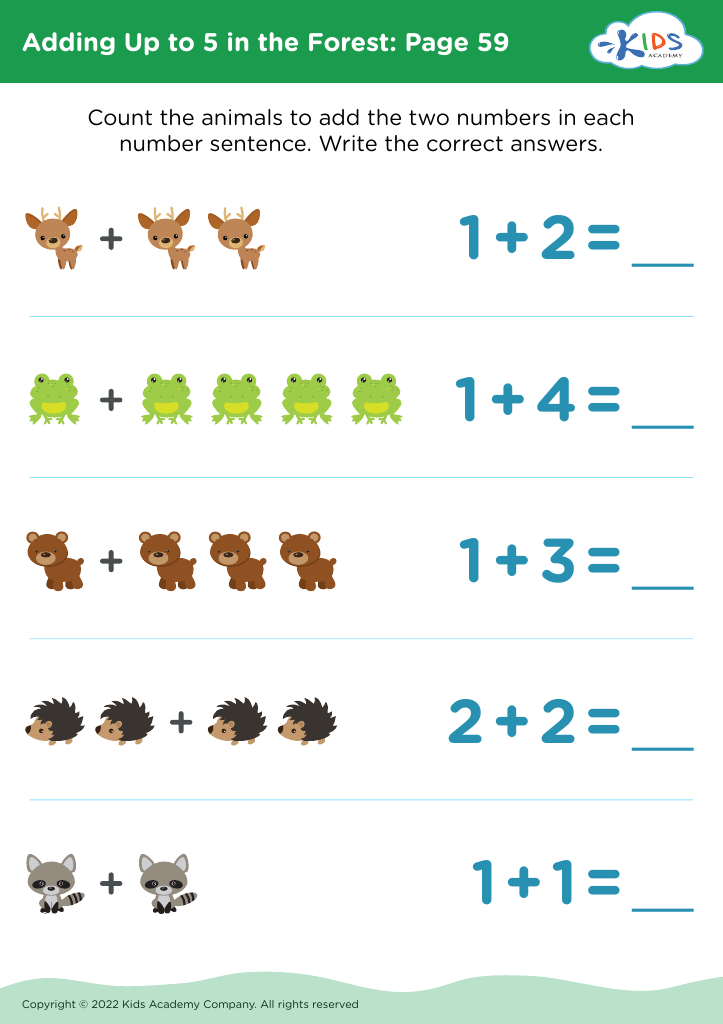
Adding Up to 5 in the Forest: Page 59
Worksheet
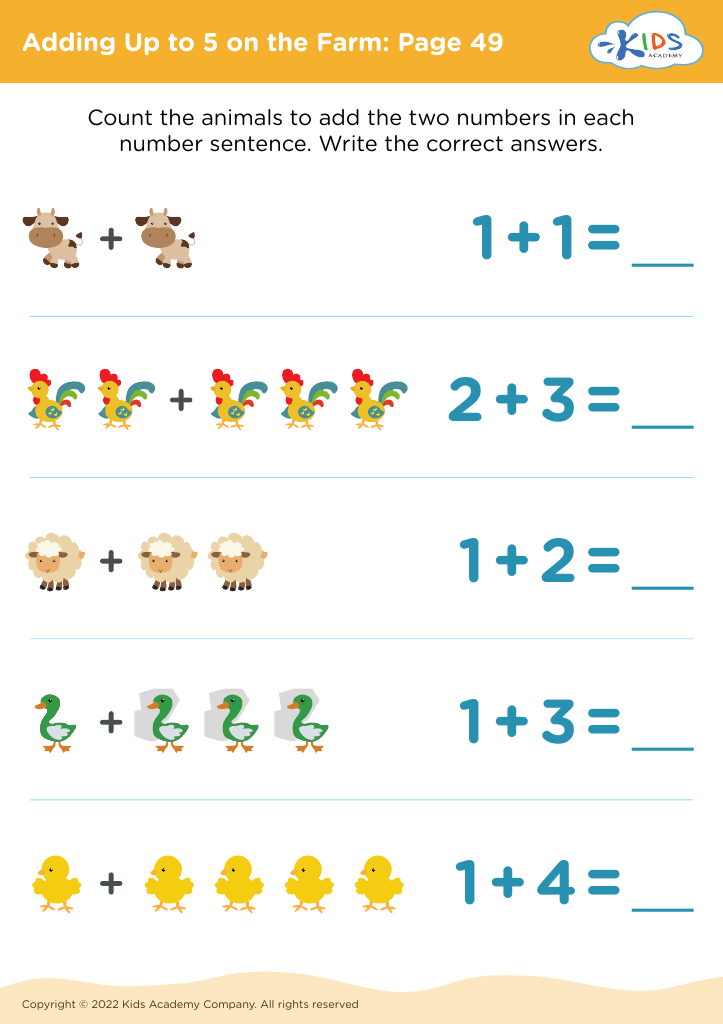
Adding Up to 5 on the Farm: Page 49
Worksheet
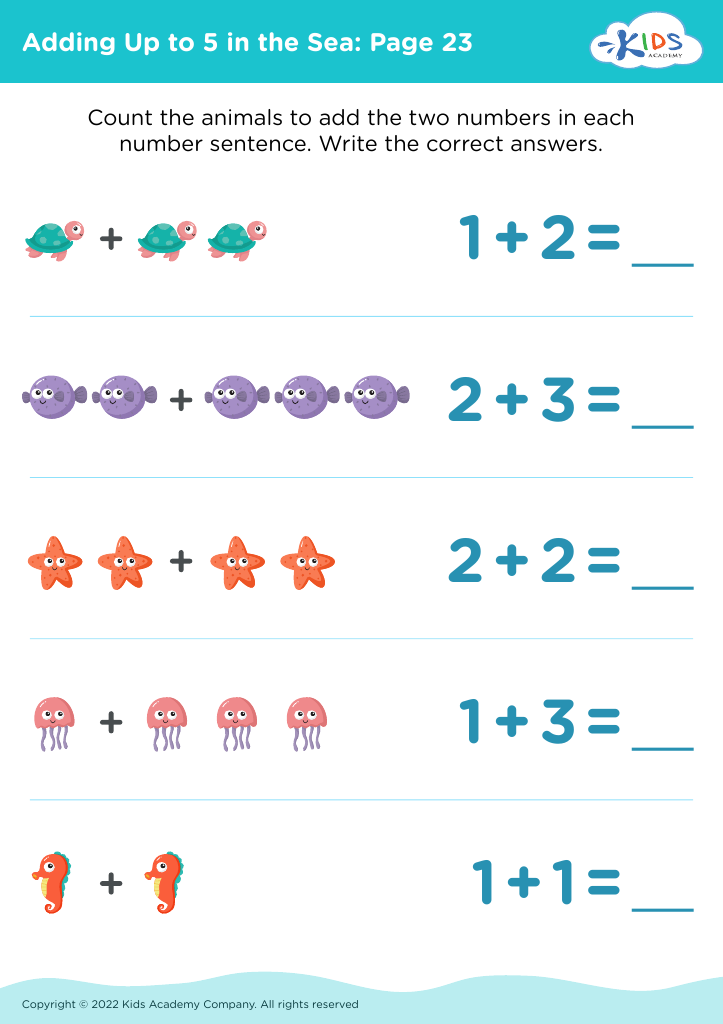
Adding Up to 5 in the Sea: Page 23
Worksheet


Counting practice, particularly with small numbers like adding up to 5, is foundational for early learners and essential for several reasons. Firstly, it fosters a critical understanding of basic mathematical concepts. Mastery of counting sets of numbers up to 5 provides a solid platform for more advanced arithmetic skills, facilitating a smooth transition to addition and subtraction.

Moreover, this practice enhances cognitive development and supports problem-solving abilities. As children engage in counting and combining quantities, they learn to recognize patterns and develop logical thinking, building essential analytical skills.

Additionally, counting activities can be woven into everyday life, making math tangible and relevant. Parents and teachers can create engaging, hands-on experiences, such as using everyday objects like toys or snacks to illustrate counting, making the process enjoyable and interactive.

In social contexts, counting helps children develop communication skills by sharing experiences and explaining their thought processes to peers or adults. Finally, proficiency in counting fosters a sense of achievement and confidence in children. By nurturing these early mathematical skills, parents and teachers are paving the way for a lifetime of learning and a strong foundation for future academic success.