Visual Learning Adding Up to 5 Worksheets - Page 2
84 filtered results
-
From - To
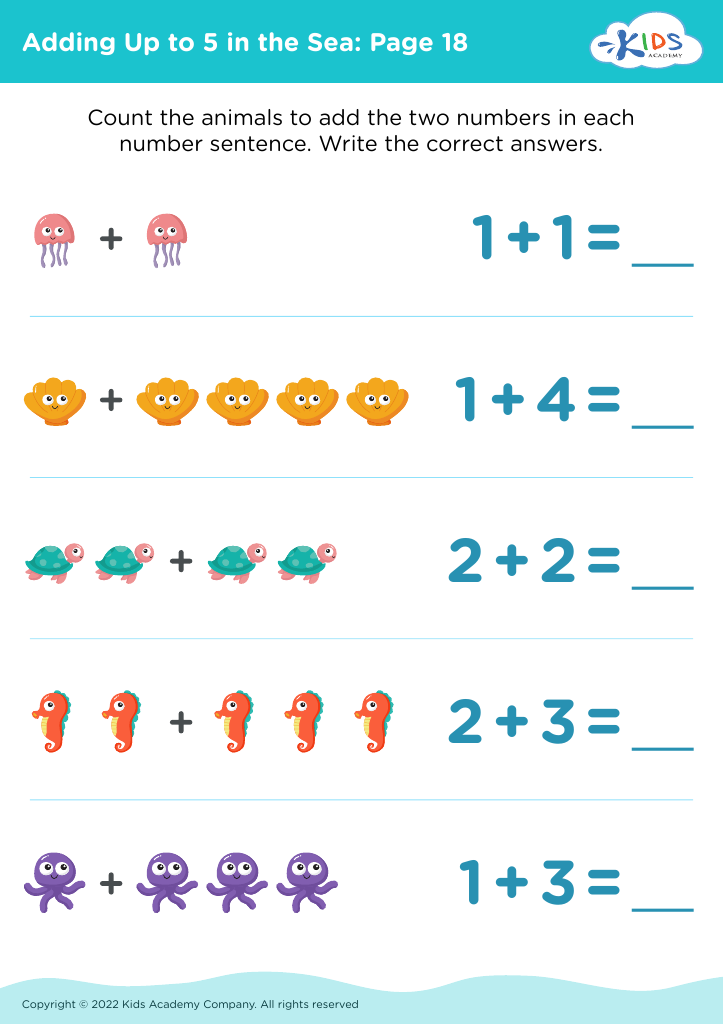
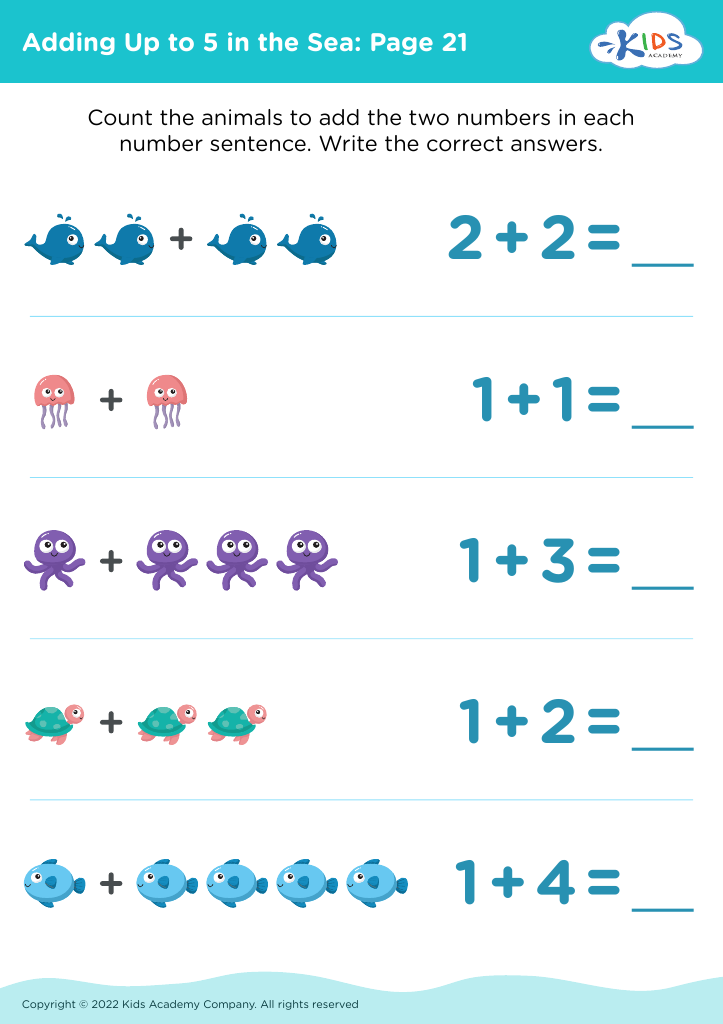
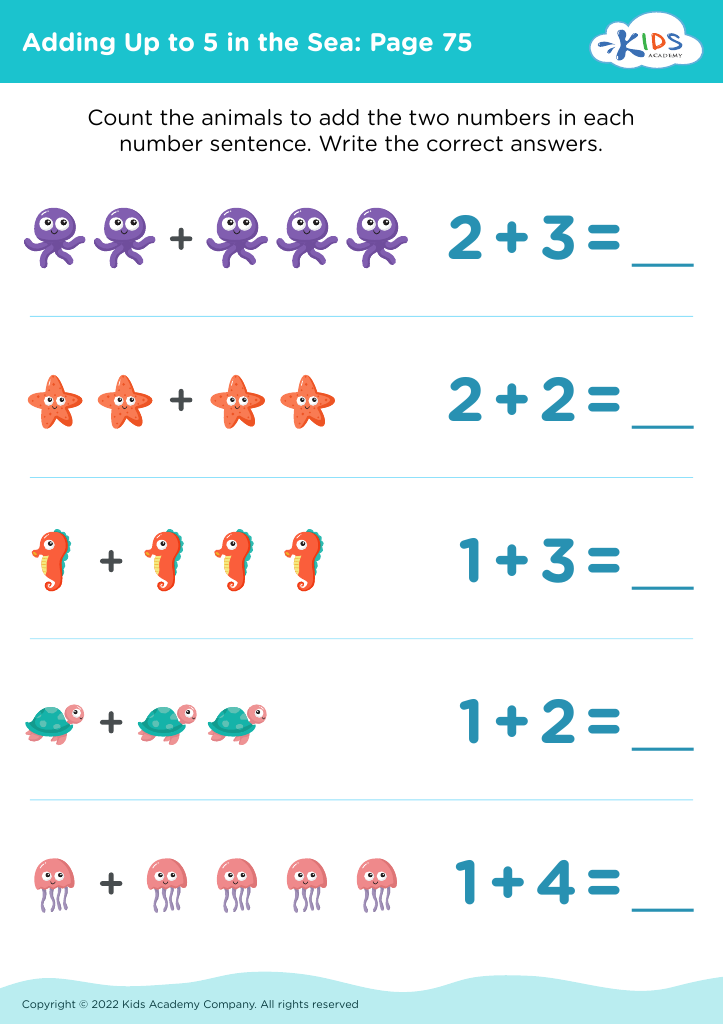
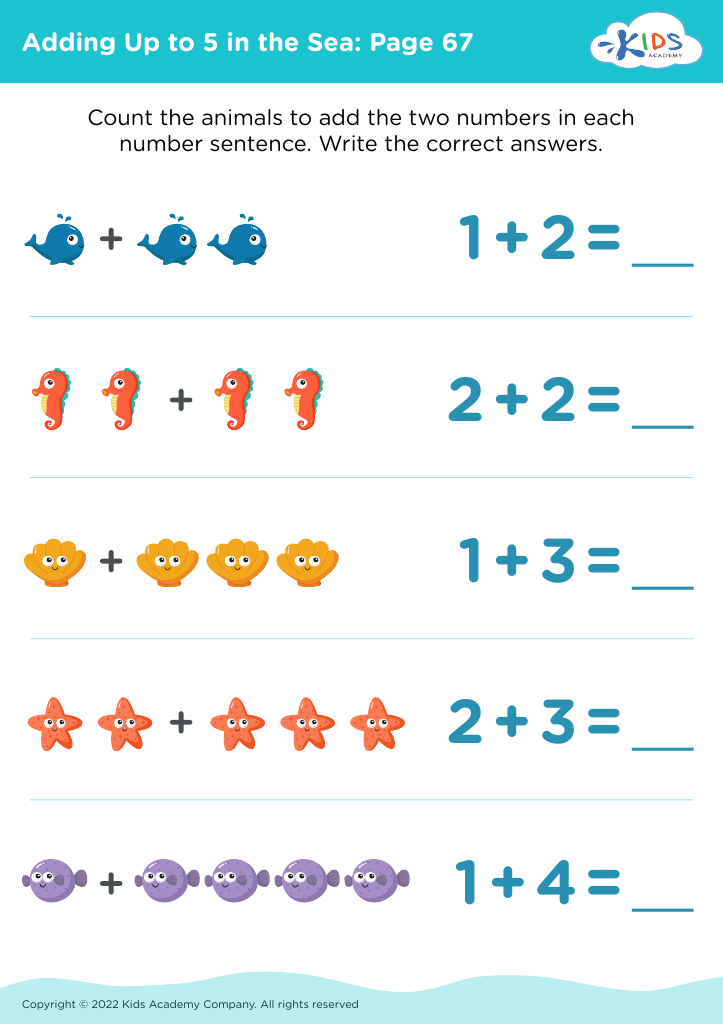
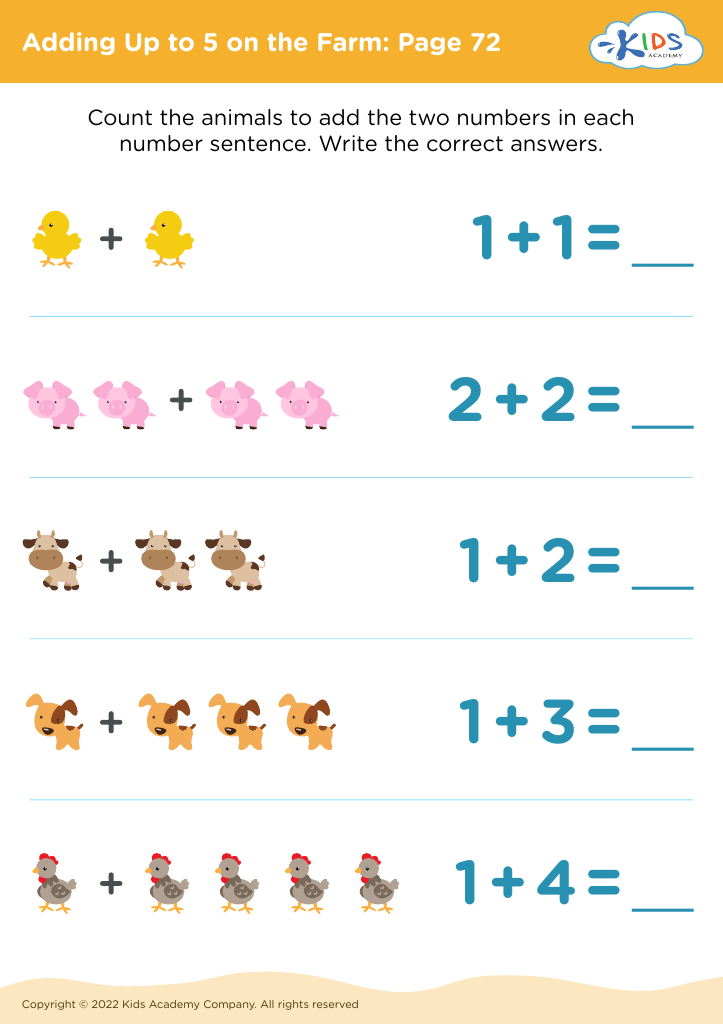
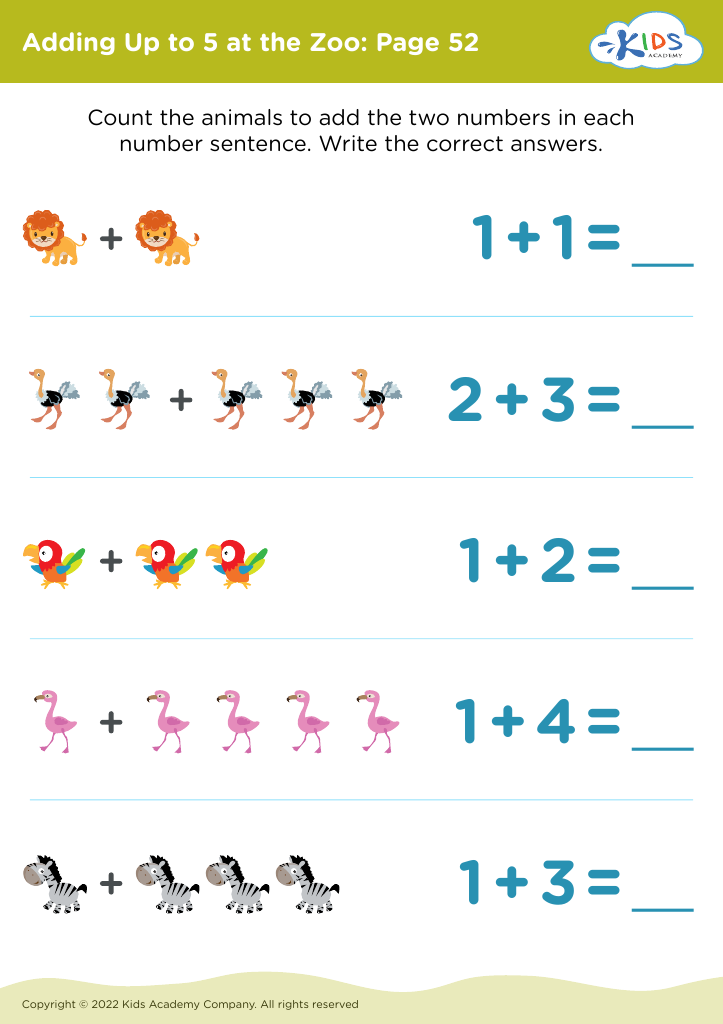
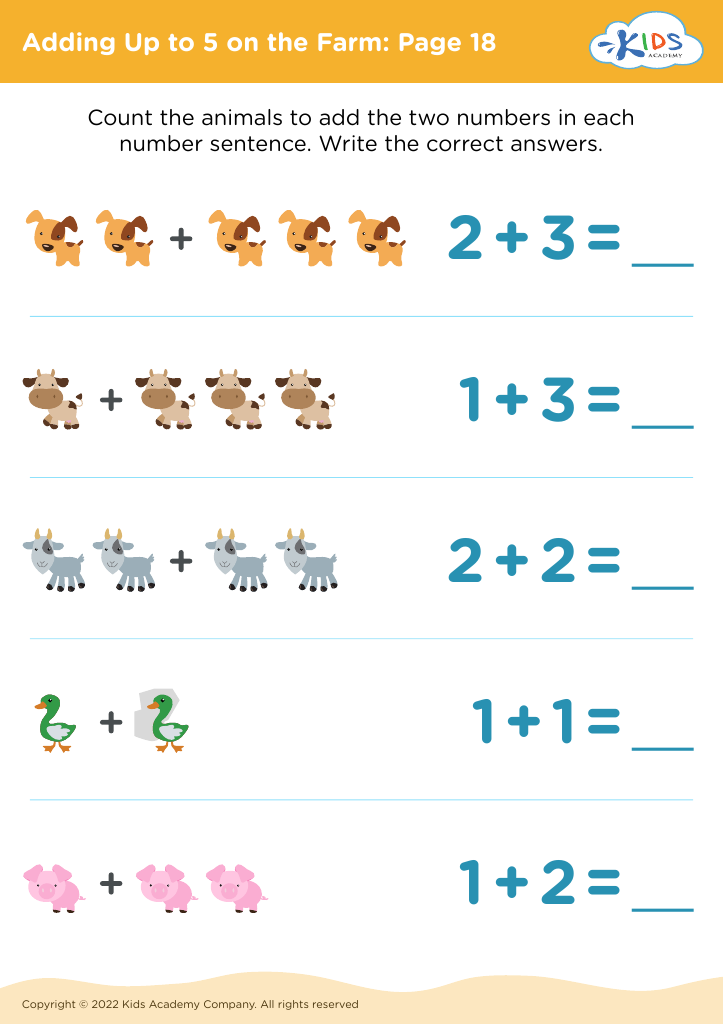
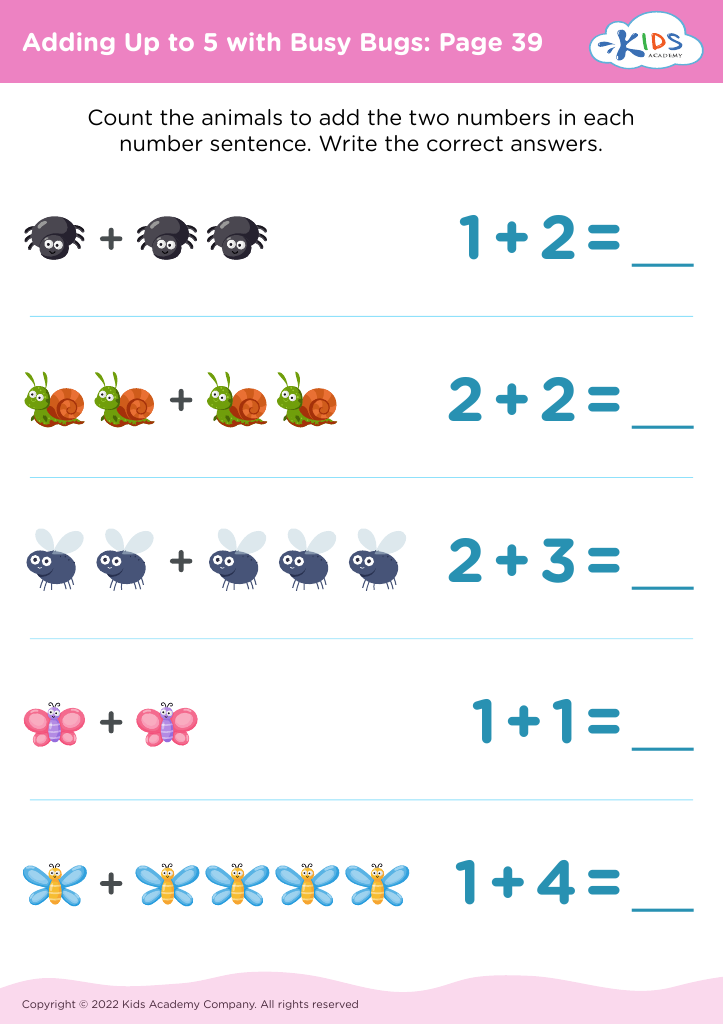


.jpg)





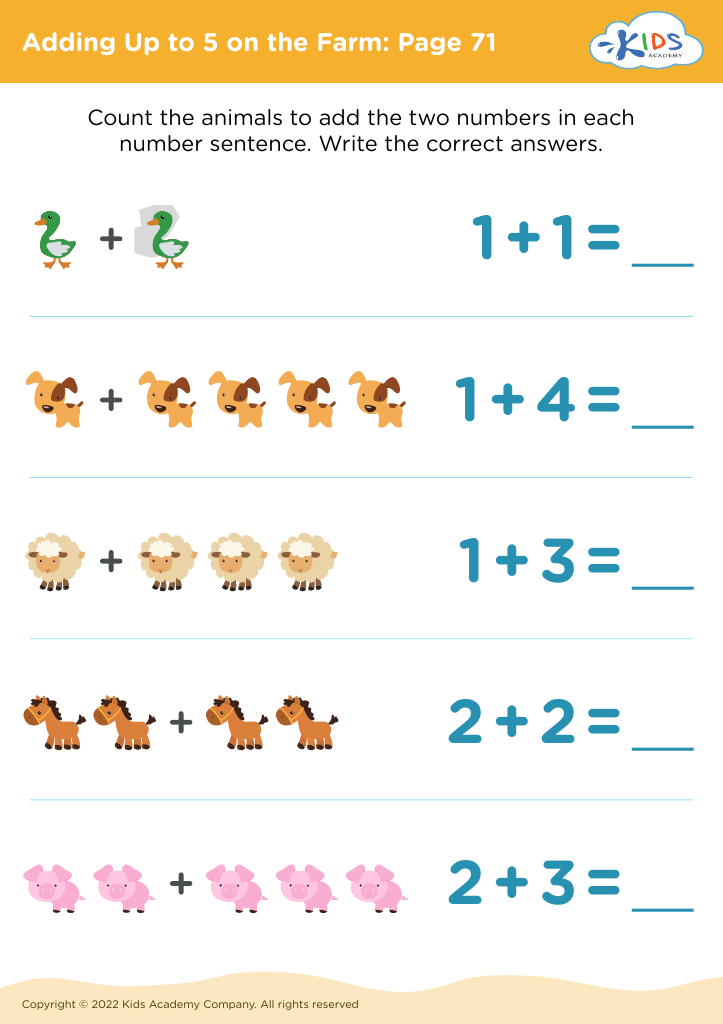
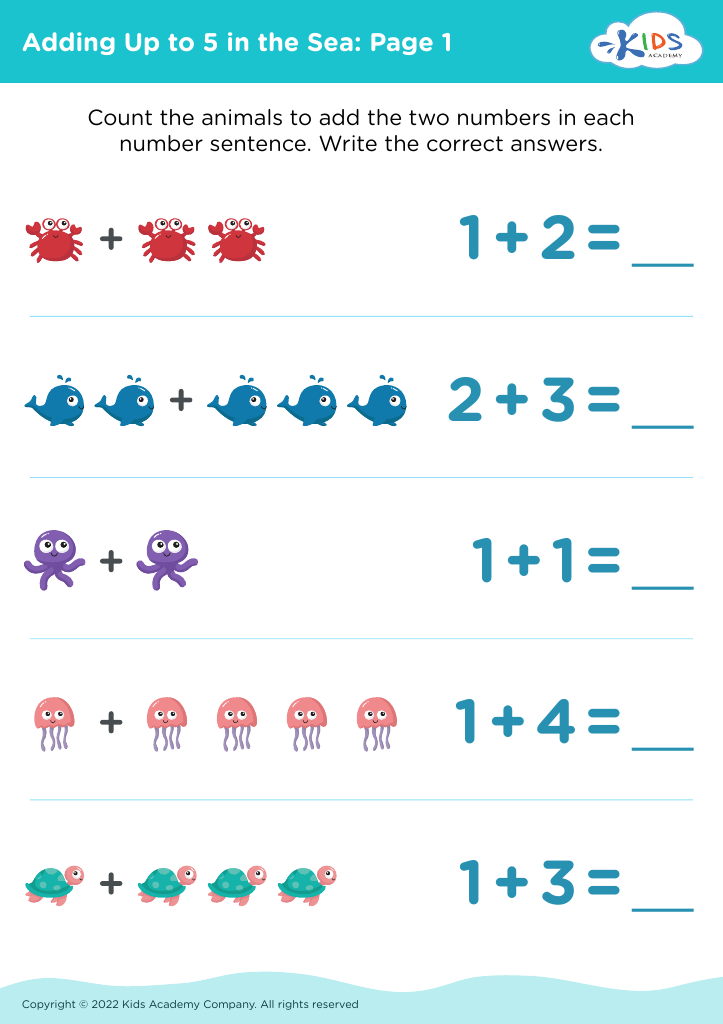
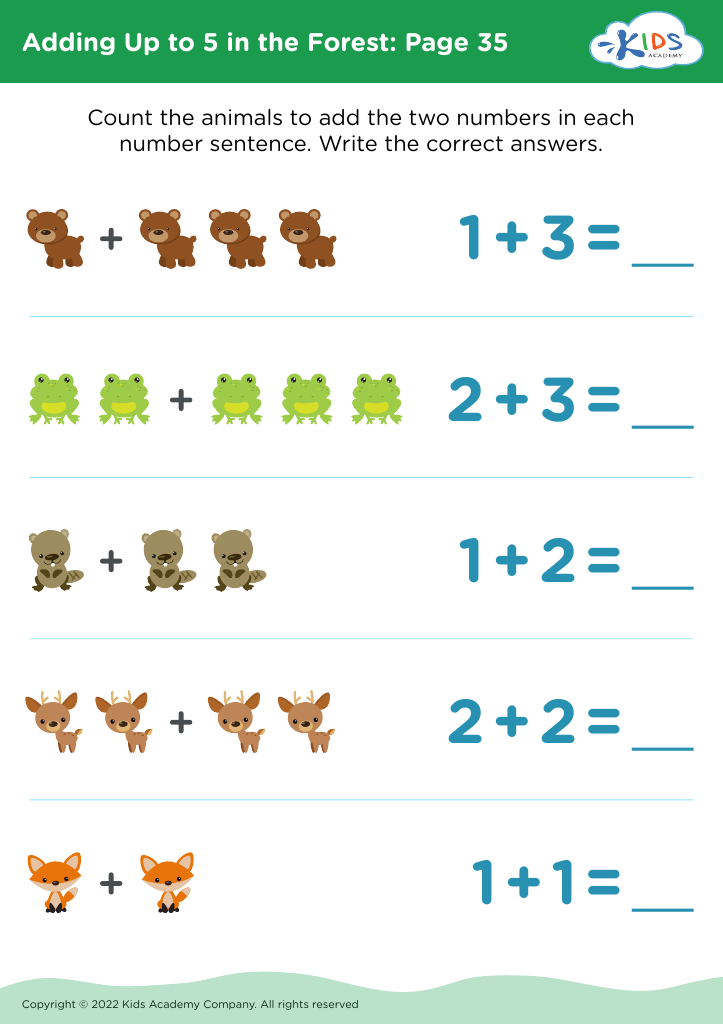
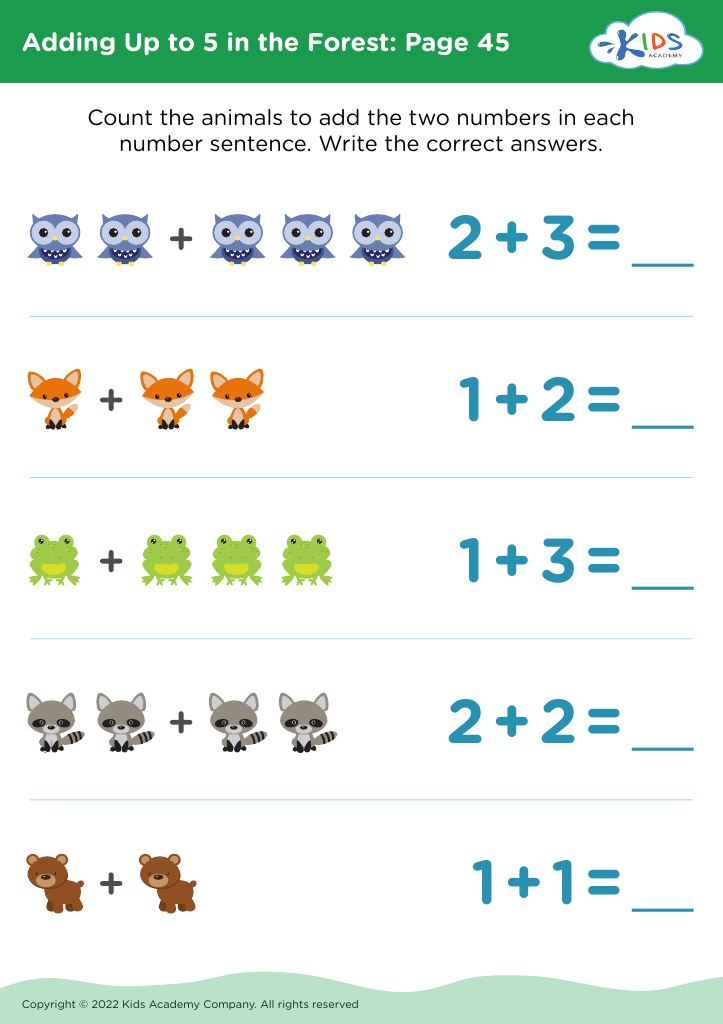
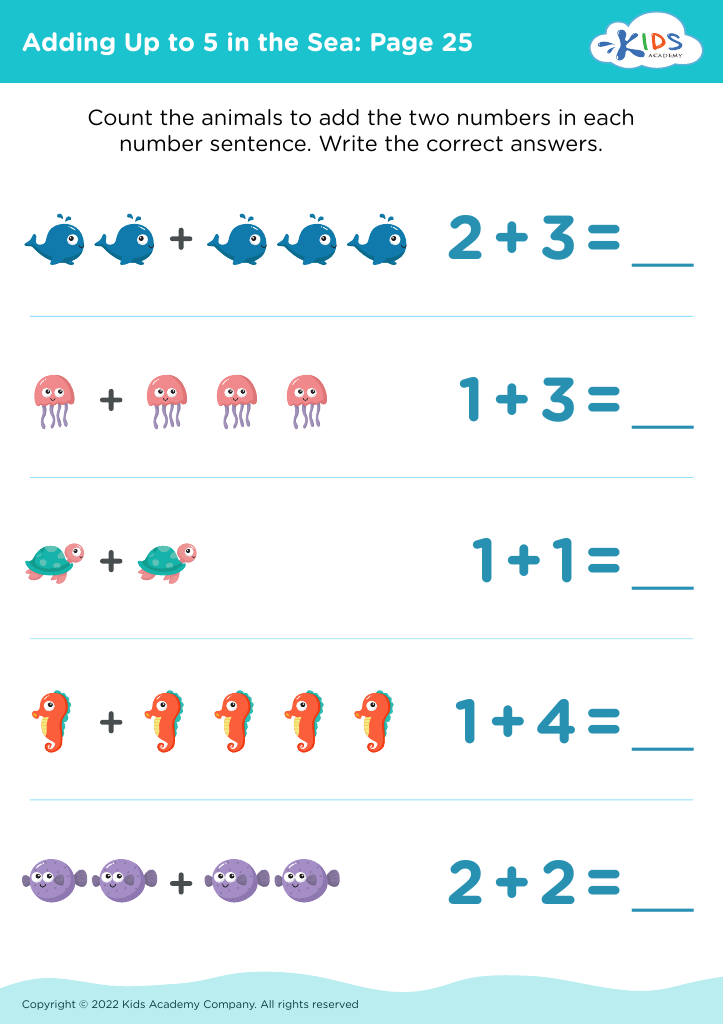
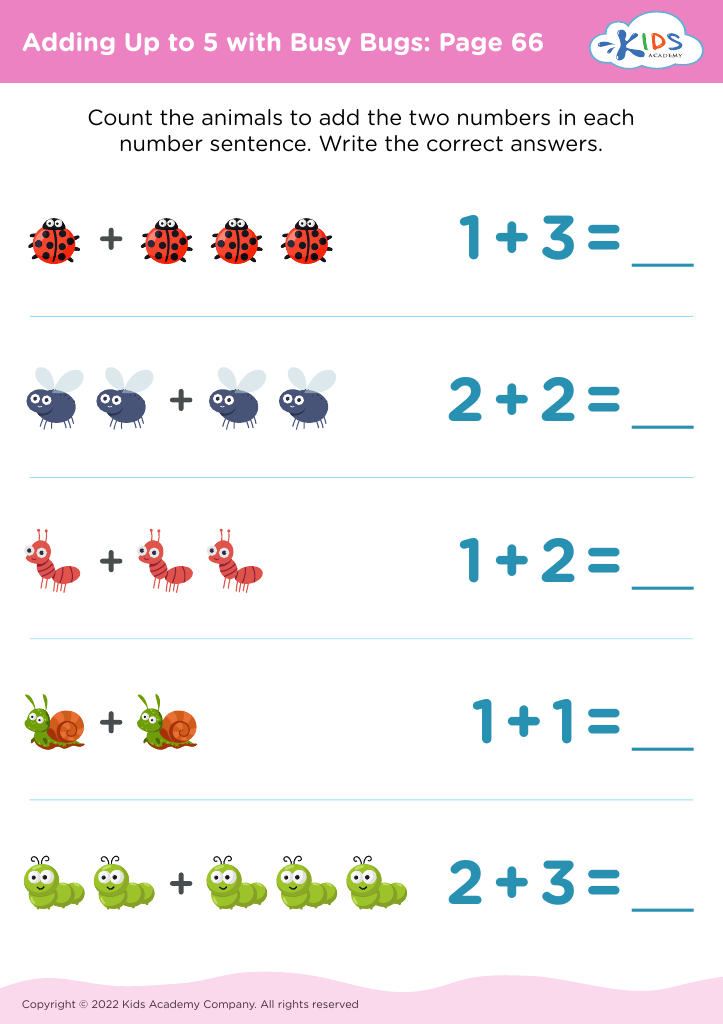
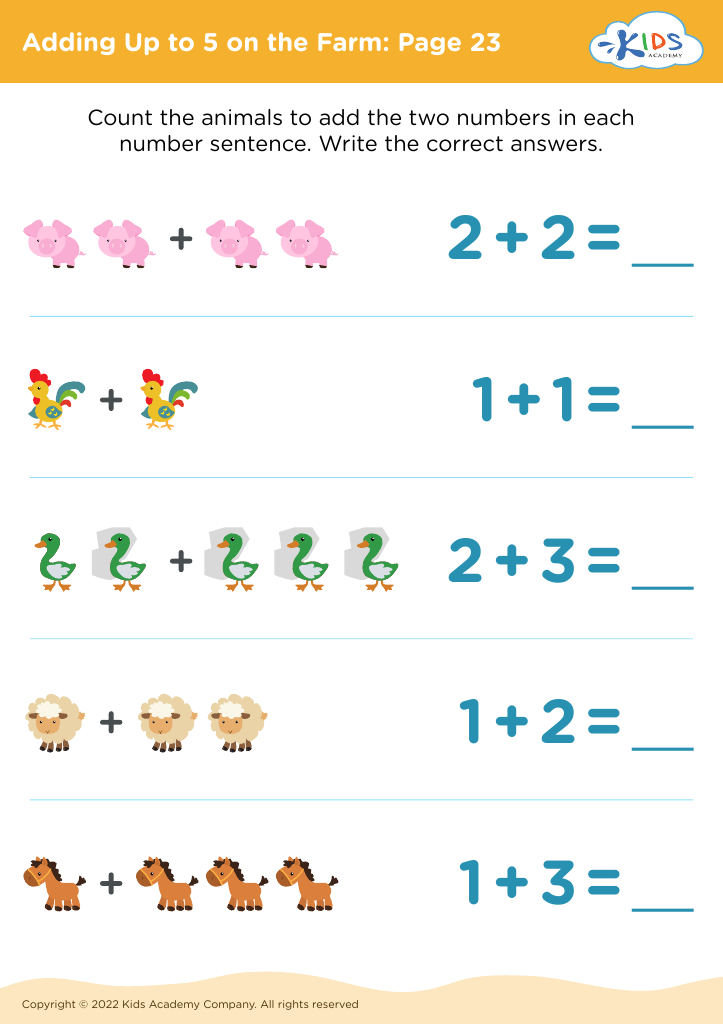
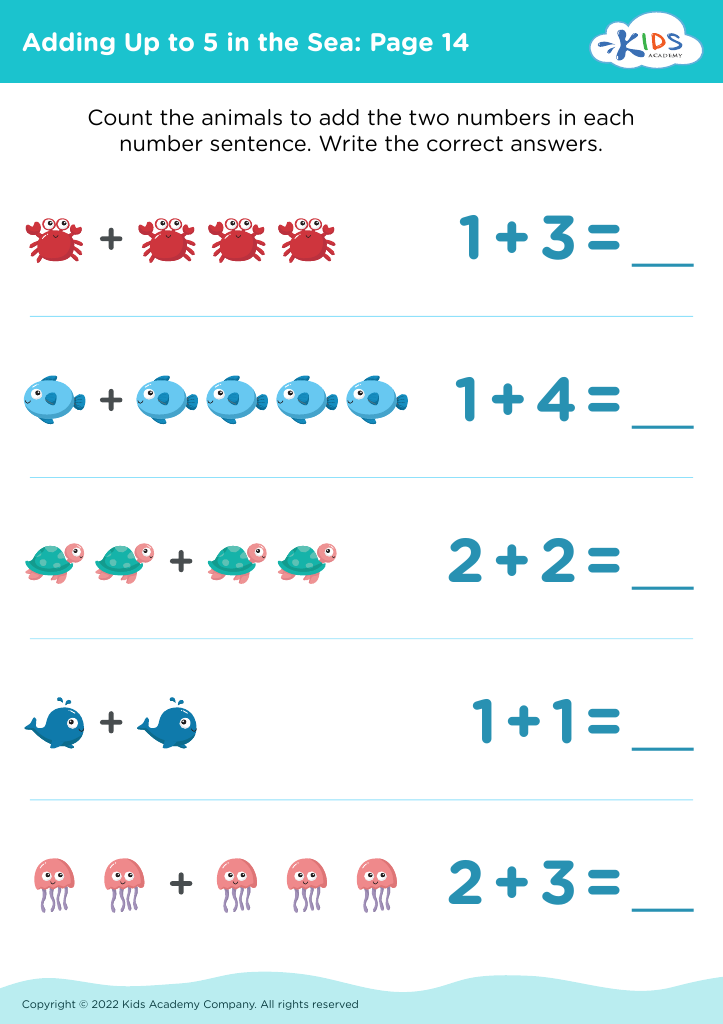
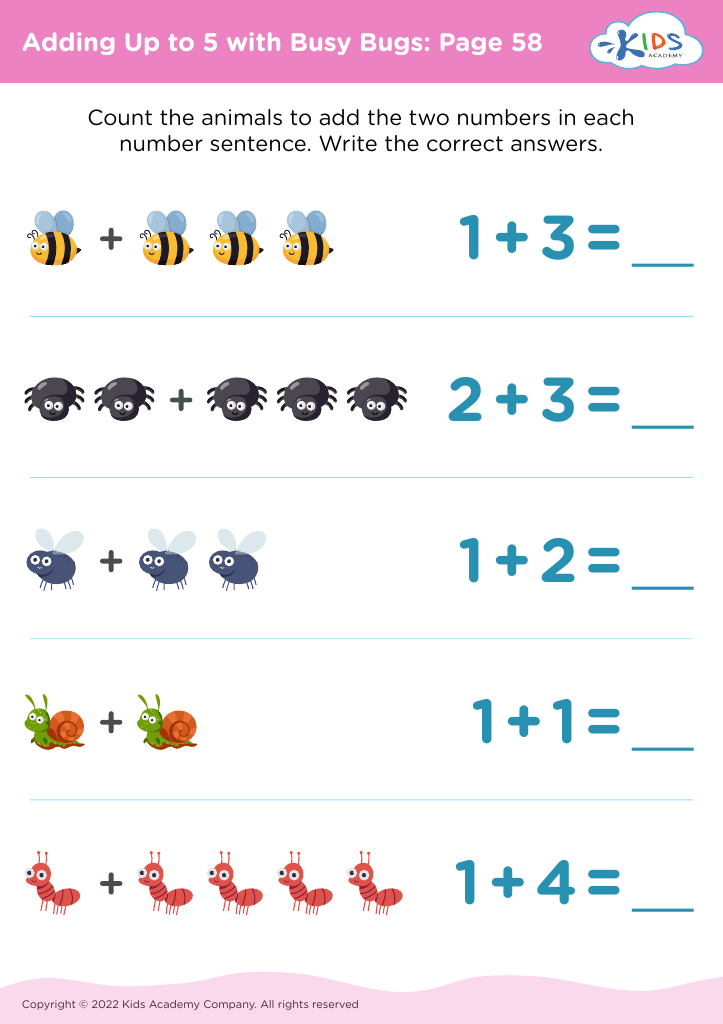
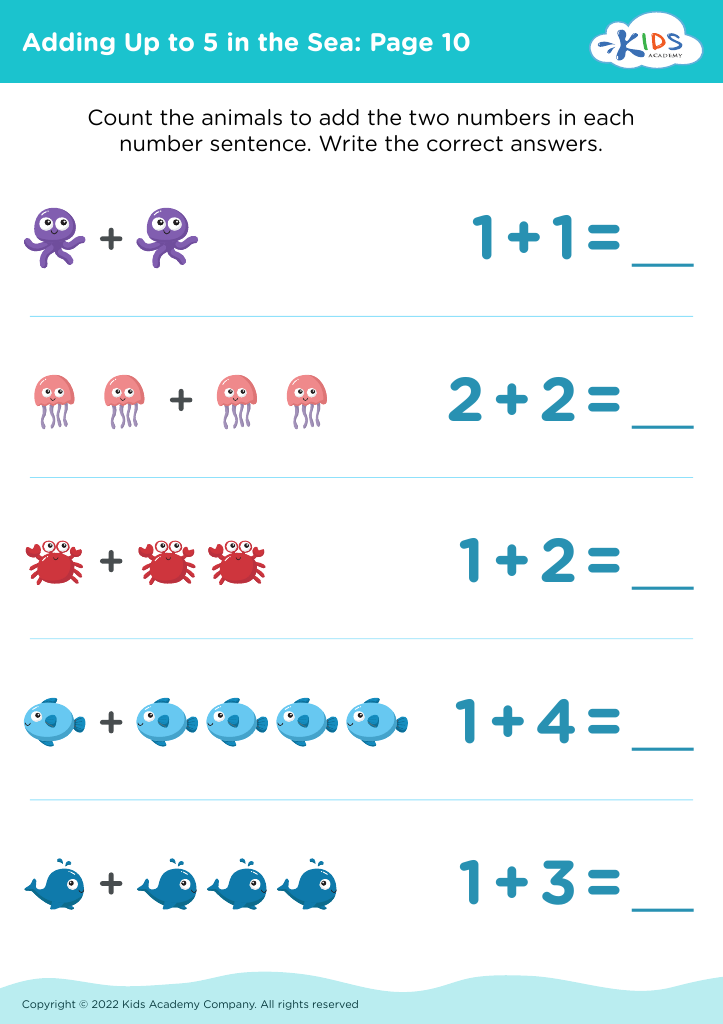
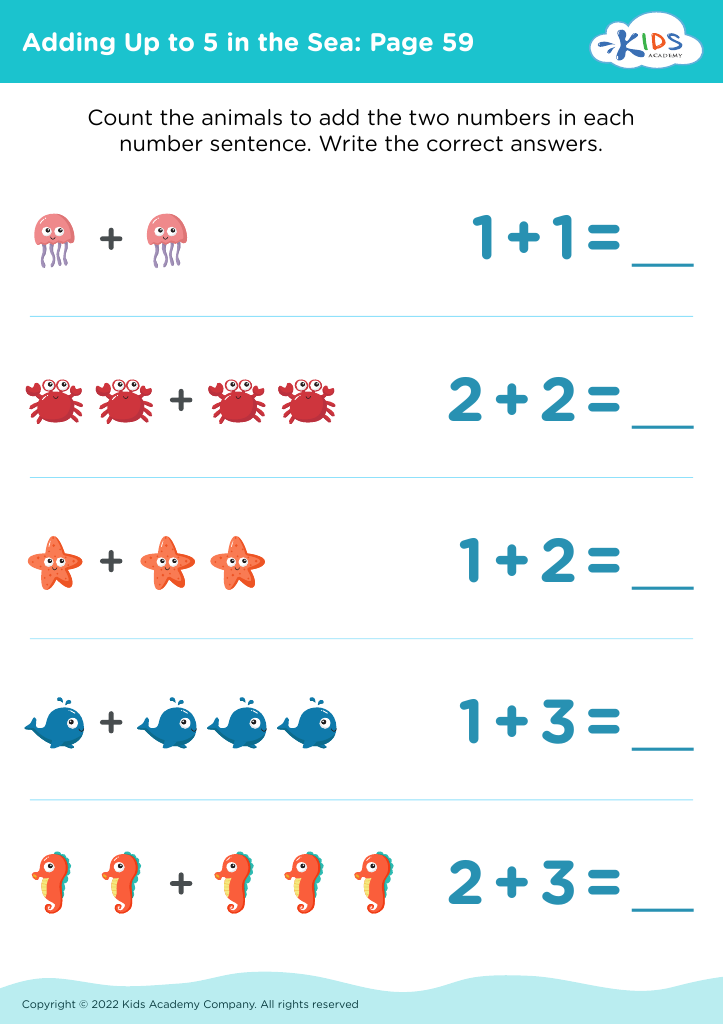
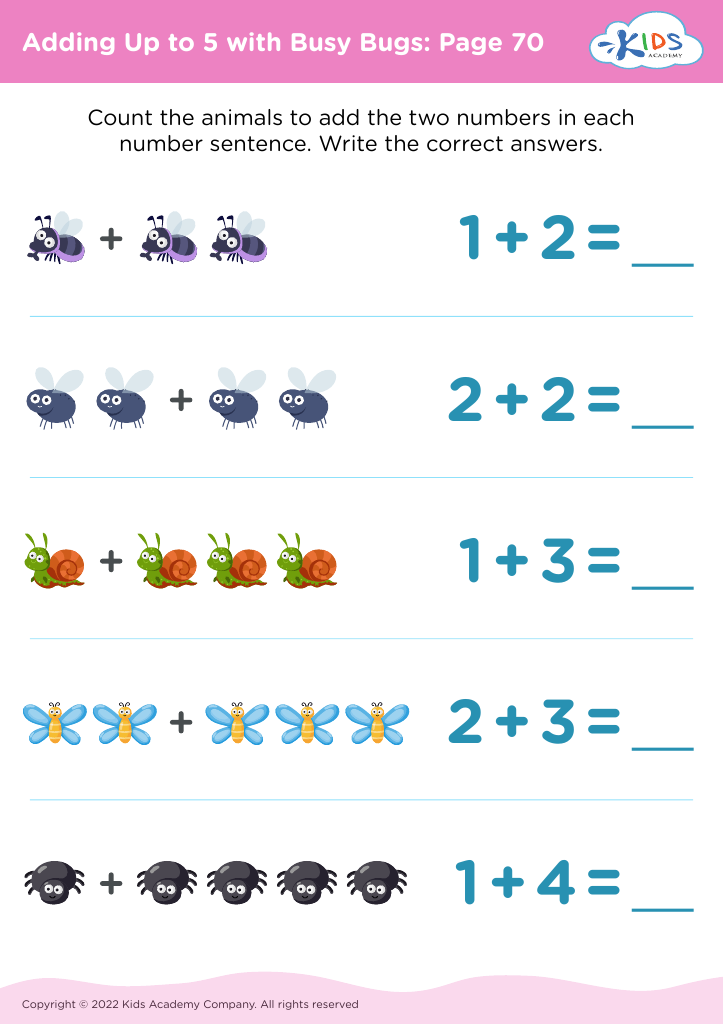
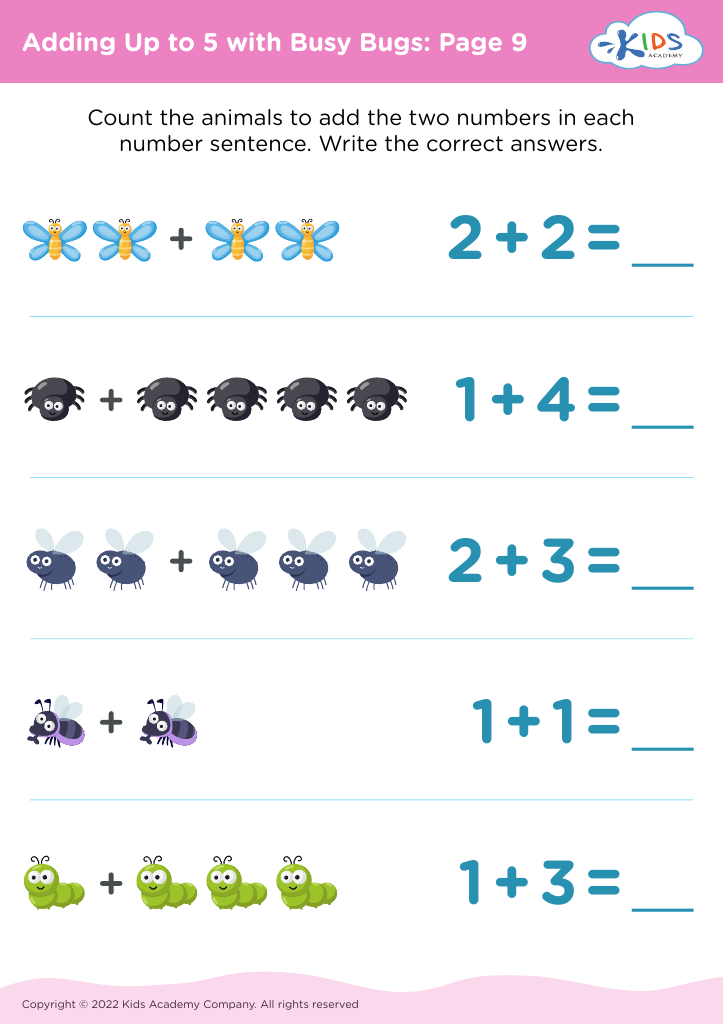
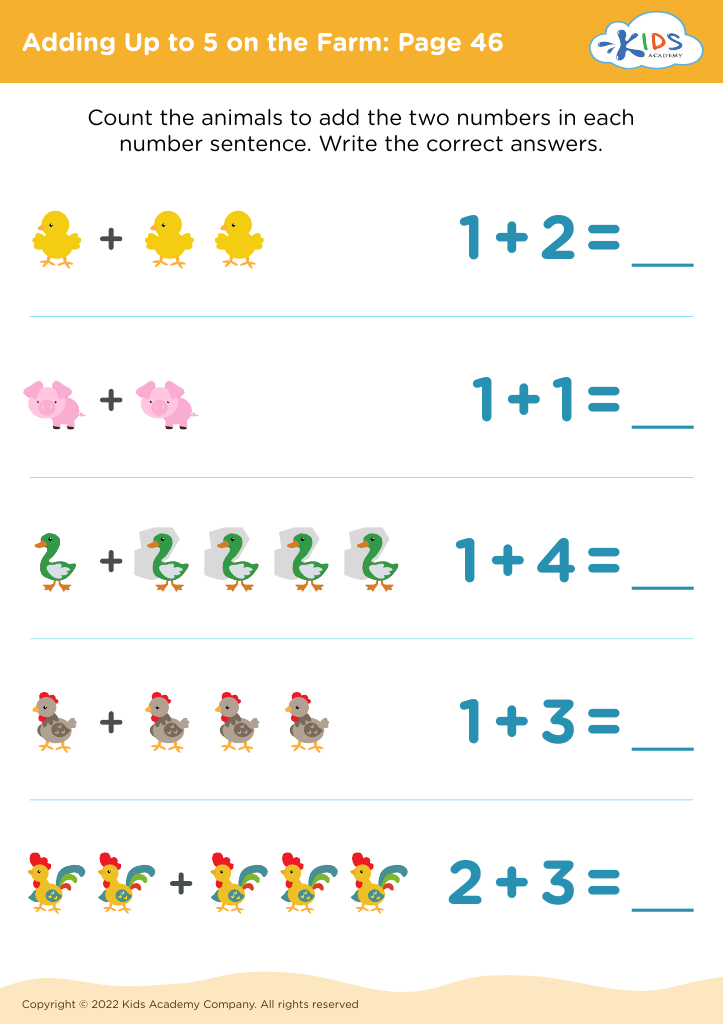
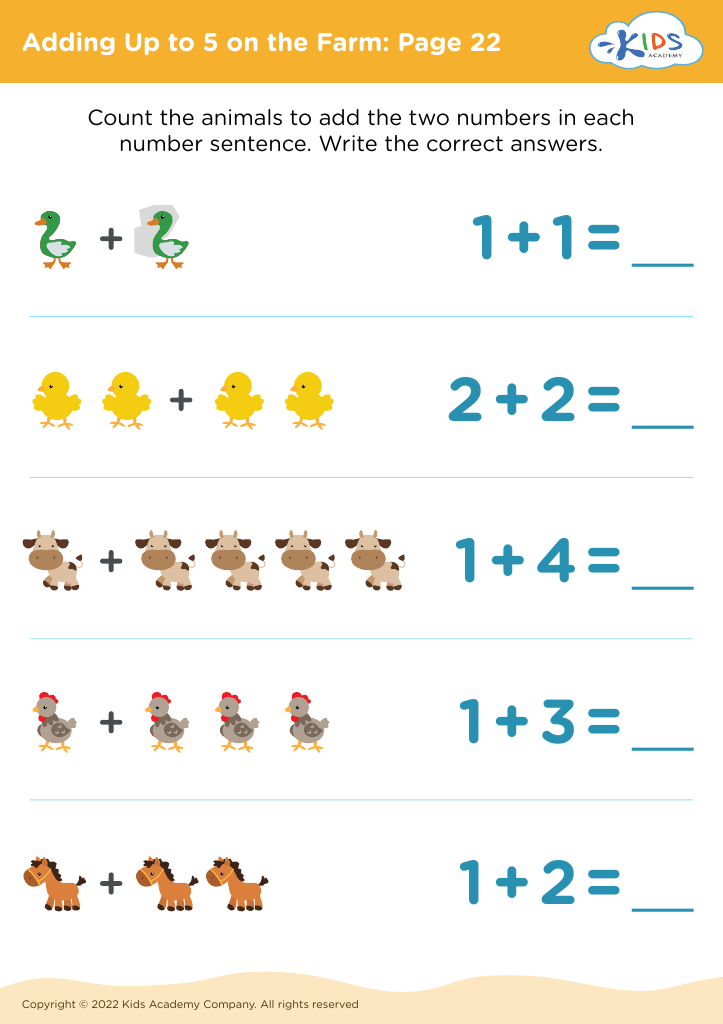
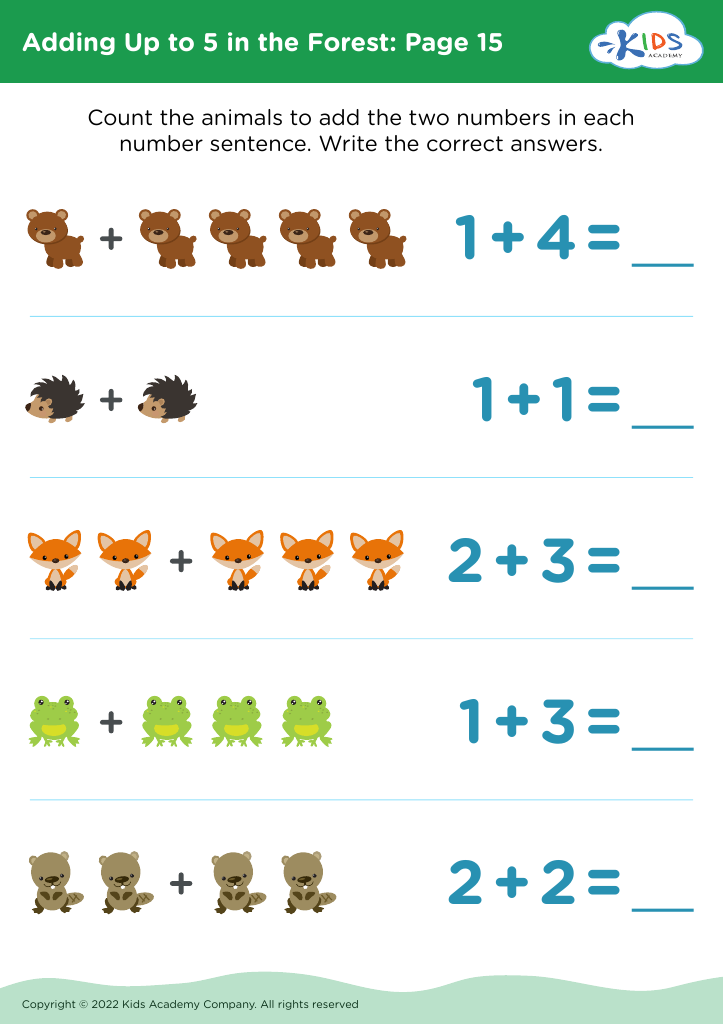
Visual learning for adding up to five is crucial in early childhood education because it lays the foundation for mathematical understanding and cognitive development. Using visual aids, such as objects, pictures, or interactive tools, helps children grasp the concept of addition in an intuitive and concrete manner. When children can see what “adding up to five” looks like, they better understand the value and quantity associated with numbers.
This approach caters to different learning styles, making math accessible to visual learners. By repeatedly seeing and manipulating physical representations of numbers, children develop stronger mental images of mathematical concepts. This reinforces their ability to perform addition without relying solely on memorization.
Moreover, visual learning promotes problem-solving skills and analytical thinking. As children practice adding quantities visually, they learn to recognize patterns and relationships between numbers. These skills are not only vital for math but also for overall cognitive development.
For teachers, incorporating visual methods can make lessons more engaging and easier to understand. Similarly, parents equipped with visual aids can confidently assist their child’s learning process at home, fostering a supportive environment. Overall, caring about visual learning methods for addition helps foster a solid foundational understanding, critical for future academic success in more complex math topics.








