Filters

34 filtered results

Clear all filters
Favorites
With answer key
Interactive

34 filtered results

Difficulty Level

Grade


Subject

    Check out this FREE Trial Lesson on Adding up to 50!

    D

    Favorites
    With answer key
    Interactive
    • Counting skills
    • Adding up to 50
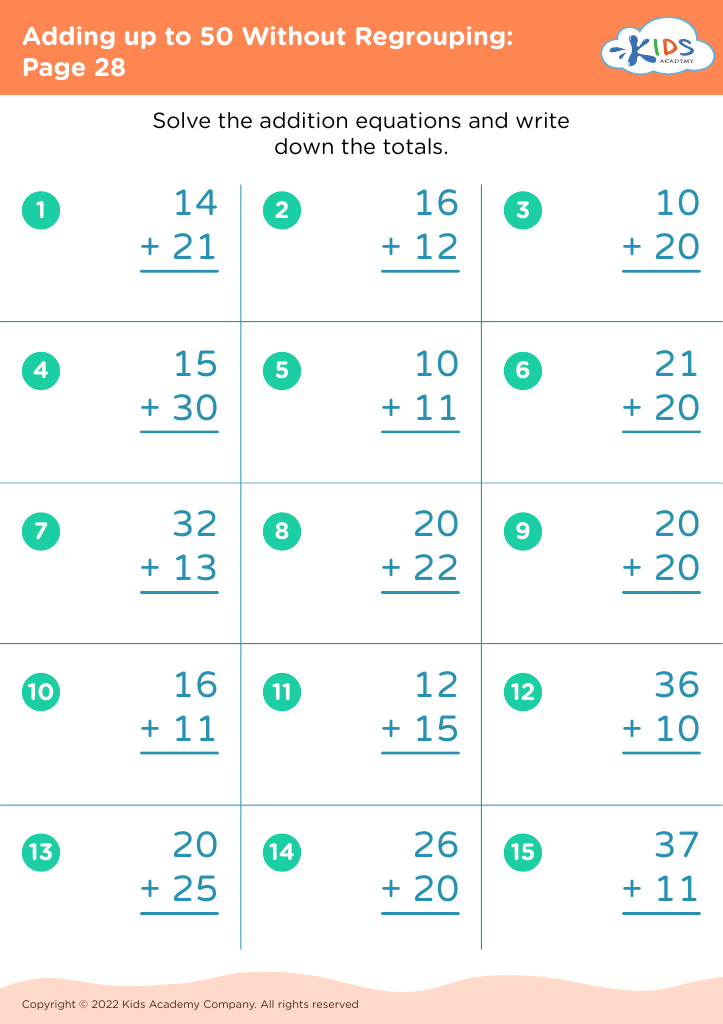
    Adding up to 50 Without Regrouping: Page 28
    Adding up to 50 Without Regrouping: Page 28
    Adding up to 50 Without Regrouping: Page 28
    Worksheet
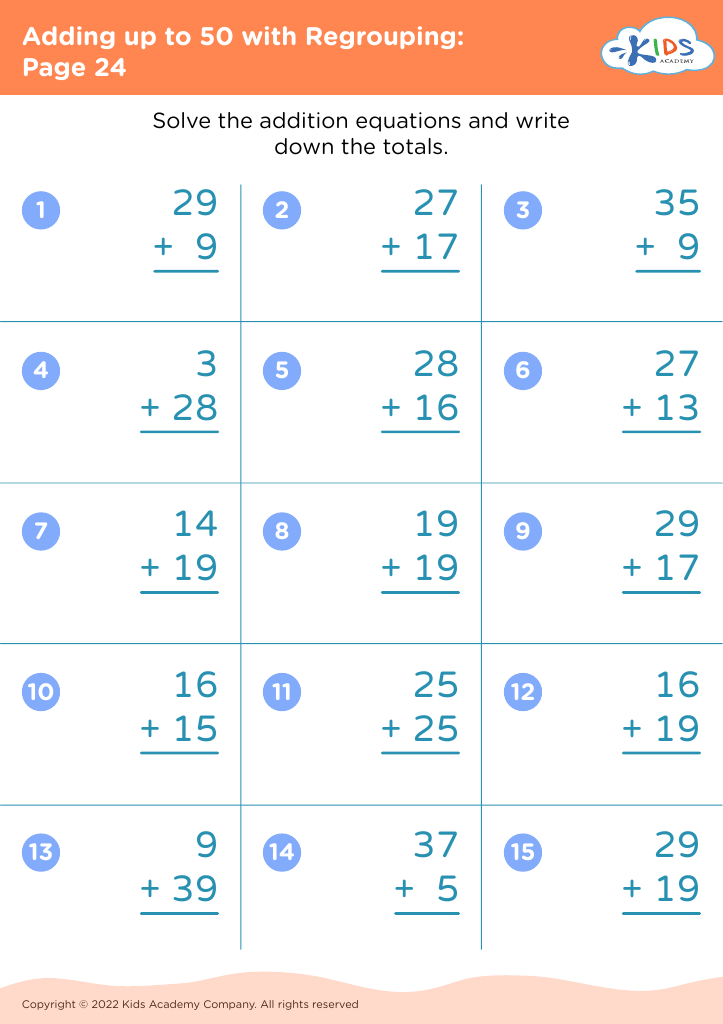
    Adding up to 50 with Regrouping: Page 24
    Adding up to 50 with Regrouping: Page 24
    Adding up to 50 with Regrouping: Page 24
    Worksheet
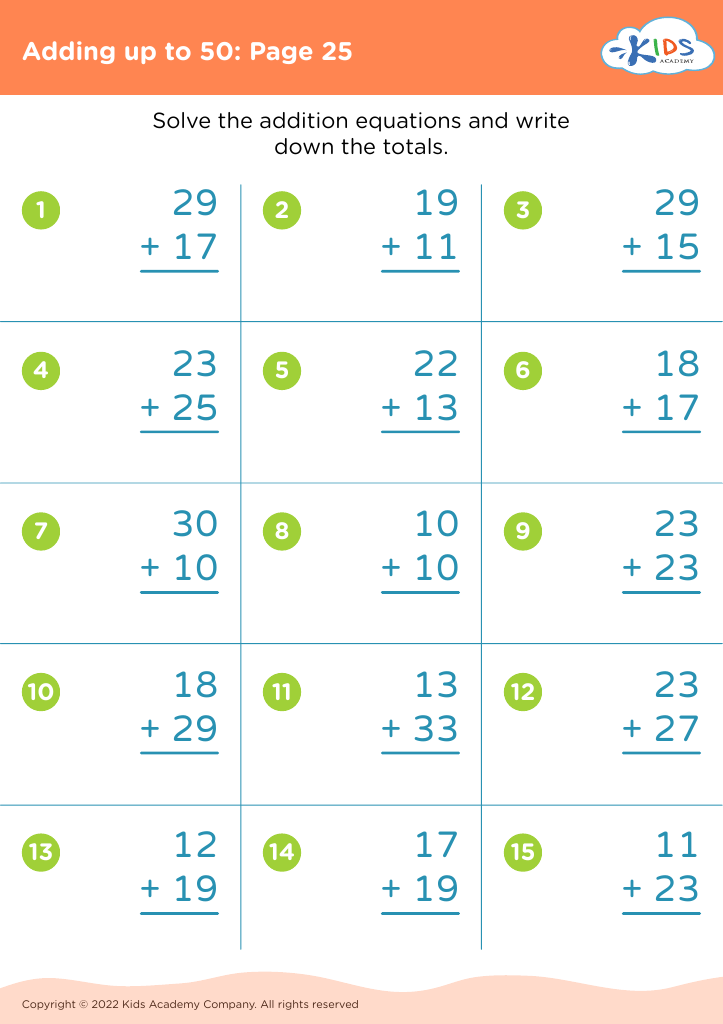
    Adding up to 50: Page 25
    Adding up to 50: Page 25

    Adding up to 50: Page 25

    Adding up to 50: Page 25
    Worksheet
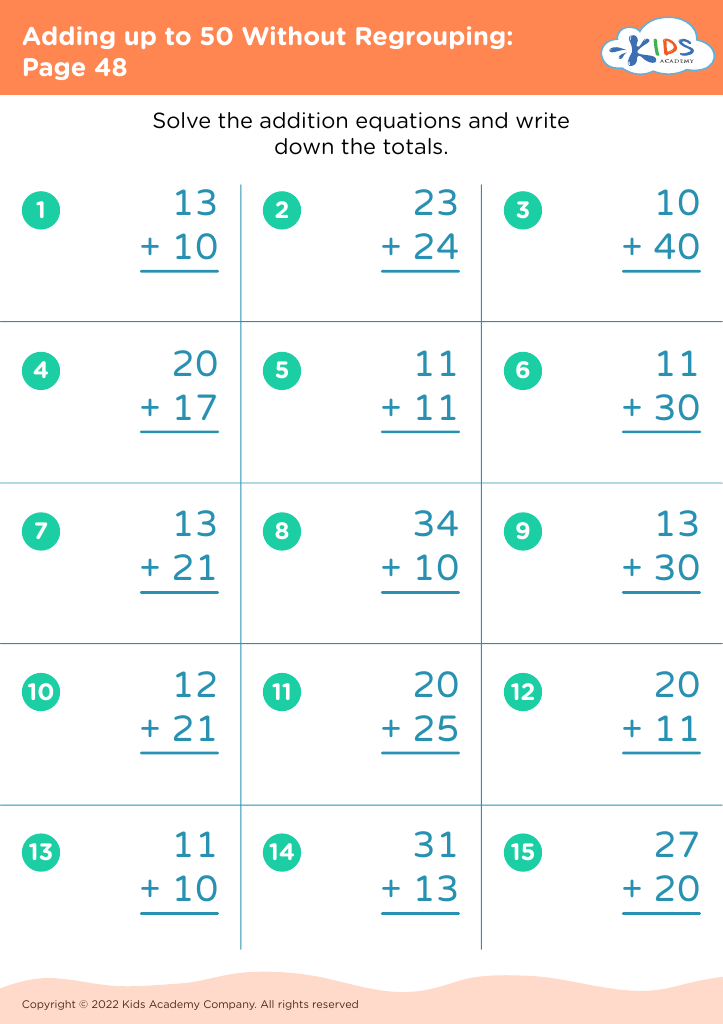
    Adding up to 50 Without Regrouping: Page 48
    Adding up to 50 Without Regrouping: Page 48
    Adding up to 50 Without Regrouping: Page 48
    Worksheet
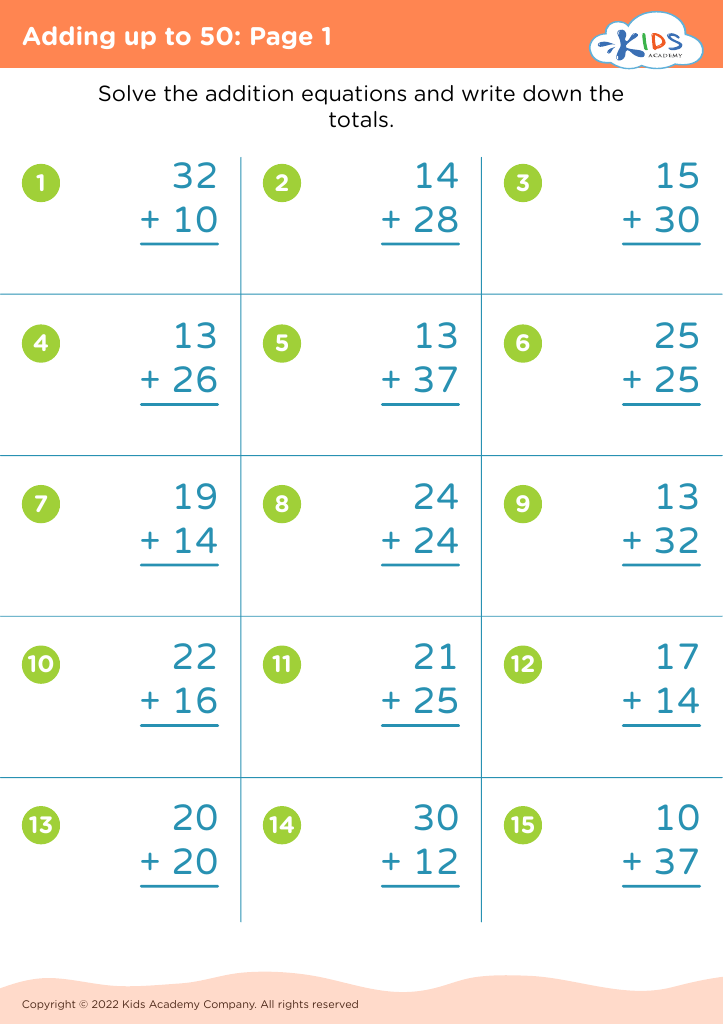
    Adding up to 50: Page 1
    Adding up to 50: Page 1

    Adding up to 50: Page 1

    Adding up to 50: Page 1
    Worksheet
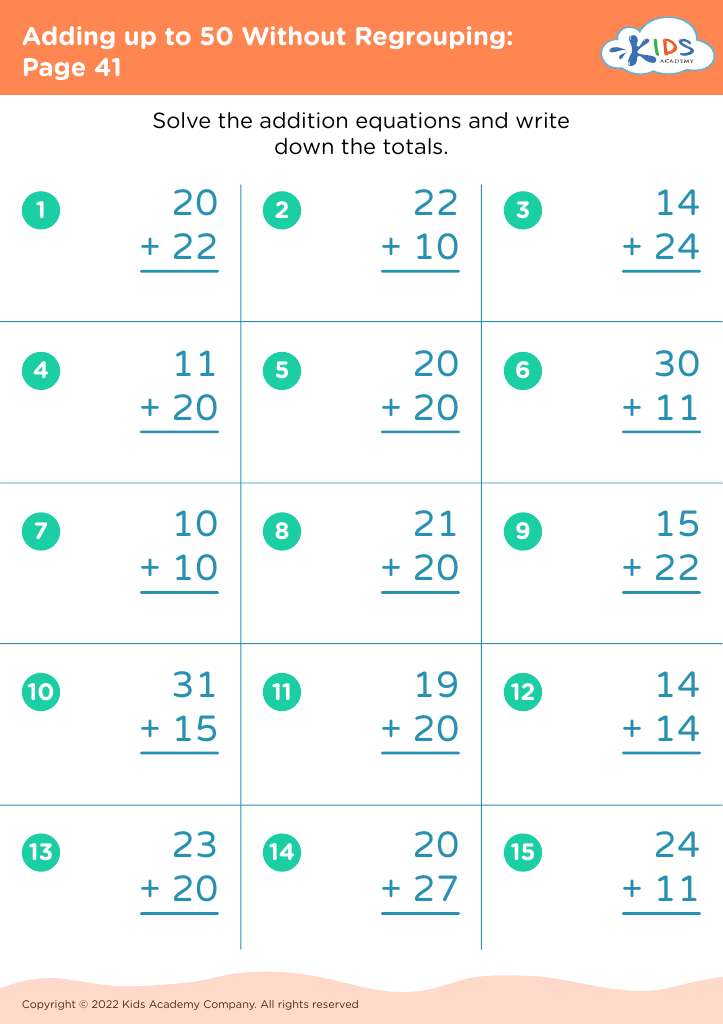
    Adding up to 50 Without Regrouping: Page 41
    Adding up to 50 Without Regrouping: Page 41
    Adding up to 50 Without Regrouping: Page 41
    Worksheet
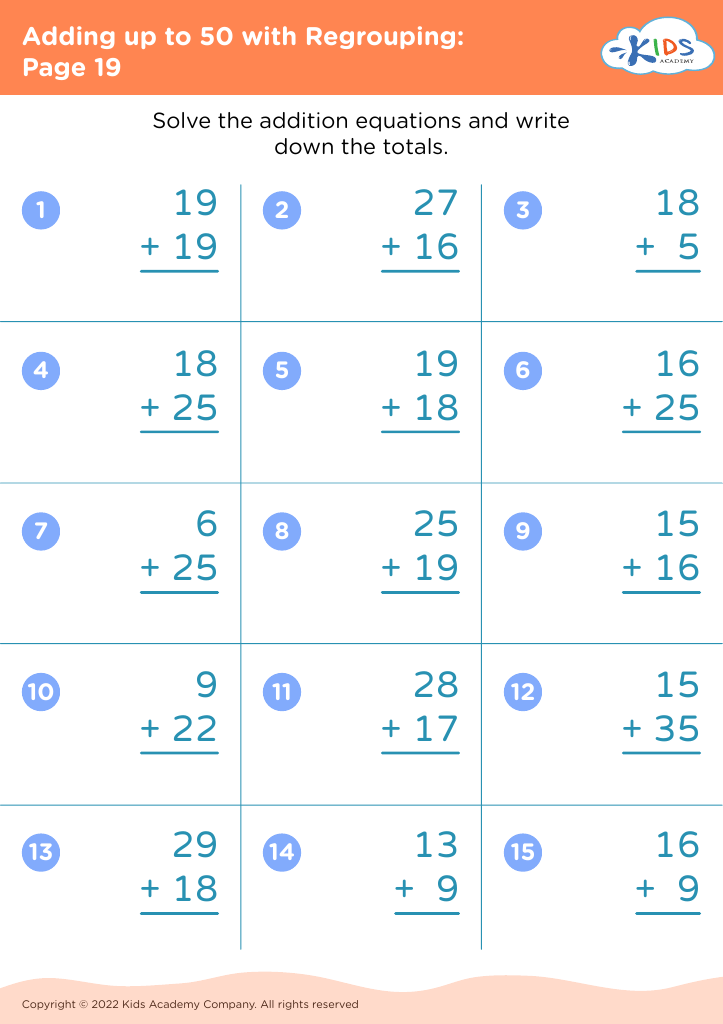
    Adding up to 50 with Regrouping: Page 19
    Adding up to 50 with Regrouping: Page 19
    Adding up to 50 with Regrouping: Page 19
    Worksheet
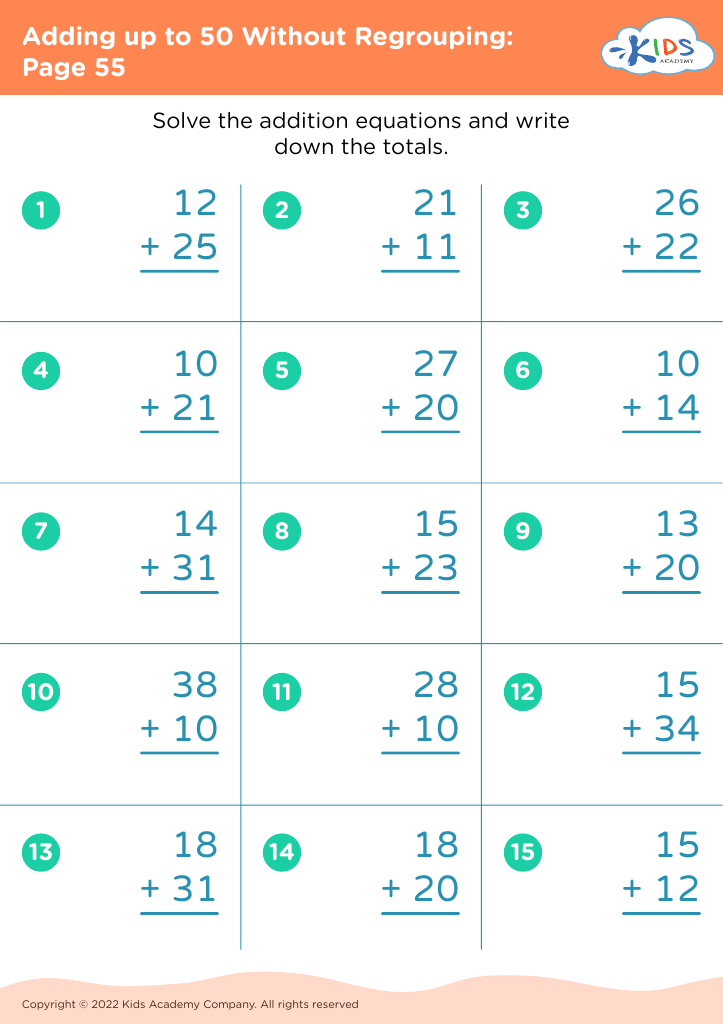
    Adding up to 50 Without Regrouping: Page 55
    Adding up to 50 Without Regrouping: Page 55
    Adding up to 50 Without Regrouping: Page 55
    Worksheet
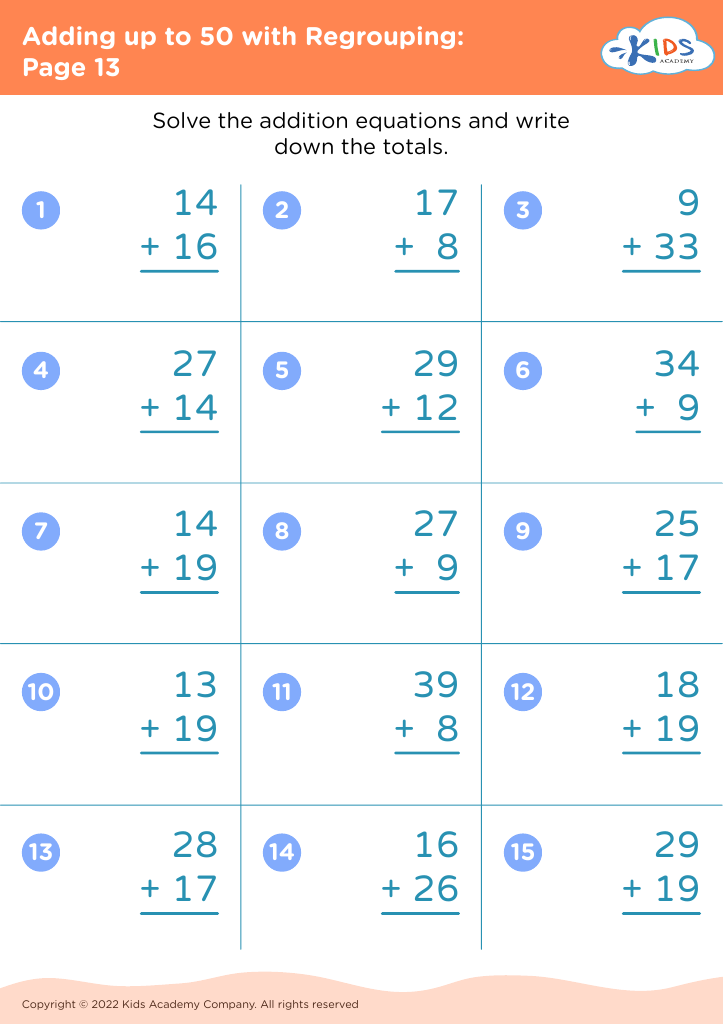
    Adding up to 50 with Regrouping: Page 13
    Adding up to 50 with Regrouping: Page 13
    Adding up to 50 with Regrouping: Page 13
    Worksheet
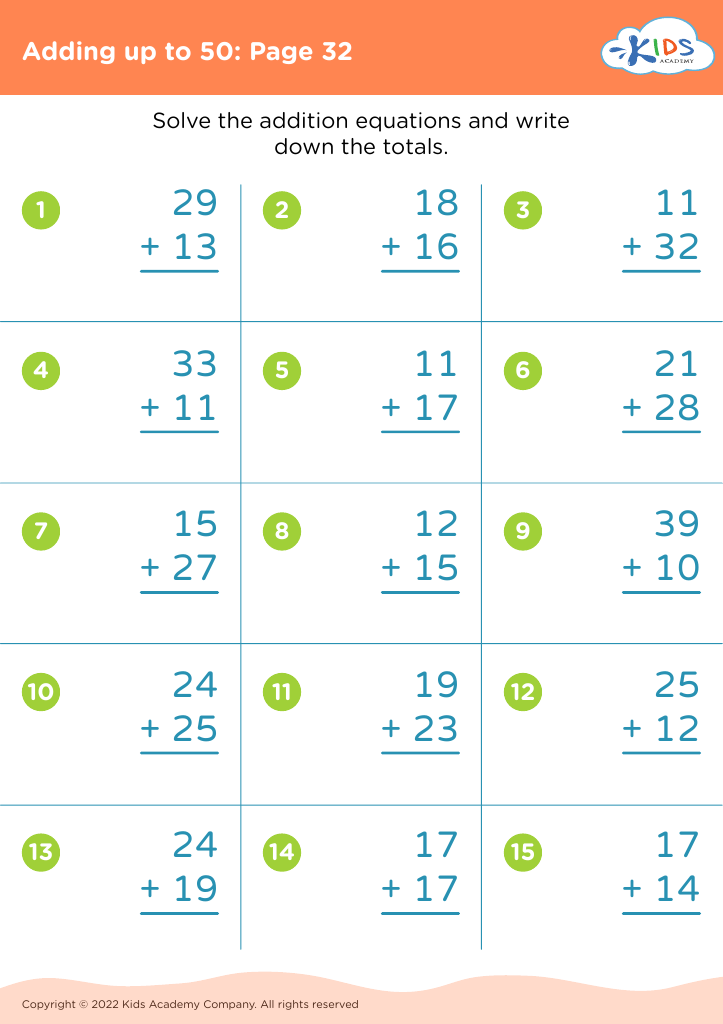
    Adding up to 50: Page 32
    Adding up to 50: Page 32

    Adding up to 50: Page 32

    Adding up to 50: Page 32
    Worksheet


    Counting skills, particularly the ability to add up to 50, are foundational for a child's mathematical development and essential for day-to-day life. Understanding and mastering these skills lays the groundwork for further mathematical concepts, including subtraction, multiplication, and division. When children can count fluently and add numbers up to 50, they are better equipped to solve problems, make sense of numerical relationships, and develop logical thinking.

    For parents and teachers, fostering these counting skills can positively impact a child's confidence and attitude towards mathematics. Early mastery creates a sense of achievement and motivates students to tackle more challenging topics. In addition, strong counting abilities enhance a child's ability to perform operations that are relevant in daily activities, like budgeting, shopping, or time management.

    Moreover, counting teaches essential skills such as pattern recognition and estimation, which are crucial for real-life scenarios, and enhances cognitive flexibility and resilience. Engaging children in counting games and activities can also be a fun, interactive experience, strengthening the adult-child relationship while promoting learning. By prioritizing counting skills, parents and teachers empower children with tools for academic success and critical life skills, contributing to their overall development.