
Animal recognition Addition & Subtraction Worksheets
99 filtered results
Difficulty Level
Grade
Age
-
From - To
Subject
Activity
Standards
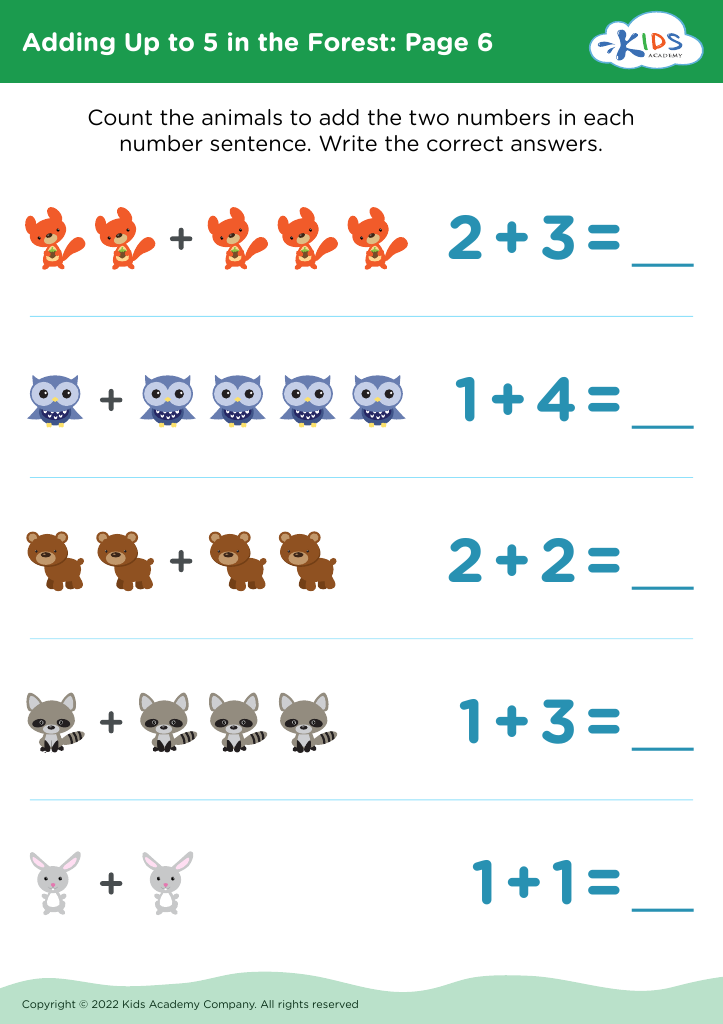
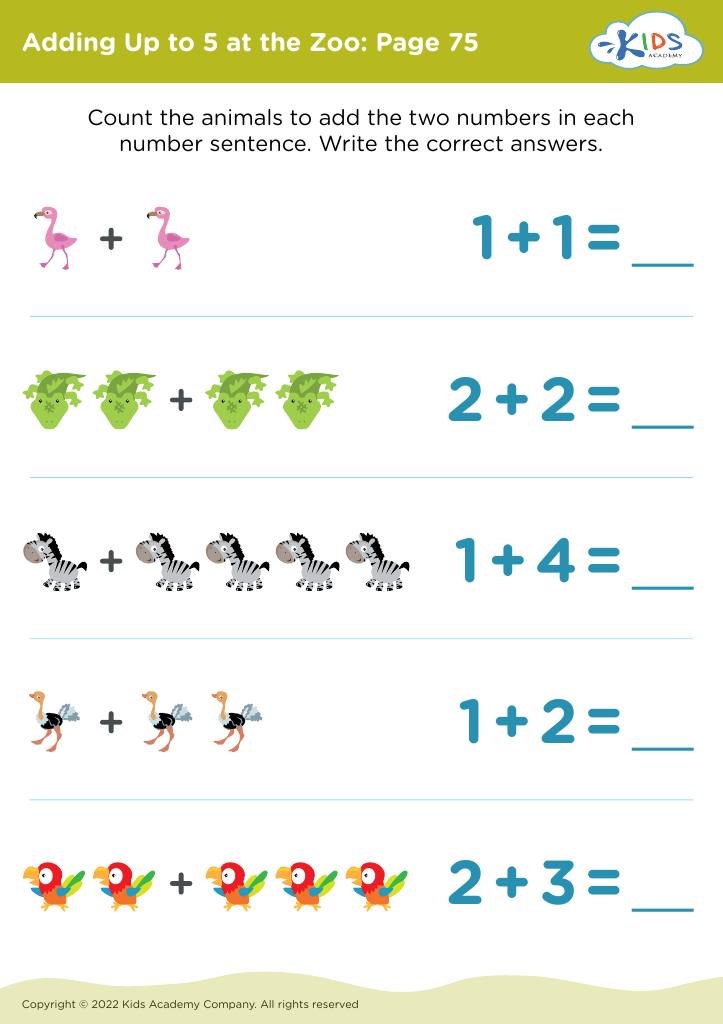
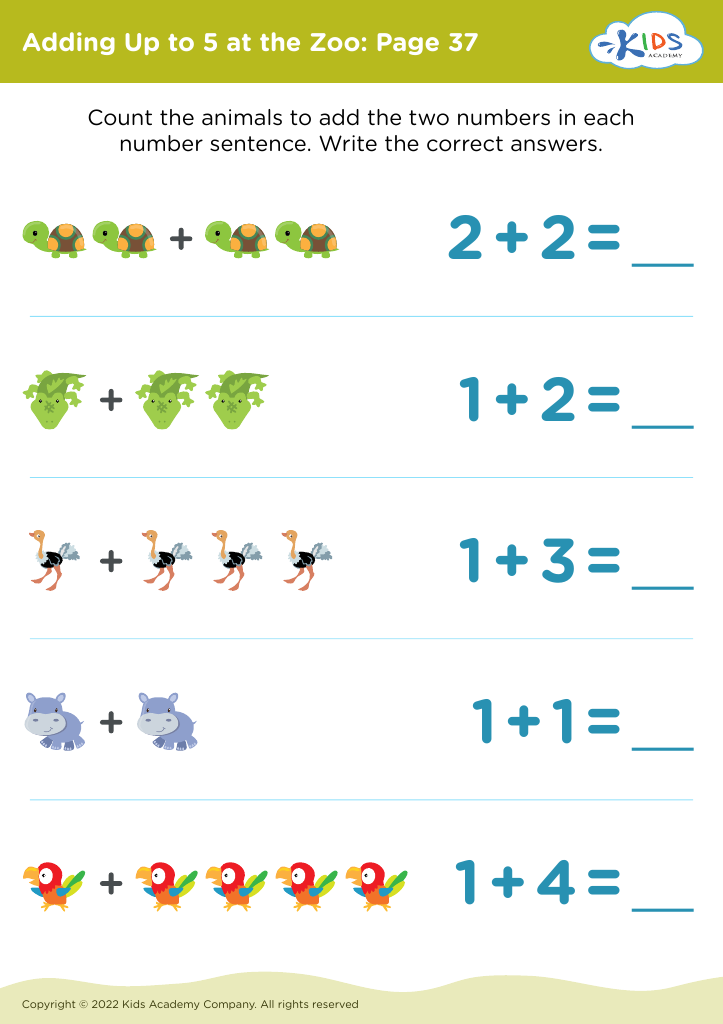
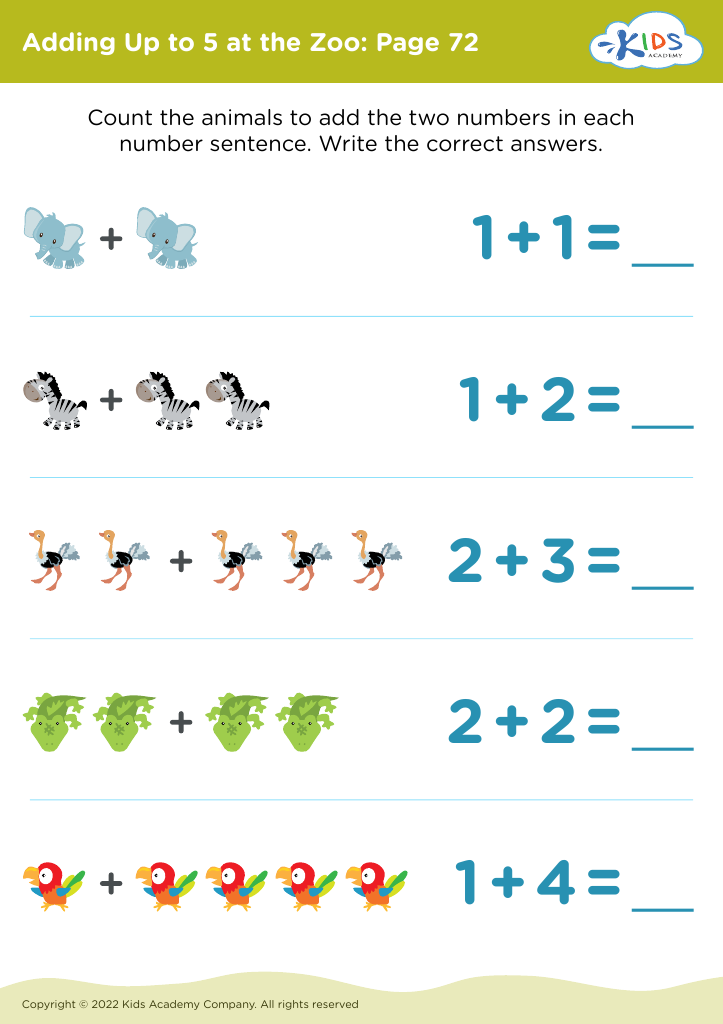
Explore our engaging "Animal Recognition Addition & Subtraction Worksheets," designed to enhance early math skills while keeping young learners excited! These fun worksheets combine essential addition and subtraction practice with adorable animal illustrations, making math enjoyable for kids. As students recognize various animals, they'll develop their counting abilities and improve number recognition. The activities promote critical thinking as children solve problems in a delightful context. Perfect for teachers, parents, or tutors, these worksheets are suitable for preschool and kindergarten levels available for easy printing. Dive into a world of math and animals, and watch your child's confidence grow with every completed worksheet!
Favorites
With answer key
Interactive
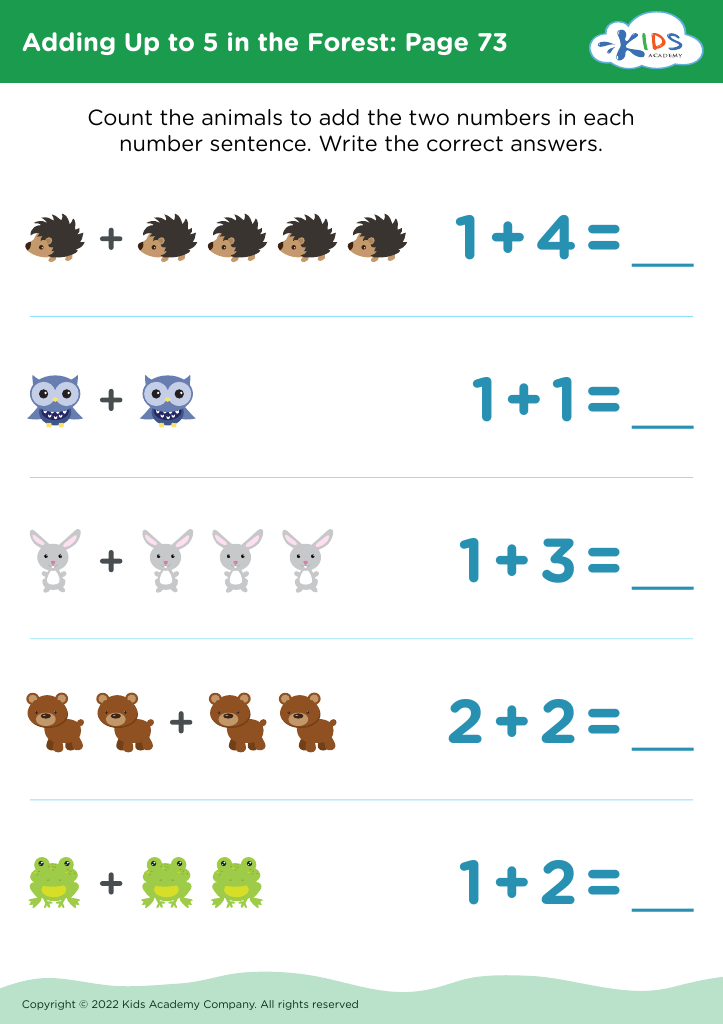
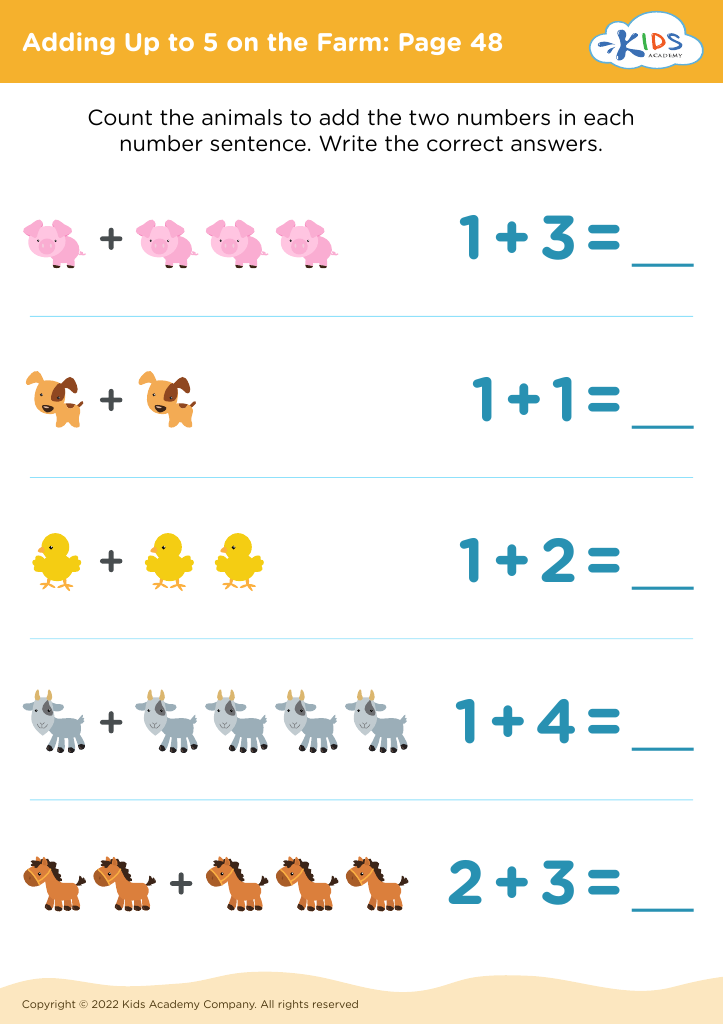
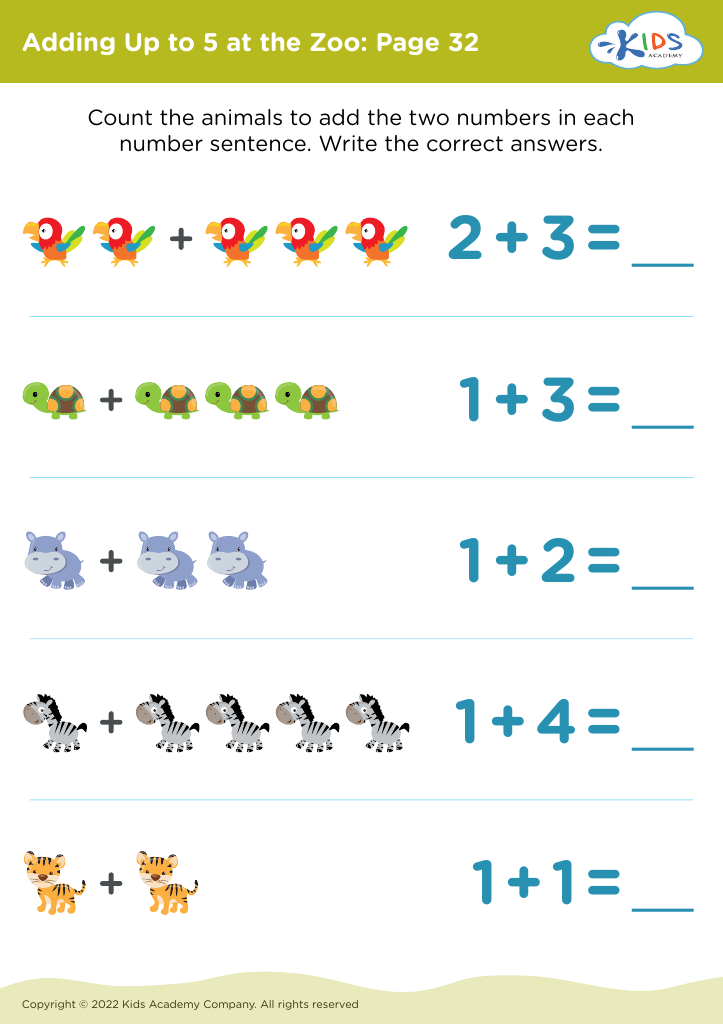
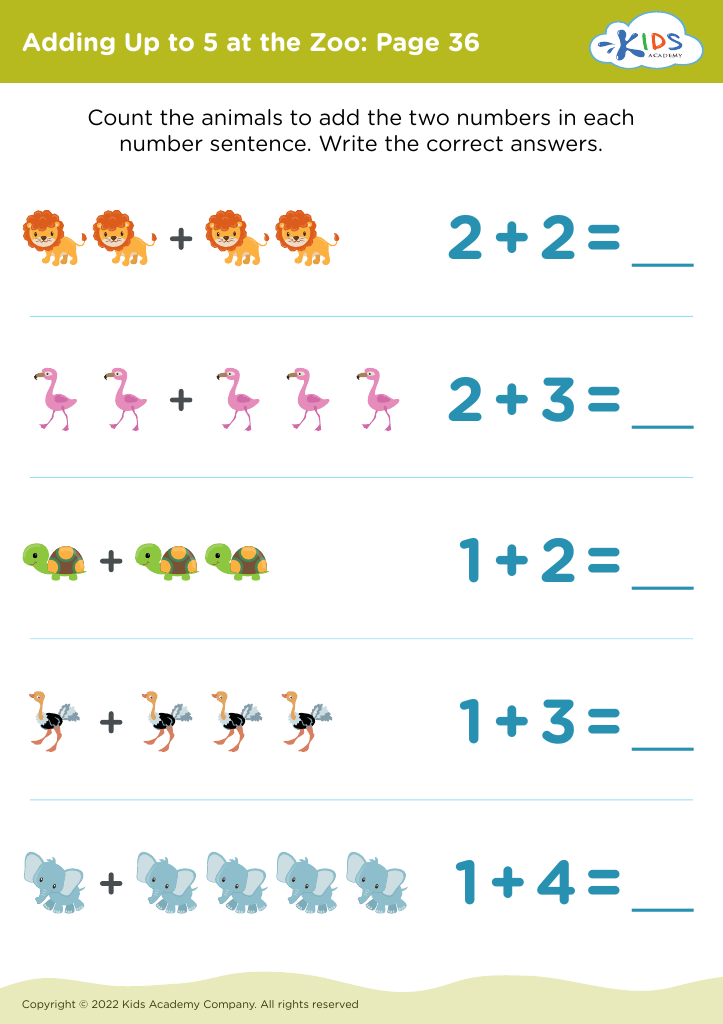
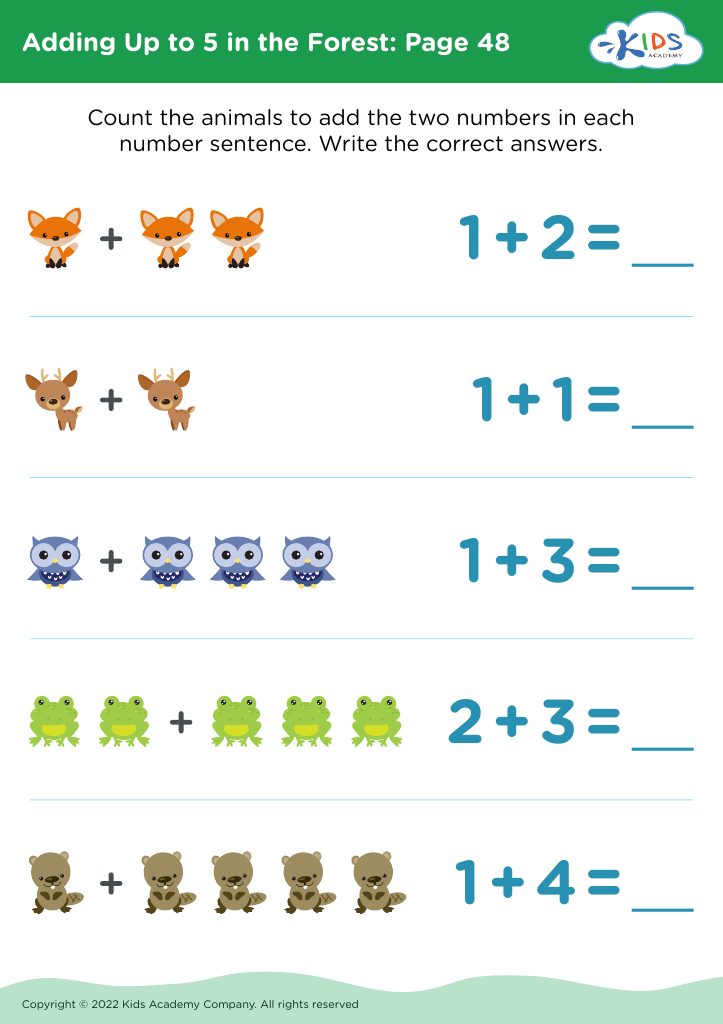
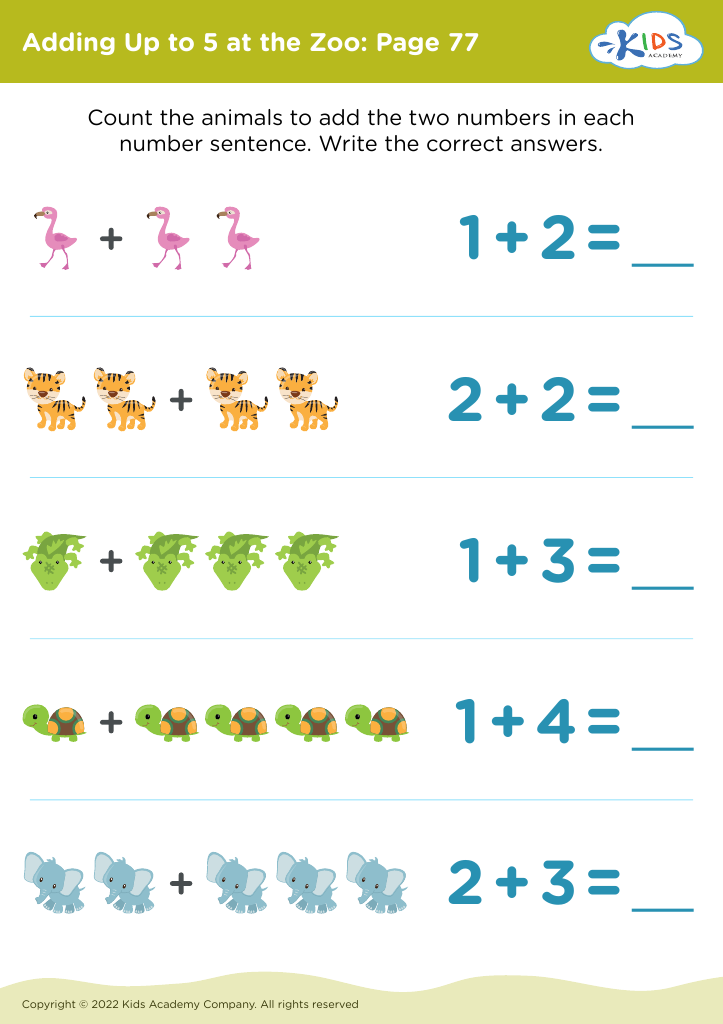
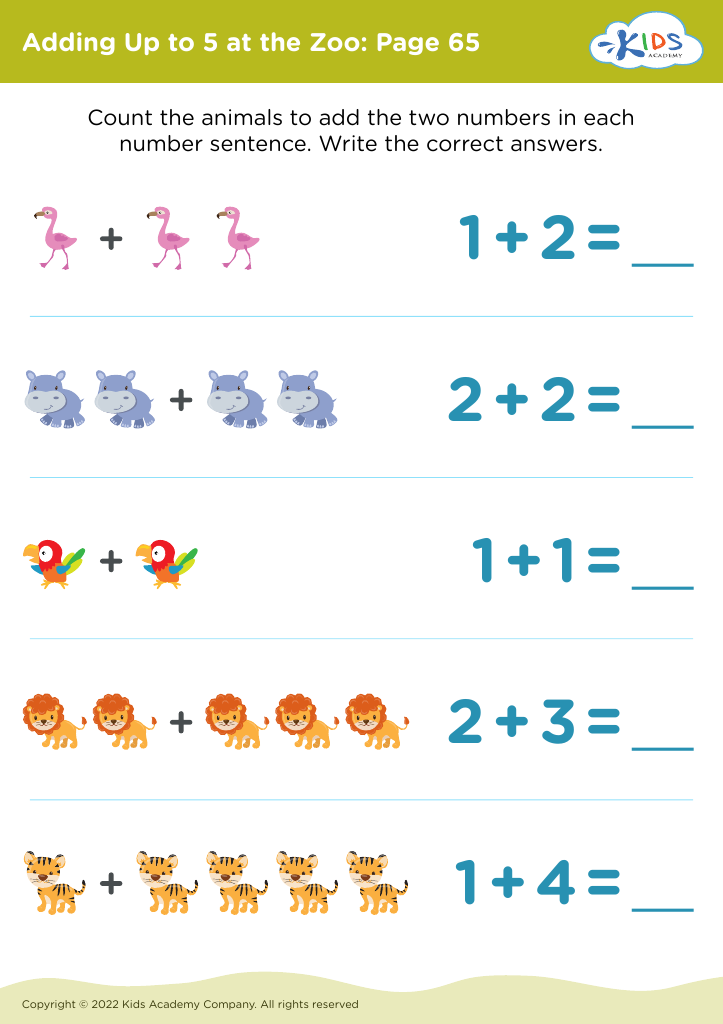
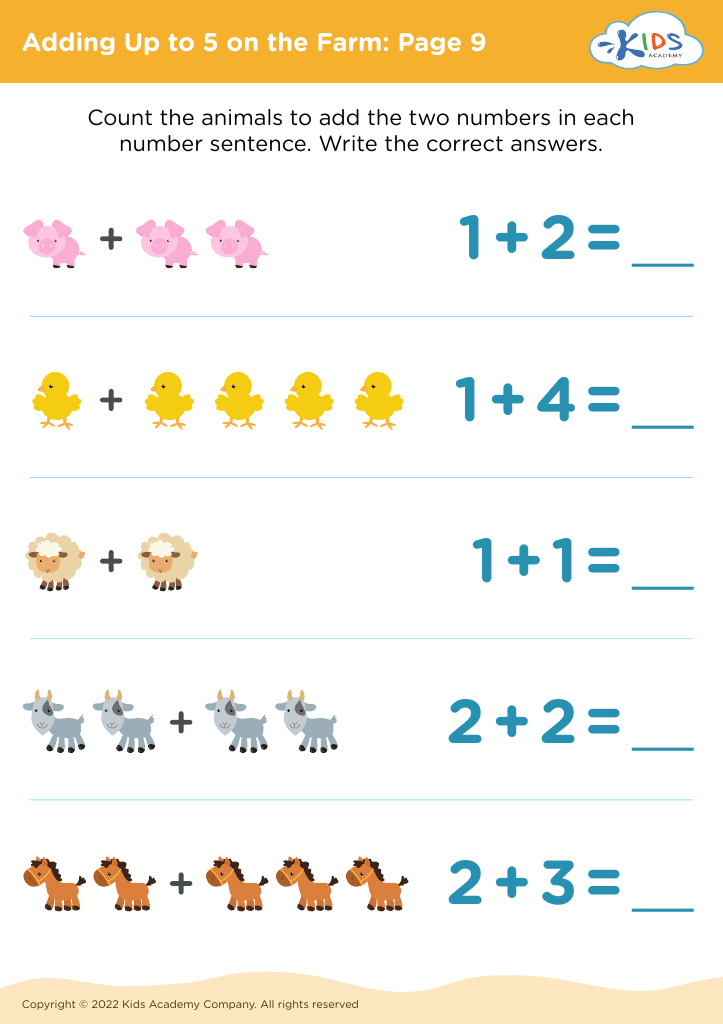
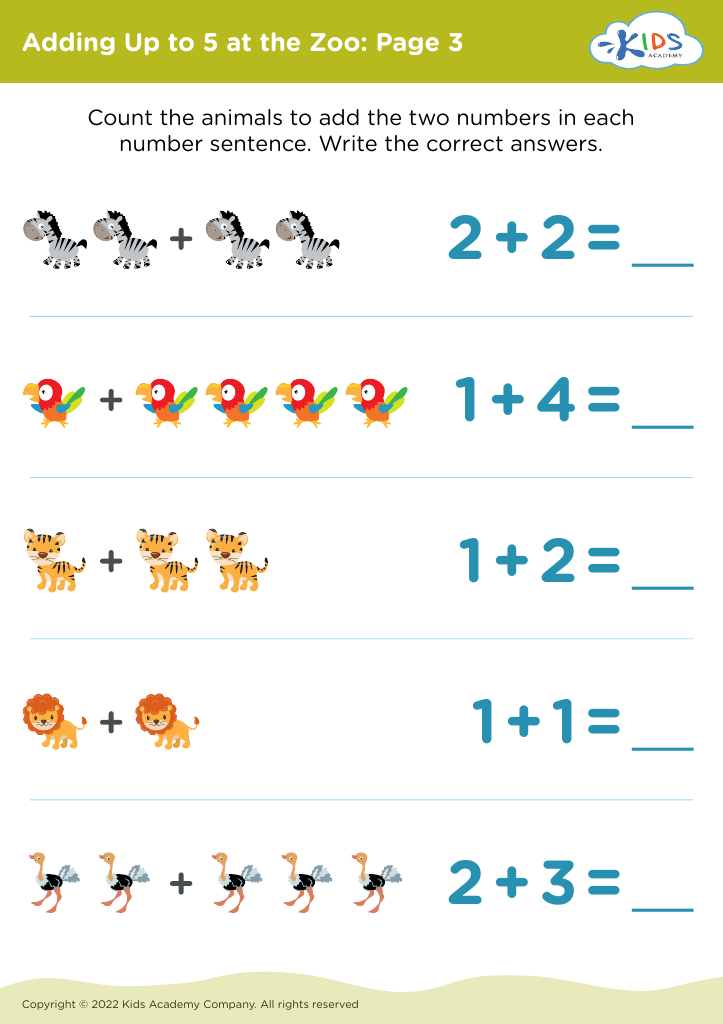
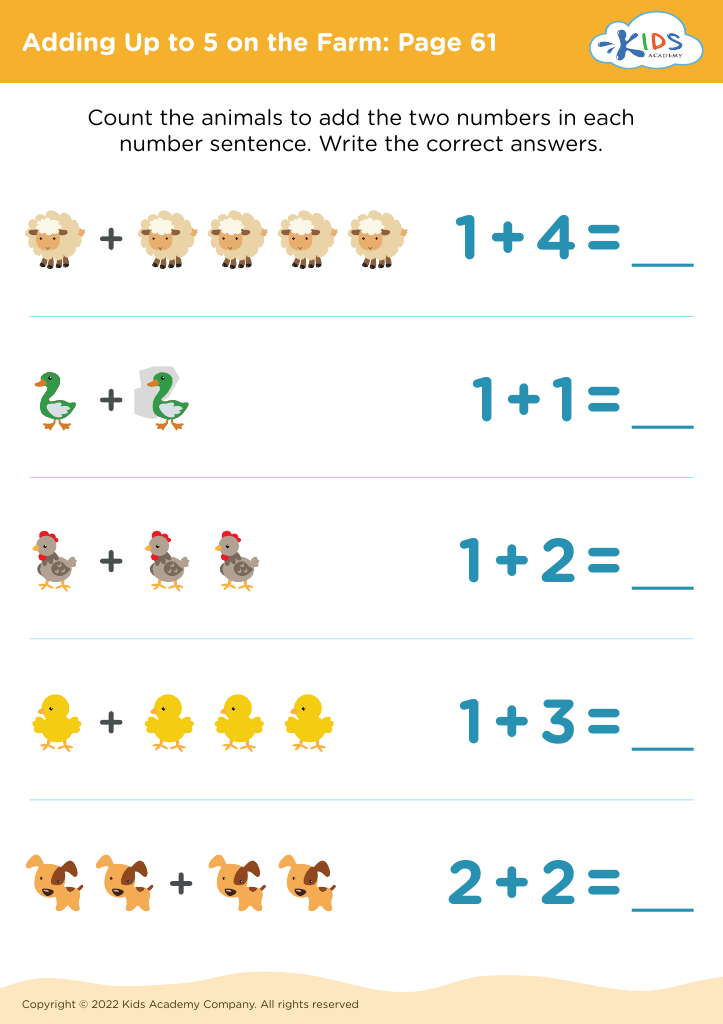
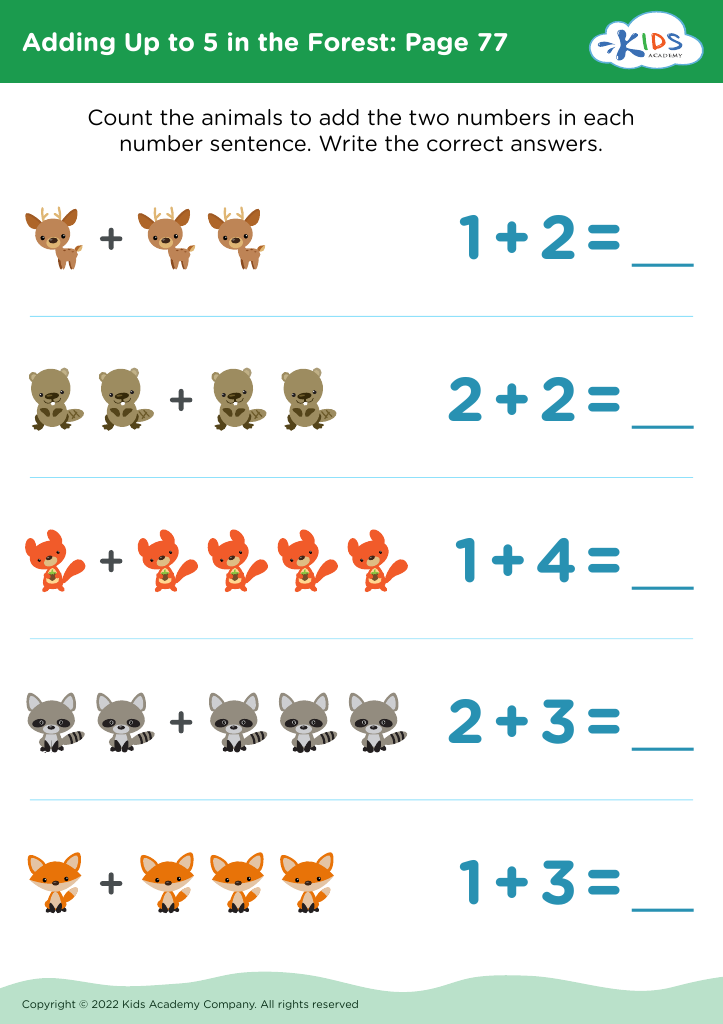
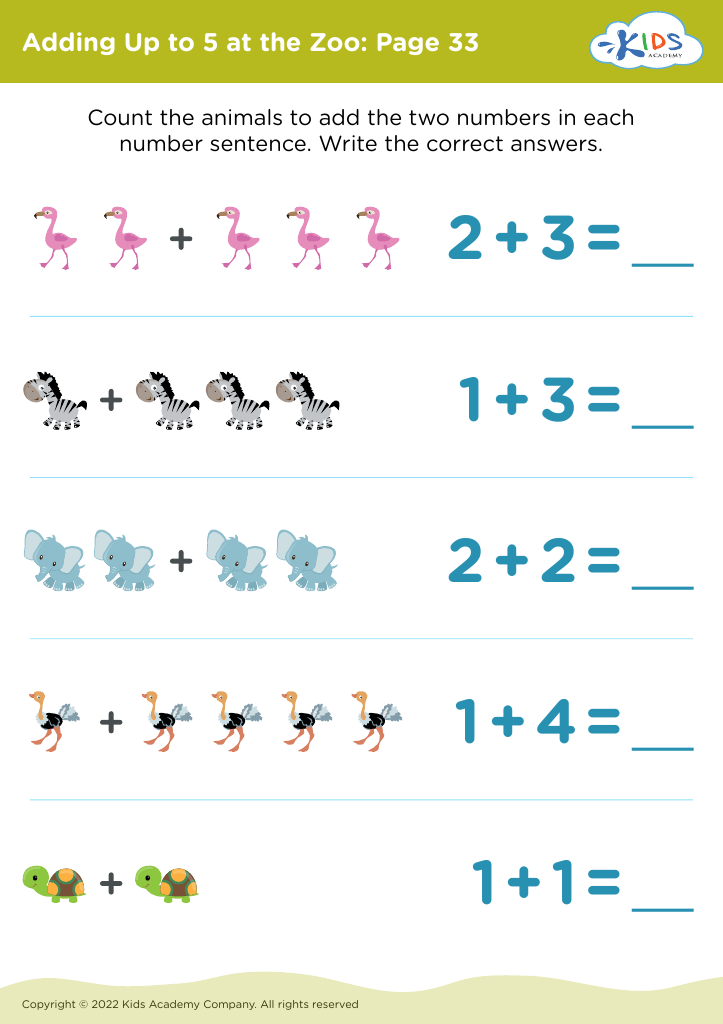
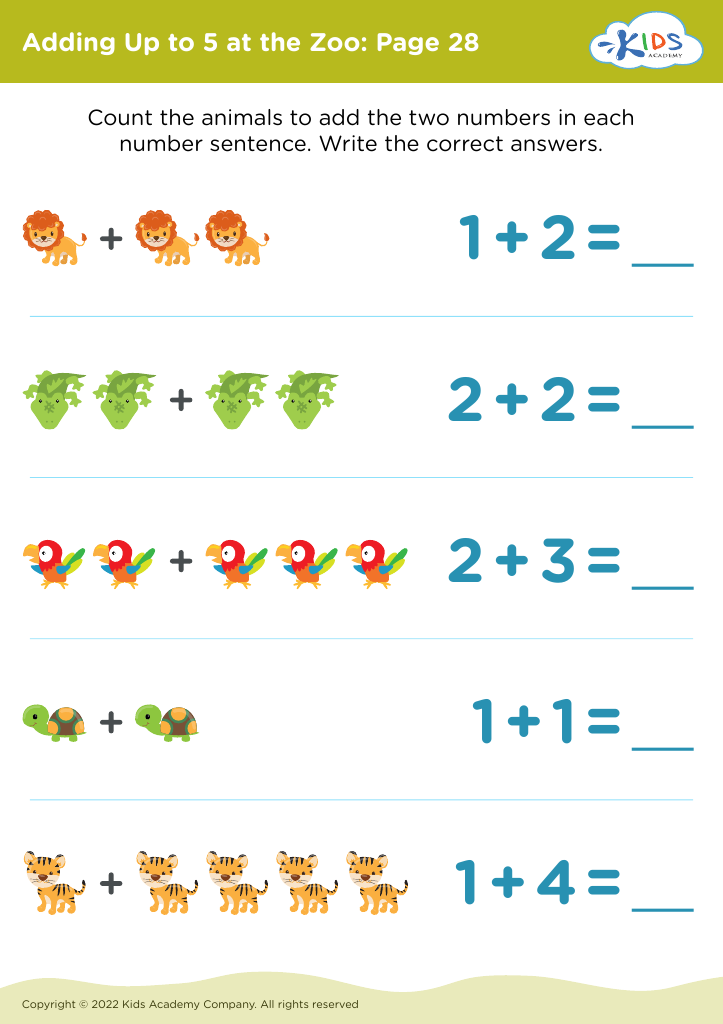
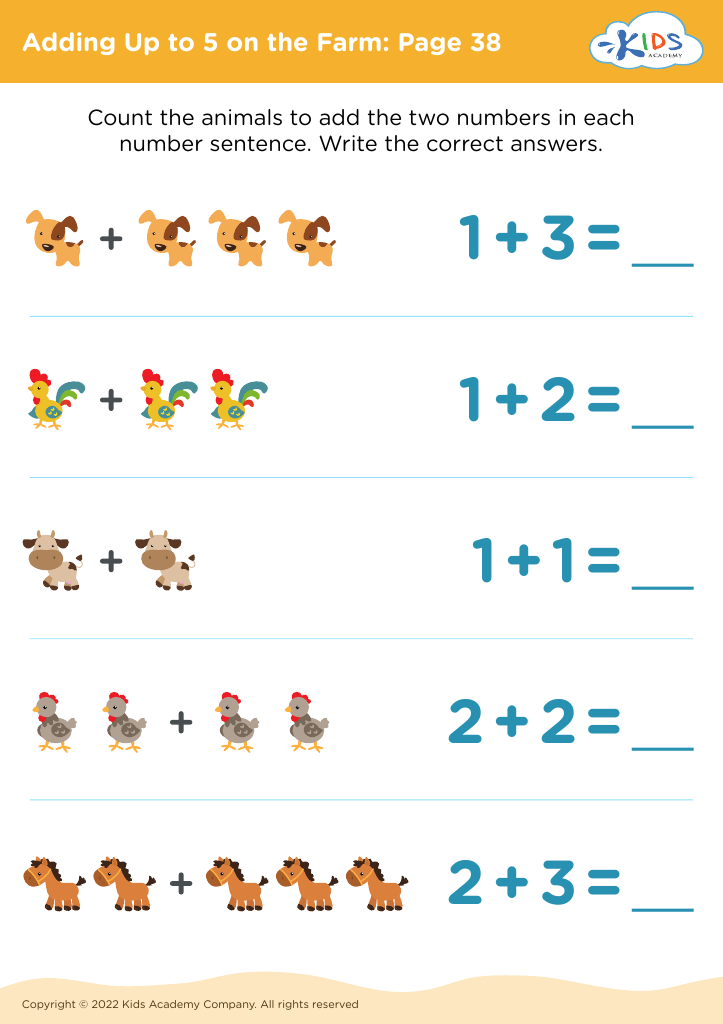
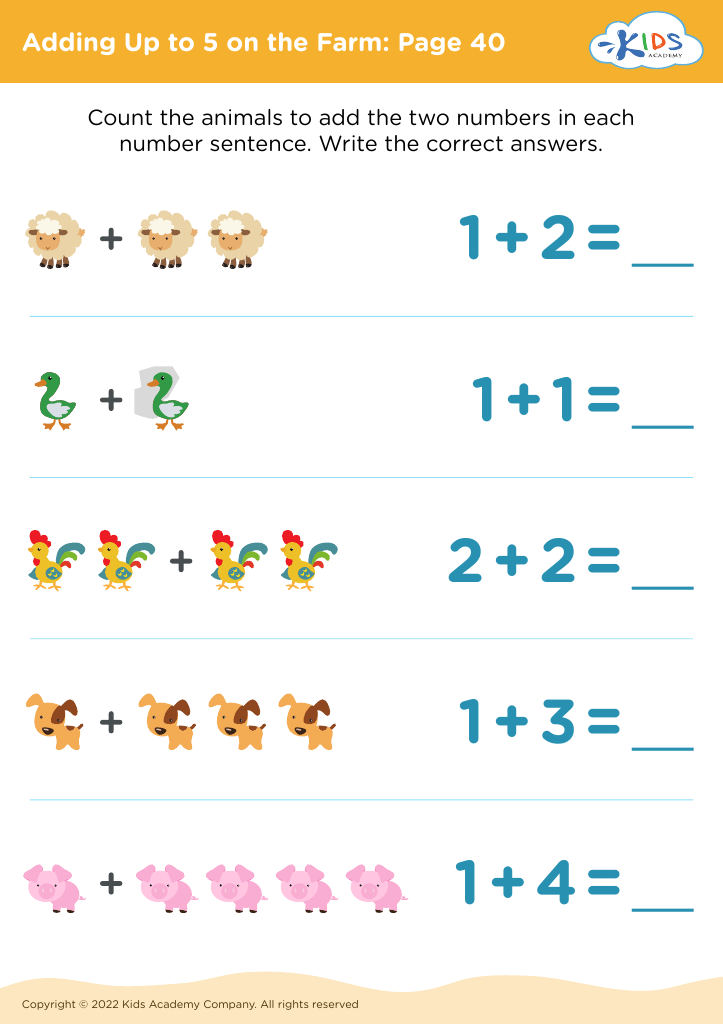
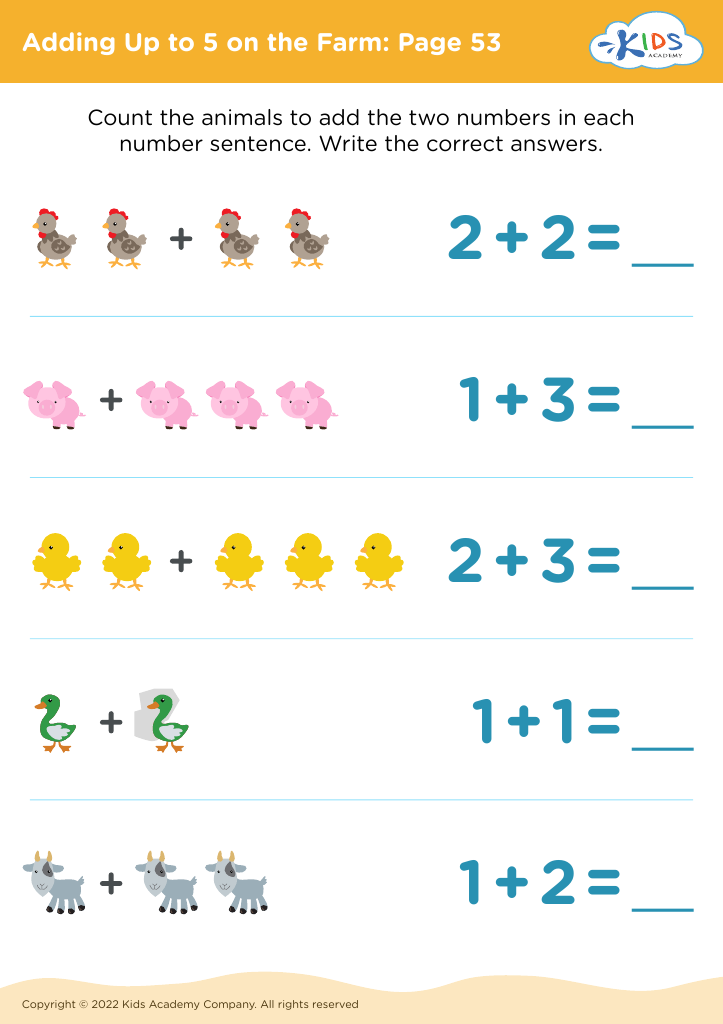
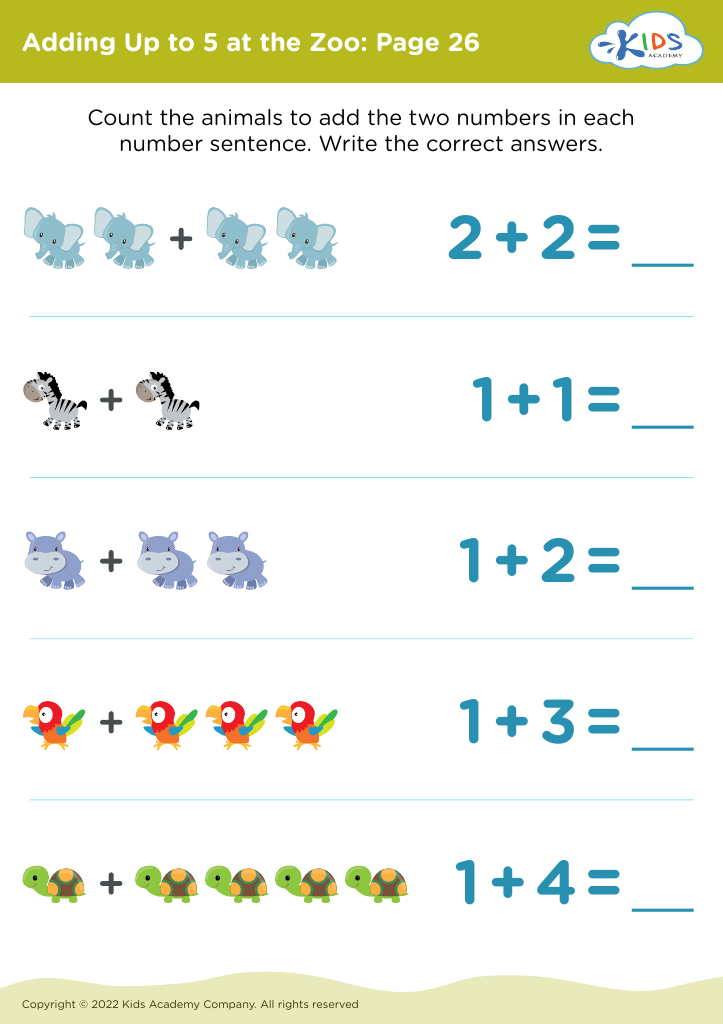
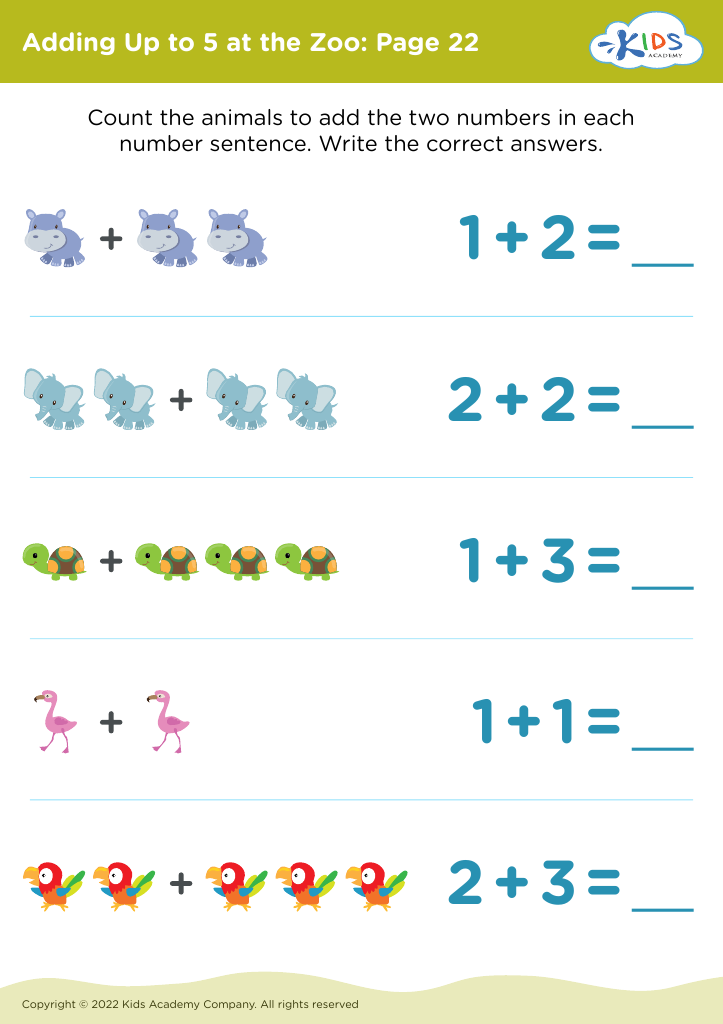
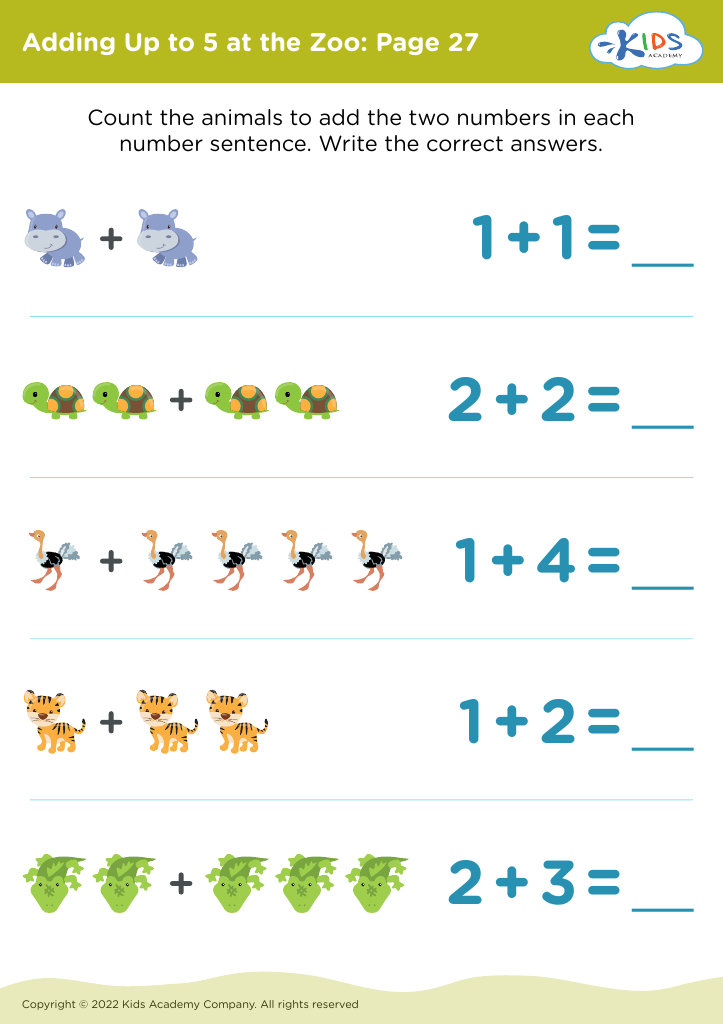
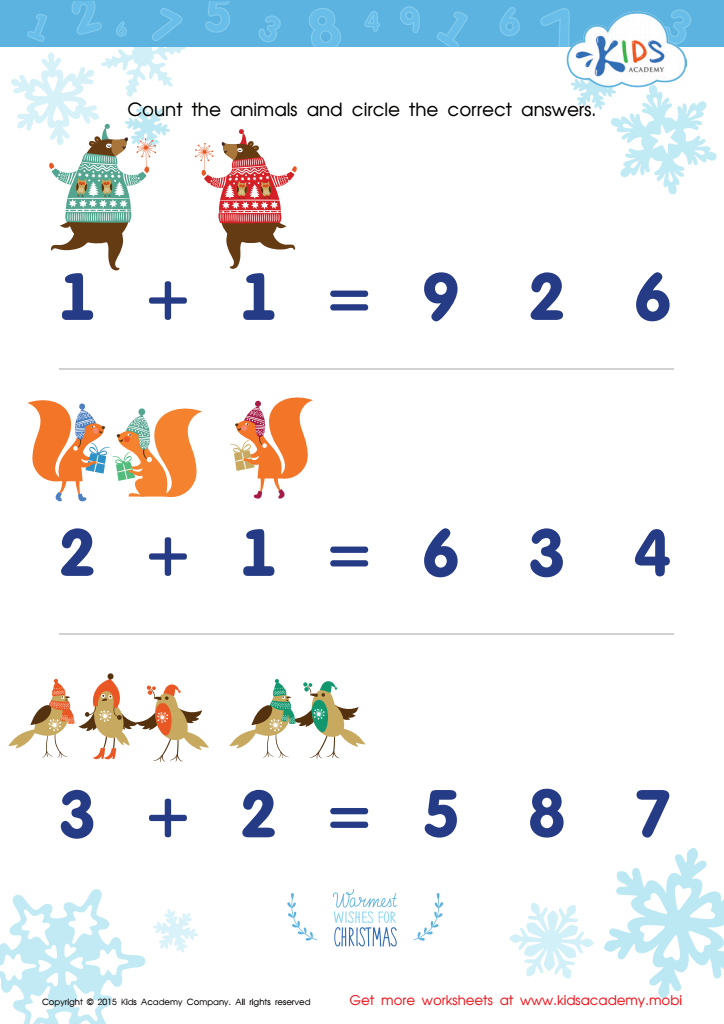
Count Funny Animals Worksheet
Get your kid in the Christmas spirit with this festive addition worksheet! They'll have fun counting the colorful animals and writing in the numbers. Our graphic layout makes it easy for them to visualize and solve the task. Print it out and help your kid keep their math skills sharp this winter with Kids Academy!
 Assign to My Students
Count Funny Animals Worksheet
Worksheet
Join Kids Academy for Free
Who is primarily going to use this learning content?








Animal recognition in the context of addition and subtraction is an engaging way to enhance early math skills in children. By incorporating animals into math activities, teachers and parents can create a fun, relatable learning experience that captures young learners' attention. This approach utilizes familiar and often beloved creatures, fostering a positive emotional connection to mathematics.
Recognizing animals and linking them to math problems can help children grasp fundamental concepts in addition and subtraction. For example, using scenarios such as “If there are three rabbits and two more join them, how many rabbits are there?” allows children to visualize the problem, making abstract notions more concrete.
Additionally, this method promotes critical thinking and problem-solving skills, as students learn to discuss their thought processes and reasoning behind their solutions. It encourages a collaborative learning environment where peers can actively participate, share ideas, and learn from one another.
Moreover, such integration of math and animals can spark conversations about wildlife, biodiversity, and the importance of respecting nature, enhancing learning beyond just numbers. Therefore, by prioritizing animal recognition in child-centric math activities, teachers and parents pave the way for holistic development while making math enjoyable and less intimidating.








