
Color Identification Addition & Subtraction Worksheets
27 filtered results
Difficulty Level
Grade
Age
-
From - To
Subject
Activity
Standards
Enhance your child's math and color recognition skills with our engaging Color Identification Addition & Subtraction Worksheets! These fun, printable activities help young learners practice essential arithmetic concepts while also identifying colors. Each worksheet features vibrant images that capture children's attention, making learning enjoyable and interactive. Designed for early grade students, these worksheets promote the development of critical thinking and problem-solving skills. Parents and educators can easily incorporate these resources into home or classroom settings. Watch as your child gains confidence in math and color identification through these exciting, hands-on exercises. Start making learning fun today with our colorful worksheets!
Favorites
With answer key
Interactive
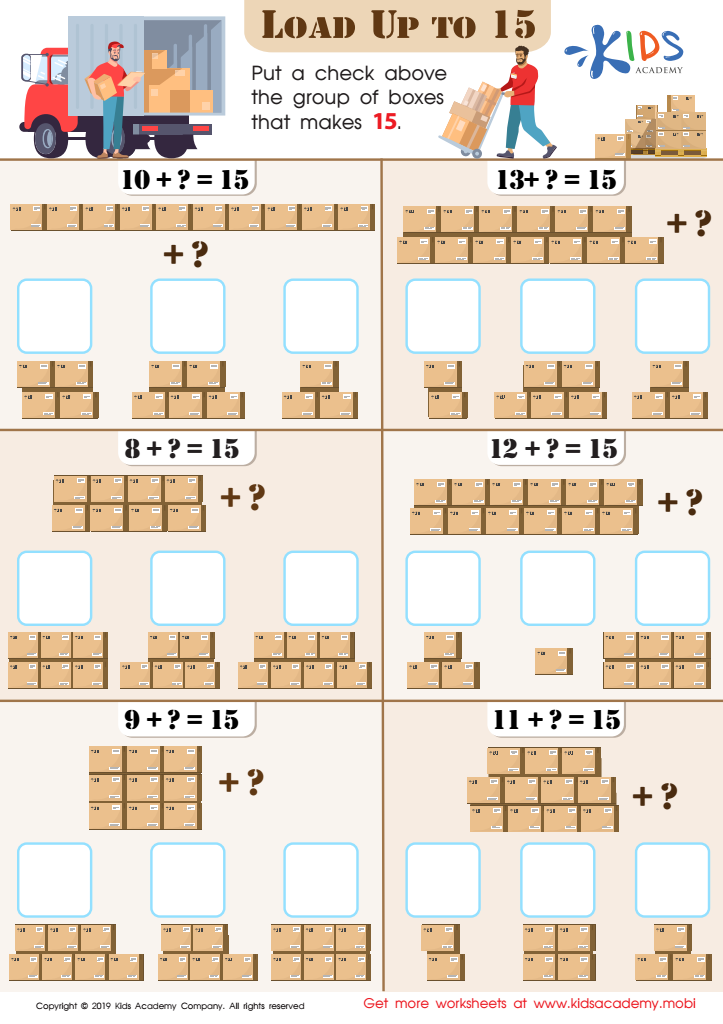
Load up to 15 Worksheet
Your students can practice addition and counting skills with this worksheet. Each equation has 6 boxes to count. Check the group that equals 15 to complete the exercise. Help your kindergartners if they need it.
 Assign to My Students
Load up to 15 Worksheet
Worksheet
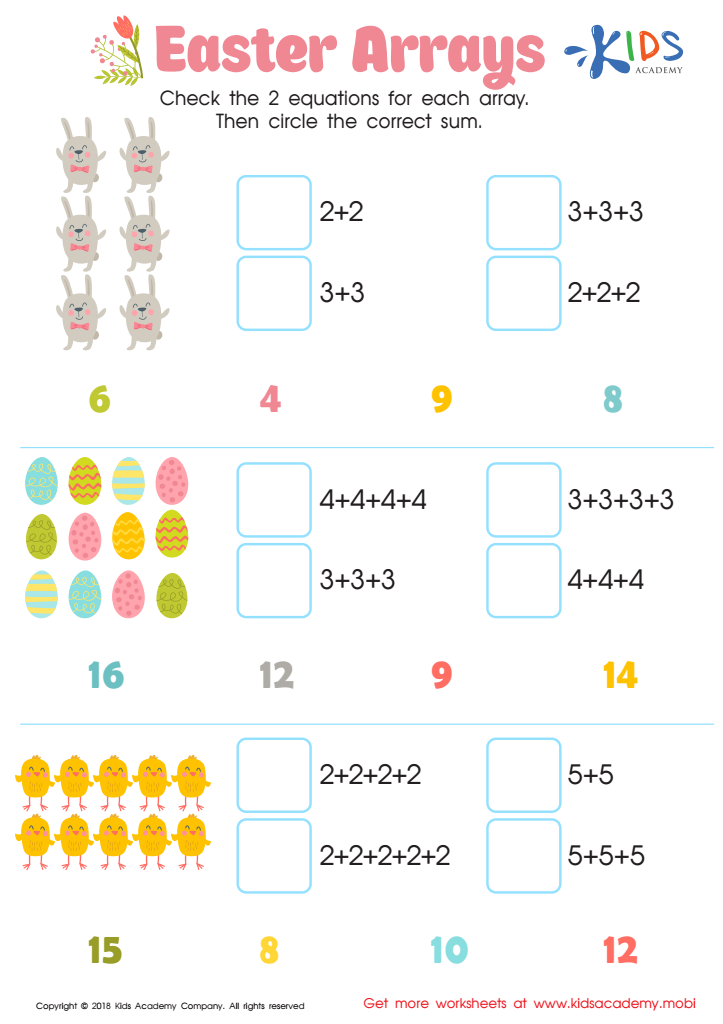
Easter Arrays Worksheet
Does your child love Easter? Do they adore the Easter bunny and egg hunts? Help them have fun with this worksheet! Go through it with them and check the equations for each array. Then, have them circle the correct sum. It's a great way to make the holiday extra exciting!
Easter Arrays Worksheet
Worksheet
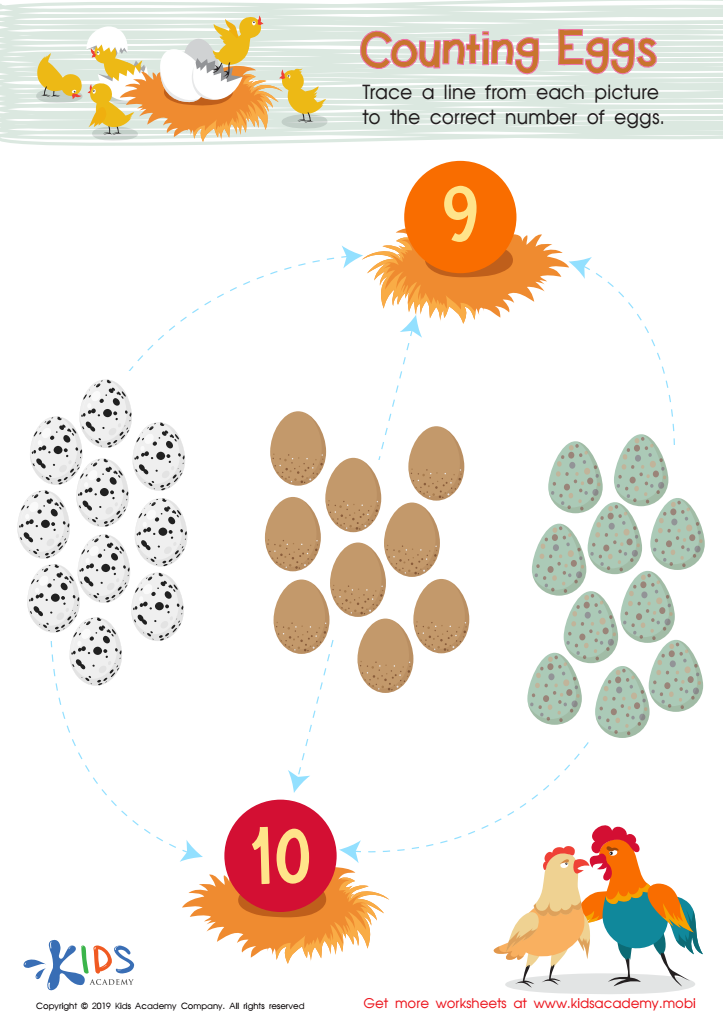
Counting Eggs Worksheet
This worksheet is great for teaching kindergarteners to count and add numbers. It includes colorful pictures of eggs with numbers to trace. Help students count the eggs and draw a line to the right number. This will make learning fun and easy!
Counting Eggs Worksheet
Worksheet
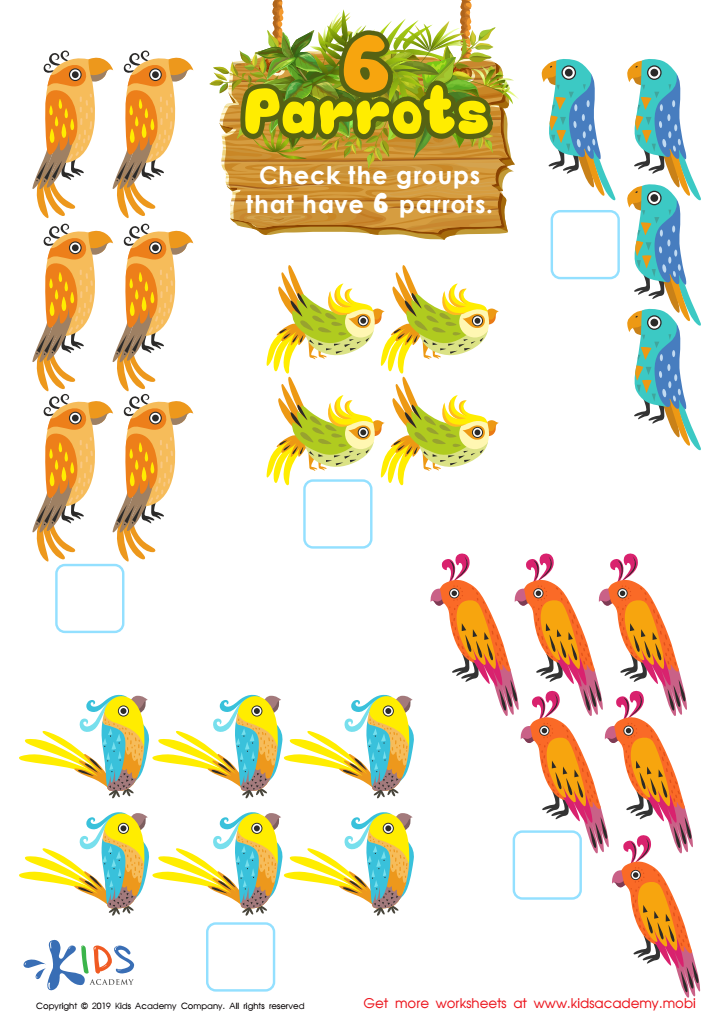
6 Parrots Worksheet
Love parrots? Here's a free worksheet to help your children practice counting to six with colorful parrot representations! Kids will adore counting the parrots and checking off groups of six - and it won't even feel like math! Just a fun way to make some new and exciting friends.
6 Parrots Worksheet
Worksheet
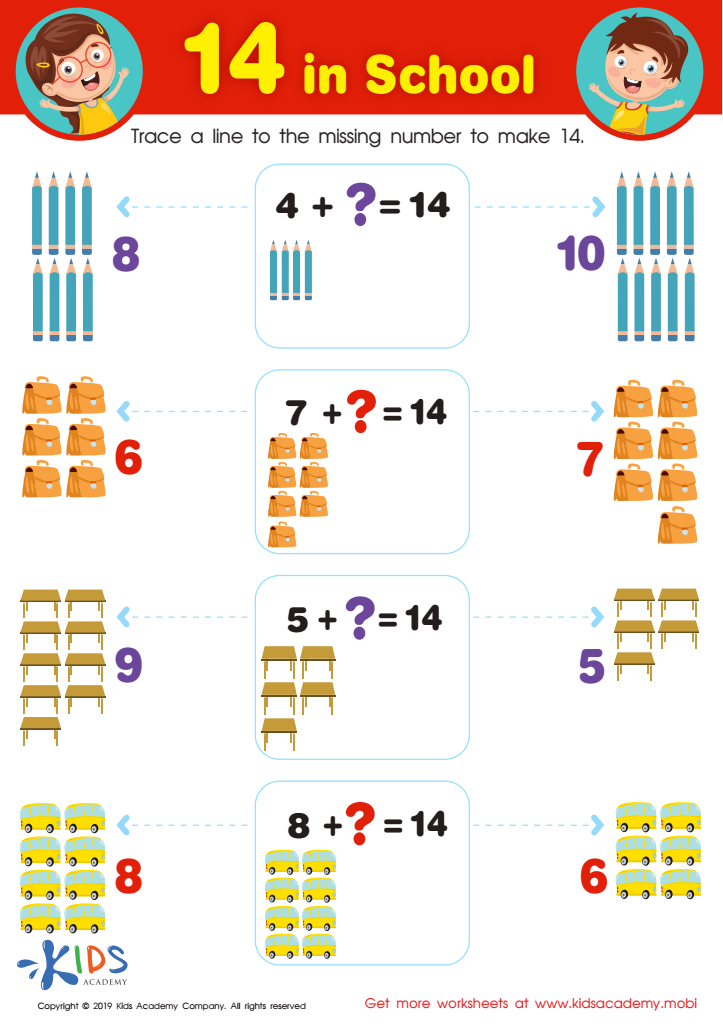
14 in School Worksheet
Remind your kids that adding different sets of numbers can give the same total (e.g. 2+3=5, 4+1=5). Ask them for more examples. Afterwards, work through the exercise. Help them count the objects and trace a line to the missing number that makes the total 14.
14 in School Worksheet
Worksheet
Join Kids Academy for Free
Who is primarily going to use this learning content?








Color identification in relation to addition and subtraction is a valuable educational tool for early grade students. It enhances learning by making abstract mathematical concepts more tangible and appealing. By using colors, teachers and parents can engage learners’ attention and imagination, making math feel less intimidating.
Color identification supports cognitive development. Associating colors with numbers helps children visualize mathematical operations and fosters their ability to categorize and differentiate. This multi-sensory approach also caters to diverse learning styles, benefiting visual learners in particular while reinforcing the connection between colors and numerical values.
Moreover, using colors in math activities fosters enthusiasm and enjoyment in learning. When children relate colors to their learning experiences, it encourages participation and exploration, enabling them to grasp foundational concepts more easily. It enhances their ability to comprehend more complex math later on.
Finally, integrating color identification in addition and subtraction tasks applies real-world relevance. Many everyday scenarios involve color-differentiated items (e.g., blocks, toys, fruits). Engaging students in such tasks builds their confidence in preserving dynamic intersectionality between visual art and math, ensuring they develop a well-rounded skill set. Consequently, emphasizing color identification equips children with practical tools for lifelong learning.








