Check out this FREE Trial Lesson on Addition & Subtraction!

Making 11

Favorites
With answer key
Interactive
  • Understanding fractions
  • Addition & Subtraction
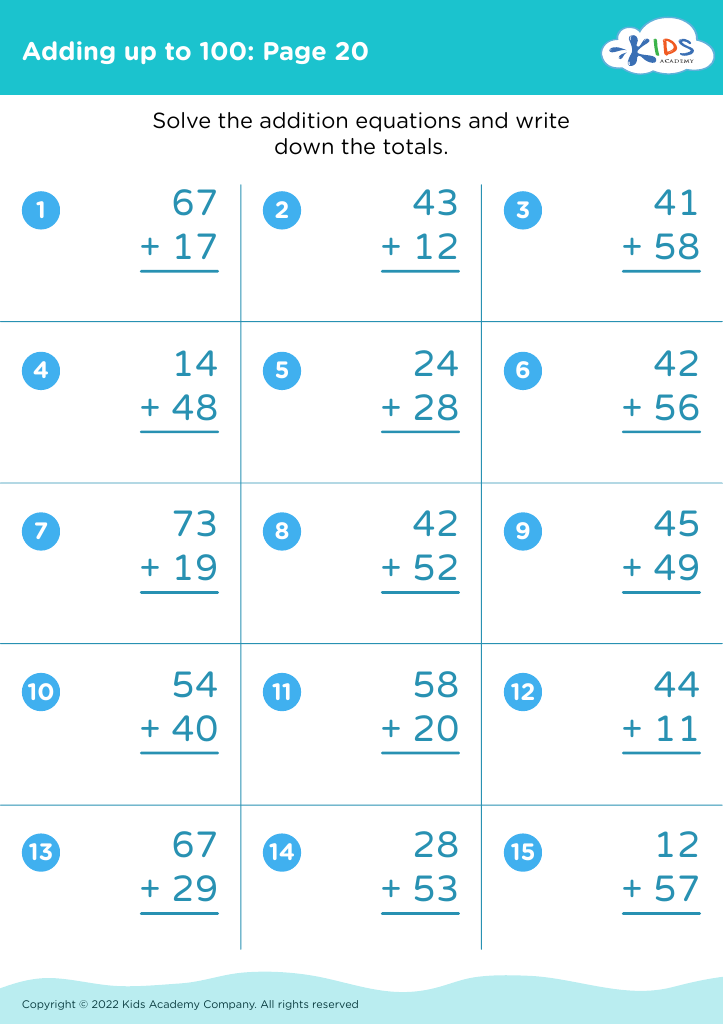
Adding up to 100: Page 20

Adding up to 100: Page 20

Adding up to 100: Page 20
Worksheet
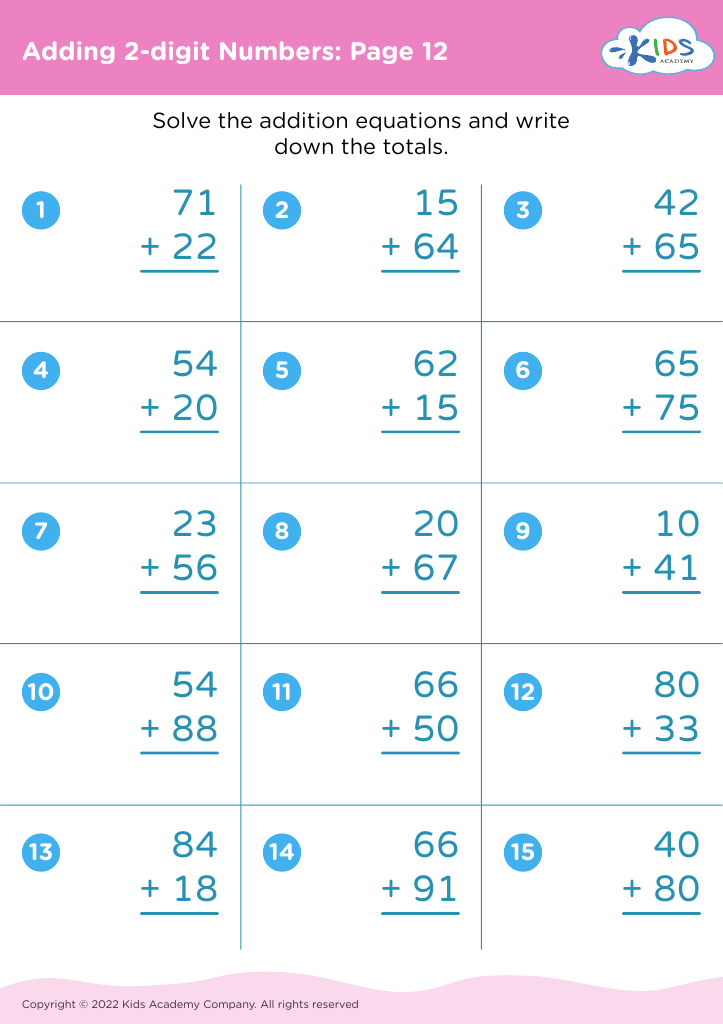
Adding 2-digit Numbers: Page 12

Adding 2-digit Numbers: Page 12

Adding 2-digit Numbers: Page 12
Worksheet
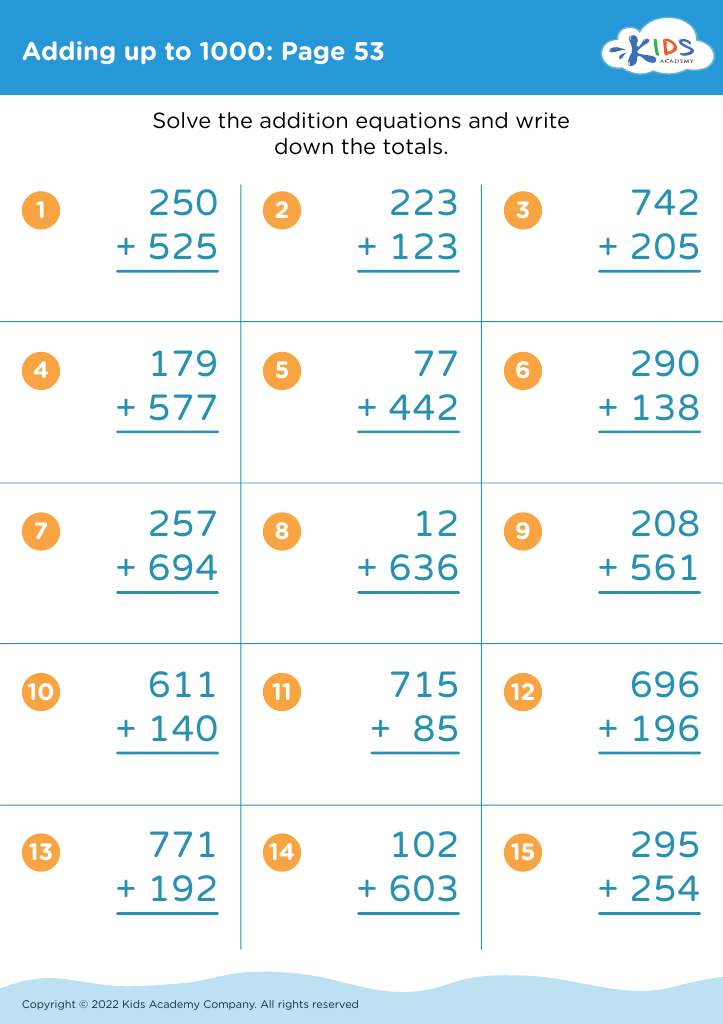
Adding up to 1000: Page 53

Adding up to 1000: Page 53

Adding up to 1000: Page 53
Worksheet
Piecing Together 11 Worksheet

Piecing Together 11 Worksheet

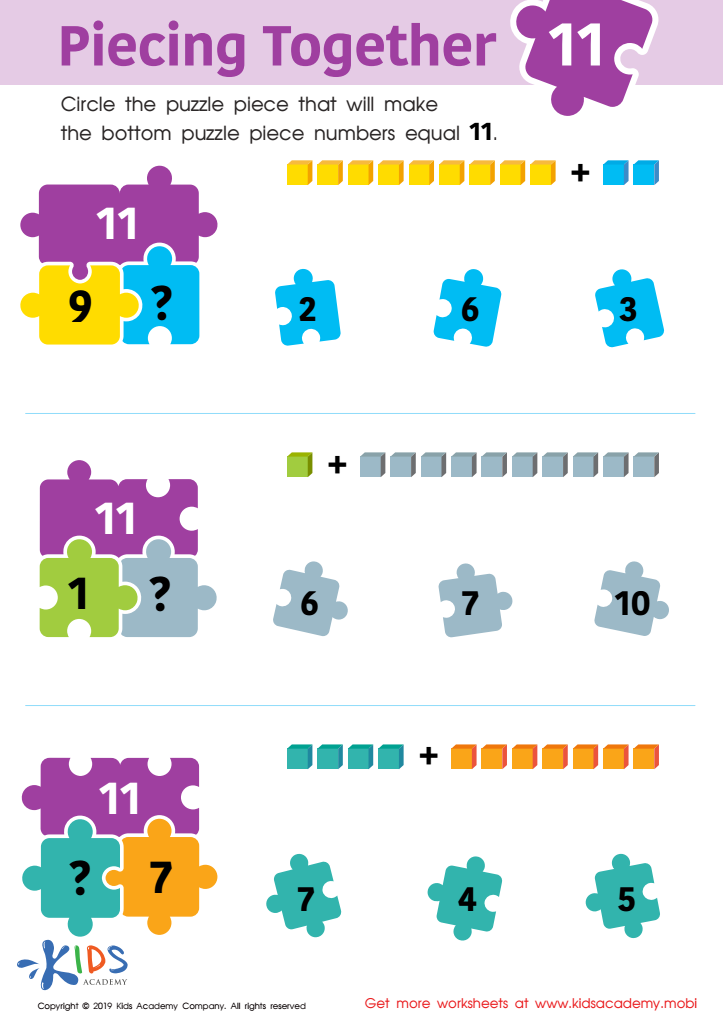
Engage your preschoolers with learning-filled fun! Show them this colorful worksheet, and ask them to identify the figures. Each puzzle piece features an equation, except one which is missing. Help the kids solve the problems and circle the piece that'll make the numbers equal 11. It's a surefire way to make learning enjoyable!
Piecing Together 11 Worksheet
Worksheet
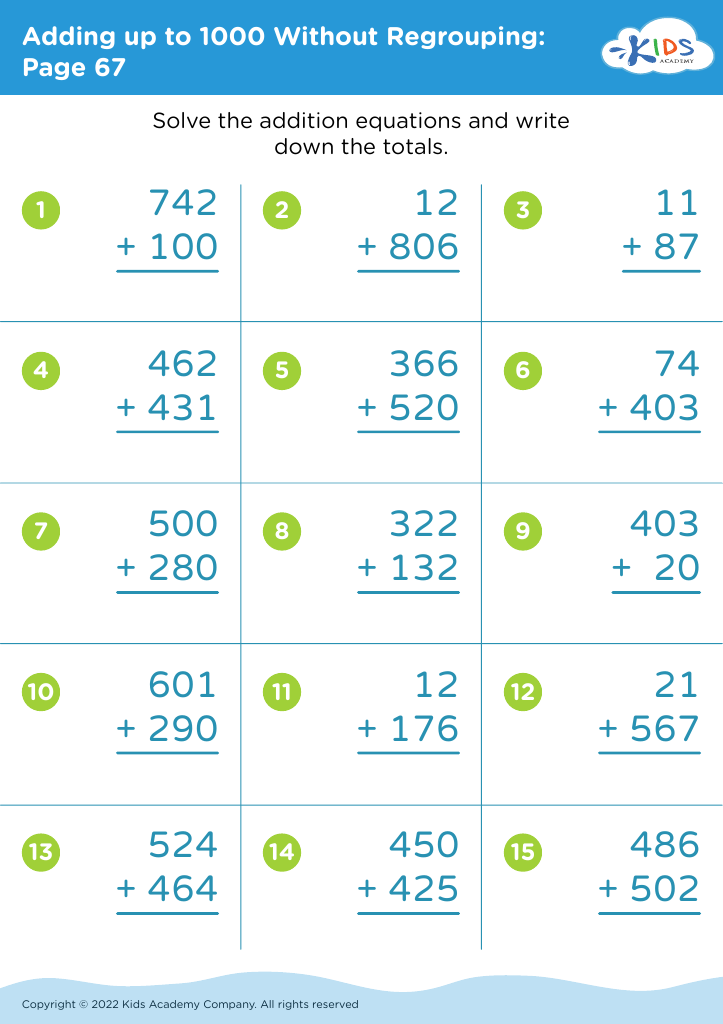
Adding up to 1000 Without Regrouping: Page 67
Worksheet
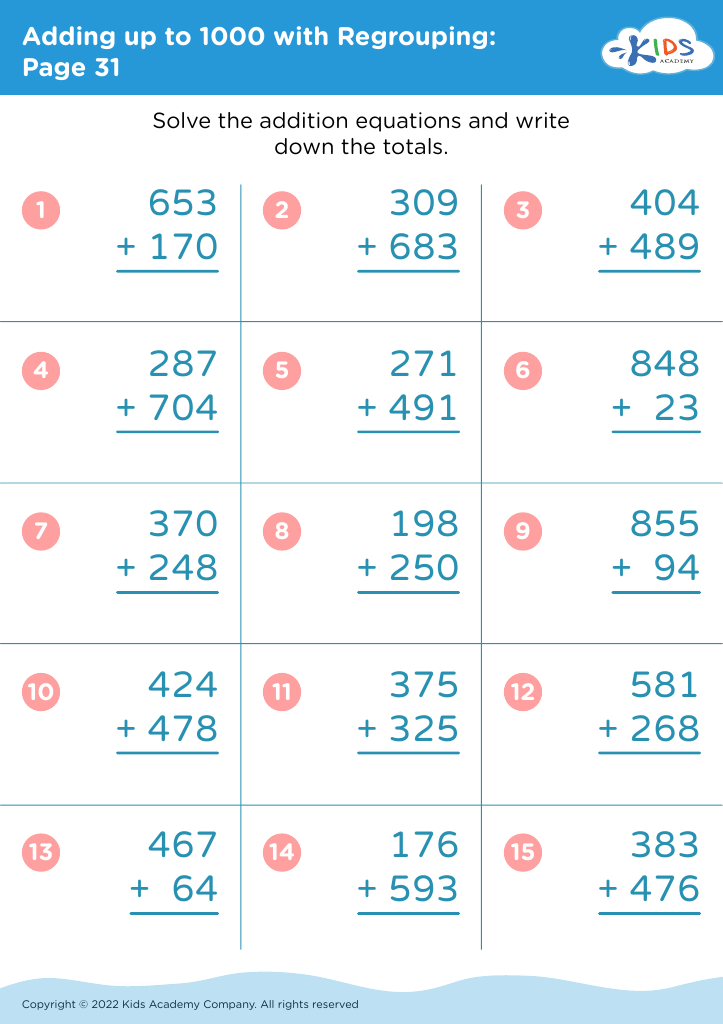
Adding up to 1000 with Regrouping: Page 31
Worksheet
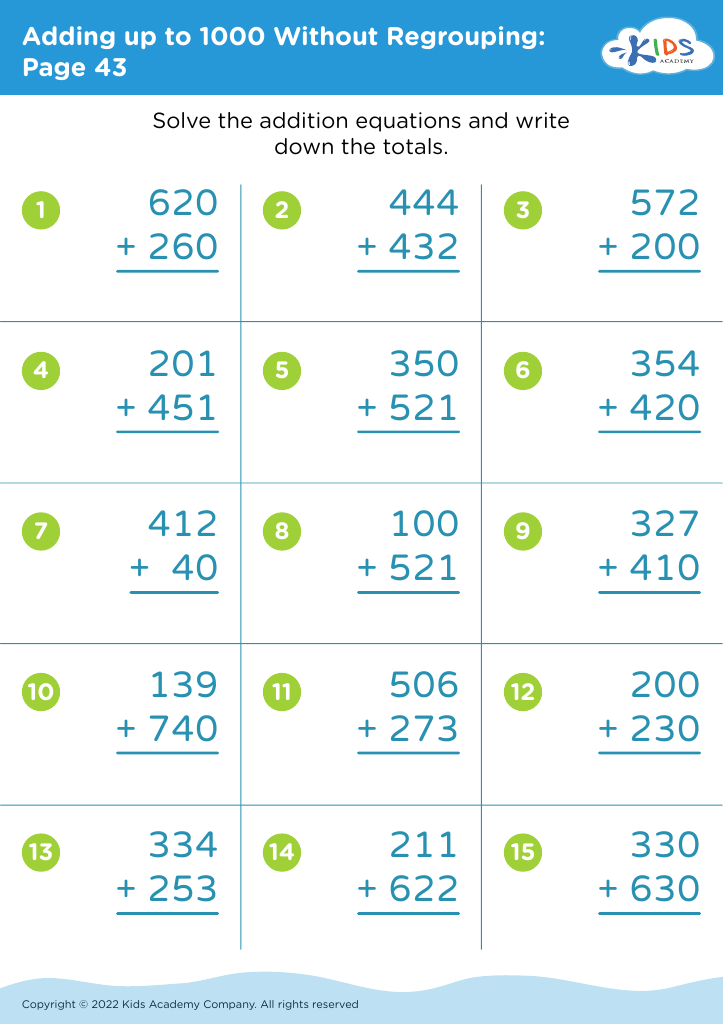
Adding up to 1000 Without Regrouping: Page 43
Worksheet
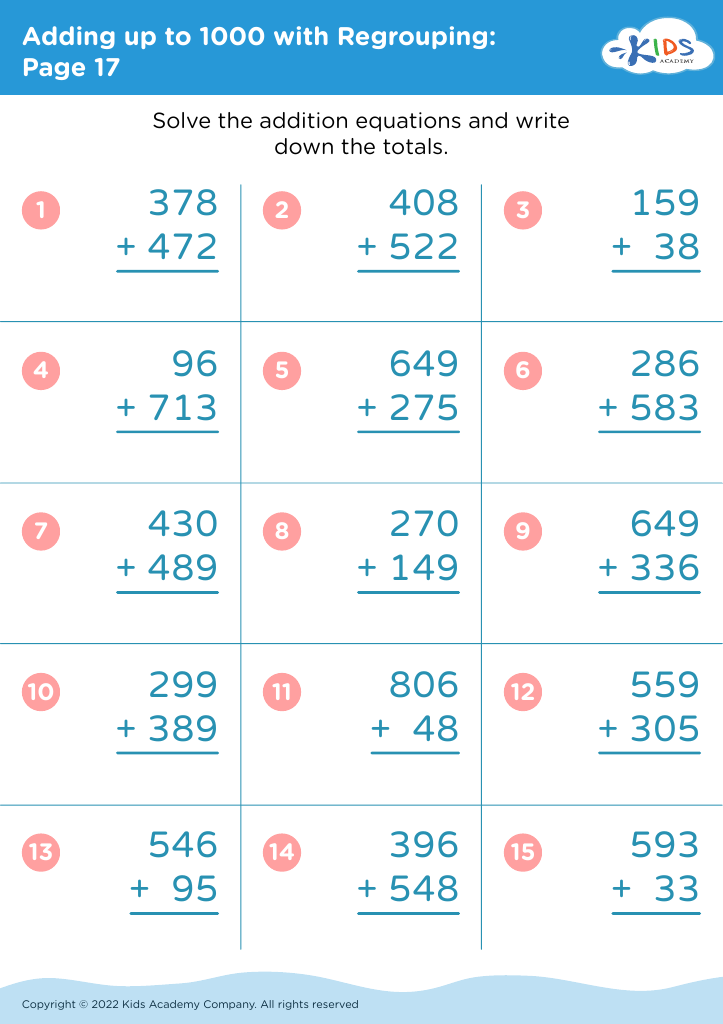
Adding up to 1000 with Regrouping: Page 17
Worksheet
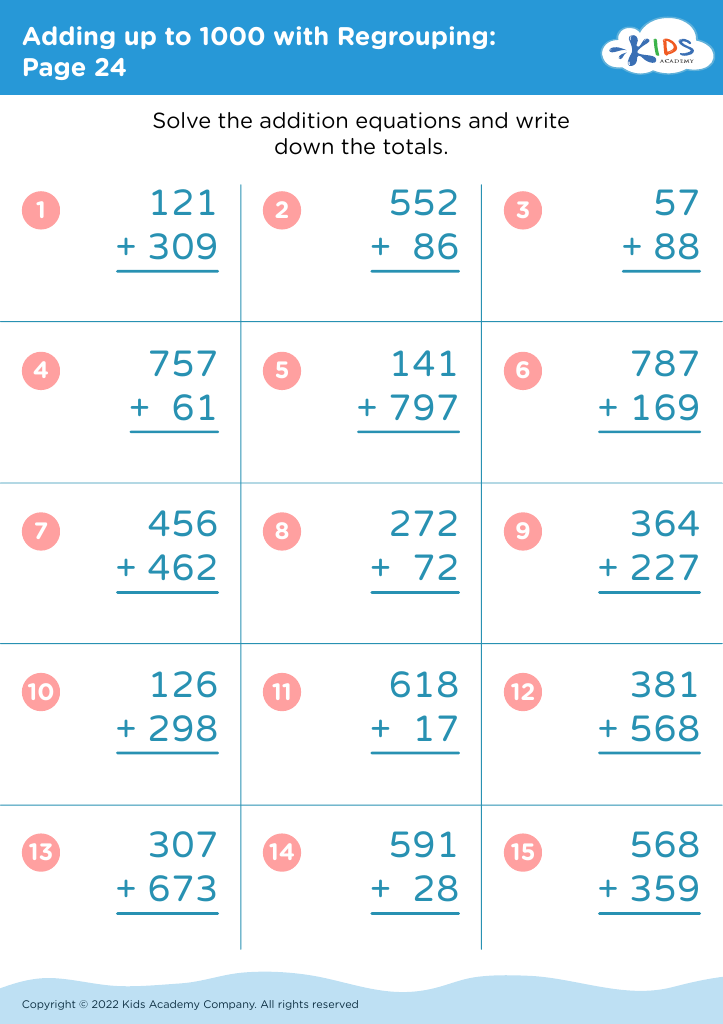
Adding up to 1000 with Regrouping: Page 24
Worksheet
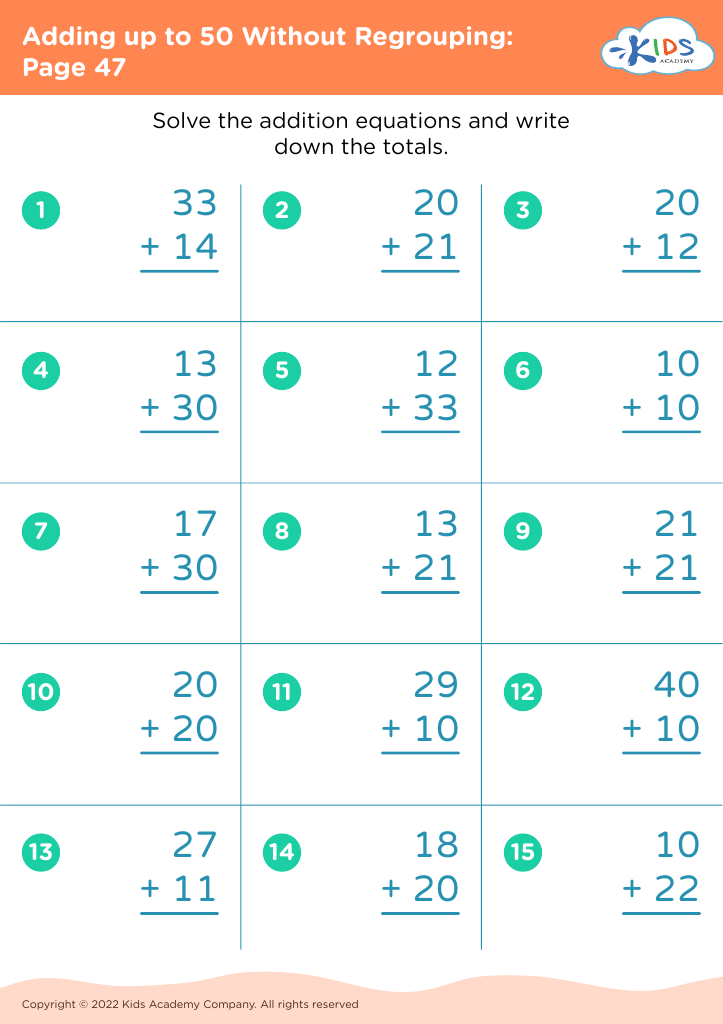
Adding up to 50 Without Regrouping: Page 47
Worksheet
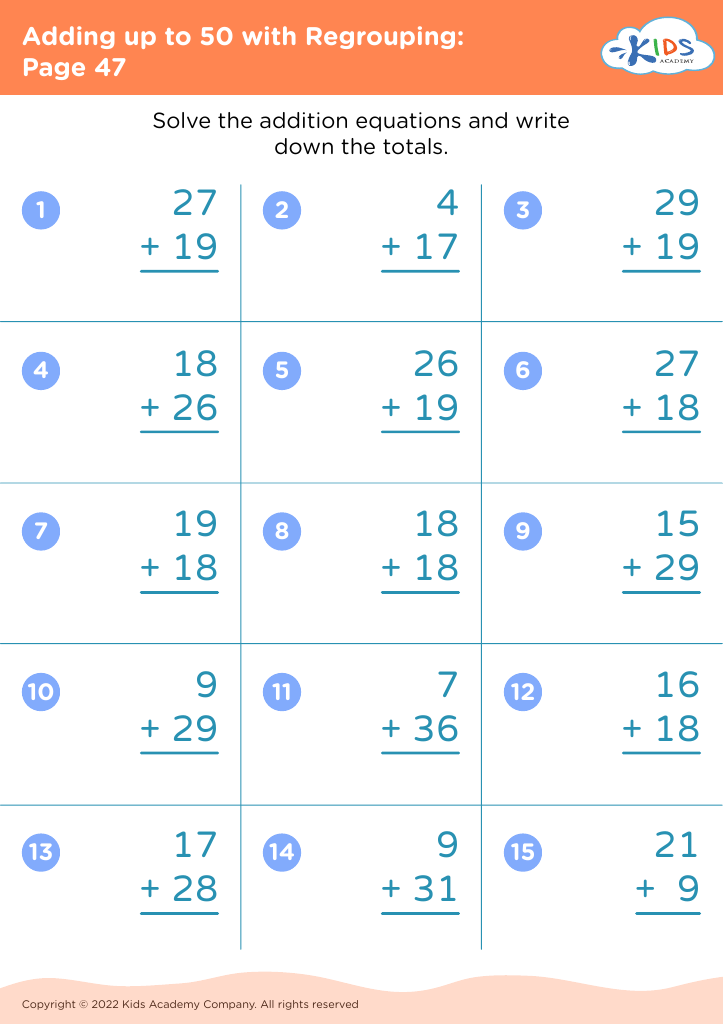
Adding up to 50 with Regrouping: Page 47
Worksheet
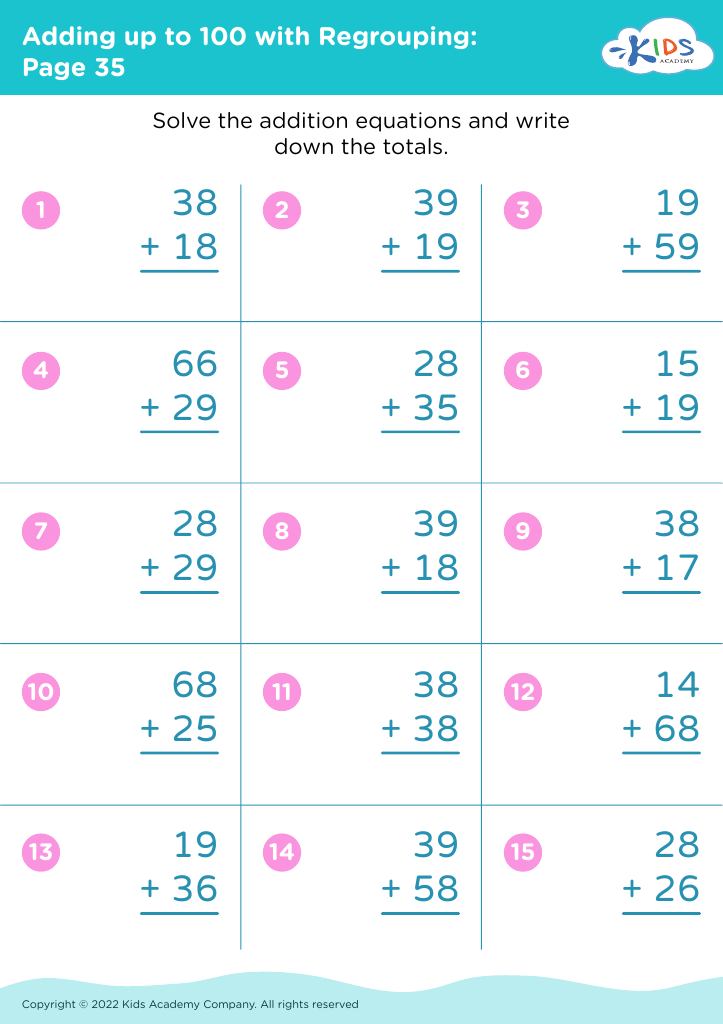
Adding up to 100 with Regrouping: Page 35
Worksheet
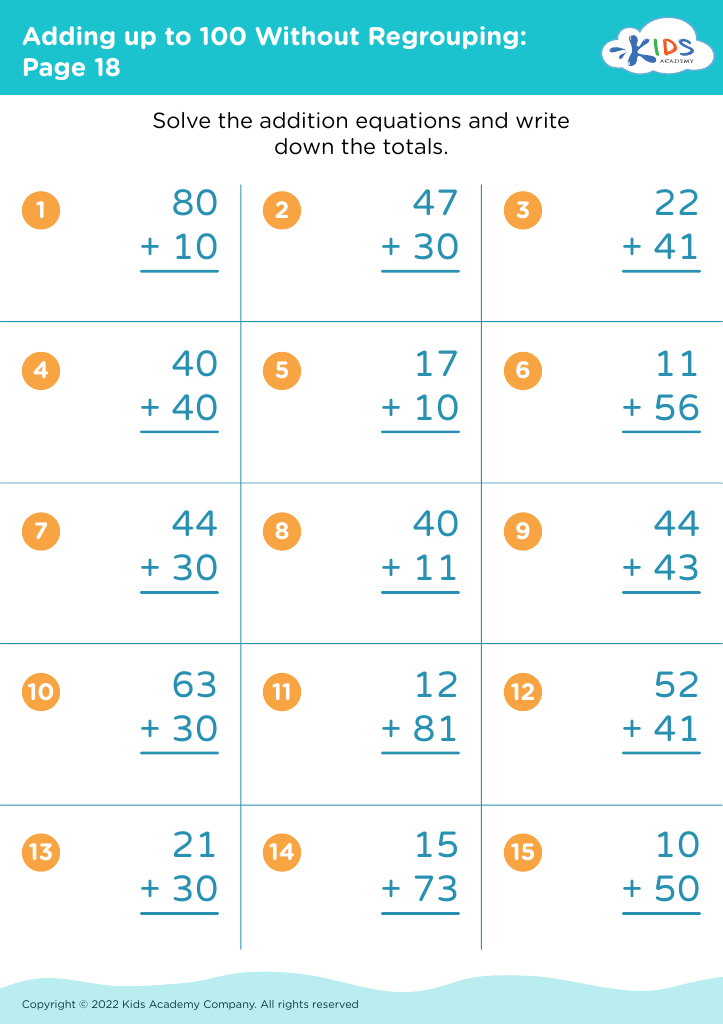
Adding up to 100 Without Regrouping: Page 18
Worksheet
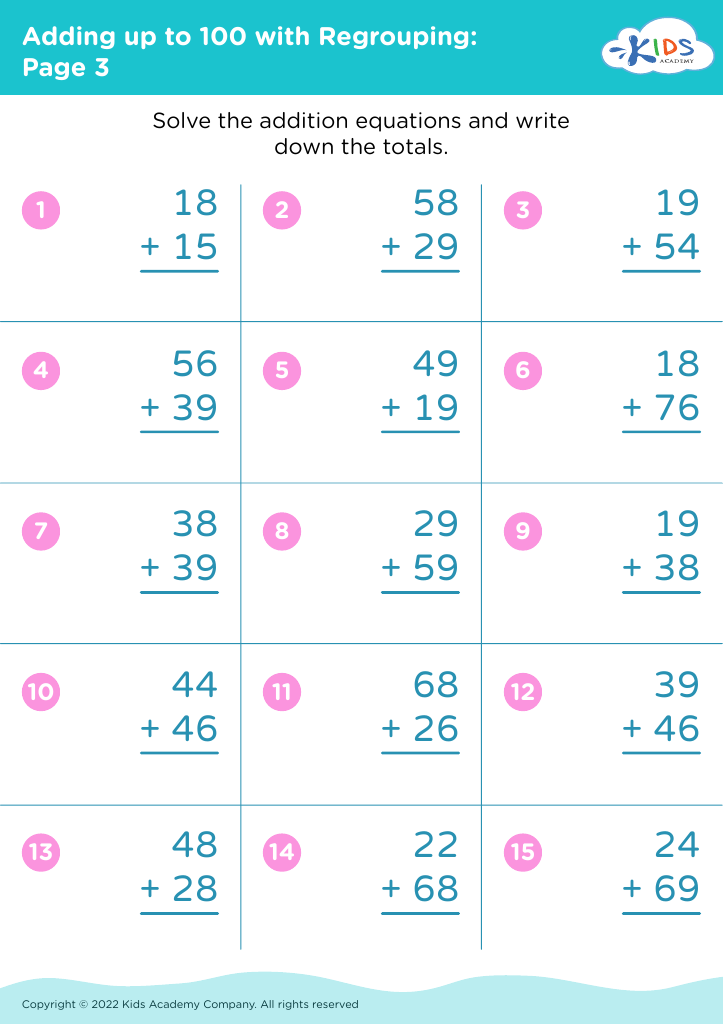
Adding up to 100 with Regrouping: Page 3
Worksheet
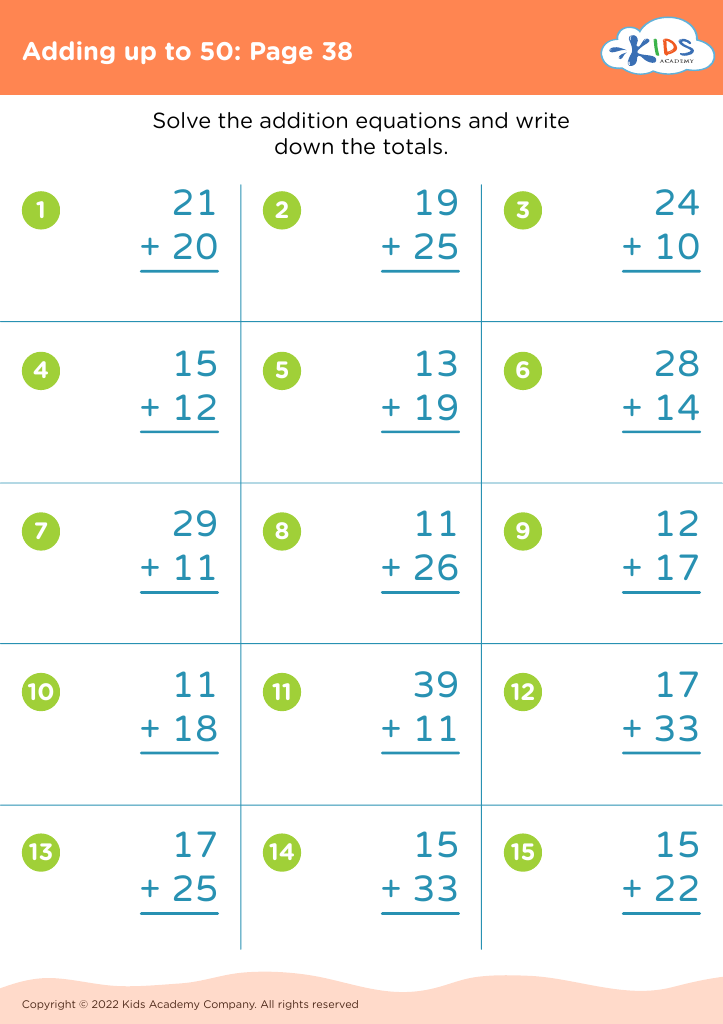
Adding up to 50: Page 38

Adding up to 50: Page 38

Adding up to 50: Page 38
Worksheet
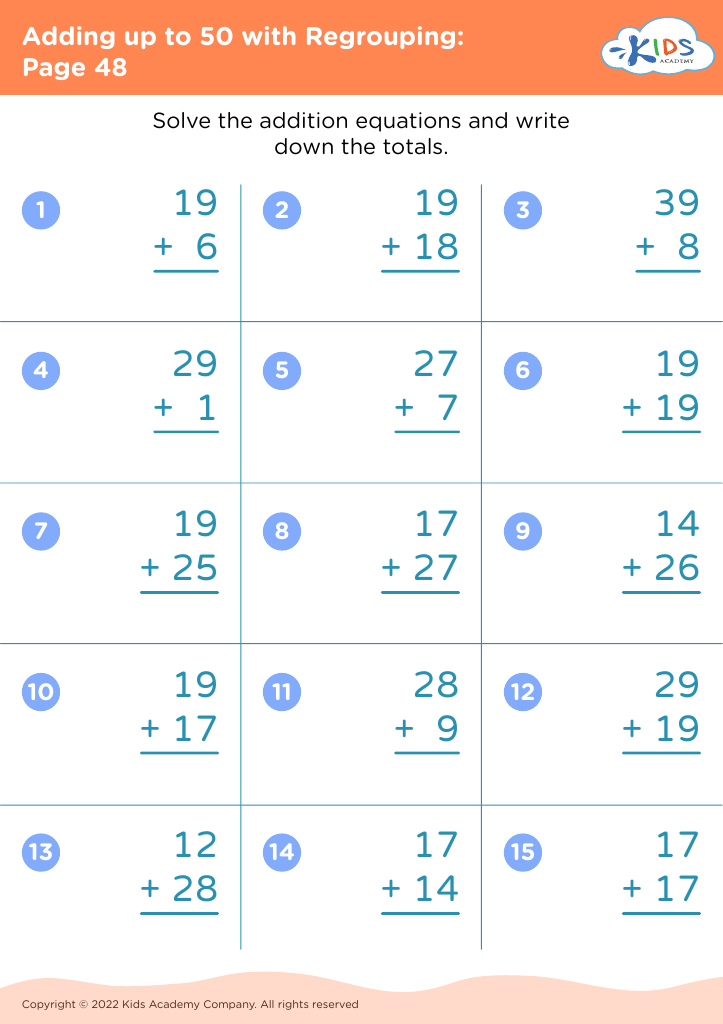
Adding up to 50 with Regrouping: Page 48
Worksheet
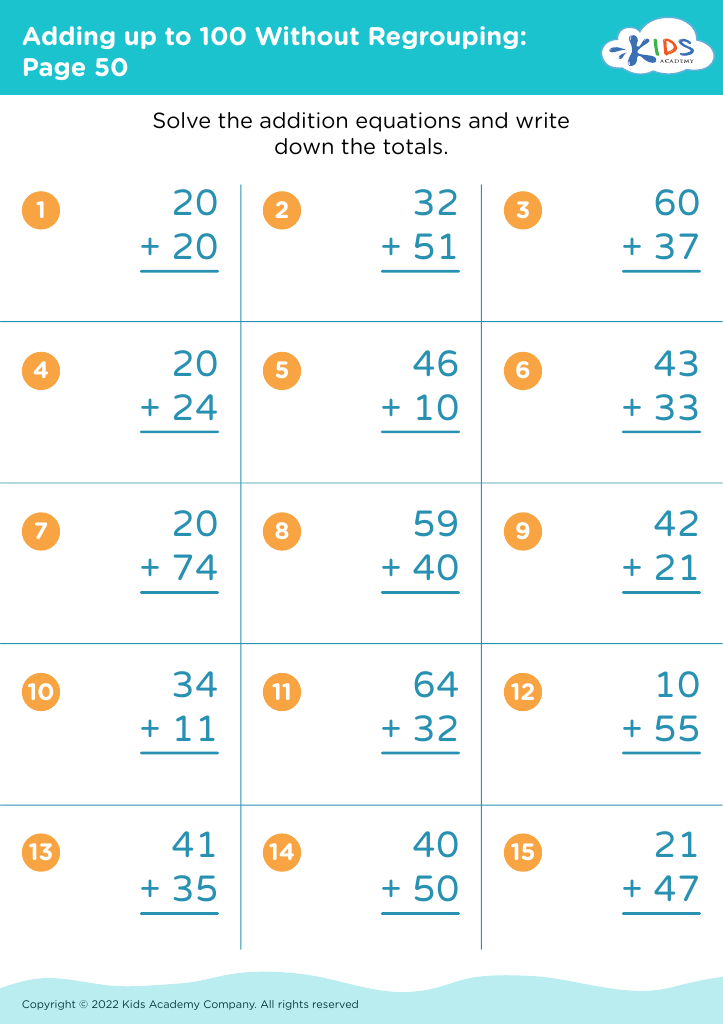
Adding up to 100 Without Regrouping: Page 50
Worksheet
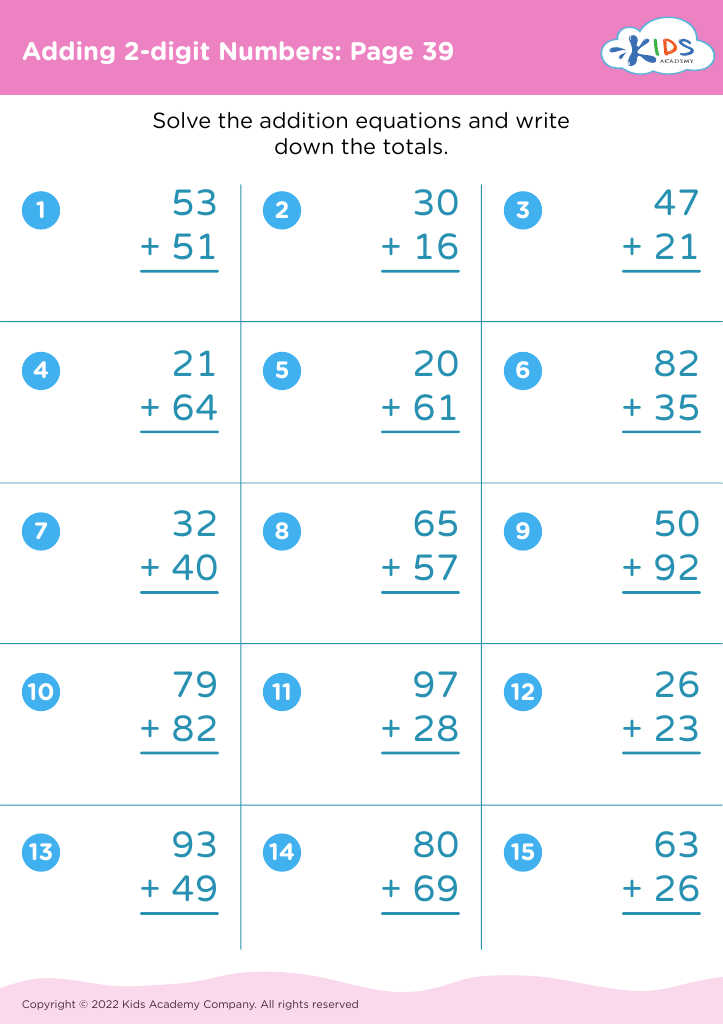
Adding 2-digit Numbers: Page 39

Adding 2-digit Numbers: Page 39

Adding 2-digit Numbers: Page 39
Worksheet
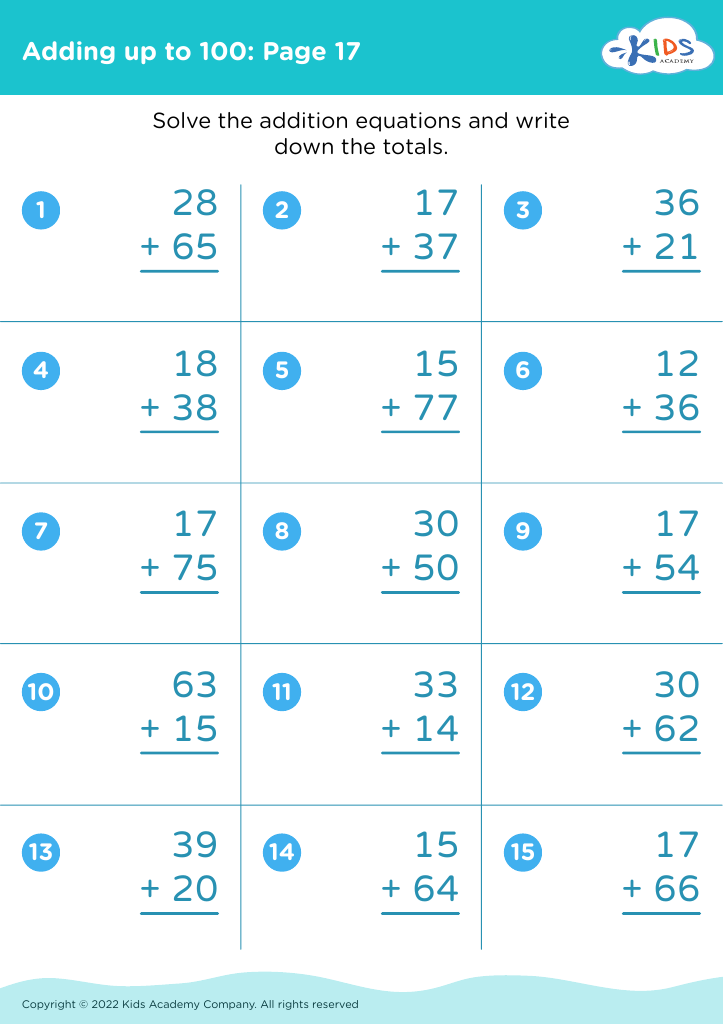
Adding up to 100: Page 17

Adding up to 100: Page 17

Adding up to 100: Page 17
Worksheet
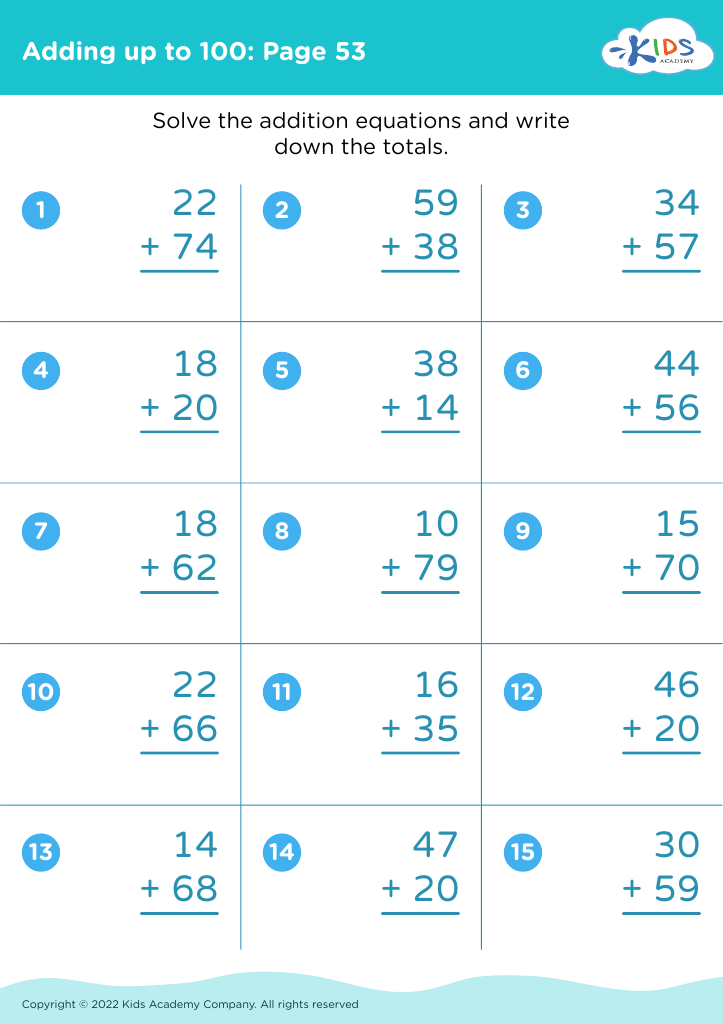
Adding up to 100: Page 53

Adding up to 100: Page 53

Adding up to 100: Page 53
Worksheet
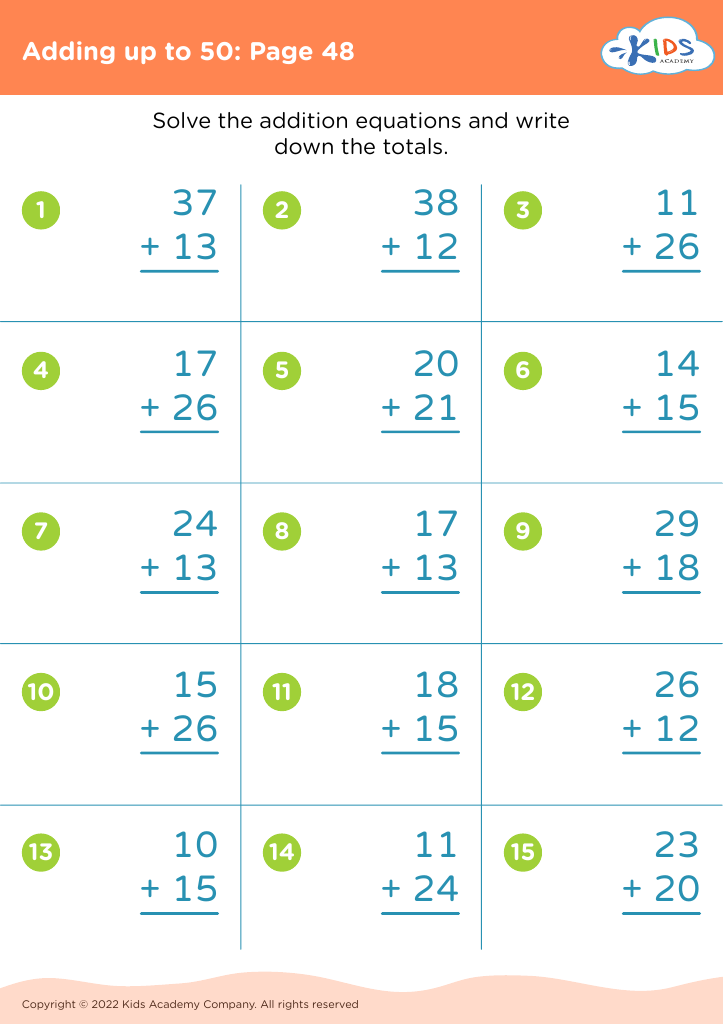
Adding up to 50: Page 48

Adding up to 50: Page 48

Adding up to 50: Page 48
Worksheet
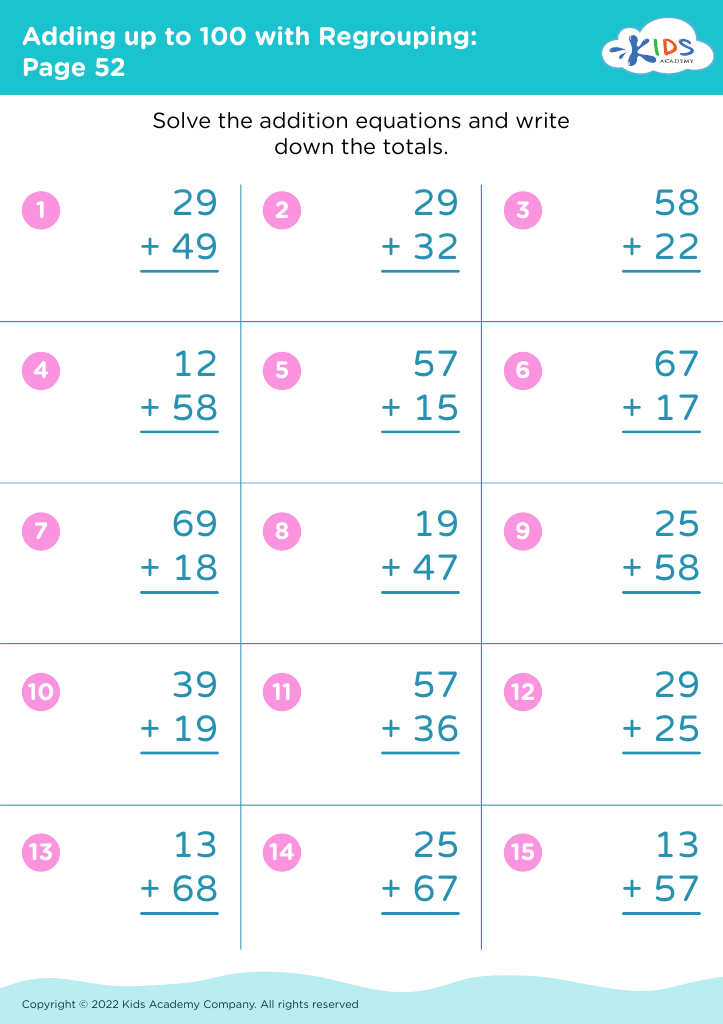
Adding up to 100 with Regrouping: Page 52
Worksheet
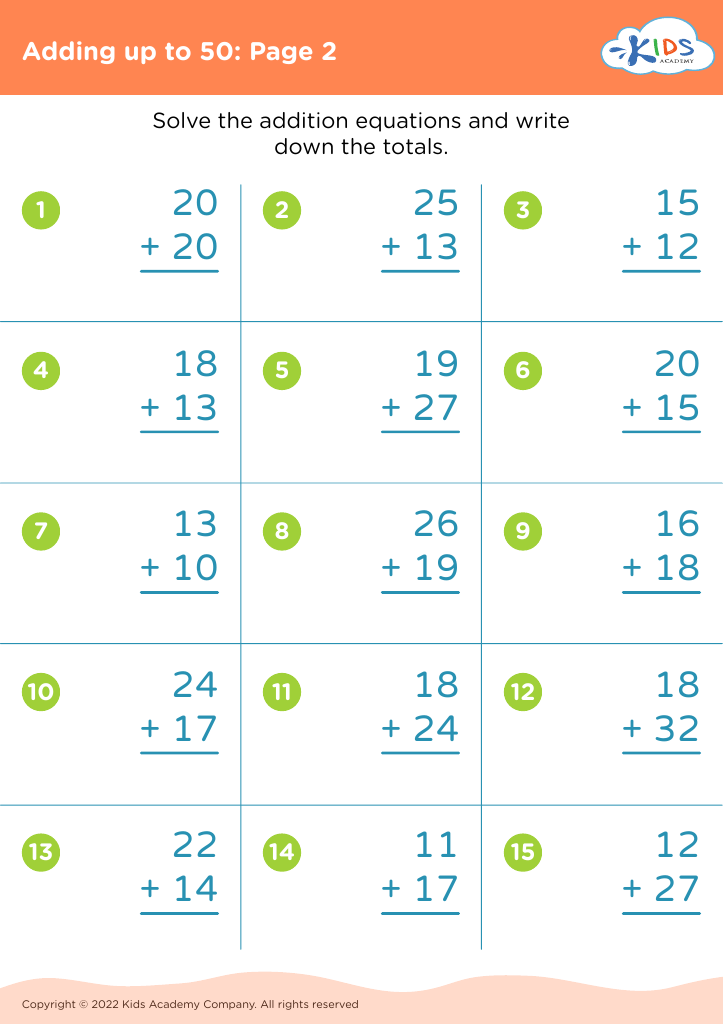
Adding up to 50: Page 2

Adding up to 50: Page 2

Adding up to 50: Page 2
Worksheet
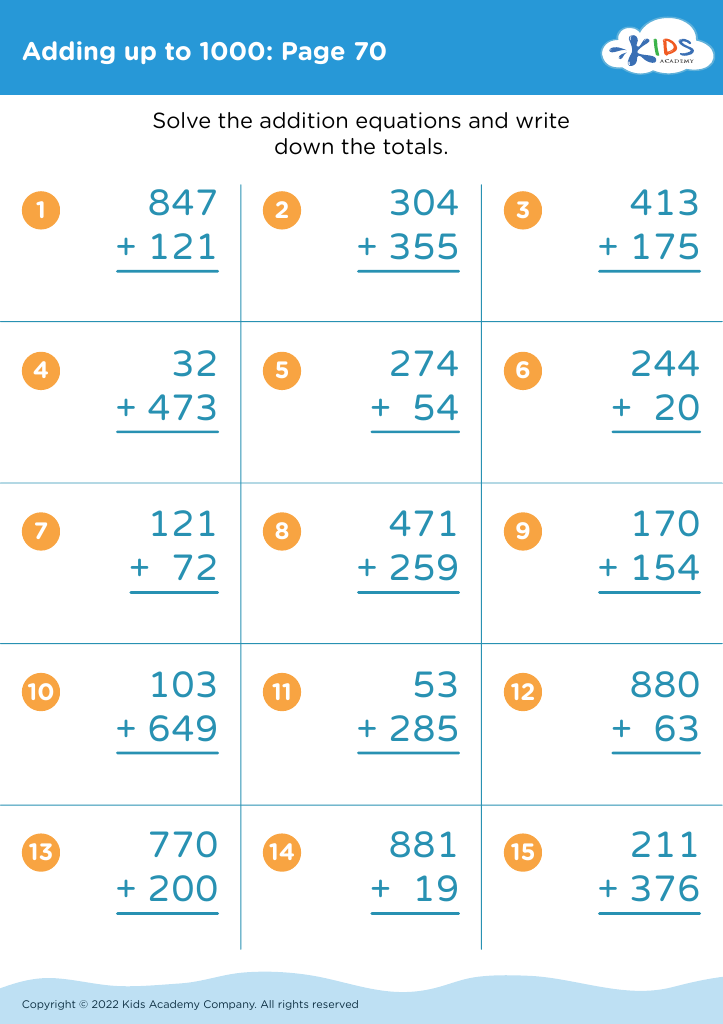
Adding up to 1000: Page 70

Adding up to 1000: Page 70

Adding up to 1000: Page 70
Worksheet


Understanding fractions, specifically addition and subtraction, is crucial for early learners as it forms the foundation for more complex mathematical concepts. First and foremost, fractions are relevant in daily life; they are used in cooking, splitting bills, measuring, and time management. When parents or teachers emphasize the importance of fractions, they equip children with practical skills that are essential for real-world applications.

Moreover, a strong grasp of fractions enhances problem-solving and critical thinking skills. By learning to add and subtract fractions, students develop their ability to approach challenges logically and systematically. This mastery also fosters a sense of achievement and builds confidence in their mathematical abilities, which is essential at this formative stage.

Additionally, understanding fractions is necessary for success in later math courses. Fractions are foundational concepts linked to understanding ratios, proportions, and even algebra. If children struggle with fractions early on, it may create gaps in their understanding that can hinder their progress in higher-level mathematics.

In conclusion, when parents and teachers prioritize understanding fractions, they not only aid students’ academic successes but also cultivate life skills that promote independence and problem-solving capability. Ultimately, fostering a solid fraction foundation will help prepare students for lifelong mathematical proficiency.