Develop addition skills Addition Worksheets
4 filtered results
-
From - To
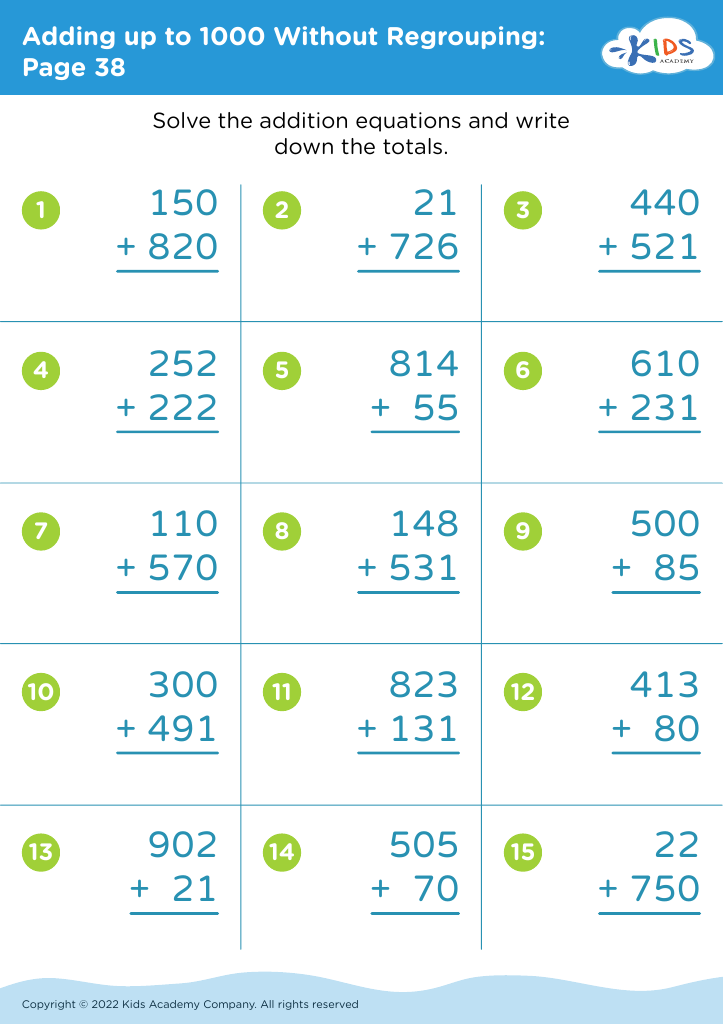
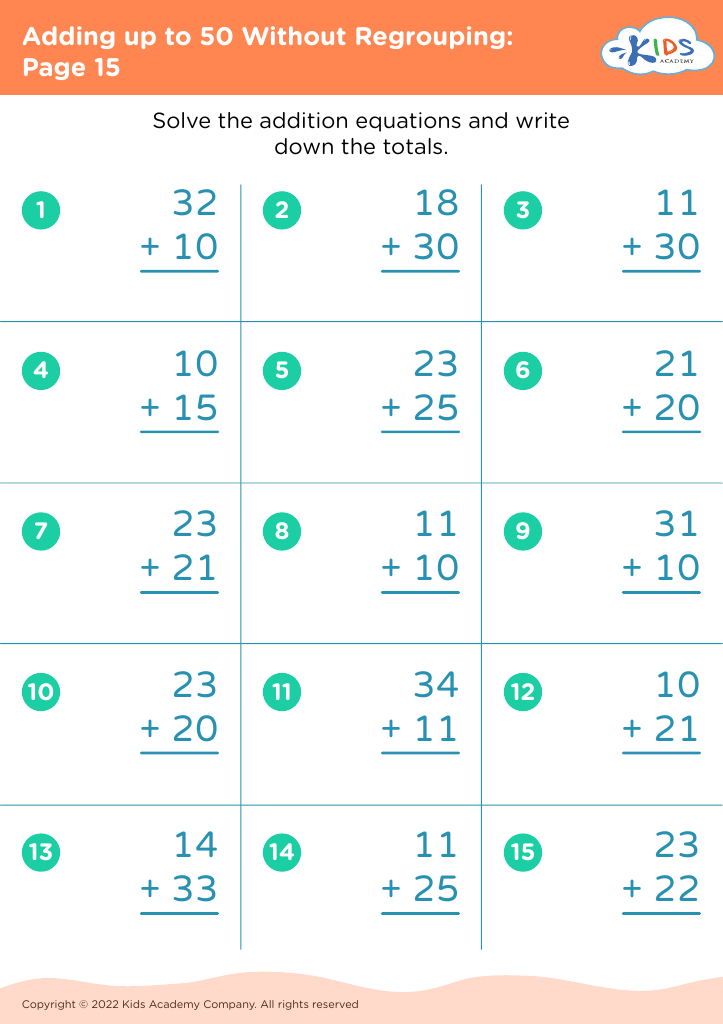
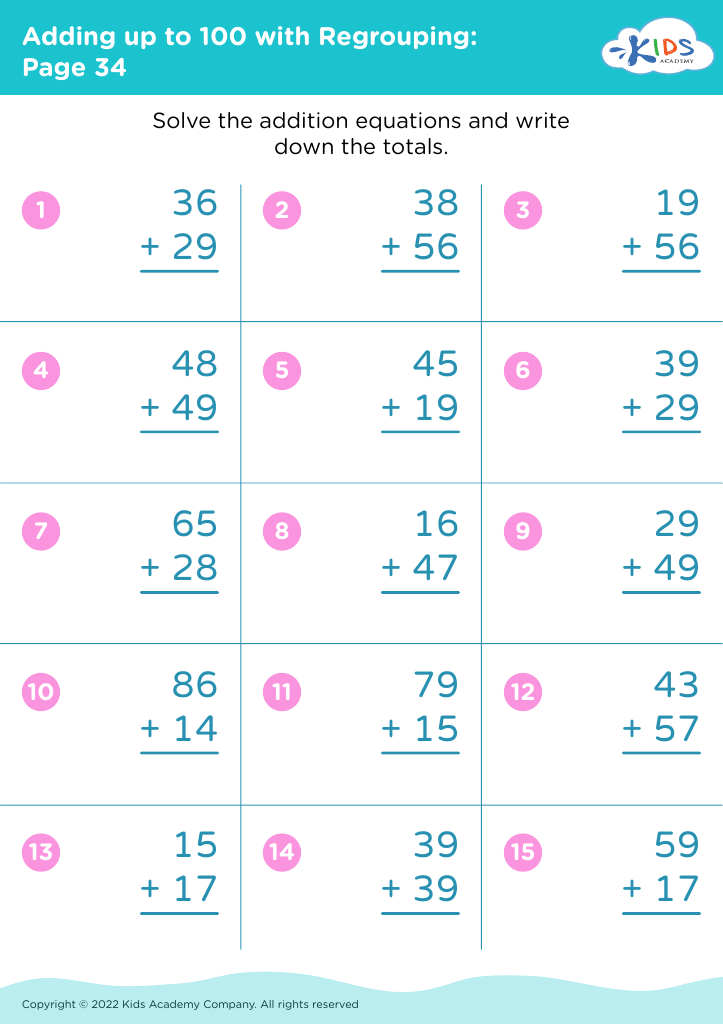
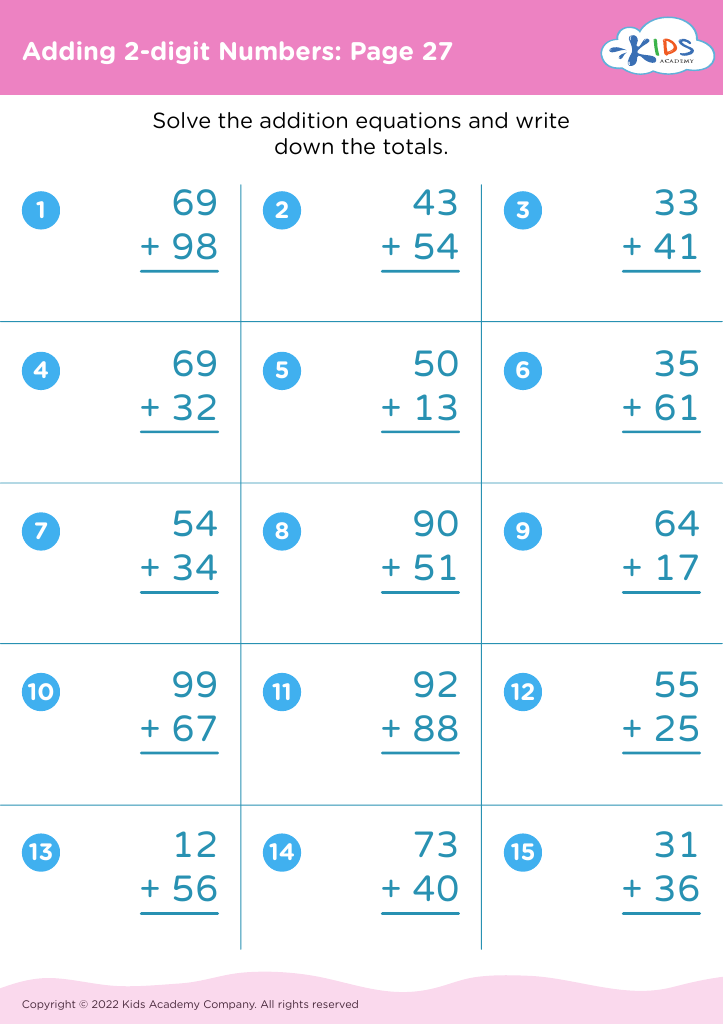
Boost your child's addition skills with our expertly designed addition worksheets from Kids Academy. Tailored to cultivate essential arithmetic abilities, these worksheets provide fun, interactive exercises perfect for young learners. Each worksheet focuses on fostering numerical fluency through engaging activities ranging from basic single-digit problems to more challenging multi-digit addition. Ideal for both classroom use and at-home practice, our tools are crafted to stimulate critical thinking and build a solid math foundation. Help your child master addition with ease and confidence using our intentional, well-structured resources adapted to fit any learning pace.







.jpg)
Developing addition skills at an early age is fundamental not only for future mathematical learning but also for overall cognitive development. Firstly, early proficiency in addition creates a strong foundation for more complex mathematical concepts. Children who grasp addition well are more likely to excel in subjects like multiplication, division, and problem-solving, fostering long-term academic success.
Furthermore, learning to add enhances critical thinking and logical reasoning. These skills are invaluable in everyday decision-making and problem-solving scenarios, extending beyond the classroom. Simple addition exercises train the brain to recognize patterns, sharpen focus, and improve memory, benefiting all areas of learning.
For parents and teachers, nurturing these skills can also build children's self-confidence and foster a positive attitude toward math. Children who feel competent in basic arithmetic are less likely to develop math anxiety, a common barrier to future learning.
Moreover, daily life often involves basic addition, from calculating expenditures to dividing items among friends. Being proficient in addition equips children with practical life skills that are essential for independent living. By emphasizing addition skills early on, parents and teachers invest not only in the child's academic journey but also in their overall cognitive and practical development.








