Shape Recognition Comparison Worksheets
3 filtered results
-
From - To
Shape Recognition Comparison Worksheets from Kids Academy are designed to enhance young learners' understanding of geometric shapes and comparison skills. These engaging worksheets help children identify, compare, and contrast different shapes through fun activities, fostering critical thinking and visual recognition. Ideal for early grade students, they support foundational math skills and prepare kids for more advanced concepts. The colorful, interactive format makes learning enjoyable and effective. Perfect for both classroom use and homeschooling, these worksheets provide valuable practice in a key area of early childhood education, ensuring kids build a strong mathematical foundation through play and exploration.
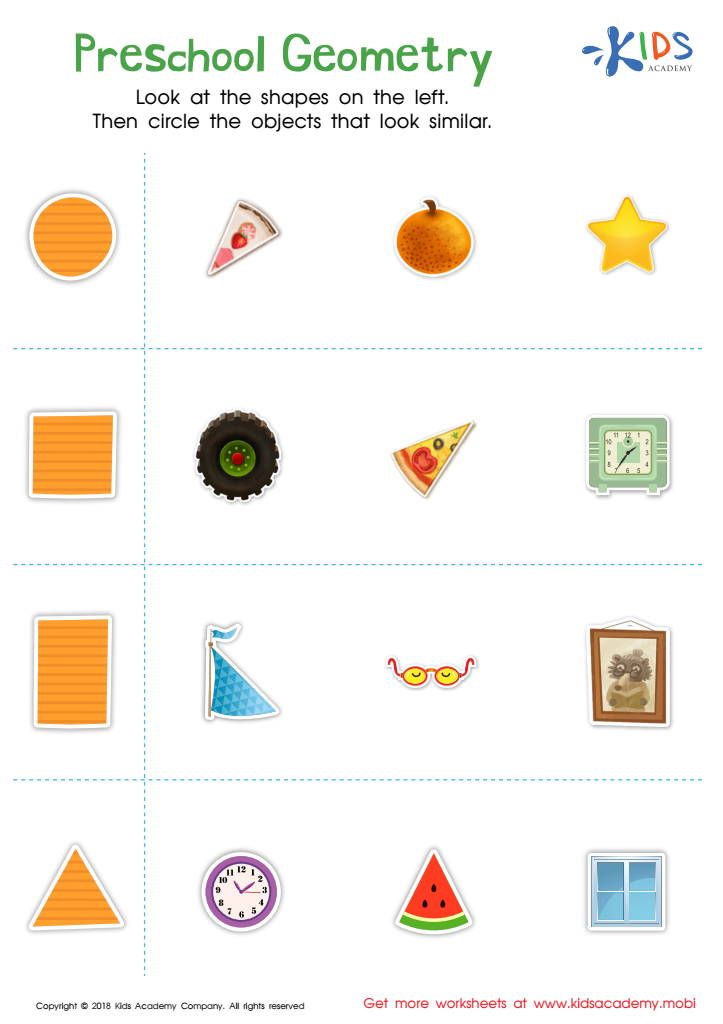
Preschool Geometry Worksheet
 Assign to My Students
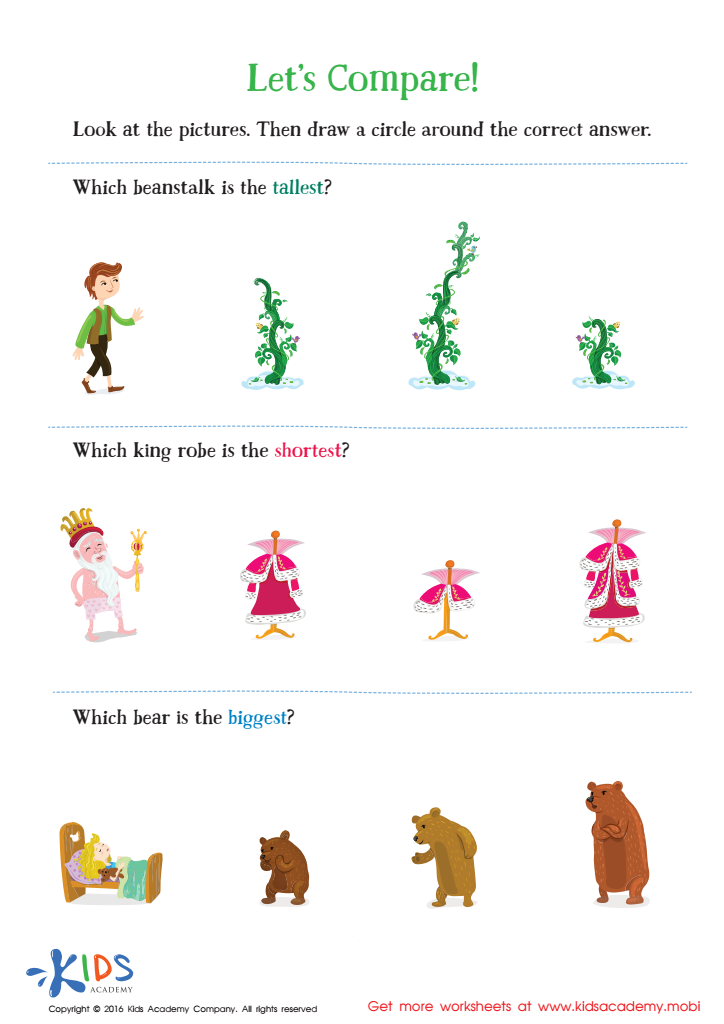
Fairy Tale Worksheet: Let's Compare
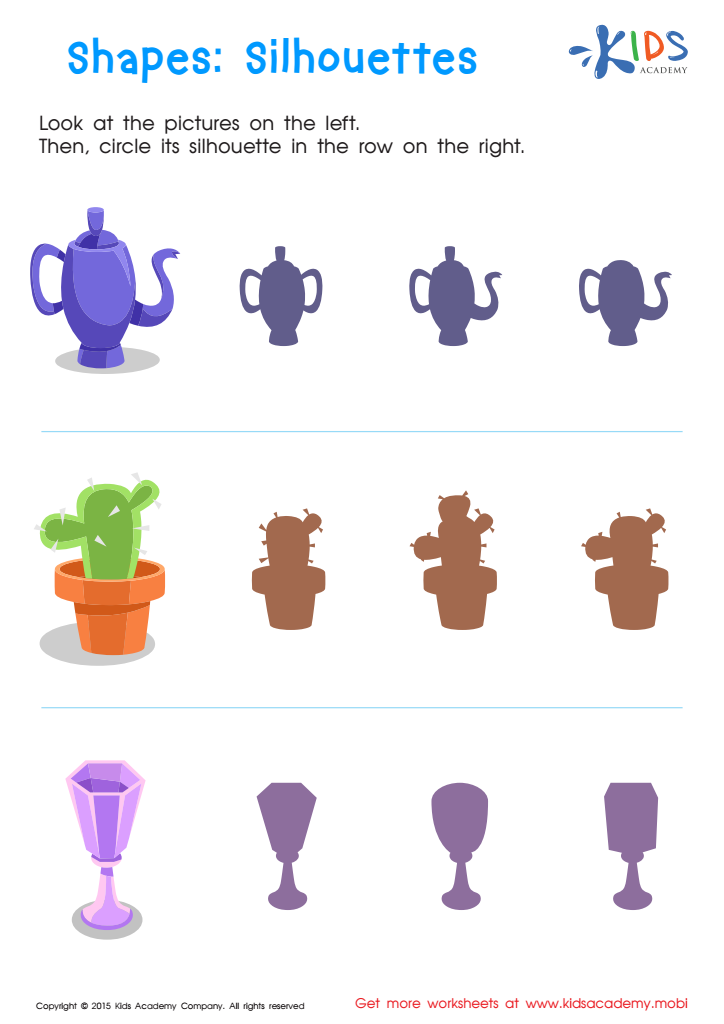
Silhouettes – Shapes Worksheet







Shape recognition comparison is a foundational skill in early childhood education that plays a crucial role in cognitive development, and parents and teachers should prioritize it for several reasons. First, learning to identify and compare different shapes enhances a child's observational skills and attentiveness to detail, fostering an awareness of the world around them. These skills are essential for later learning in more complex fields like mathematics, science, and engineering.
Second, recognizing shapes also aids in the development of spatial awareness and reasoning abilities. It helps children understand how objects interact in space – critical for tasks ranging from packing a backpack to more advanced geometry concepts.
Moreover, shape recognition is deeply interconnected with language development. Describing shapes and their characteristics enriches a child's vocabulary and strengthens communication skills, aiding both verbal expression and comprehension.
Additionally, early mastery of shape recognition lays the groundwork for reading skills. Many letters and numbers have specific shapes, and being able to discriminate between them is key to literacy and numeracy.
For parents and teachers, integrating shape comparison into playtime and learning activities can be as simple as drawing, sorting toys, or identifying objects during a nature walk, making it both enjoyable and educational. Thus, fostering shape recognition isn't merely an academic exercise but a vital part of holistic child development.








