Color differentiation Geometry Worksheets
3 filtered results
-
From - To
Enhance your child's understanding of geometry with our engaging Color Differentiation Geometry Worksheets! Designed for early learners, these worksheets not only introduce foundational geometric concepts but also incorporate vibrant colors to make learning fun and interactive. Children will practice identifying shapes, understanding their properties, and distinguishing between different geometric figures through color-coded activities. These worksheets foster critical thinking and observational skills while keeping young minds captivated. Perfect for both classroom and home learning, our resources cater to diverse learning styles, ensuring every child can thrive. Start your child’s geometry journey today with our colorful, educational worksheets!
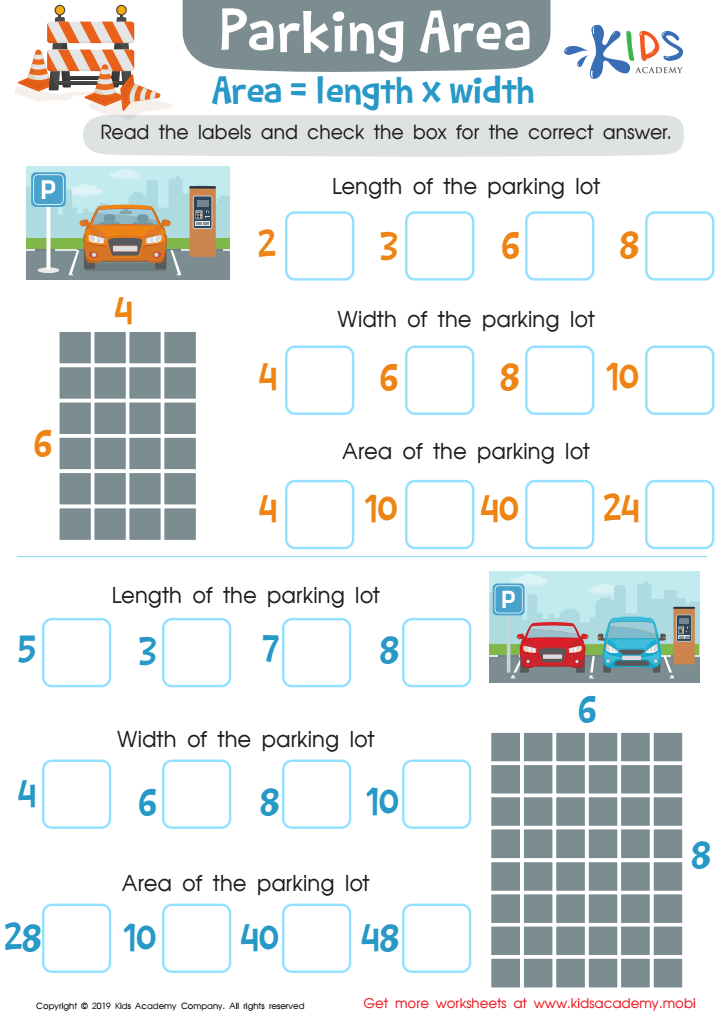
Parking Area Worksheet
 Assign to My Students











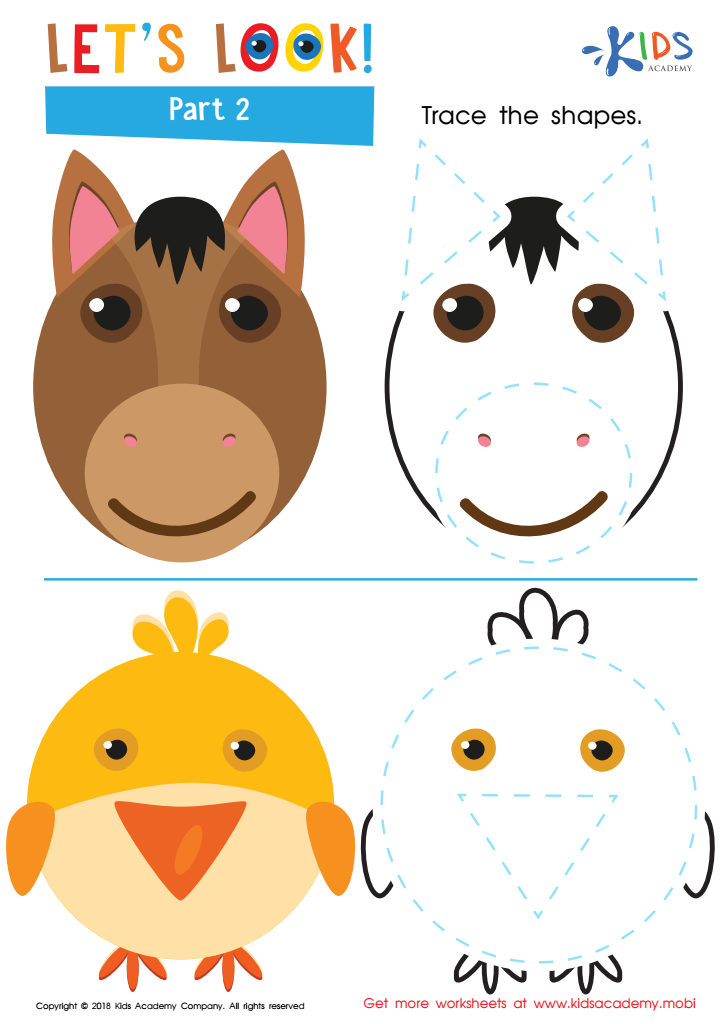
Let's Look! Part 2 Worksheet
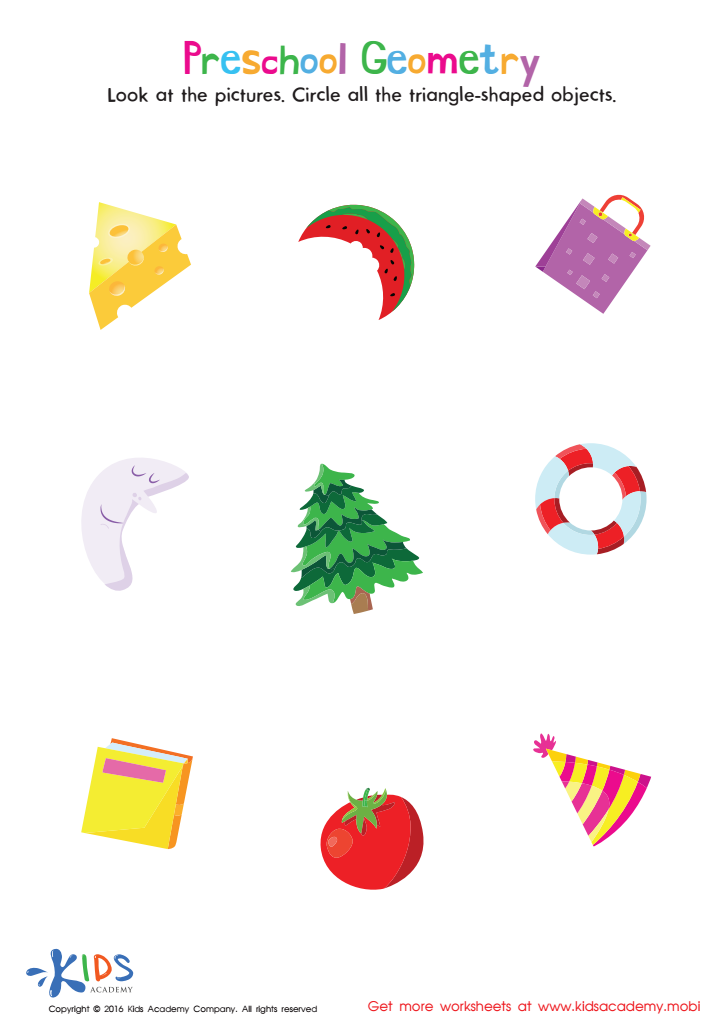








Color differentiation in geometry plays a crucial role in early childhood education, particularly for young learners exploring shapes and spatial relationships. Understanding geometry is foundational for developing mathematical reasoning, and color serves as an effective tool to enhance this learning.
Firstly, using color differentiation helps young children distinguish between various geometric shapes, making it easier for them to identify, classify, and manipulate these shapes. When colors are strategically used in teaching, they act as visual aids, drawing attention to important concepts and making learning more engaging. For example, coloring sorted shapes in different hues can aid visual memory, enabling students to recall and recognize them better.
Moreover, color differentiation fosters creativity and encourages interactive learning. Children may enjoy using colors to create patterns or designs, facilitating a deeper understanding of symmetry, angles, and dimensions. This hands-on experience promotes critical thinking and problem-solving skills.
Finally, parents and teachers concerned about developmental milestones should recognize that early experiences with geometry can influence later success in subjects like math and science. By integrating color differentiation in geometric learning, educators foster a positive learning environment that supports cognitive, emotional, and social development in children.








