Color Identification Geometry Worksheets
5 filtered results
-
From - To
Explore our Color Identification Geometry Worksheets, designed to engage young learners in the world of shapes and colors! These interactive worksheets help children develop their color recognition skills while introducing essential geometry concepts. Each activity combines fun with education, allowing students to identify various shapes such as circles, squares, and triangles, all while using vibrant colors. Perfect for early learners, these worksheets make teaching geometry enjoyable and accessible. Ideal for classroom use or at-home practice, they encourage creativity and critical thinking. Download our Color Identification Geometry Worksheets today and watch your students thrive in their learning journey!
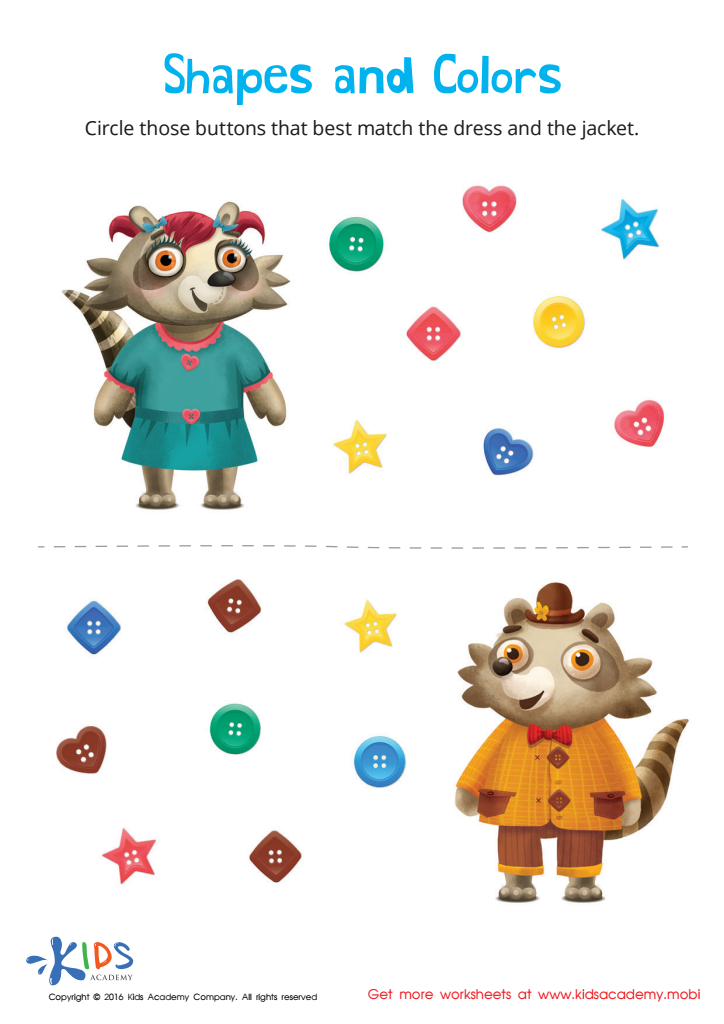
Matching: Shapes and Colors Worksheet











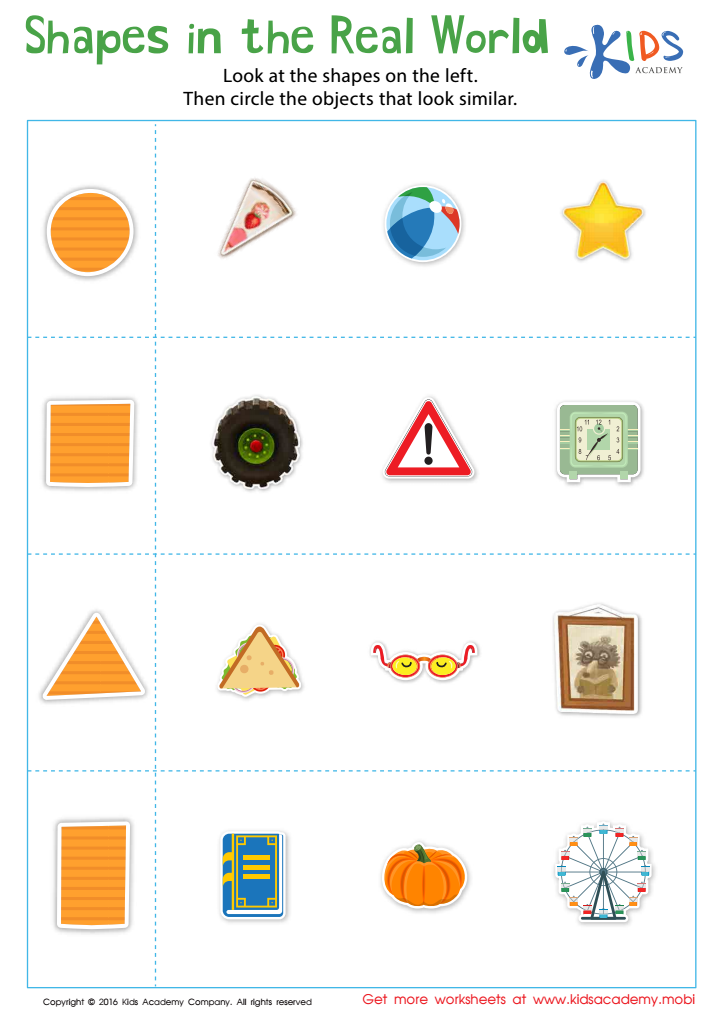
Shapes in the Real World Worksheet
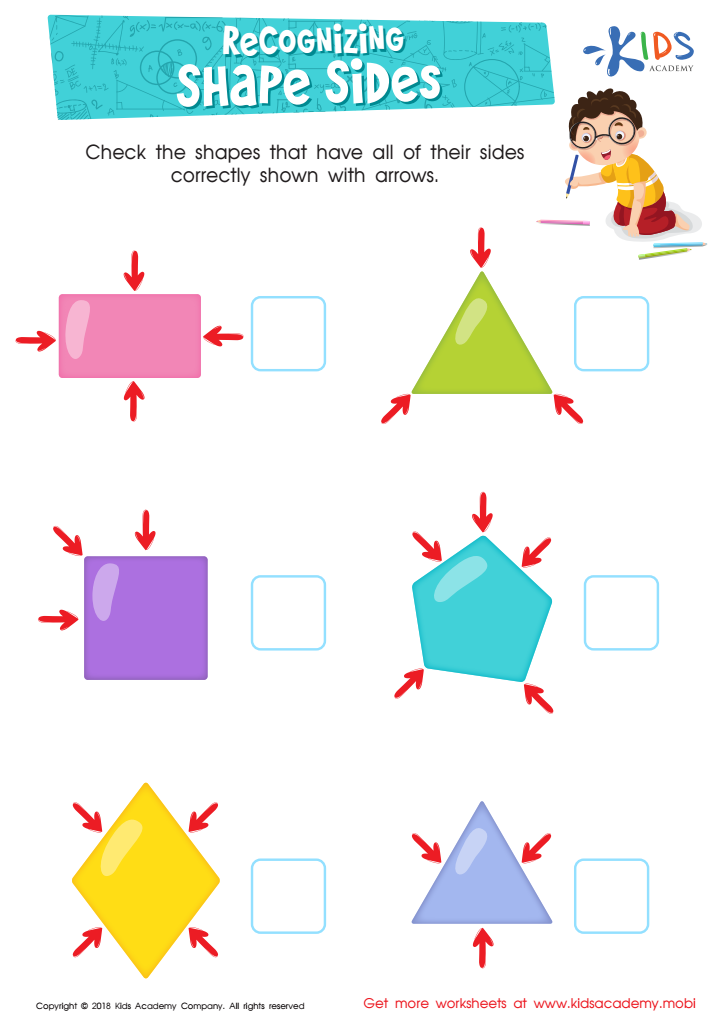
Recognizing Shape Sides Worksheet
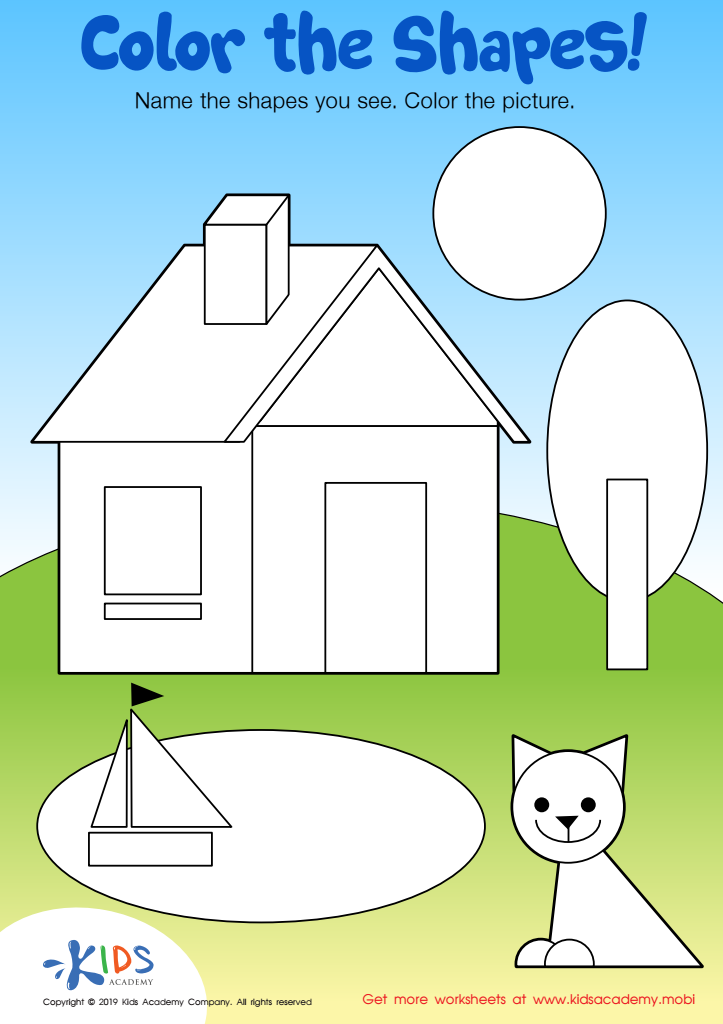
Color the Shapes Worksheet
 Assign to My Students
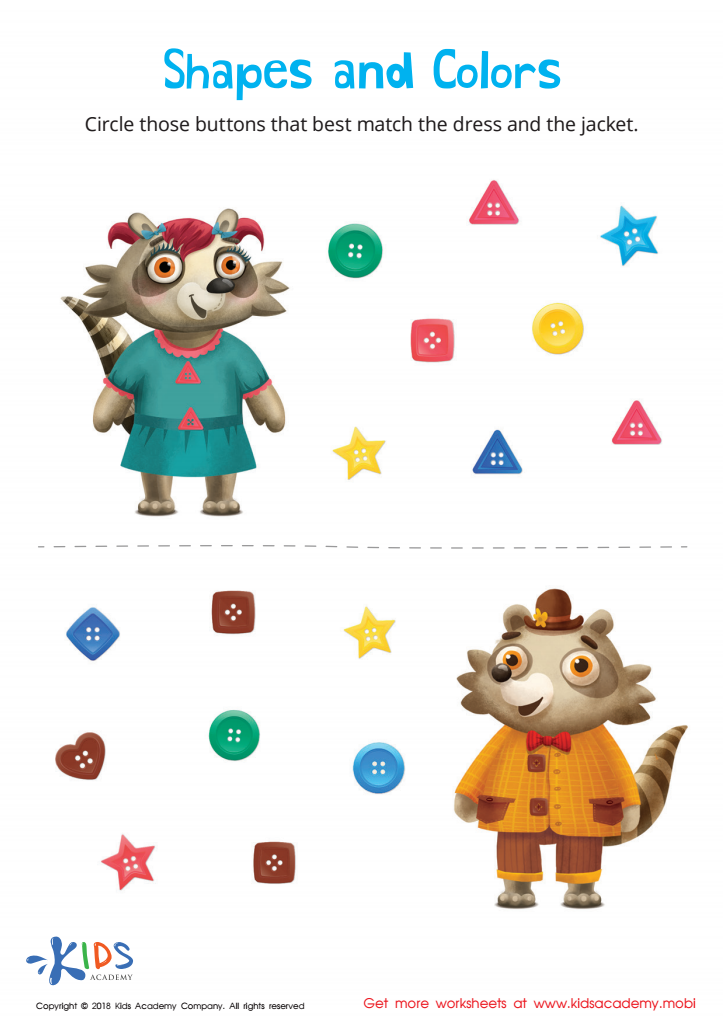
Shapes and Colors Worksheet








Parents and teachers should care about color identification in geometry as it plays a crucial role in early childhood education and cognitive development. Understanding colors and shapes enhances children's ability to categorize and distinguish between different objects, fostering their visual perception abilities. This fundamental skill not only aids in daily activities, such as organizing toys or dressing up, but also lays the groundwork for more complex mathematical concepts.
Engaging children in activities that integrate color identification with geometry helps to ignite their interest in learning. For example, sorting colored shapes can improve their problem-solving skills and boost hand-eye coordination. Such activities encourage active participation and allow children to express creativity while exploring spatial relationships.
Moreover, color identification supports language development as children learn to articulate their observations and ask questions about shapes and colors. This process can enhance vocabulary and communication skills, leading to improved social interactions.
Incorporating color identification within geometric learning aligns with various educational standards, ensuring that children develop a well-rounded understanding of both subjects. Ultimately, parents and teachers who prioritize these skills set the stage for a lifetime of learning, critical thinking, and academic success.








