Critical Thinking Geometry Worksheets
5 filtered results
-
From - To
Explore our collection of "Critical Thinking Geometry Worksheets," designed to enhance students' geometric understanding through engaging activities. These worksheets focus on developing essential skills such as problem-solving, analytical reasoning, and spatial awareness. Perfect for early learners, our resources encourage students to apply their geometry knowledge creatively and critically. Topics include shape recognition, symmetry, and spatial relationships, tailored to challenge young minds and foster a love for math. Each worksheet is crafted to align with educational standards, making them ideal for classroom use or home learning. Empower your students to think critically about geometry and strengthen their mathematical skills today!
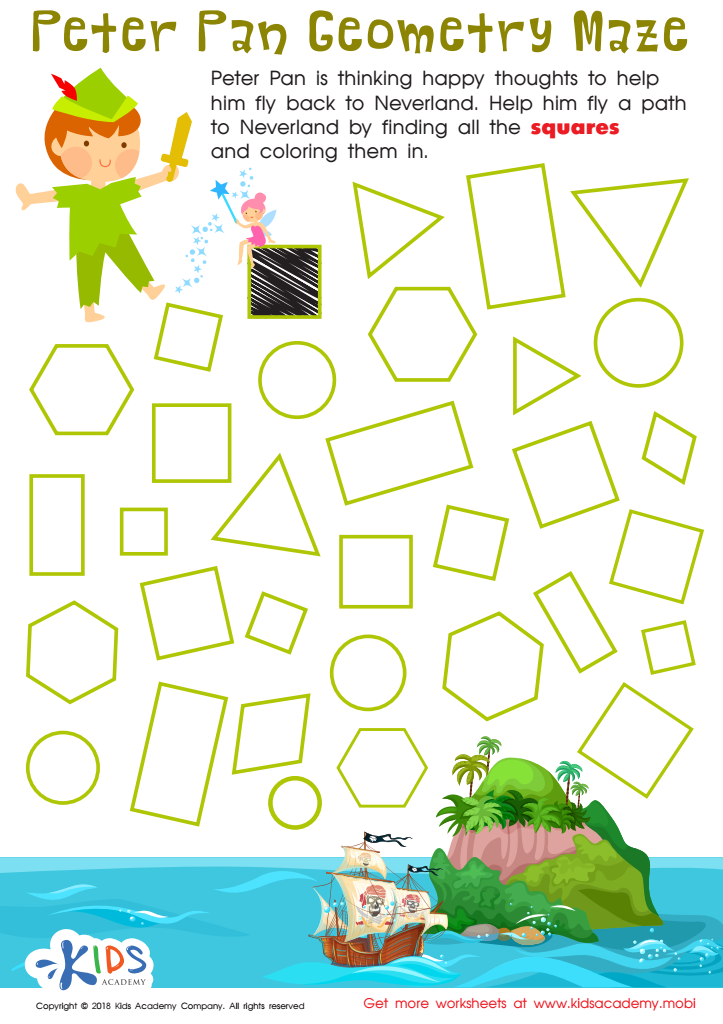
Peter Pan Worksheet
 Assign to My Students











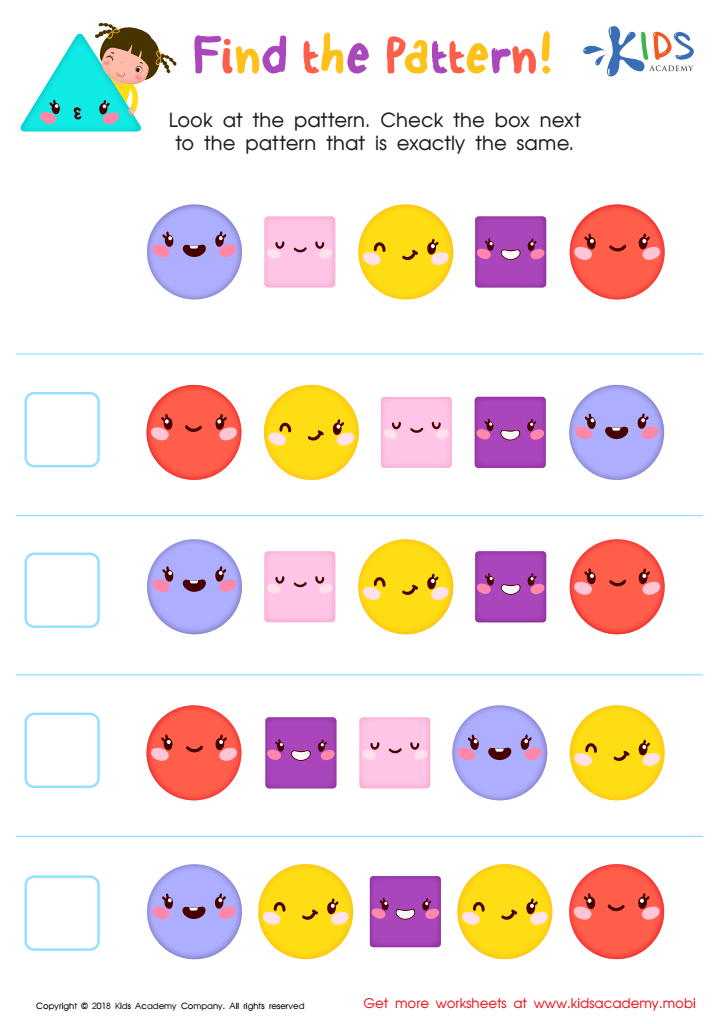
Find the Pattern Worksheet
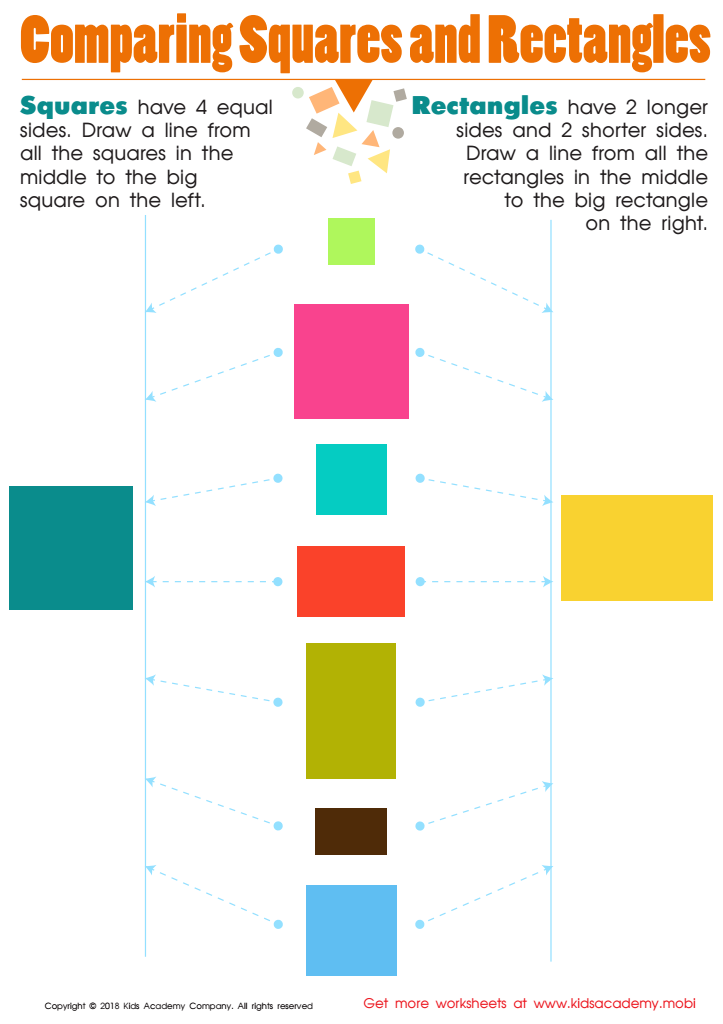
Comparing Squares Rectangles Worksheet
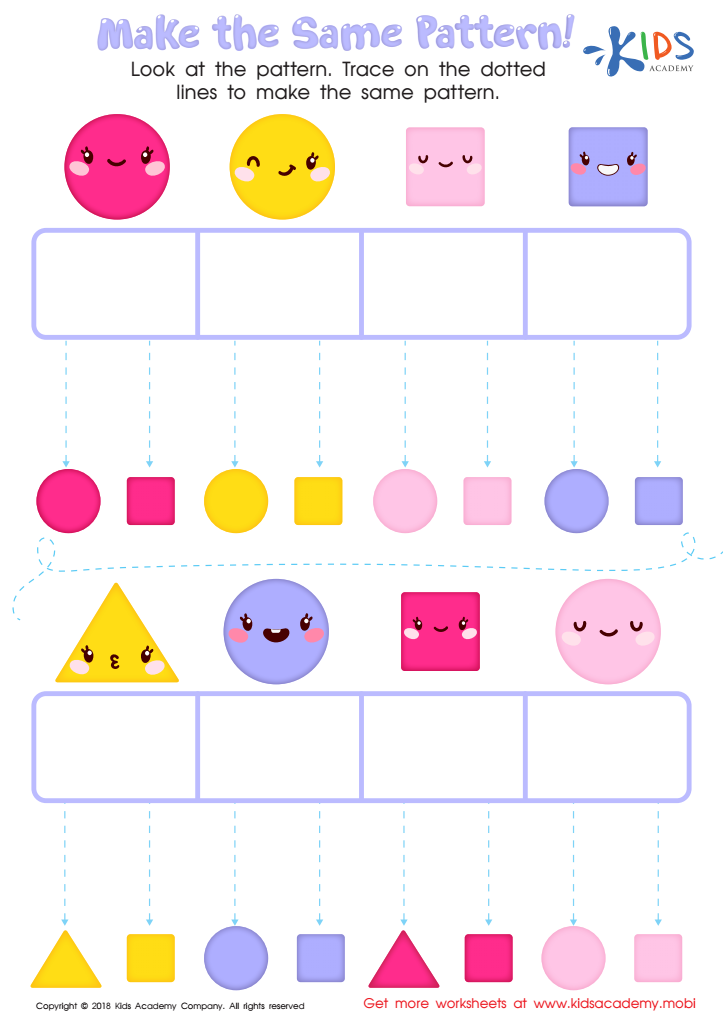
Make the Same Pattern Worksheet
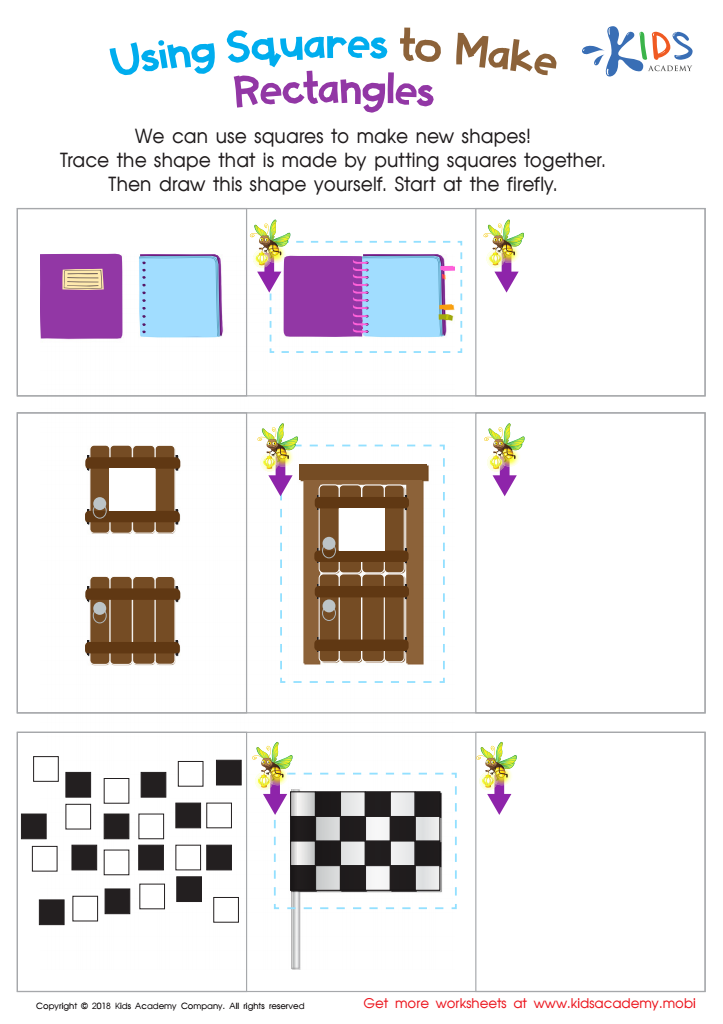
Using Squares to Make Rectangles Worksheet








Critical thinking in geometry is essential for both parents and teachers as it nurtures foundational skills vital for students' overall development. Unlike rote memorization, critical thinking encourages students to analyze, evaluate, and solve problems creatively. Engaging with geometry in a critical and thoughtful manner helps students not only understand shapes, sizes, and spatial relationships but also develop logical reasoning skills that are applicable across various subjects and real-life situations.
Encouraging students to think critically about geometric concepts fosters their ability to approach problems methodically and consider multiple perspectives when seeking solutions. This reflects broader cognitive skills such as pattern recognition and systematic reasoning. For parents and teachers, emphasizing critical thinking in geometry instills confidence and resilience in students, equipping them to tackle more complex challenges in academics and beyond.
Moreover, critical thinking promotes collaborations, as students discuss and defend their ideas within group settings, enhancing communication and social skills. Ultimately, by prioritizing critical thinking in geometry education, parents and teachers help cultivate a generation of analytical thinkers ready to innovate and address future problems in an increasingly complex world. Supporting this approach leads to empowered learners equipped to succeed in all areas of life.








