Spatial understanding Geometry Worksheets
3 filtered results
-
From - To
Enhance your child's spatial understanding with our engaging Geometry Worksheets! Designed to build foundational math skills, these worksheets provide fun activities that help young learners visualize shapes, recognize patterns, and develop critical thinking. Through a variety of interactive exercises, children will explore concepts such as symmetry, spatial orientation, and geometric relationships. Ideal for both classroom and home use, our worksheets cater to diverse learning styles and encourage creativity. Perfect for early grades, these resources make geometry approachable and exciting. Start fostering your child's mathematical intuition today by downloading our Spatial Understanding Geometry Worksheets and watch their confidence soar!
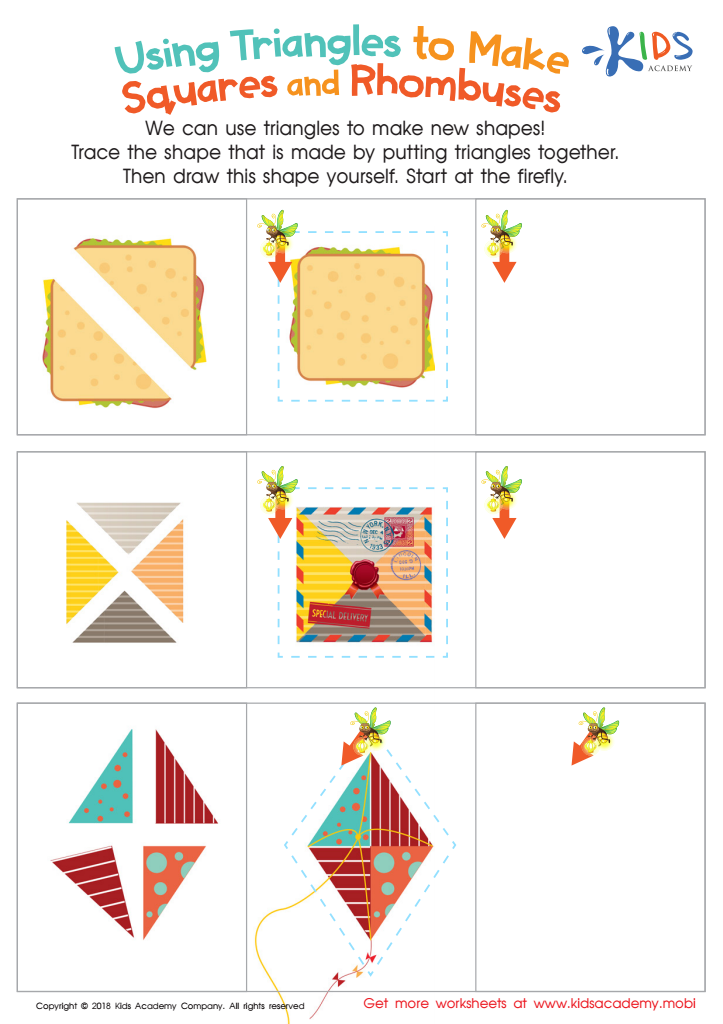
Using Triangles to Make Squares and Rhombuses Worksheet
 Assign to My Students











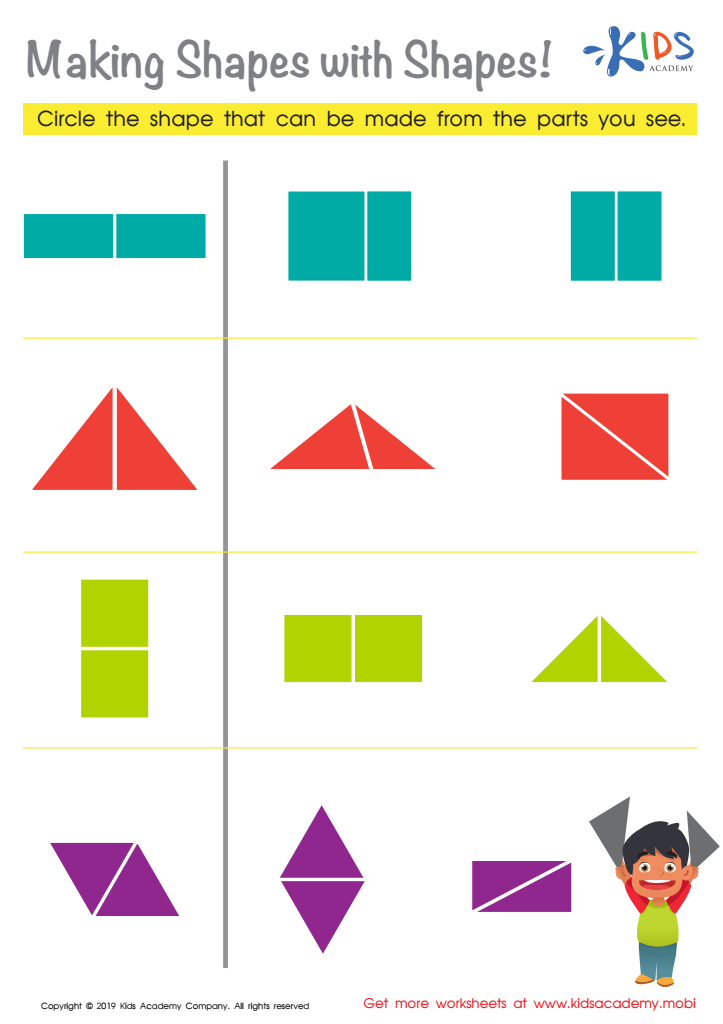
Making Shapes with Shapes Worksheet
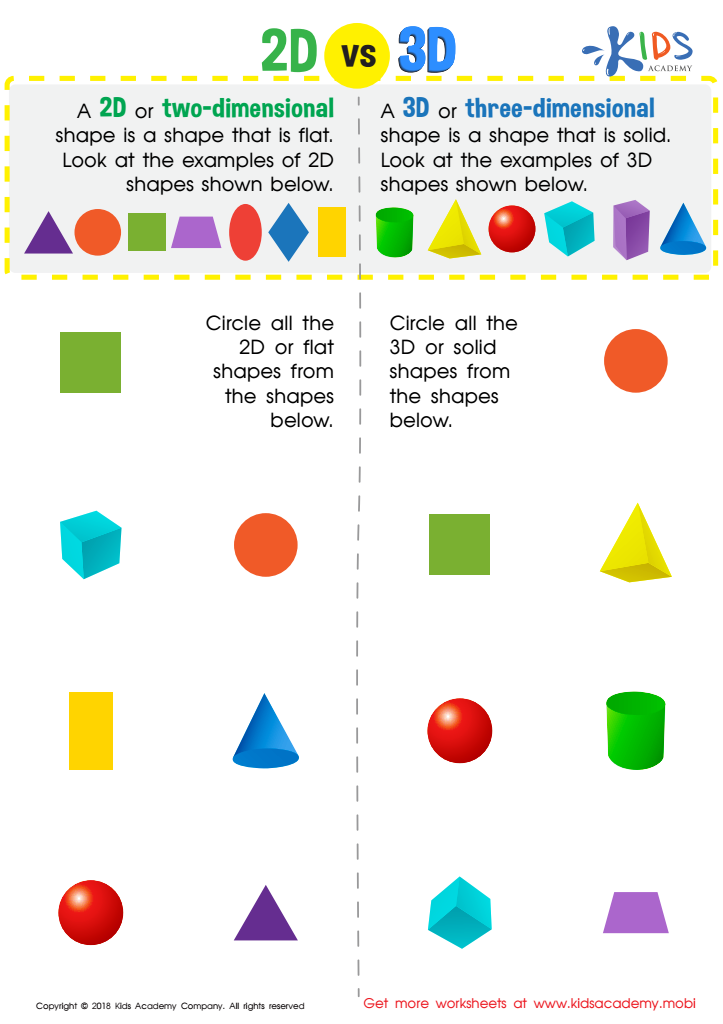
2D vs 3D Shapes Worksheet








Parents and teachers should prioritize spatial understanding in geometry because it lays the groundwork for critical thinking and problem-solving skills essential for student success. Spatial understanding involves the ability to visualize and manipulate shapes and spaces, fundamental to a child’s cognitive development. Mastering these concepts fosters creativity and innovation, as students learn to think outside the box, whether in art, science, or everyday problem-solving.
Furthermore, spatial skills have been linked to success in STEM (science, technology, engineering, and mathematics) fields. As our world becomes increasingly technology-driven, proficiency in these areas offers students a competitive advantage in the workforce. Recognizing geometric relationships enhances logical reasoning and boosts confidence in tackling complex tasks.
Moreover, spatial reasoning is interconnected with literacy and language development. Discussing shapes and spatial relationships helps improve vocabulary and fosters effective communication skills, empowering children to articulate their thoughts clearly.
By investing time in developing spatial understanding, parents and teachers can better prepare children for academic challenges and real-world applications. Ultimately, nurturing geometric skills not only enriches a child’s education but also equips them with the tools necessary for future success, making it a priority for holistic development.








