Understanding area Geometry Worksheets
3 filtered results
-
From - To
Discover a fun and engaging way for young learners to grasp the concept of area with our "Understanding Area Geometry Worksheets." Designed for early grade students, these worksheets provide colorful visuals and relatable real-life examples that make learning about shapes and their areas an enjoyable experience. The engaging activities encourage critical thinking while helping kids apply their knowledge of geometry in practical contexts. From measuring squares and rectangles to exploring different units of measurement, our resources promote independent learning. Equip your students with the skills they need to master the fundamentals of geometry and enjoy every step of their educational journey!
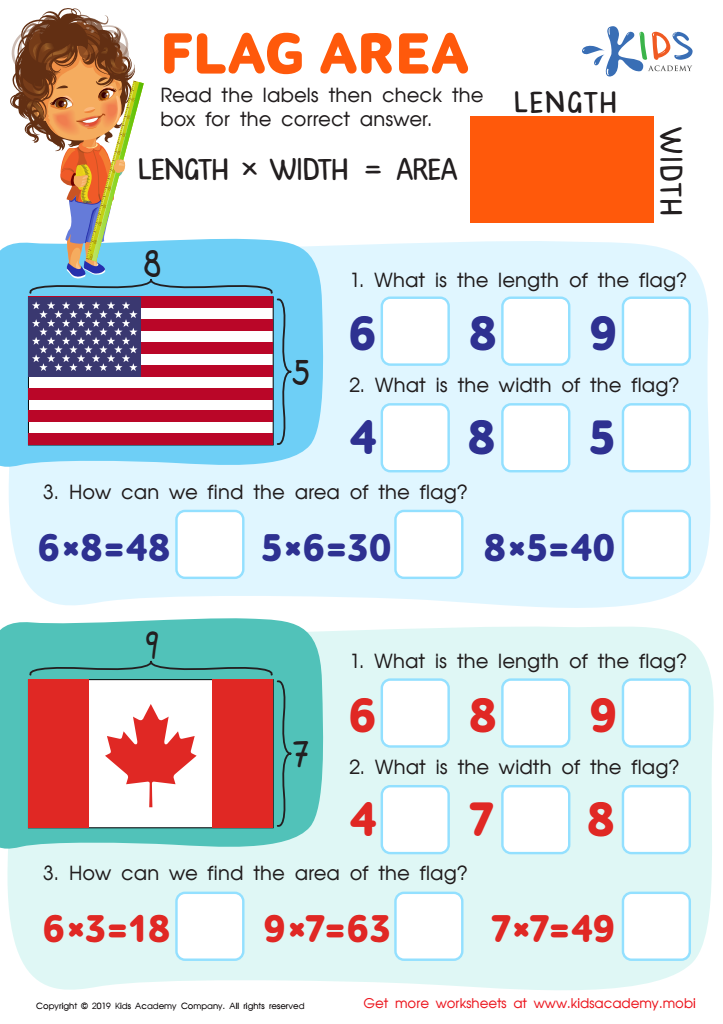
Flag Area Worksheet
 Assign to My Students











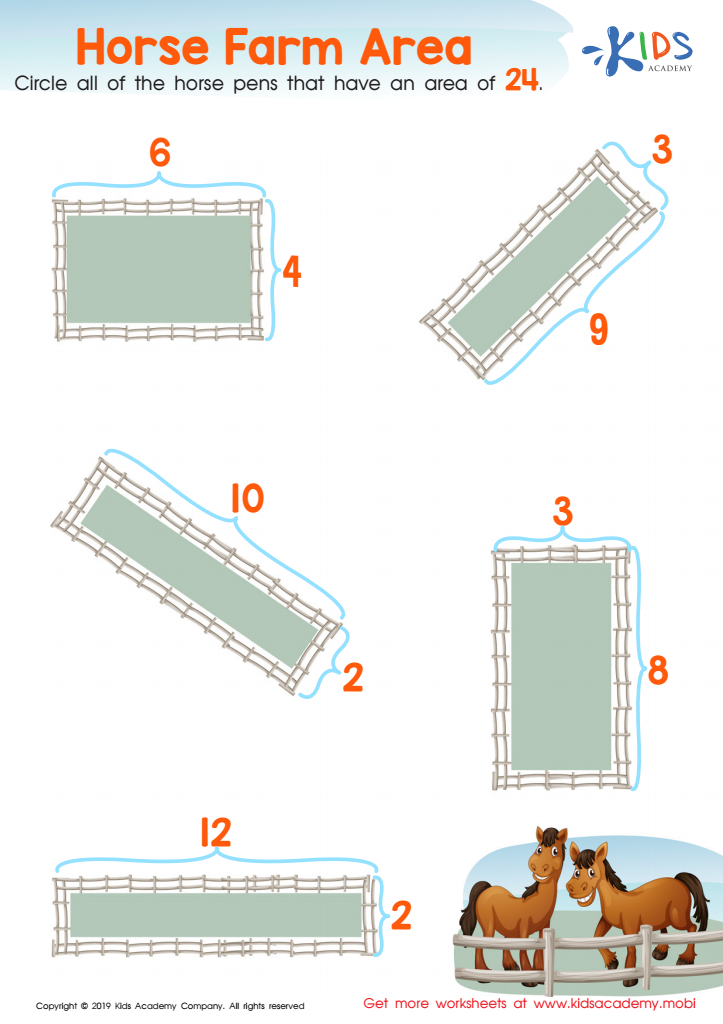
Horse Farm Area Worksheet
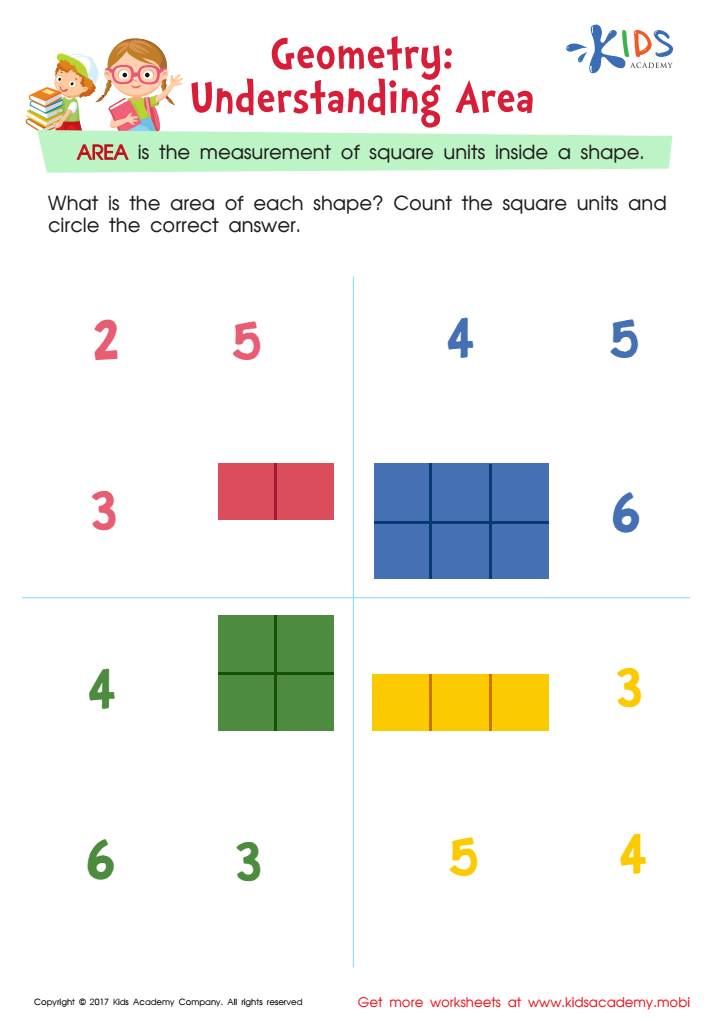
Understanding Area Worksheet








Understanding area and geometry is essential for parents and teachers because it forms the foundation for a child's problem-solving skills and mathematical reasoning. These concepts are not just abstract numbers; they are practical tools used in everyday life, from measuring spaces in a home to understanding the layout of a garden or playground. As children learn about area, they cultivate spatial awareness and enhance their ability to visualize and organize information.
Geometry also fosters critical thinking. Comprehending shapes and their properties encourages students to develop logical reasoning skills necessary for more complex math challenges. Furthermore, grasping these concepts improves students' abilities to tackle real-world scenarios, such as calculating the amount of paint needed for a wall area or determining the size of furniture when rearranging a room.
For educators and parents, emphasizing geometry and area nurtures a love for mathematics and builds confidence in young learners. When students see the relevance of what they are learning, they are more likely to engage with and retain the material. Providing support and encouragement in these areas enhances students’ overall academic skills and prepares them for future advanced studies in math and science.








