Visual Learning Geometry Worksheets
5 filtered results
-
From - To
Discover our engaging Visual Learning Geometry Worksheets that make mastering geometric concepts fun and interactive for young learners. Designed to enhance spatial awareness and critical thinking skills, these worksheets incorporate vibrant visuals like shapes, patterns, and real-world examples that capture children's interest. Perfect for preschool and early elementary students, our resources include various activities such as matching shapes, identifying geometric forms, and hands-on exercises that reinforce learning. Empower your child’s learning journey with worksheets that not only focus on geometry but also promote creativity and confidence in math. Explore our collection today and transform geometry into an enjoyable adventure!
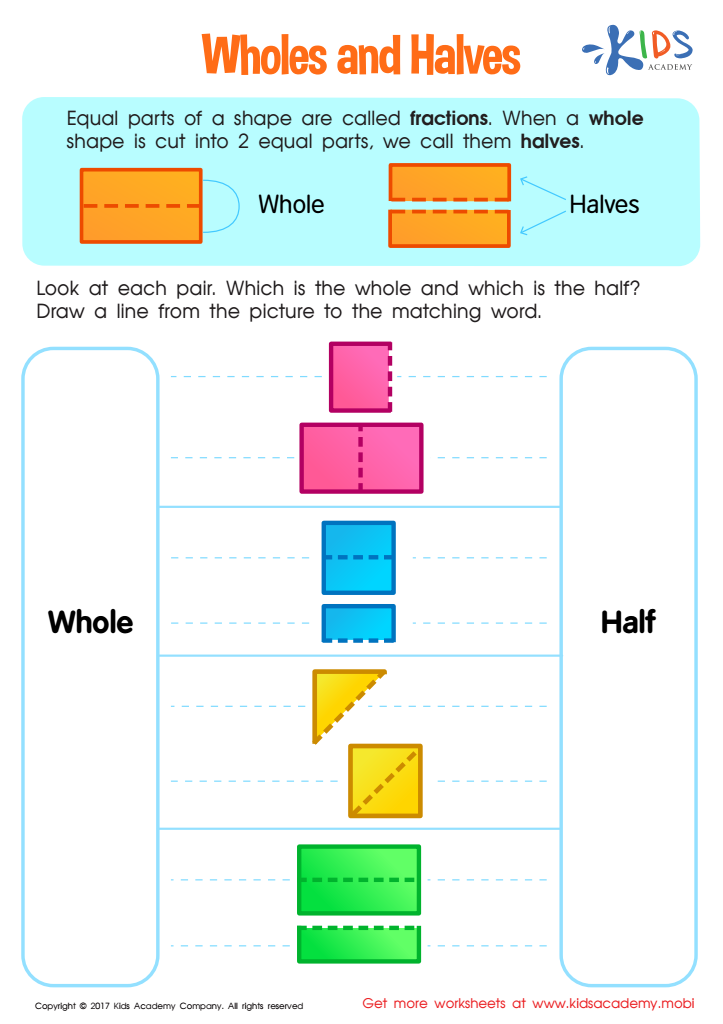
Wholes and Halves Worksheet
 Assign to My Students











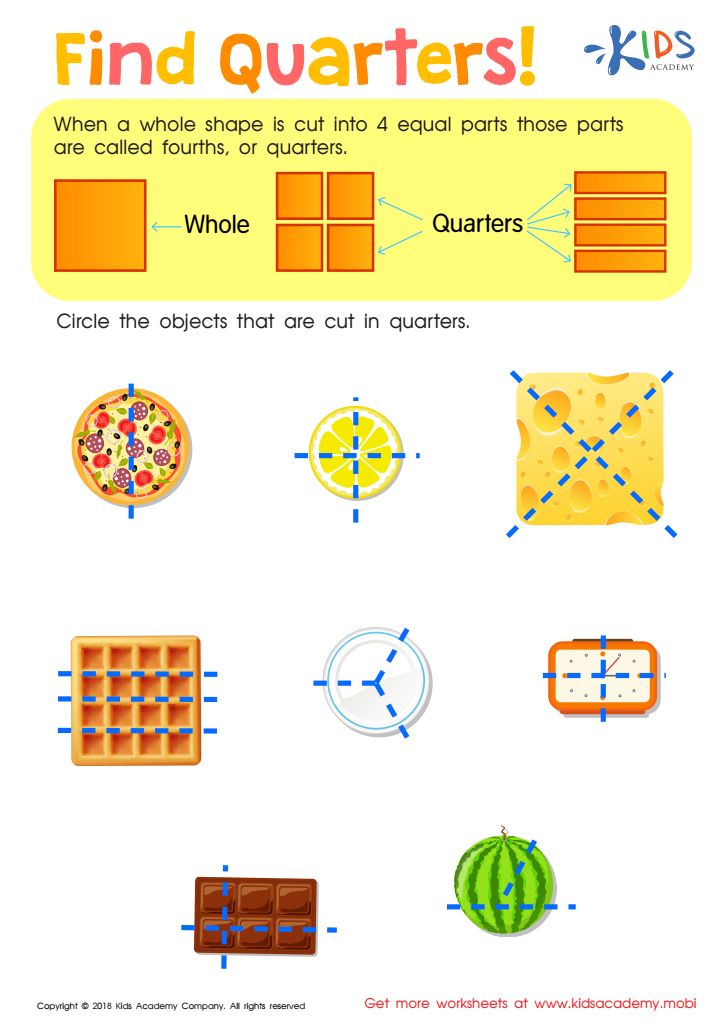
Find Quarters Worksheet
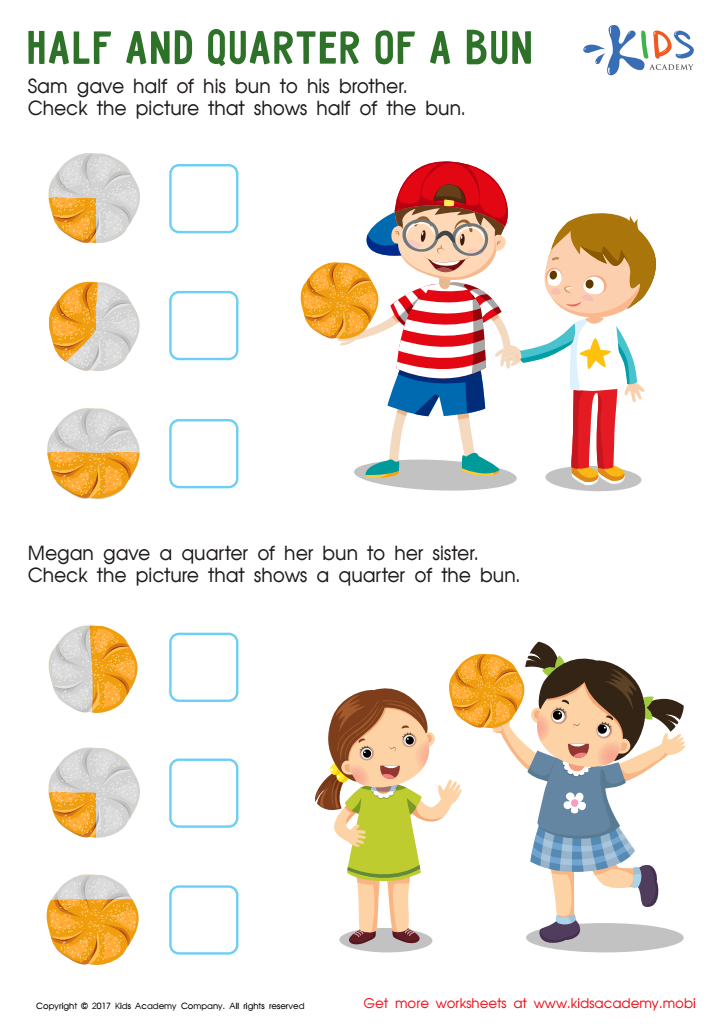
Half and Quarter of a Bun Worksheet
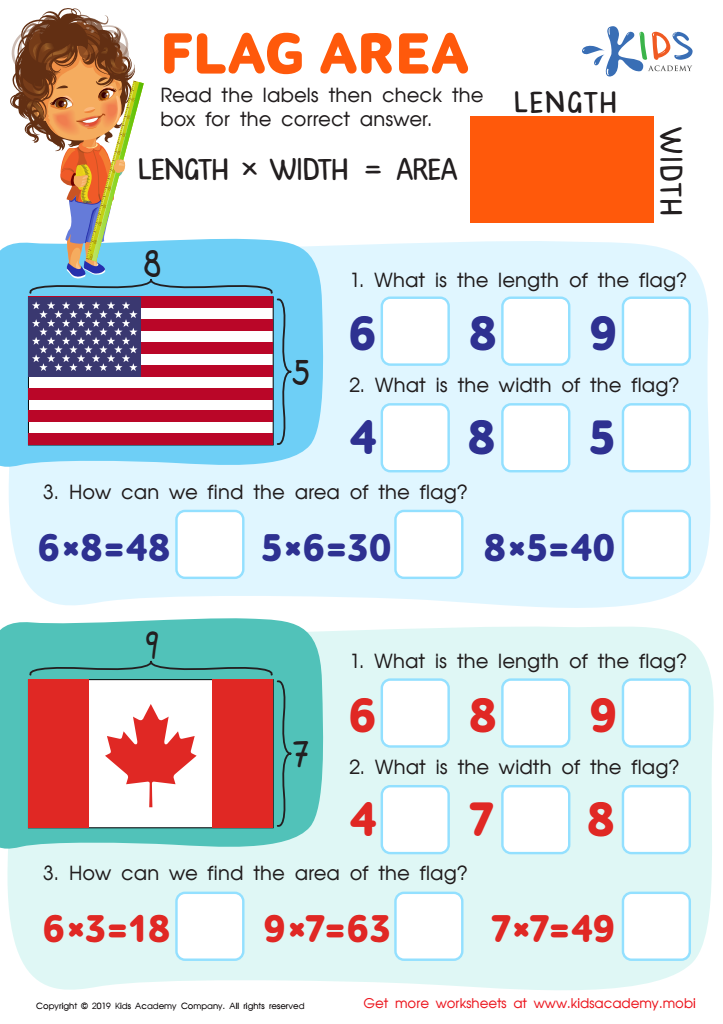
Flag Area Worksheet
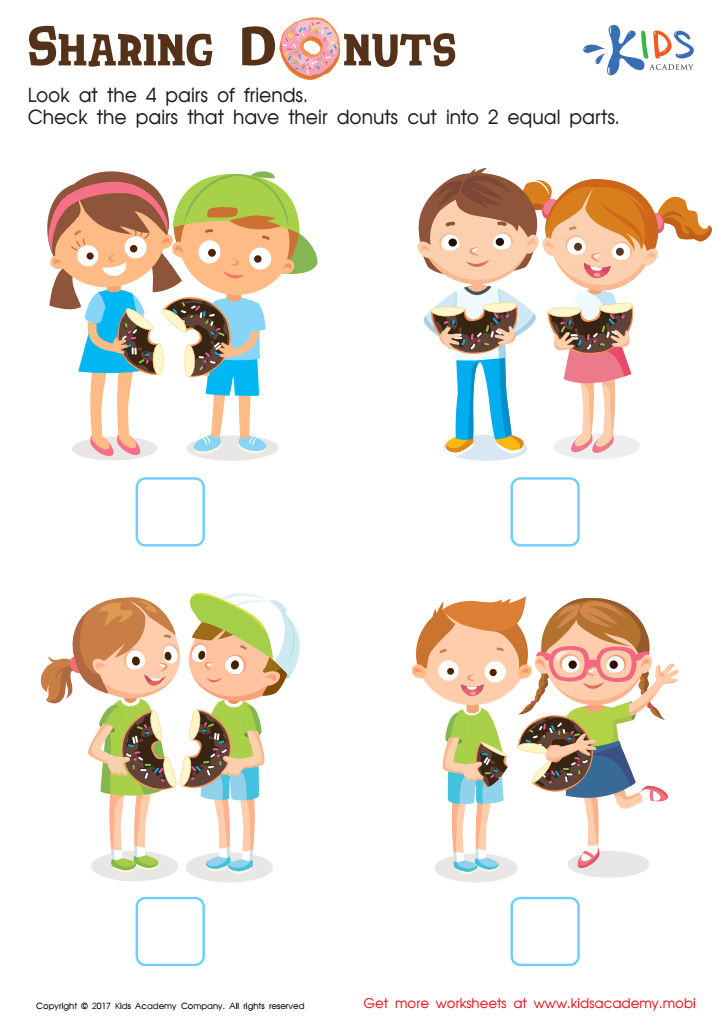
Sharing Donuts Worksheet








Parents and teachers should care about Visual Learning Geometry because it enhances students' comprehension and engagement. Visual learning involves the use of visual aids—such as diagrams, models, and interactive applications—that help students grasp complex geometric concepts more easily. This method caters to various learning styles, motivating those who may struggle with traditional verbal or numerical approaches.
Additionally, geometry is foundational in developing critical thinking and problem-solving skills. By visually exploring shapes, sizes, and spatial relationships, learners can better understand the properties of figures and how they relate to one another. This understanding is crucial not just for academic success in mathematics but also for real-world applications in fields such as architecture, engineering, and design.
Moreover, incorporating visual tools fosters creativity as students can represent their ideas graphically. Parents and teachers also benefit by observing increased enthusiasm for learning and improved academic performance. Finally, incorporating visual learning strategies in geometry can bridge gaps for diverse learners, promoting inclusivity in the classroom. Ultimately, a focus on Visual Learning Geometry prepares students for future learning and cultivates a strong foundation in mathematical literacy.








