
Multiplication practice Numbers Worksheets
5 filtered results
Difficulty Level
Grade
Age
-
From - To
Subject
Activity
Standards
Enhance your child's math skills with our engaging Multiplication Practice Worksheets! Specifically designed for young learners, these worksheets provide a fun and interactive way to master multiplication concepts. Each worksheet features vibrant graphics and thoughtful exercises, making learning both enjoyable and effective. Students will practice multiplying numbers through thoughtfully structured problems that cater to various skill levels. Our easily printable worksheets ensure that children can learn at their own pace, reinforcing essential multiplication skills in the process. Boost confidence and foundational math abilities today with our Multiplication Practice Worksheets, perfect for home or classroom use!
Favorites
With answer key
Interactive
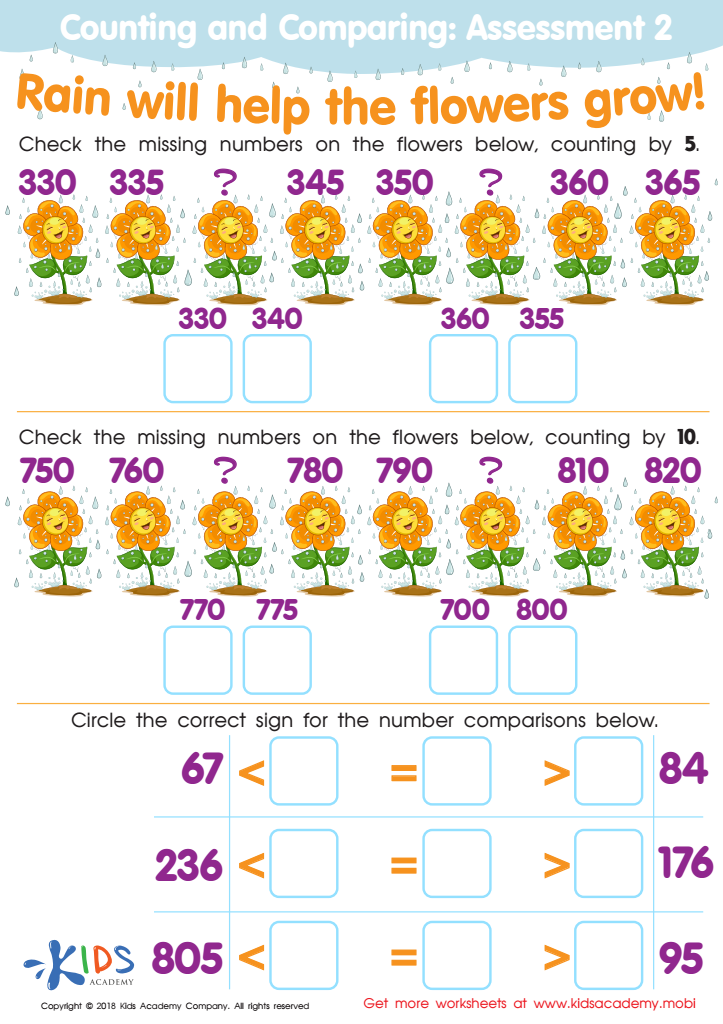
Counting and Comparing: Assessment 2 Worksheet
This worksheet featuring flowers in the rain is a great way to assess your kids' math skills. Check their number line and comparison sentences accuracy to get an overview of their abilities. Knowing these skills helps with computation, so you can pinpoint where they need extra help.
 Assign to My Students
Counting and Comparing: Assessment 2 Worksheet
Worksheet
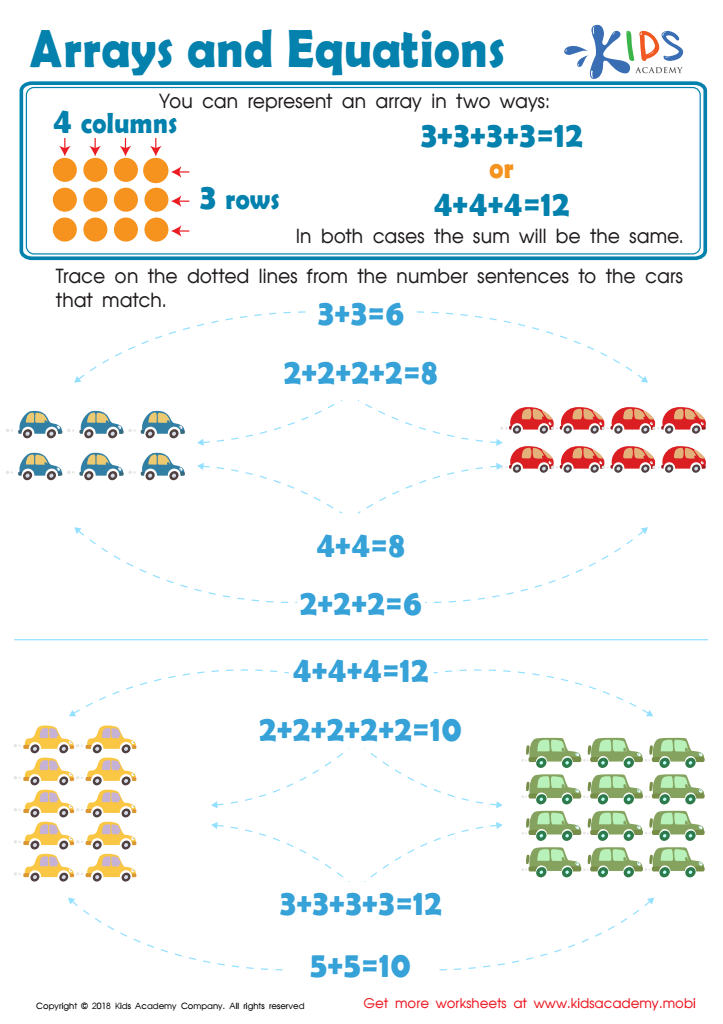
Arrays and Equations Worksheet
An array is objects, pix, or numbers organized in rows and columns. Show kids two ways to interpret this: 3 rows in 4 places = 12 and 4 columns in 3 places = 12. Help your child trace the number sentences to the matching cars. All equations always add up to the same amount.
Arrays and Equations Worksheet
Worksheet
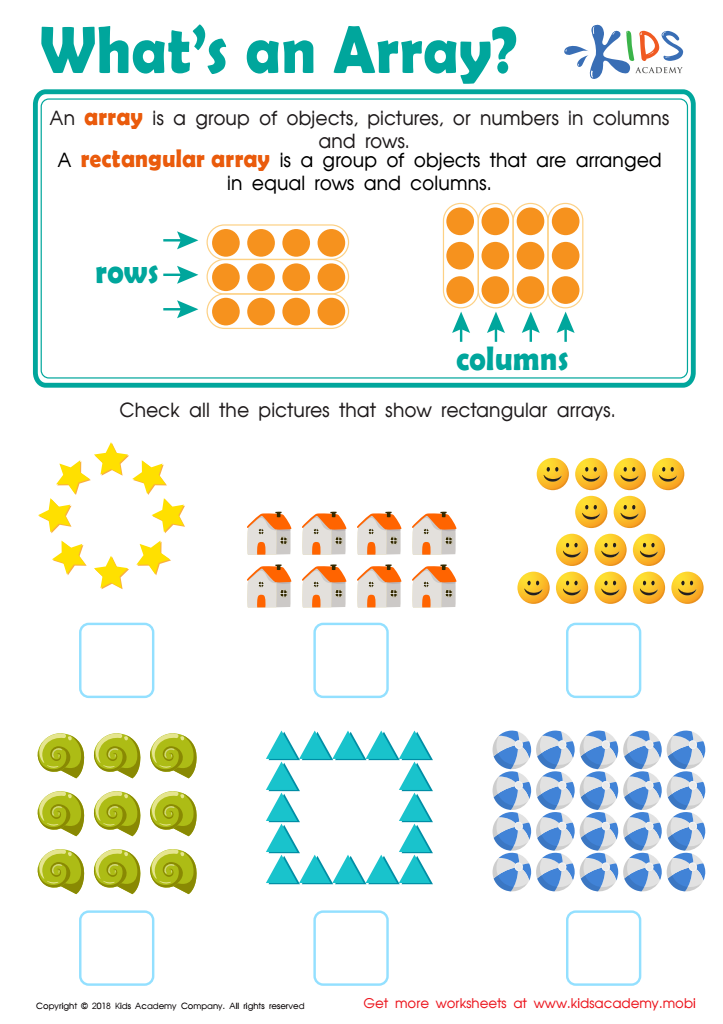
What's an Array? Worksheet
Explain to your child that an array is a group of objects, pictures, or numbers in columns and rows. Show them a rectangular array is a group of objects in equal rows and columns. Guide them to check the pictures in the worksheet to spot any rectangular arrays. Help them remember this concept.
What's an Array? Worksheet
Worksheet
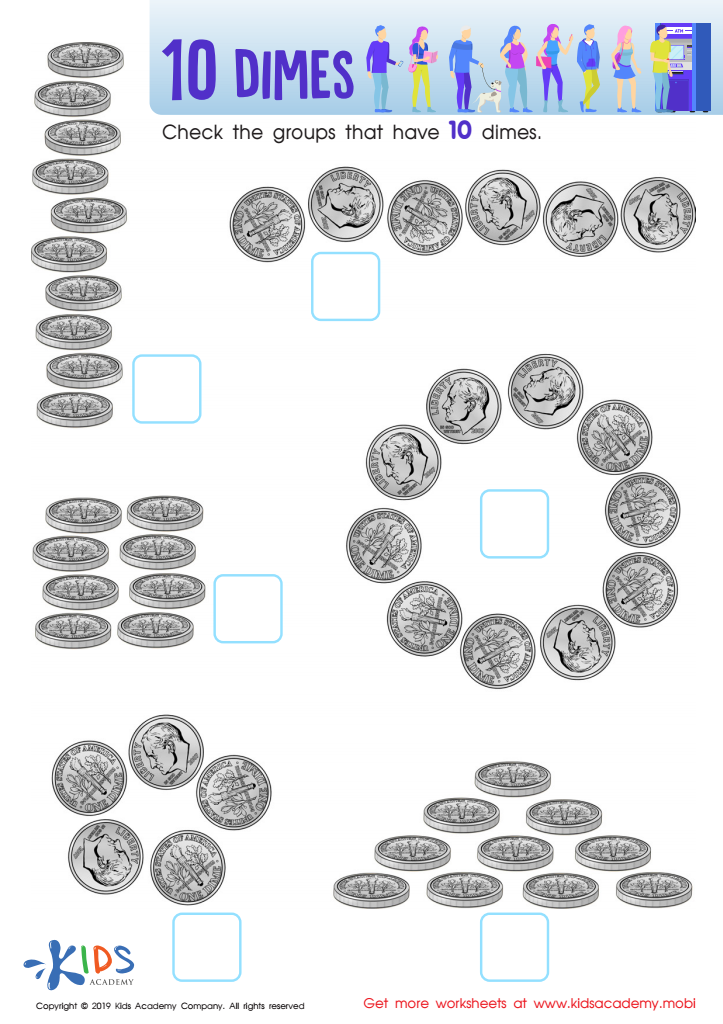
10 Dimes Worksheet
Get your students ready for the task by asking them to count as high as they can. Familiar objects are stacked in groups. Look at the picture and help them count the dimes. Circle the groups of 10. This worksheet will help kindergartners practice counting up to and recognizing 10 dimes.
10 Dimes Worksheet
Worksheet
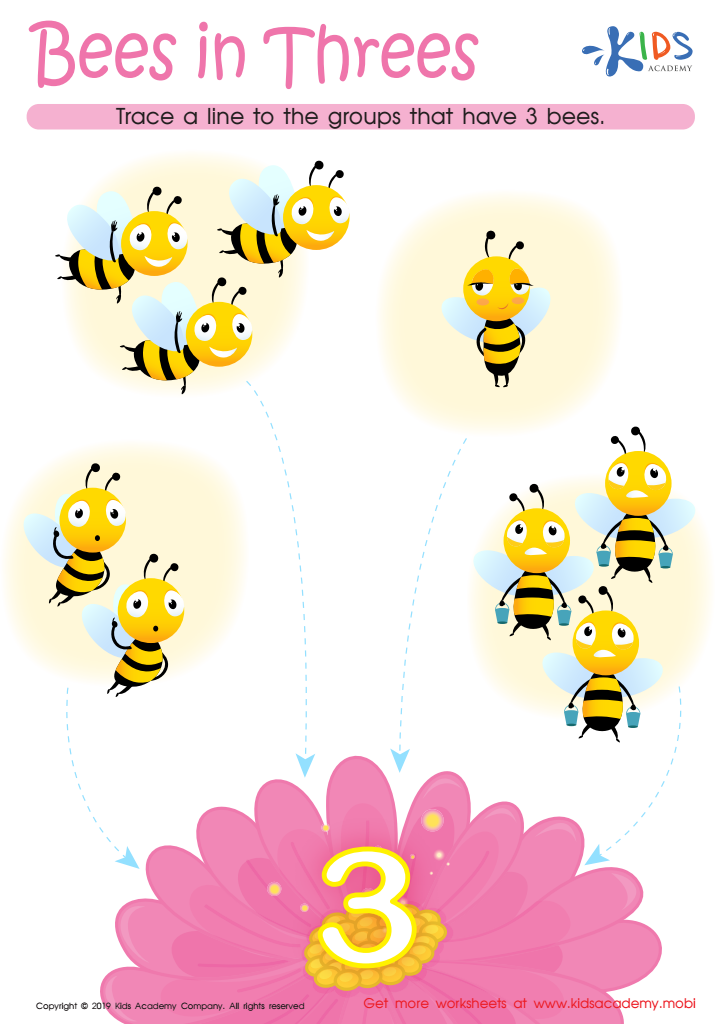
Bees in Threes Worksheet
Kids love learning numbers, especially 1, 2, 3! Counting bees with this fun worksheet? It's the bee's knees! They'll practice number recognition and counting skills while connecting groups of three to the number three. It's a great way to make math fun at home or school!
Bees in Threes Worksheet
Worksheet
Join Kids Academy for Free
Who is primarily going to use this learning content?





Multiplication practice is a crucial aspect of early math education that parents and teachers should prioritize. This foundational skill not only contributes to a child's overall numeracy but also enhances cognitive development. Mastering multiplication enables students to perform more complex operations, such as division, fractions, and equations, necessary for advanced math and everyday problem-solving.
Reinforcing multiplication skills at a young age builds confidence, as children gain the ability to tackle math-related tasks with ease. Furthermore, it fosters critical thinking and logical reasoning, essential skills in both academic and real-world scenarios. Additionally, a solid grasp of multiplication aids in understanding concepts related to measurement, budgeting, and time management, which are valuable for life skills.
In a group setting, multiplication mastery promotes collaborative learning, allowing students to engage in team-oriented activities, reinforcing social skills. For parents, supporting multiplication practice at home creates a positive learning environment, fostering curiosity and a love for mathematics. By integrating multiplication into daily routines, such as cooking or shopping, parents and teachers make learning tangible and fun, encouraging lifelong learners who appreciate the practical applications of math. Ultimately, prioritizing multiplication practice sets the stage for future success in mathematics and beyond.








