Comparative skills Math Worksheets
3 filtered results
-
From - To
Discover our engaging Comparative Skills Math Worksheets designed to help young learners master the concept of comparison in mathematics. These worksheets provide a variety of exercises that focus on comparing objects, numbers, and quantities, enhancing students' understanding of greater than, less than, and equal to. Perfect for early-grade classrooms, our resources foster essential skills through fun visuals and interactive activities that encourage critical thinking. Equip your students with the tools they need to develop a solid foundation in comparative reasoning, essential for tackling more advanced math concepts. Access our comprehensive collection and watch your students excel in their math journey!
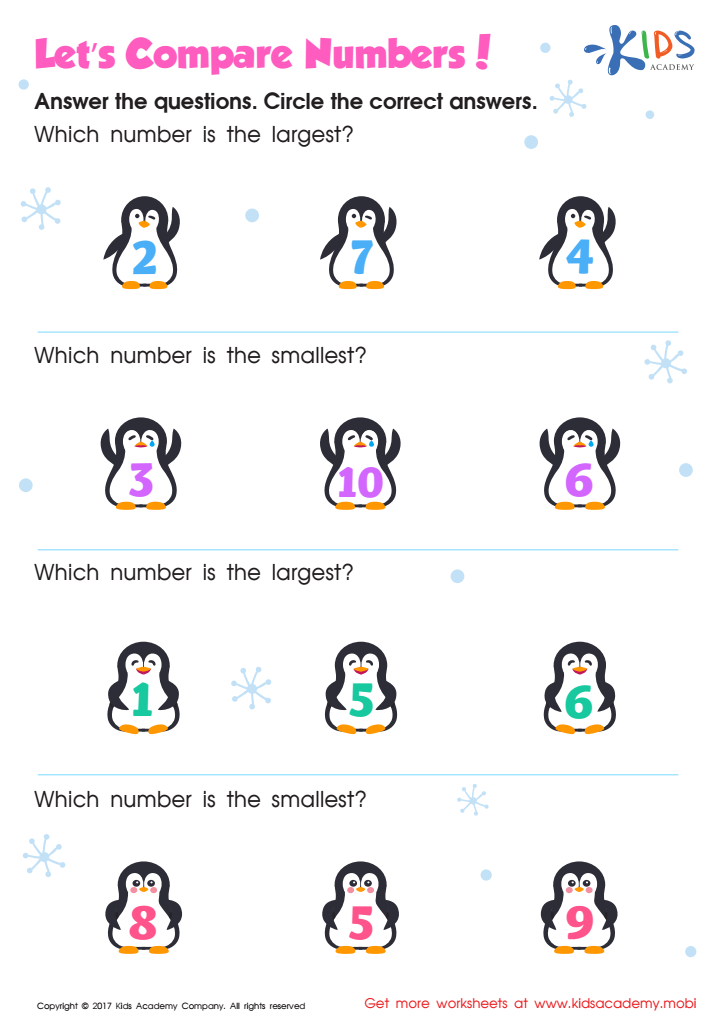
Comparing Numbers 1–10 Worksheet Kindergarten
 Assign to My Students
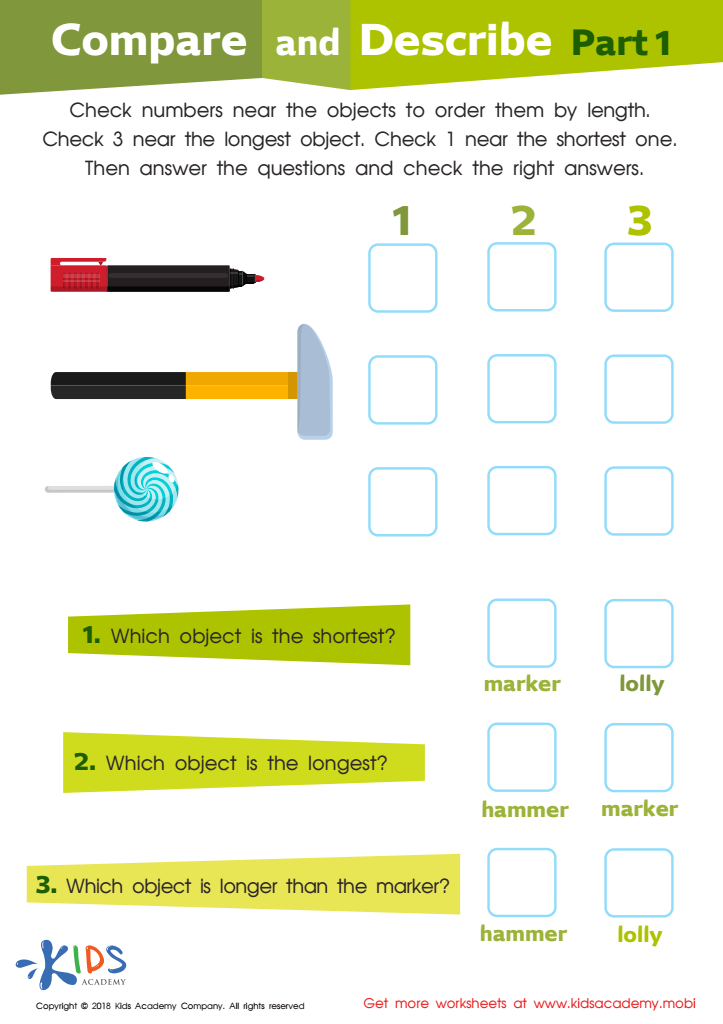
Compare and Describe: Part 1 Worksheet
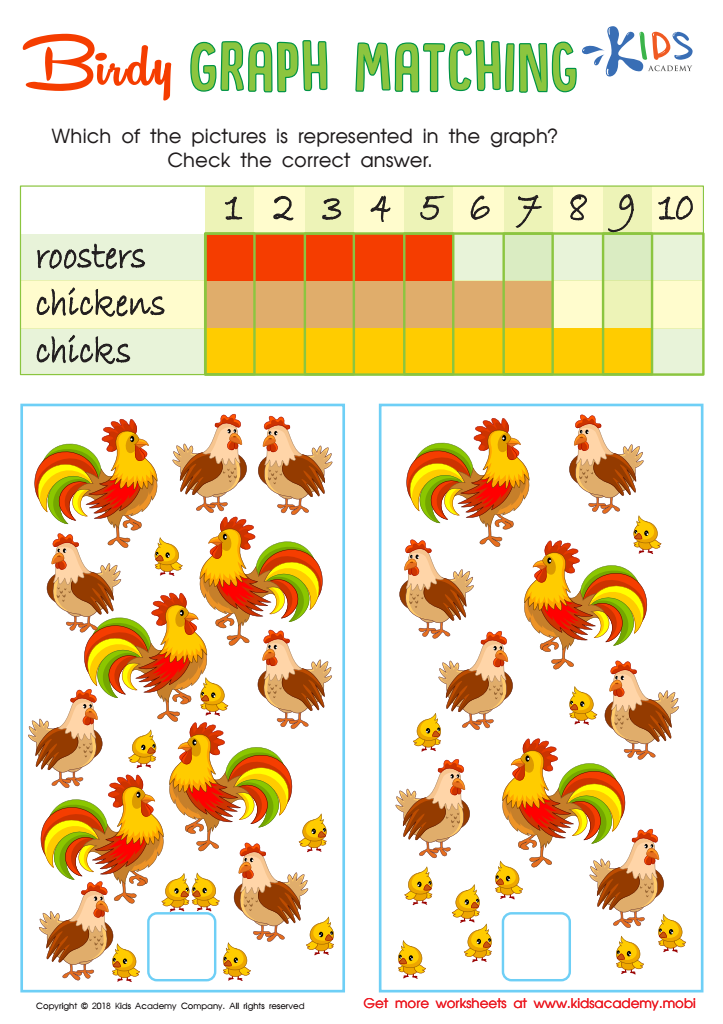
Birdy Graph Matching Worksheet







Comparative skills in math are essential for young learners as they form the foundation for critical thinking and problem-solving abilities. Parents and teachers should prioritize these skills because they help children understand relationships between numbers, measurements, and quantities. By engaging in activities that involve comparison, like identifying which groups are larger or smaller, children develop a strong sense of number sense, which is crucial for higher-level math concepts.
Moreover, comparative skills encourage analytical thinking. When students compare different mathematical entities—whether fractions, shapes, or data sets—they learn to evaluate, make predictions, and draw conclusions based on their observations. This analytical mindset extends beyond math, promoting skills required in science, social studies, and everyday life.
Additionally, fostering these skills at an early age can bolster confidence. As children learn to make comparisons and analyze information, they feel more empowered in their learning journey. Parents and teachers can support comparative skills through games, storytelling, and hands-on activities, making math engaging and relatable. Ultimately, strong comparative skills not only lead to academic success but also equip students with the tools they need to navigate the world around them, fostering lifelong learning and curiosity.








