Enhancing analytical thinking Math Worksheets
3 filtered results
-
From - To
Discover the engaging world of "Enhancing Analytical Thinking Math Worksheets" designed by Kids Academy to boost your child’s problem-solving skills and mathematical reasoning. Tailored for ages Pre-K to Grade 3, these worksheets offer a variety of exercises focusing on patterns, sequencing, spatial awareness, and logic. Each activity is crafted to develop critical thinking, ensuring a solid foundation in early math concepts. With colorful illustrations and interactive formats, learning becomes fun and motivating. Empower your child to think analytically and embrace math with confidence, preparing them for future academic success. Explore our worksheets today and start the journey to mathematical mastery!
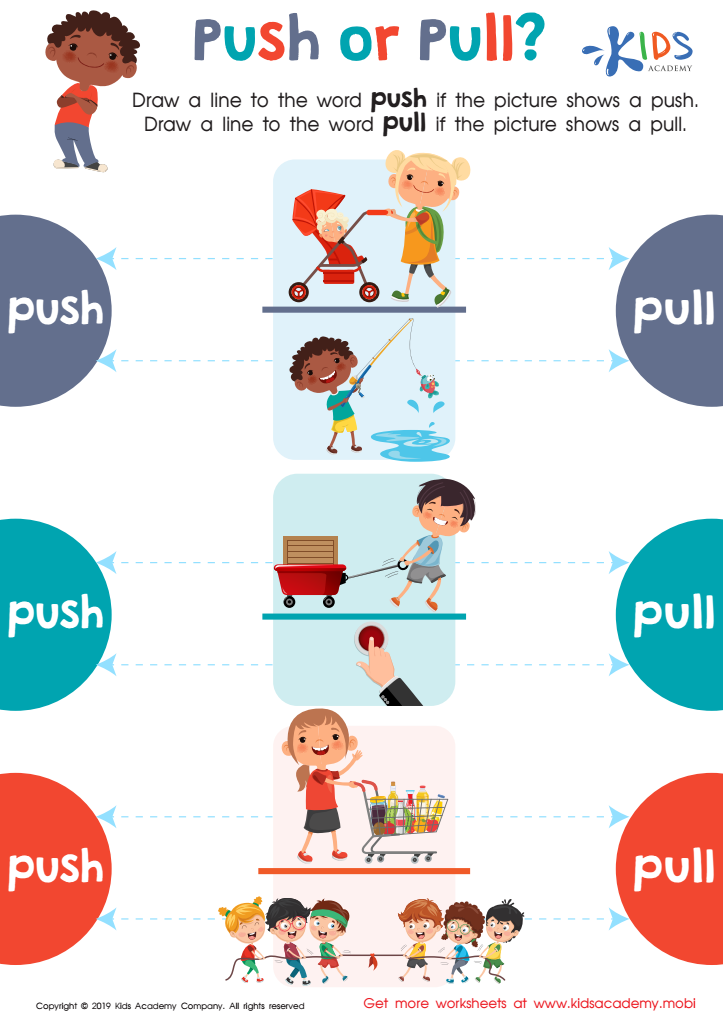
Push or Pull? Worksheet
 Assign to My Students
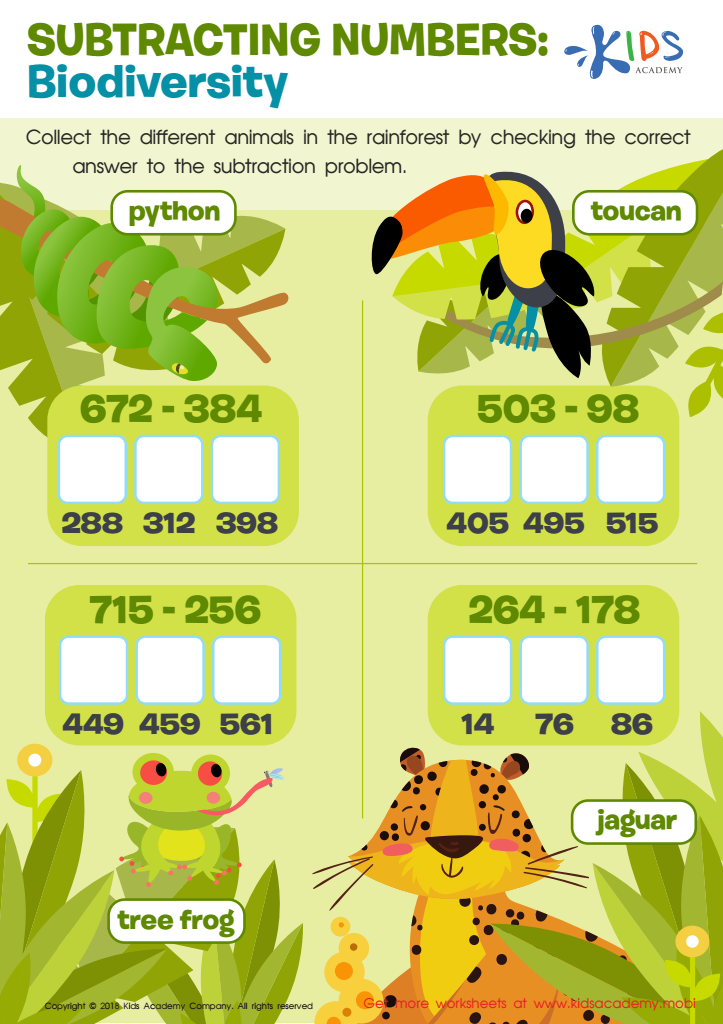
Subtracting Numbers: Biodiversity Worksheet







Enhancing analytical thinking in math for young learners is pivotal for several reasons, and parents and teachers have vital roles in this development. Analytical thinking involves breaking down complex problems into manageable parts, recognizing patterns, making connections, and constructing solutions—a skill set highly transferable across academic disciplines and real-world situations. By fostering this capability in math, children can better understand and solve problems, rather than simply memorizing formulas or procedures.
For parents, supporting analytical thinking in math encourages children's natural curiosity and helps develop a love for learning. When kids view math problems as challenges to be explored rather than obstacles to be feared, they gain confidence and resilience. This positive attitude towards challenges translates into increased perseverance and greater overall academic success.
Teachers, on the other hand, can create enriching environments that stimulate critical thinking. Integrating open-ended problems, encouraging discussions, and promoting explorative learning paths not only engage students but also enhance cognitive growth and comprehension. Ultimately, strong analytical skills allow students to excel in standardized testing and future academic endeavors, fostering a generation adept in problem-solving and decision-making. By prioritizing analytical thinking in math, parents and teachers lay the foundation for children’s current and future success, critical for facing an increasingly complex world with agility and confidence.








