Spatial awareness development Math Worksheets
3 filtered results
-
From - To
Enhance your child’s spatial awareness skills with our engaging math worksheets designed for young learners. Critical for early development, spatial reasoning helps kids understand concepts like shape, size, distance, and position. Our worksheets offer fun, interactive activities that encourage children to visualize and navigate different spaces. The exercises are crafted by experts to improve problem-solving abilities and boost confidence in math through joyful learning experiences. By incorporating a variety of tasks—from identifying patterns to understanding symmetry—these worksheets prepare kids for more complex mathematical concepts. Give your child the tools they need for success with our tailored spatial awareness development math worksheets.
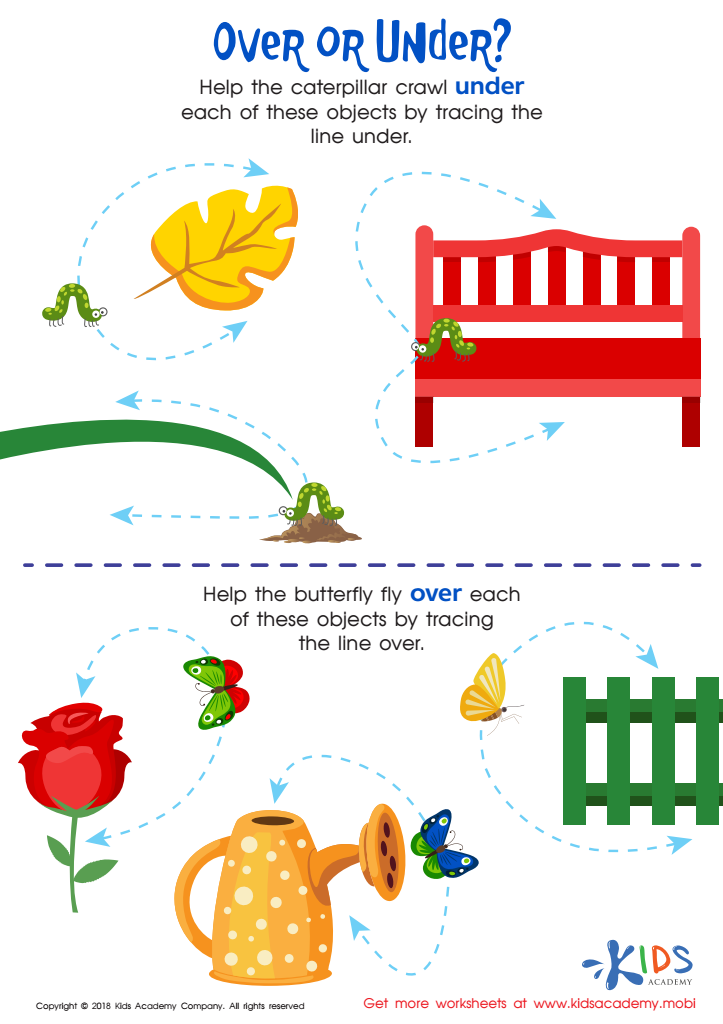
Over or Under? Worksheet
 Assign to My Students
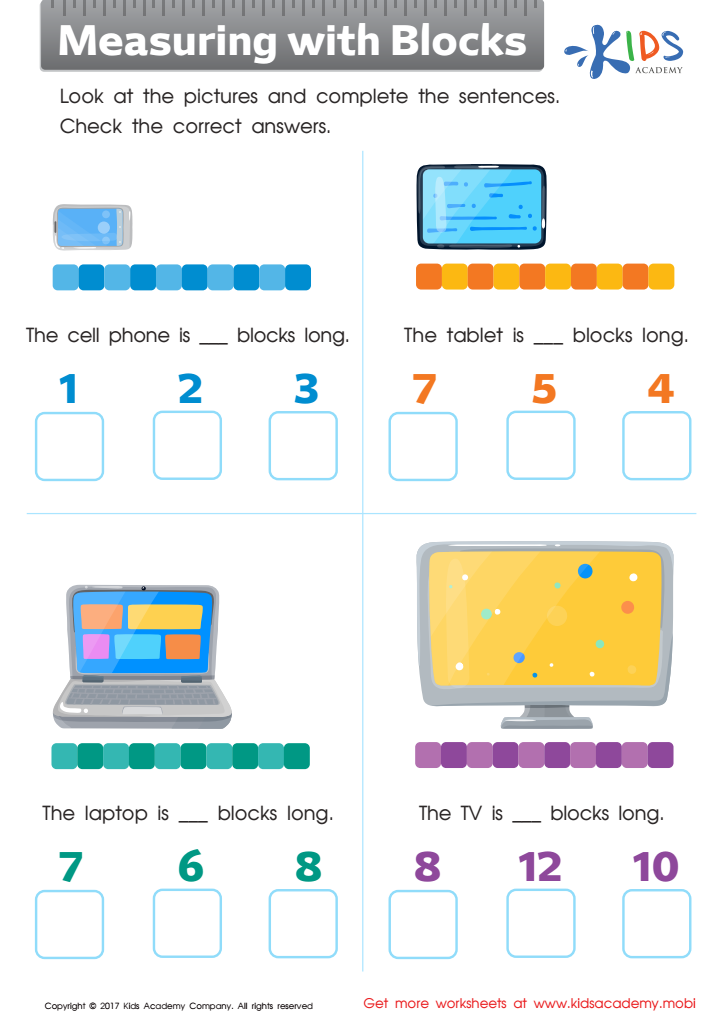
Measuring with Blocks Worksheet
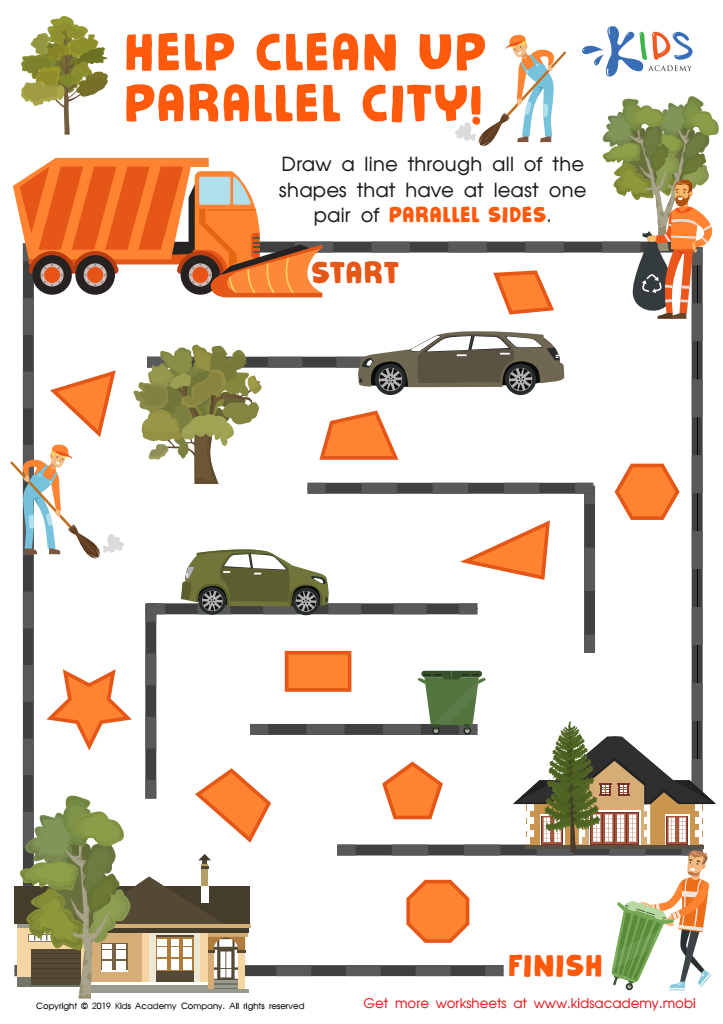
Help Clean Up Parallel City Worksheet


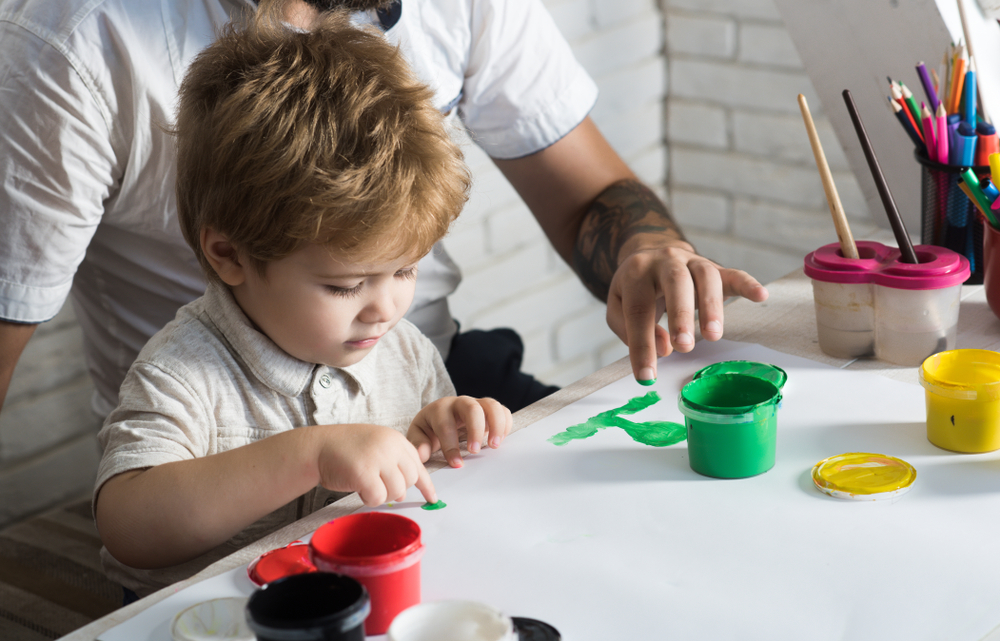


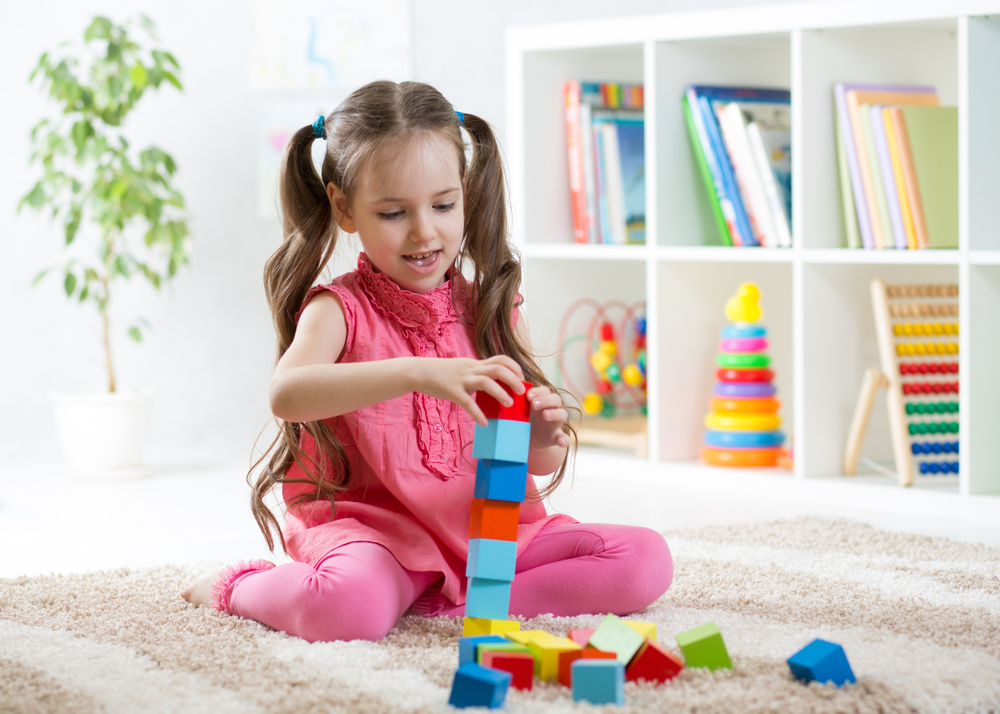


Spatial awareness is crucial for children’s overall development and is particularly significant in the realm of mathematics. When parents and teachers focus on enhancing spatial awareness, they equip children with essential skills that transcend traditional math problems. Spatial awareness involves understanding and manipulating the positions of objects in space, which directly correlates to geometric reasoning, measurement, and problem-solving—key components of mathematics.
From an early age, children with strong spatial skills can visualize and interpret shapes, sizes, and distances, laying the foundation for grasping more complex math concepts. This visualization ability can enhance their understanding of abstract math issues and improve their performance in STEM subjects.
Educators can help develop spatial awareness through activities like puzzles, block-building, drawing, and navigation games. Parents, too, can encourage this at home through play-based learning and everyday conversations about the spatial properties of objects and environments.
Research consistently shows that early spatial skill development contributes to long-term academic success. By prioritizing spatial awareness, teachers and parents foster not only math proficiency but also critical thinking, creativity, and analytical skills. These are foundational for academic achievement and practical problem-solving in everyday life, underscoring the importance of spatial awareness in early education.








