
Spatial understanding Math Worksheets
4 filtered results
Difficulty Level
Grade
Age
-
From - To
Subject
Activity
Standards
Enhance your child's spatial reasoning skills with our comprehensive collection of Spatial Understanding Math Worksheets at Kids Academy. Perfectly tailored for young learners, these engaging worksheets develop crucial spatial relations and geometry concepts. Our fun activities help children navigate space, understand shapes and patterns, and foster problem-solving abilities. Each worksheet is designed to stimulate critical thinking and support early math learning in an enjoyable way. Discover the ideal resource for parents and teachers aiming to build a strong foundation in math while keeping the process interactive and entertaining. Make math magical with our spatial understanding worksheets!
Favorites
With answer key
Interactive
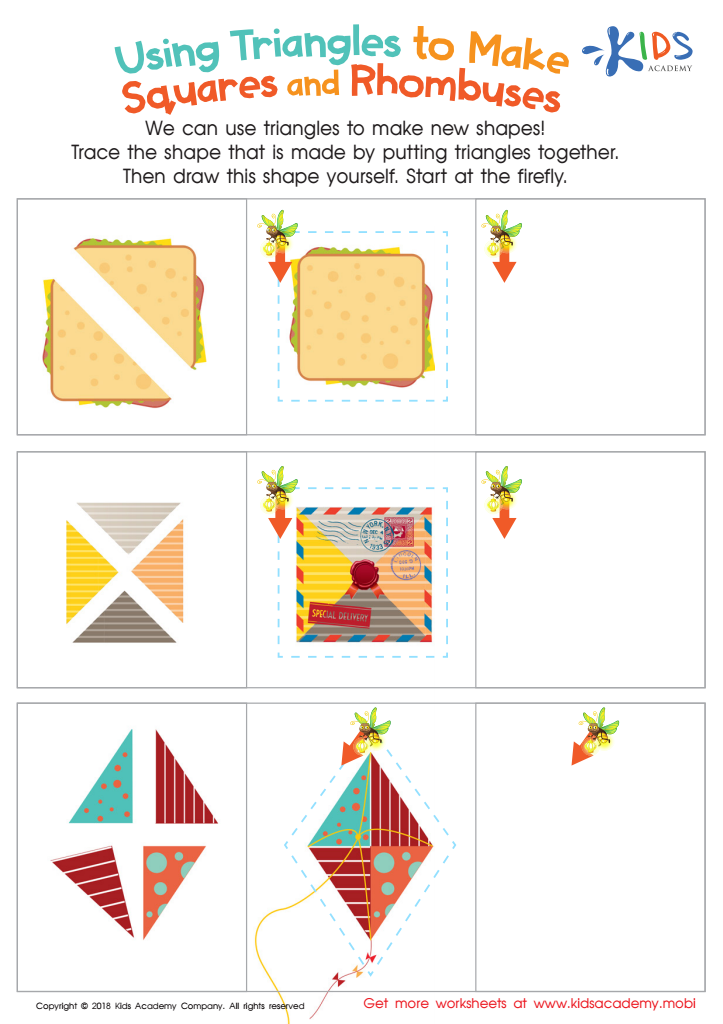
Using Triangles to Make Squares and Rhombuses Worksheet
Learning shapes is a fun way to boost spatial skills and critical thinking. This worksheet shows children how to use triangles to construct squares and rhombuses. Clear illustrations and a printout help children draw the new shape. A great activity for the math classroom! 80 words.
 Assign to My Students
Using Triangles to Make Squares and Rhombuses Worksheet
Worksheet
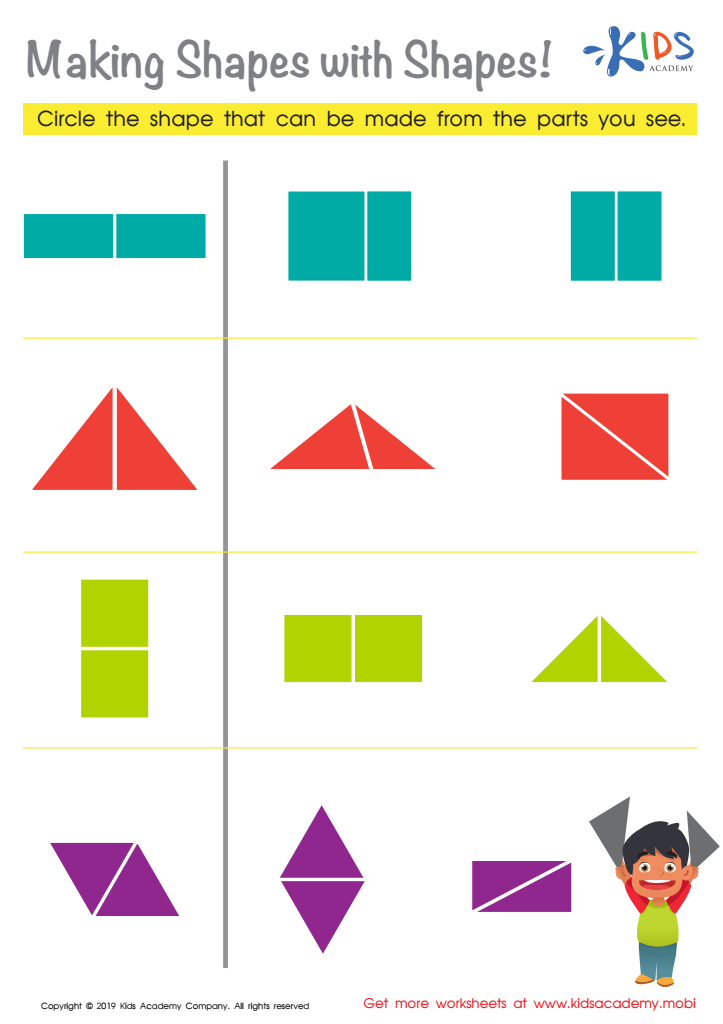
Making Shapes with Shapes Worksheet
Help your kindergartners identify shapes with this simple worksheet. Examine the shapes on the left and have them circle the one they can make from the parts in the picture. Shapes can be tricky, but this exercise will help clear up any confusion.
Making Shapes with Shapes Worksheet
Worksheet
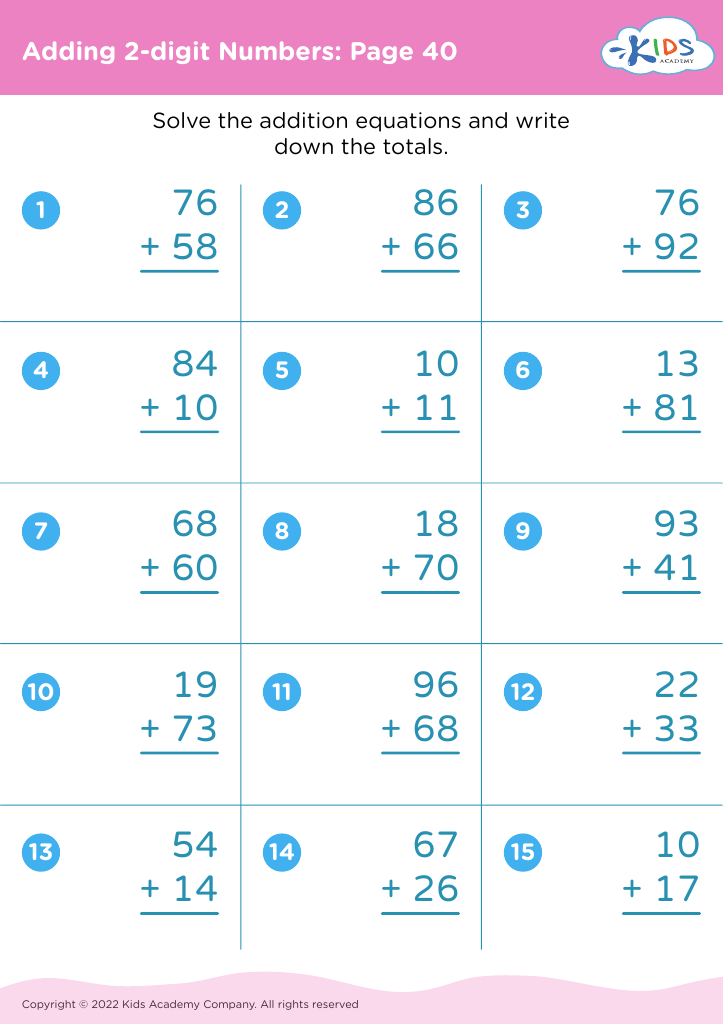
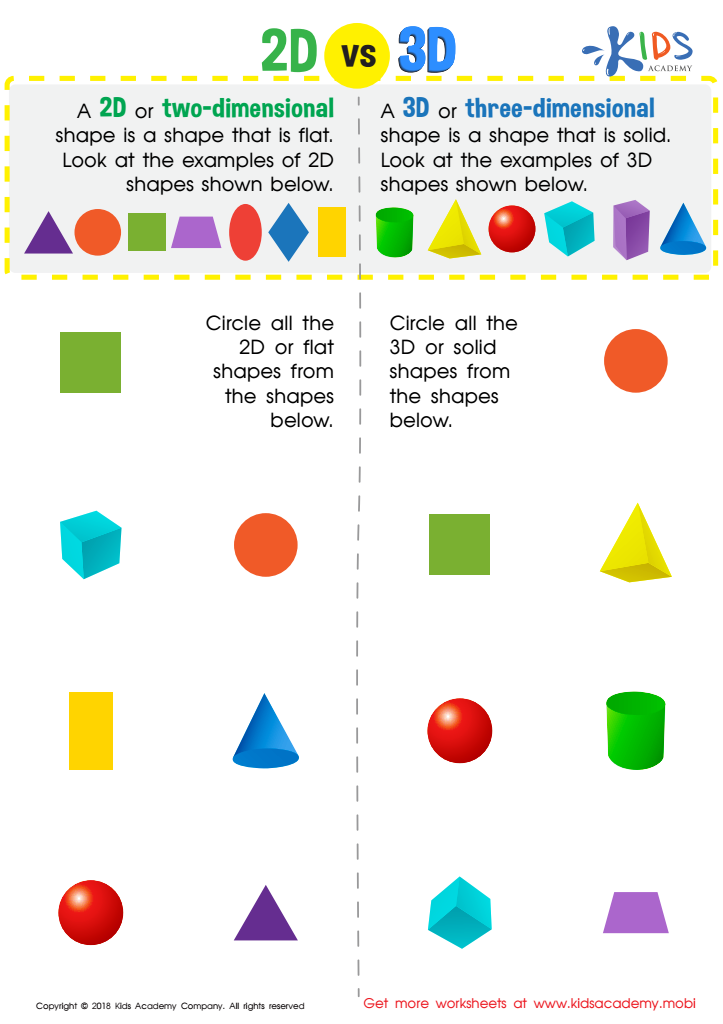
2D vs 3D Shapes Worksheet
Help your child understand 3D shapes using this engaging worksheet! Read the descriptions at the top and search for 2D and 3D shapes. An ideal activity for toddlers learning shapes. A fun way to understand the tricky concept of 3D shapes!
2D vs 3D Shapes Worksheet
Worksheet
Join Kids Academy for Free
Who is primarily going to use this learning content?








Spatial understanding is crucial for children's overall cognitive development and plays a significant role in mathematics and many other life skills. As parents or teachers, fostering this aspect can have far-reaching benefits for young learners. Spatial skills include the ability to visualize, understand, and manipulate shapes and objects in the mind. These skills are fundamental in everyday activities such as reading maps, tying shoes, assembling puzzles, and more.
In math specifically, strong spatial reasoning underpins the understanding of geometry, measurement, and the ability to comprehend and create graphs and diagrams. Such skills are essential not just in early education but also form a foundation for advanced STEM (Science, Technology, Engineering, and Mathematics) learning. For instance, spatial proficiency helps students grasp complex concepts like symmetry, proportions, and the properties of 2D and 3D shapes.
Research also links spatial capabilities to problem-solving and critical thinking, as children learn to navigate and solve tasks that are spatially oriented. By nurturing these skills early on, parents and teachers are paving the way for improved academic performance across multiple subjects and promoting confident, well-rounded learners. Moreover, integrating spatial learning activities can make math enjoyable, thereby fostering a lasting affinity and motivation for the subject. Activities like building blocks, drawing, and interactive geometry apps can make a significant difference.








