
Understand number relationships Math Worksheets
3 filtered results
Difficulty Level
Grade
Age
-
From - To
Subject
Activity
Standards
Explore our "Understand Number Relationships" math worksheets designed to help young learners grasp essential mathematical concepts. These engaging worksheets focus on familiarizing students with number relationships through fun activities and visual aids. By using these resources, children can improve their counting skills, recognize patterns, and develop a strong foundation for addition and subtraction. Ideal for early grade teachers and parents, the worksheets cater to various learning styles and levels. With clear instructions and vibrant illustrations, your child will enjoy mastering key math skills while building confidence. Start your journey to mathematical fluency today with our comprehensive collection of worksheets!
Favorites
With answer key
Interactive
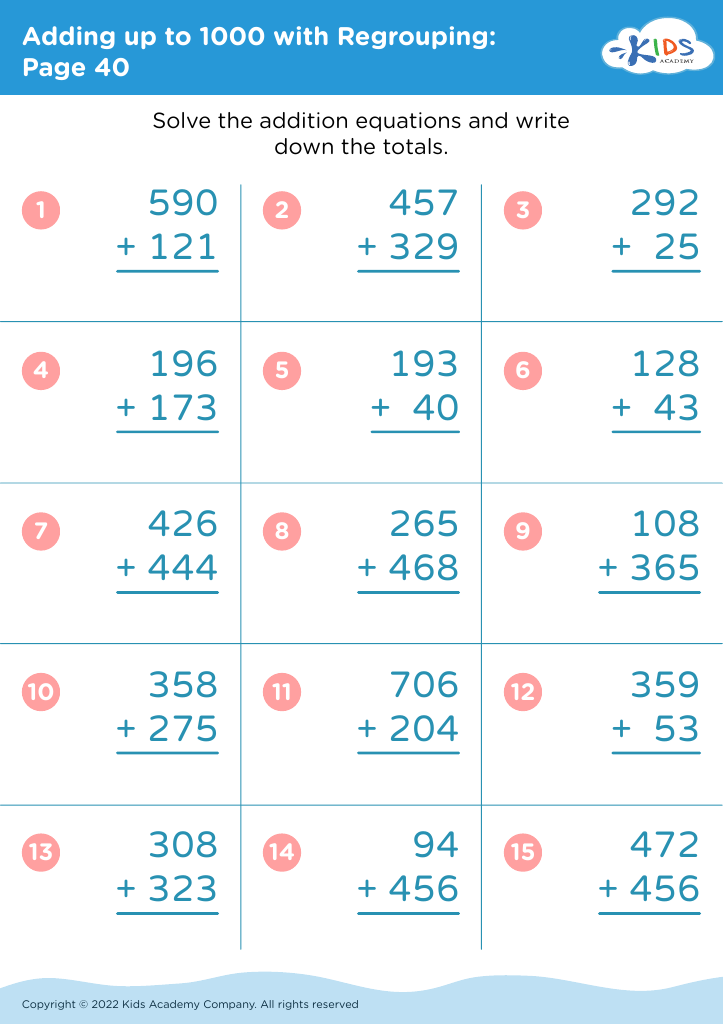
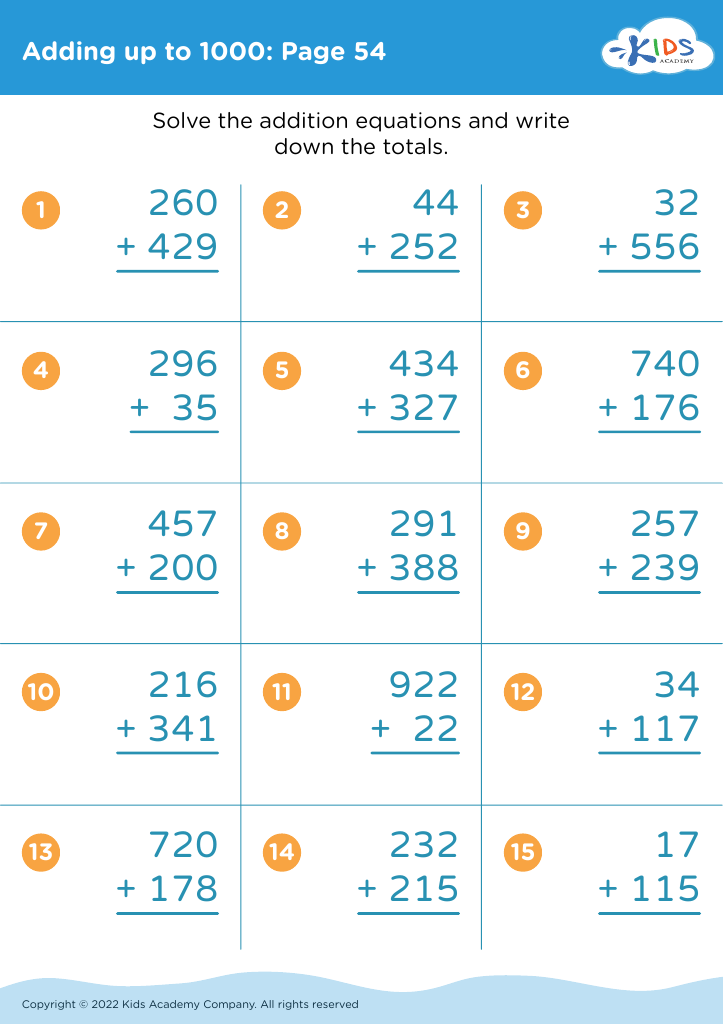
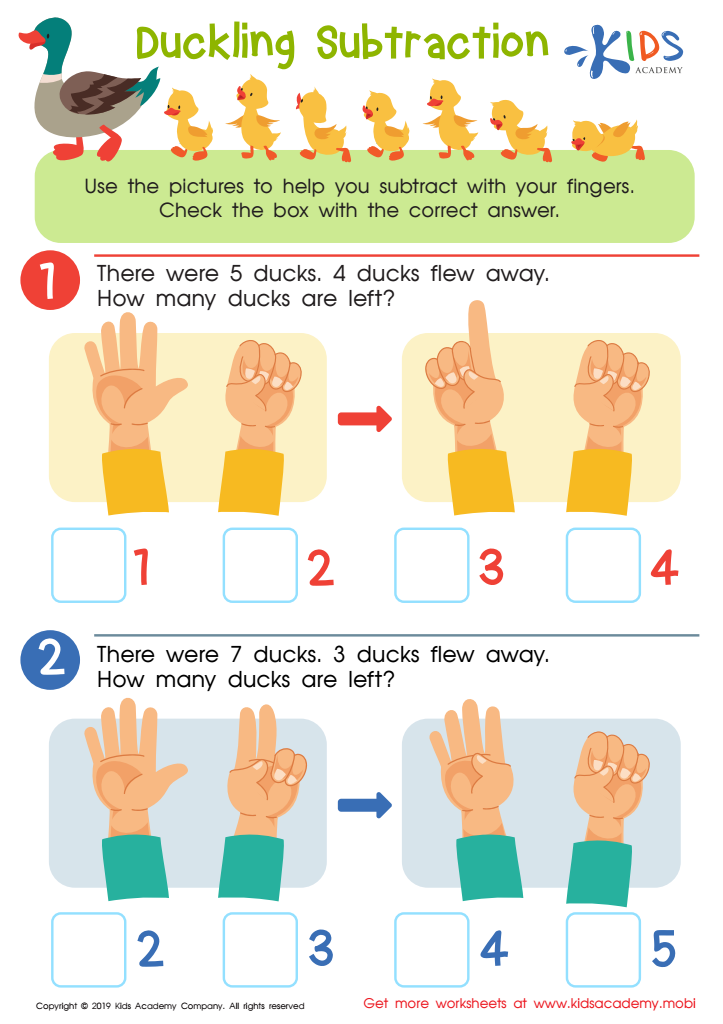
Duckling Subtraction Worksheet
Help your students learn equations and math with this fun worksheet. There are two questions to solve with the help of the pictures. Ask them to subtract with their fingers and check the box with the correct answer. This makes math easier and more enjoyable!
 Assign to My Students
Duckling Subtraction Worksheet
Worksheet
Join Kids Academy for Free
Who is primarily going to use this learning content?








Understanding number relationships is fundamental to a child's mathematical development and overall numerical literacy. For parents and teachers, recognizing the importance of this concept can greatly influence a child's attitude towards math and their ability to apply mathematical skills in real-world situations. Number relationships, which encompass concepts such as addition, subtraction, multiplication, division, and their interconnections, help children develop a deep understanding of how numbers interact.
By fostering this understanding, parents and teachers can enhance problem-solving skills, critical thinking, and number sense. When students grasp these relationships, they can tackle more complex mathematical concepts with confidence, making them better prepared for higher-level mathematics. Additionally, a strong grasp of number relationships supports a child's performance in academic assessments, thereby influencing their self-esteem and motivation.
Moreover, engaging with number relationships cultivates an appreciation for math beyond the classroom. It allows children to see the relevance of math in everyday life, such as budgeting, measurements, and time management. Consequently, encouraging this understanding not only boosts academic success but also equips children with essential life skills, empowering them for future endeavors. Prioritizing number relationships is essential in nurturing confident, capable, and innovative learners.








