Understanding bar graphs Math Worksheets
5 filtered results
-
From - To
Explore our "Understanding Bar Graphs" Math Worksheets designed to help young learners grasp essential data interpretation skills. Perfect for early grades, these engaging worksheets feature colorful, easy-to-read bar graphs that make learning fun and intuitive. Students will practice reading, interpreting, and creating bar graphs, enhancing their math and analytical skills. Each worksheet varies in complexity, catering to different learning paces and providing ample practice opportunities. Boost your child's confidence in math with these tailored exercises, ensuring they develop a strong foundation in understanding and utilizing bar graphs in real-world contexts. Ideal for both classroom use and homeschooling!
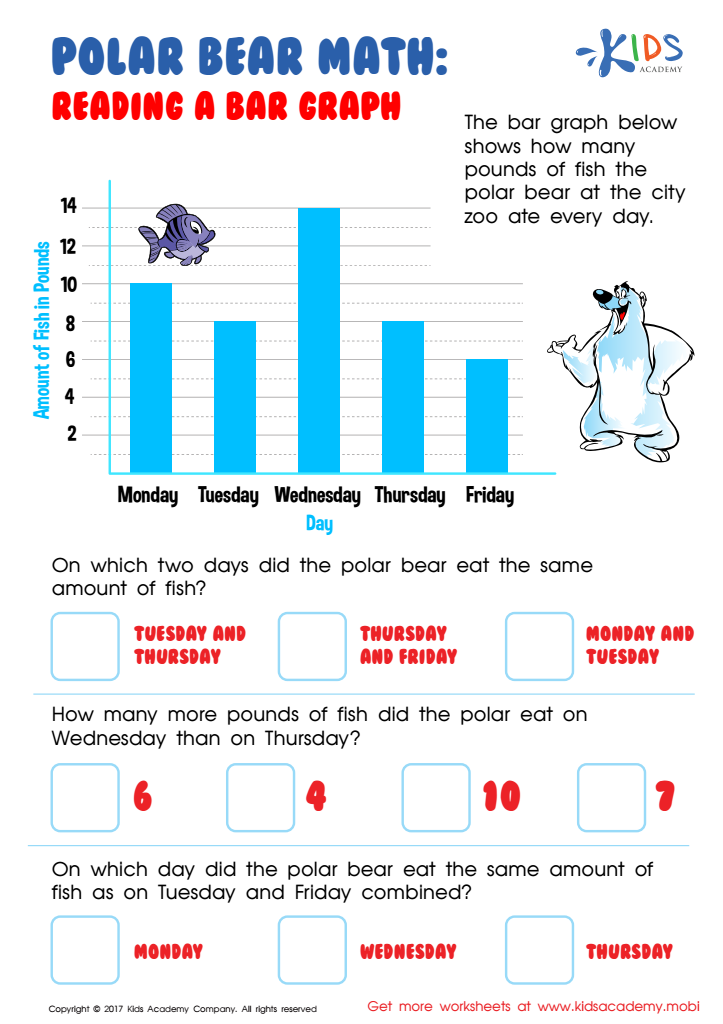
Reading Bar Graph Worksheet
 Assign to My Students
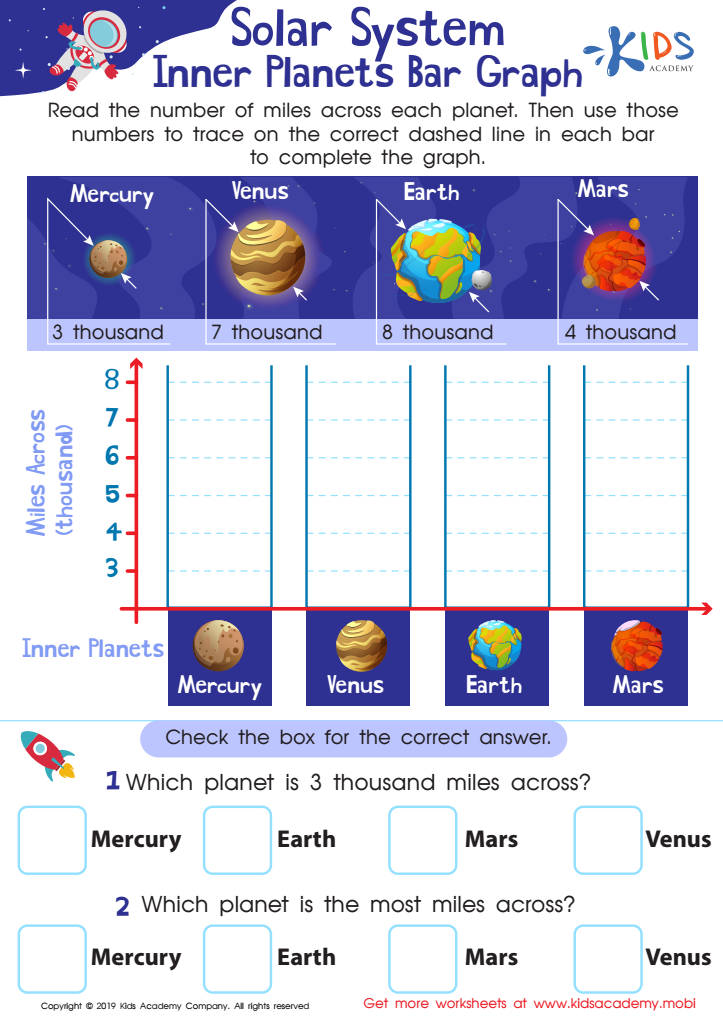
Planets Bar Graph Worksheet
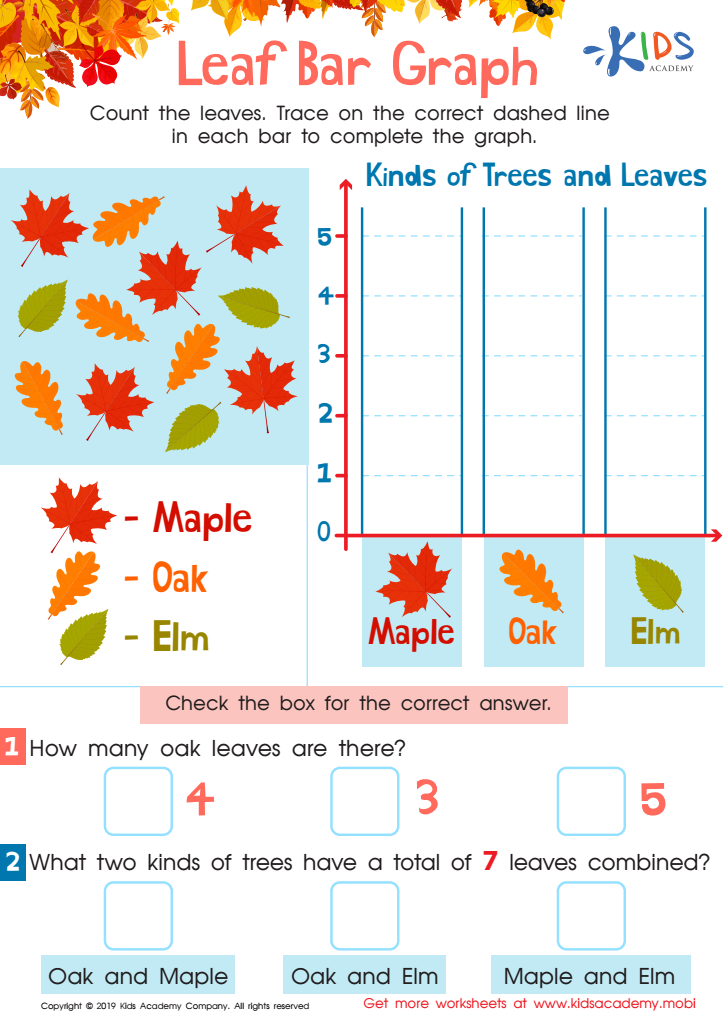
Leaf Bar Graph Worksheet
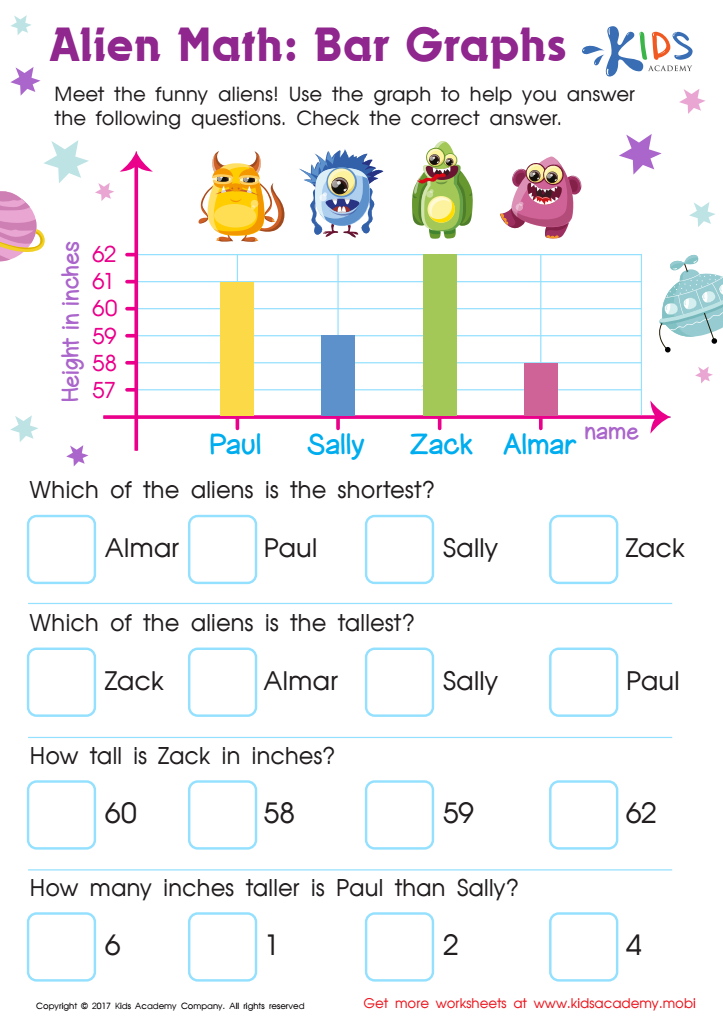
Bar Graphs Worksheet
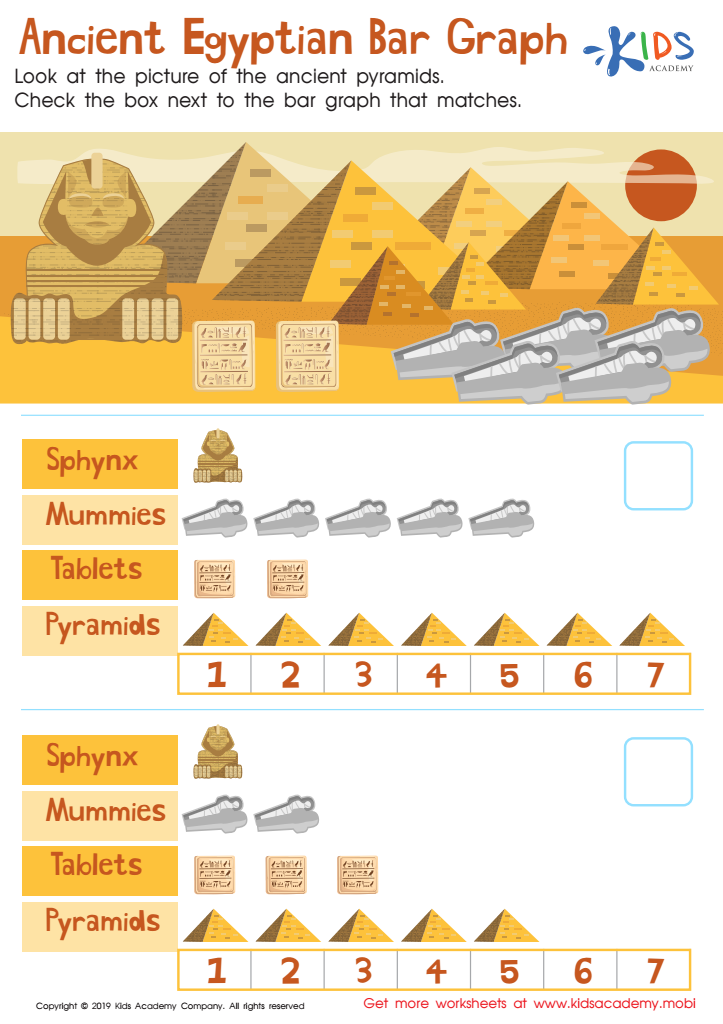
Egyptian Bar Graph Worksheet








Understanding bar graphs is an essential skill for young learners, providing them a visual means to interpret data—a skill that becomes progressively more important as they advance academically and navigate everyday life. When parents and teachers emphasize comprehending bar graphs, they foster critical thinking, analytical skills, and data literacy in children. These graphs make complex information more accessible, enabling students to see patterns, compare quantities, and draw meaningful conclusions at a glance.
For teachers, incorporating bar graphs into lessons can enhance student engagement through interactive and practical applications of math concepts. By using real-life examples like classroom surveys or weather patterns, educators can make math more relatable and interesting. For parents, supporting their child's understanding of bar graphs enables meaningful discussions about schoolwork and fosters a child's confidence in handling more complex mathematical tasks in the future.
Additionally, proficiency in interpreting bar graphs builds a foundation for other academic subjects, including science, economics, and social studies, where data visualization is crucial. As our world becomes increasingly driven by data, instilling these skills early prepares children for future educational and professional success, making it imperative for both parents and teachers to prioritize this aspect of math education.








