
Comparing lengths Measurement Worksheets
14 filtered results
Difficulty Level
Grade
Age
-
From - To
Subject
Activity
Standards
Explore our engaging Comparing Lengths Measurement Worksheets designed for early learners! These worksheets help children understand the concept of length through fun, interactive activities. Students will measure and compare various objects, fostering essential skills in measurement and critical thinking. With vibrant illustrations and age-appropriate challenges, children will enjoy learning about longer and shorter lengths. Each worksheet includes clear instructions and varied activities to cater to different learning styles. Perfect for homeschooling or classroom use, these resources encourage hands-on learning experiences. Equip your young students with the foundational skills they need for future math success by incorporating these worksheets into your lessons!
Favorites
With answer key
Interactive
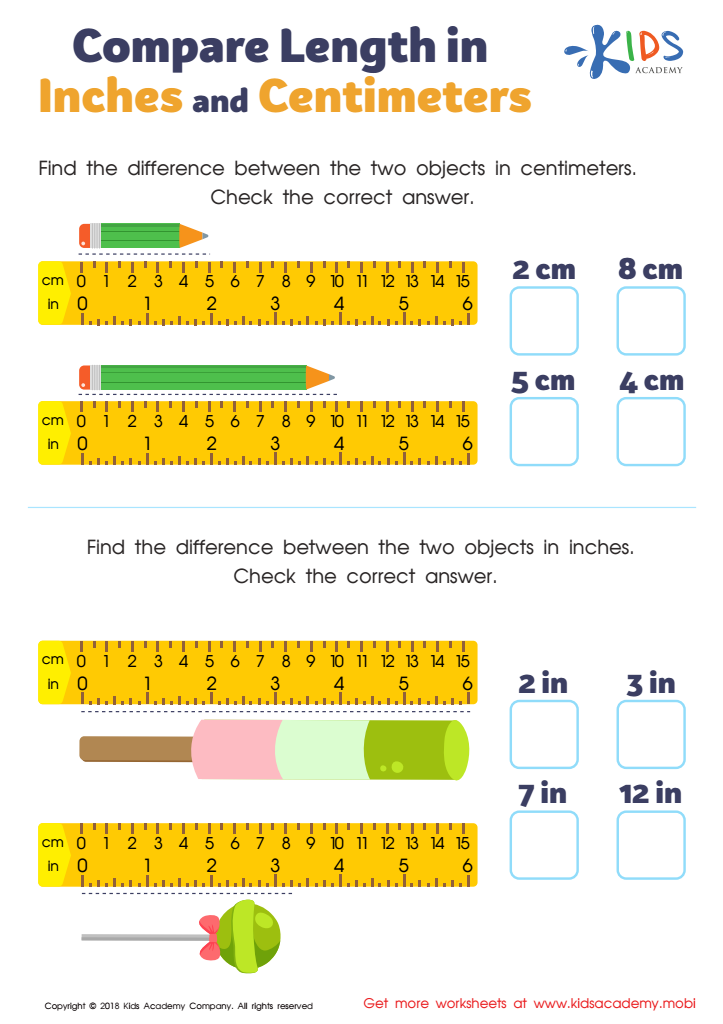
Compare Length in Inches and Centimeters Worksheet
This worksheet has your child measuring objects in both centimeters and inches. The first task requires measuring both objects in centimeters, then finding their difference. The second task is the same but in inches.
 Assign to My Students
Compare Length in Inches and Centimeters Worksheet
Worksheet
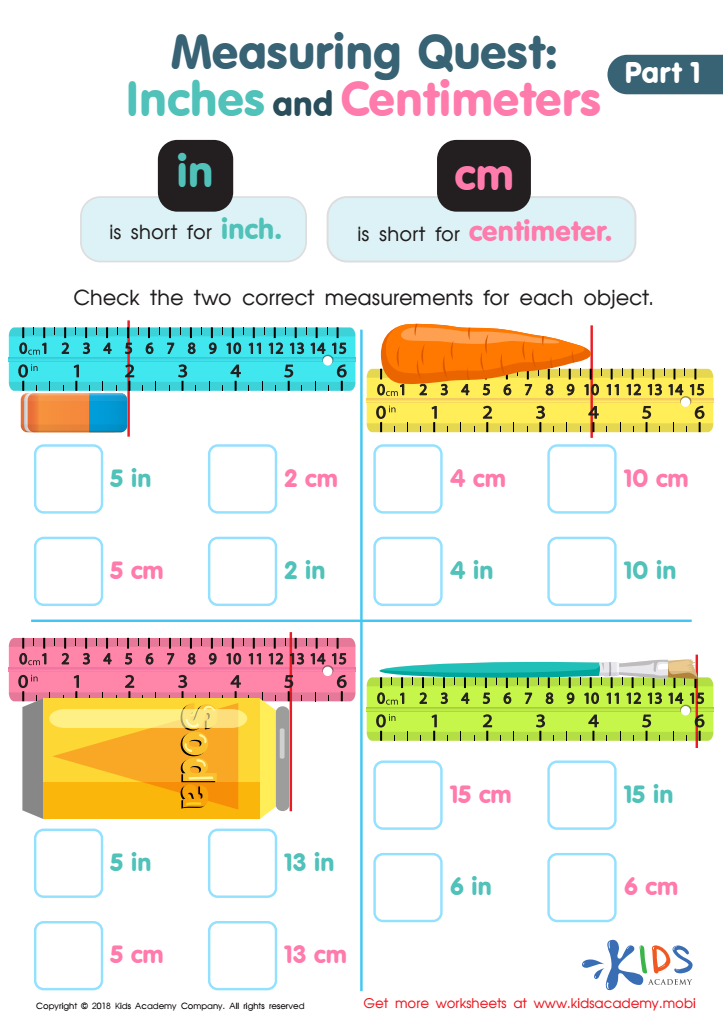
Measuring Quest: Inches and Centimeters Worksheet
Your child will measure items in both inches and centimeters and check the correct measurements from the options given. The metric ruler states 2.5 cm equals 1 inch, and 15 cm equals 6 inches. This worksheet helps ensure accurate measurements, despite the different figures.
Measuring Quest: Inches and Centimeters Worksheet
Worksheet
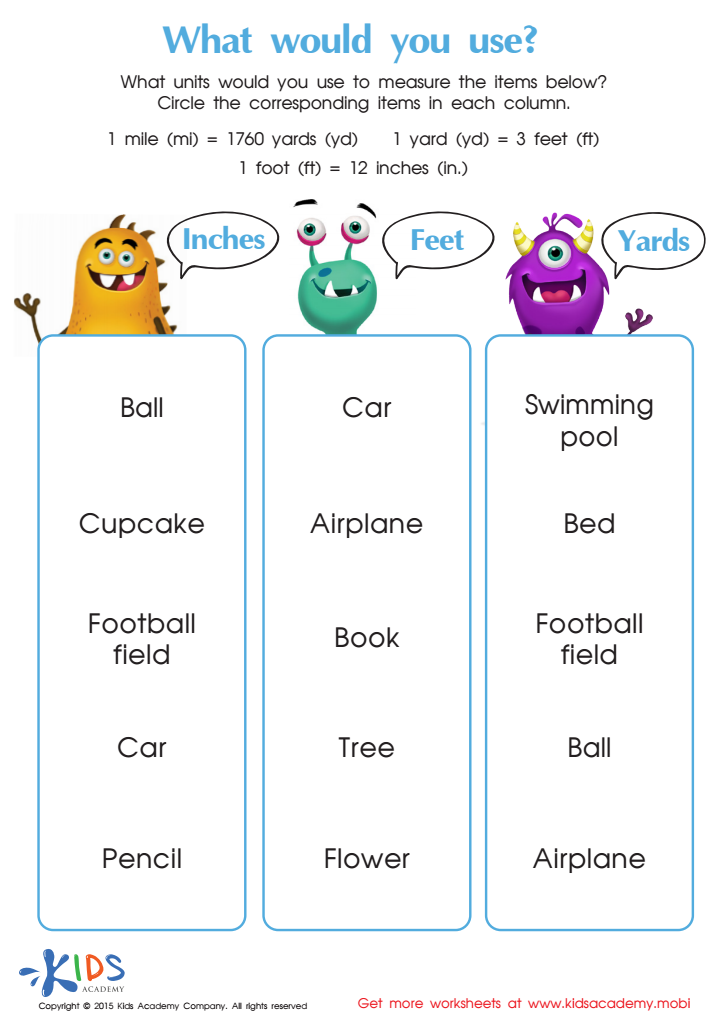
Learning about measuring objects in inches, feet and yards Worksheet
Download, cut and let your preschoolers learn and have fun estimating objects like pencils, airplanes and swimming pools in inches, feet and yards!
Learning about measuring objects in inches, feet and yards Worksheet
Worksheet
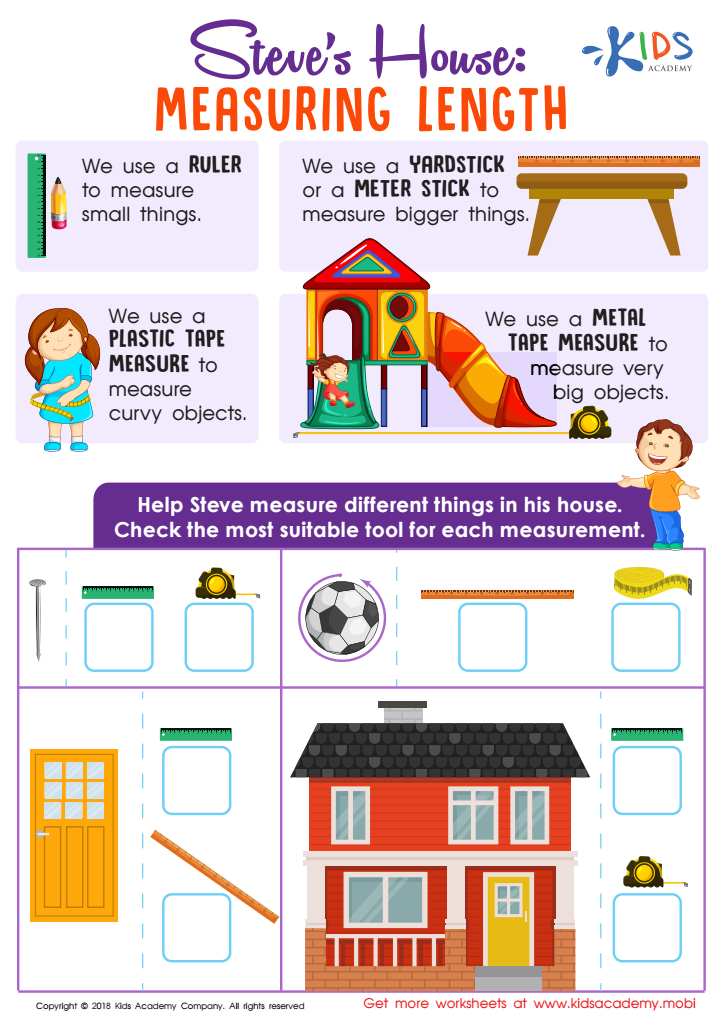
Steve's House: Measuring Length Worksheet
Introduce your kids to the various measuring tools and their uses. Explain how a ruler, plastic tape, yard stick, and metal tape measure are used to measure different objects. Guide them as they help Steve measure things in his home with the correct tool.
Steve's House: Measuring Length Worksheet
Worksheet
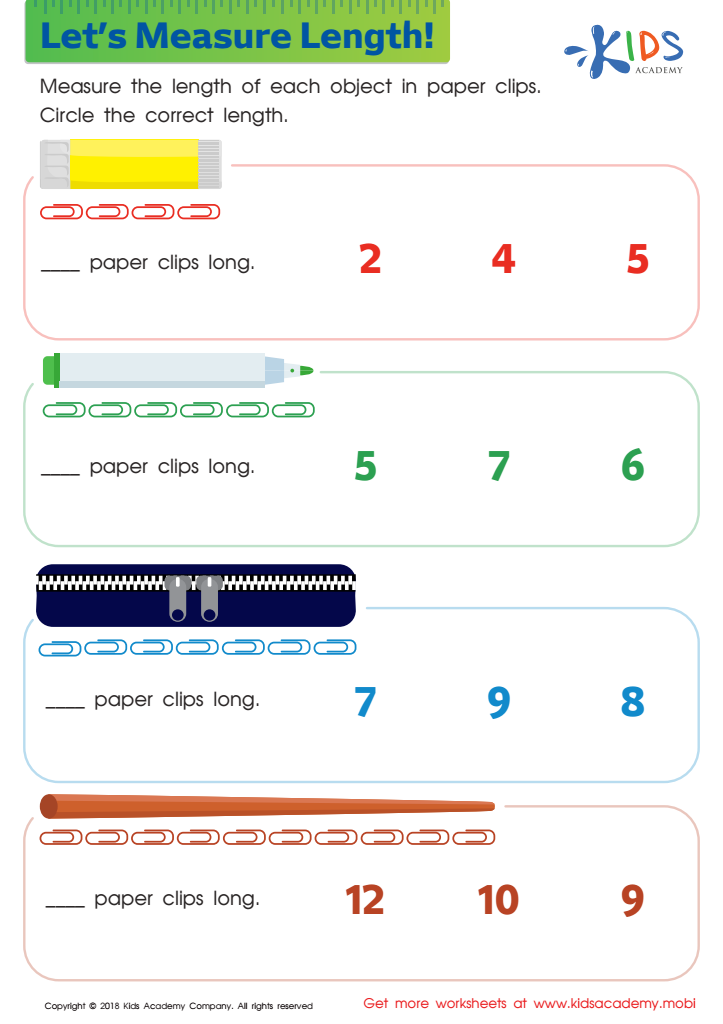
Lets Measure Length Worksheet
It's time to help your child take their measuring skills up a notch! This colorful PDF sheet from Kids Academy introduces kids to measuring with paperclips. Guide them through the page, showing them how to count the clips to measure each image. Then, circle the correct length for each to complete the sheet!
Lets Measure Length Worksheet
Worksheet
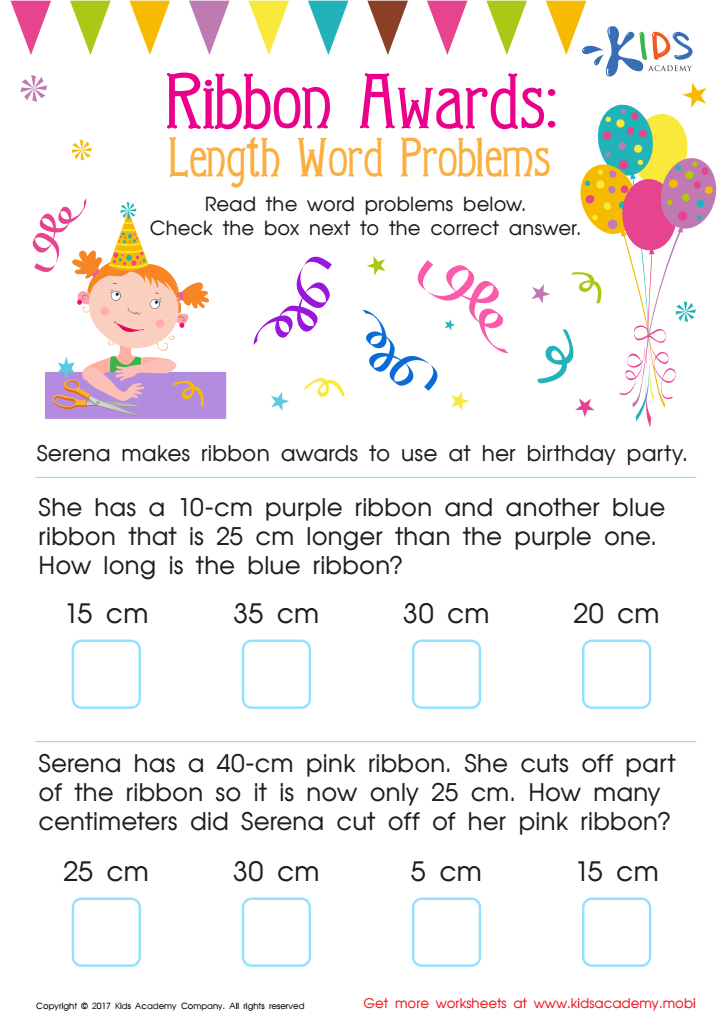
Length Word Problems Worksheet
Word problems help grade 2 students practice measurement using everyday scenarios. This worksheet provides practice in working with centimeters and inches, like measuring ribbon. It's a great way to learn and apply math skills.
Length Word Problems Worksheet
Worksheet
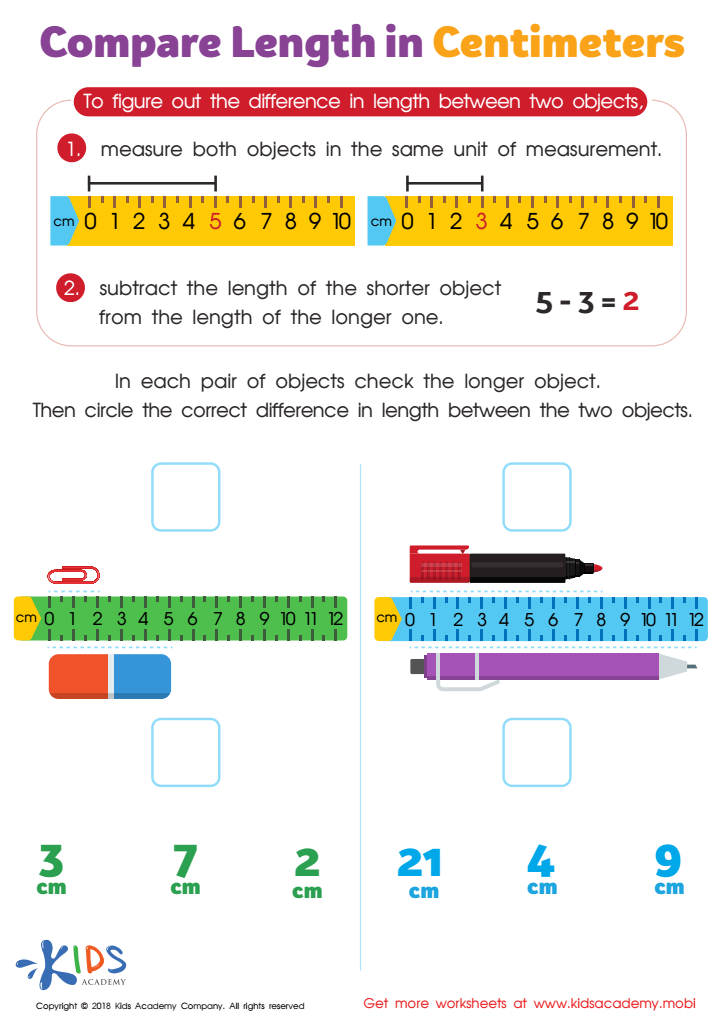
Compare Length in Centimeters Worksheet
To do this worksheet, your child needs to be able to measure accurately, add and subtract. They must measure both items and subtract the shorter from the longer to work out the difference in length.
Compare Length in Centimeters Worksheet
Worksheet
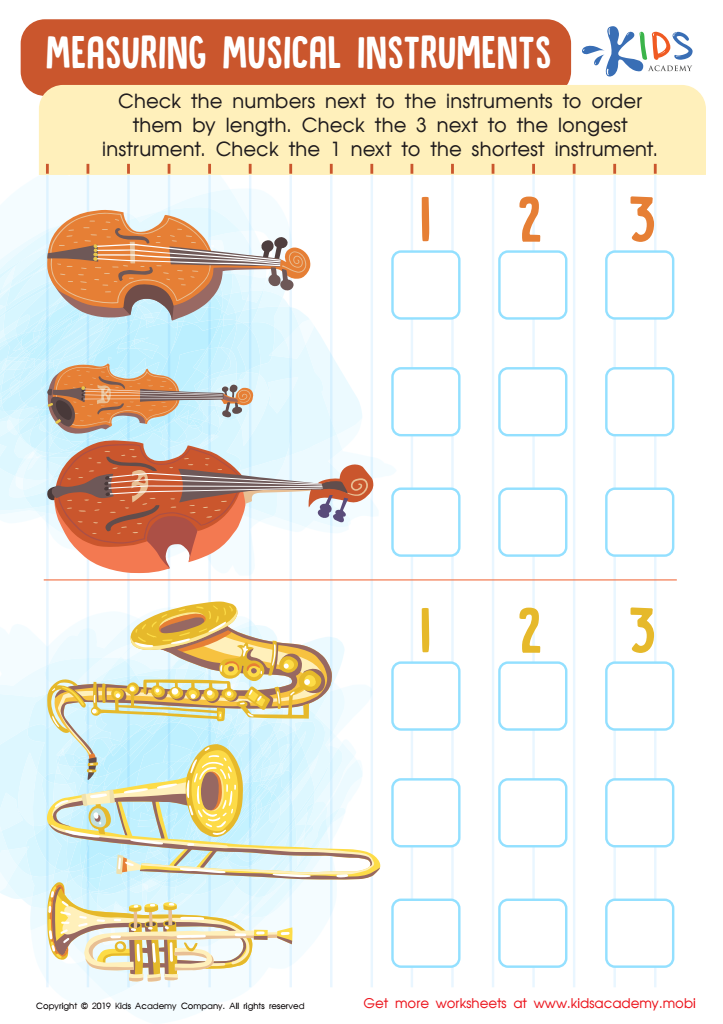
Measuring Musical Instruments Worksheet
Learning measurements can be tricky, but this worksheet makes it easy. Ask your child to identify the instruments in the pictures. Then, order them by length using the numbers. 3 is the longest, 1 is the shortest. Simple exercises like this will help them understand the different metric systems.
Measuring Musical Instruments Worksheet
Worksheet
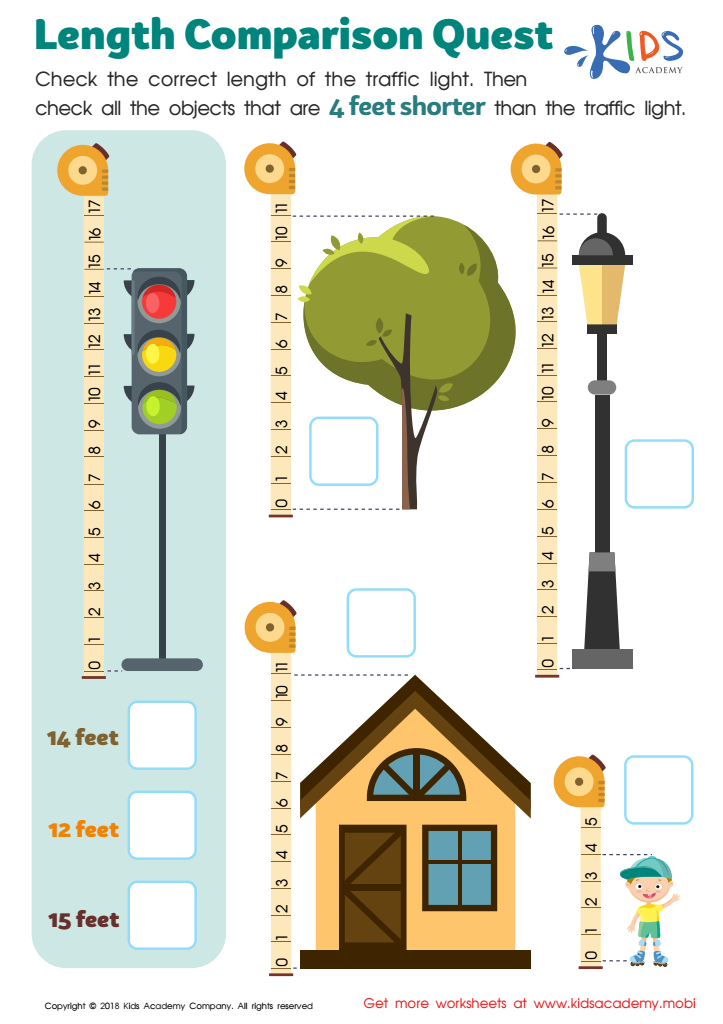
Length Comparison Quest Worksheet
Knowing measurement tools and how to use them is just the start. To be proficient, your kid must be able to accurately compare objects and their lengths. With the 'Length Comparison Quest' worksheet, they will check the correct length of the traffic light in the picture and then compare other objects to it, marking those that measure 4 feet shorter.
Length Comparison Quest Worksheet
Worksheet
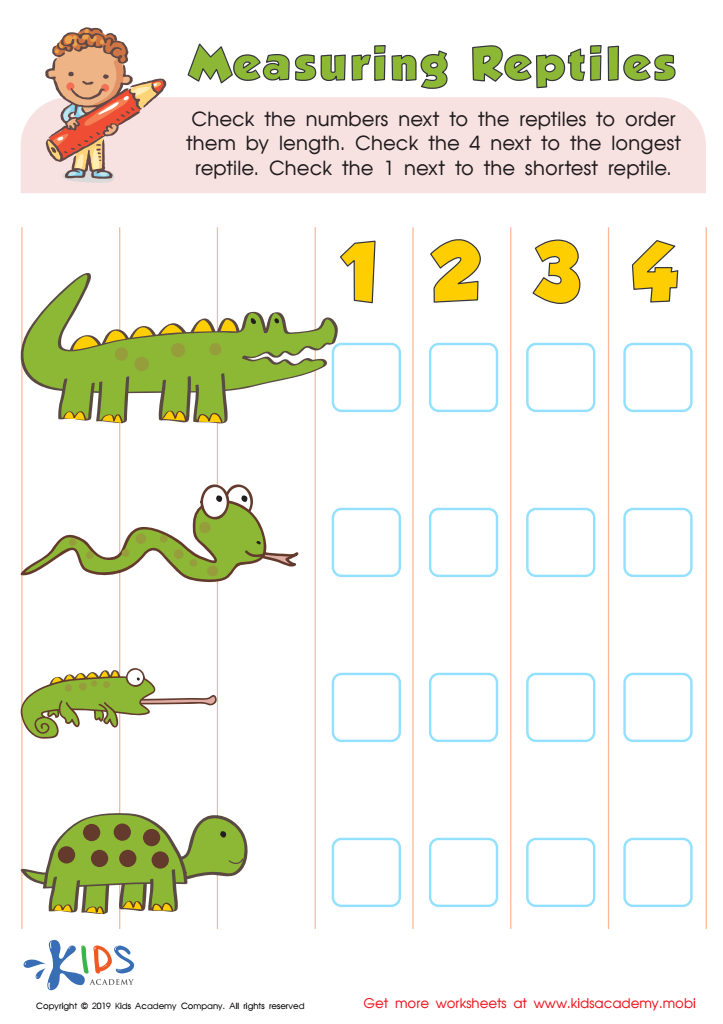
Measuring Reptiles Worksheet
Do your kids know what reptiles are? Ask them to name some and name features. In this activity, your kindergartners will measure with reptiles. Show them the picture and get them to order by length, starting with the one with 4 by the longest reptile, then the one with 1 by the shortest.
Measuring Reptiles Worksheet
Worksheet
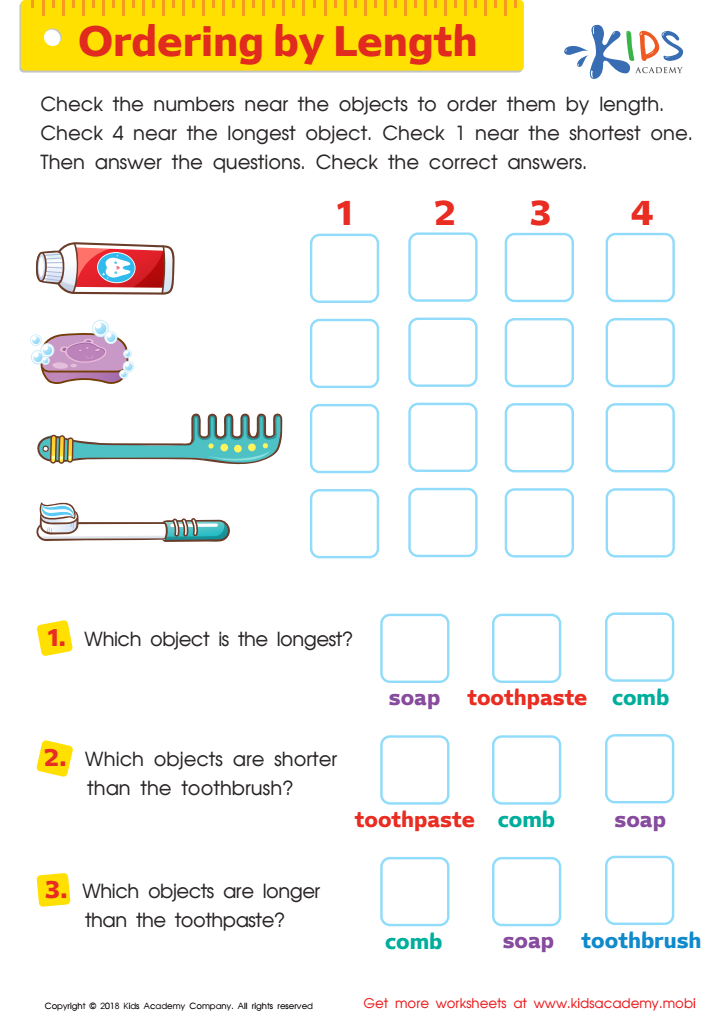
Ordering by Length Worksheet
Compare objects to learn about measurement! Before purchasing a ruler, get kids to understand length by comparing objects and labeling them as longer or shorter than others. Use this printable math worksheet to help children think about measurement. It will show pictures of objects and ask children to categorize them by length.
Ordering by Length Worksheet
Worksheet
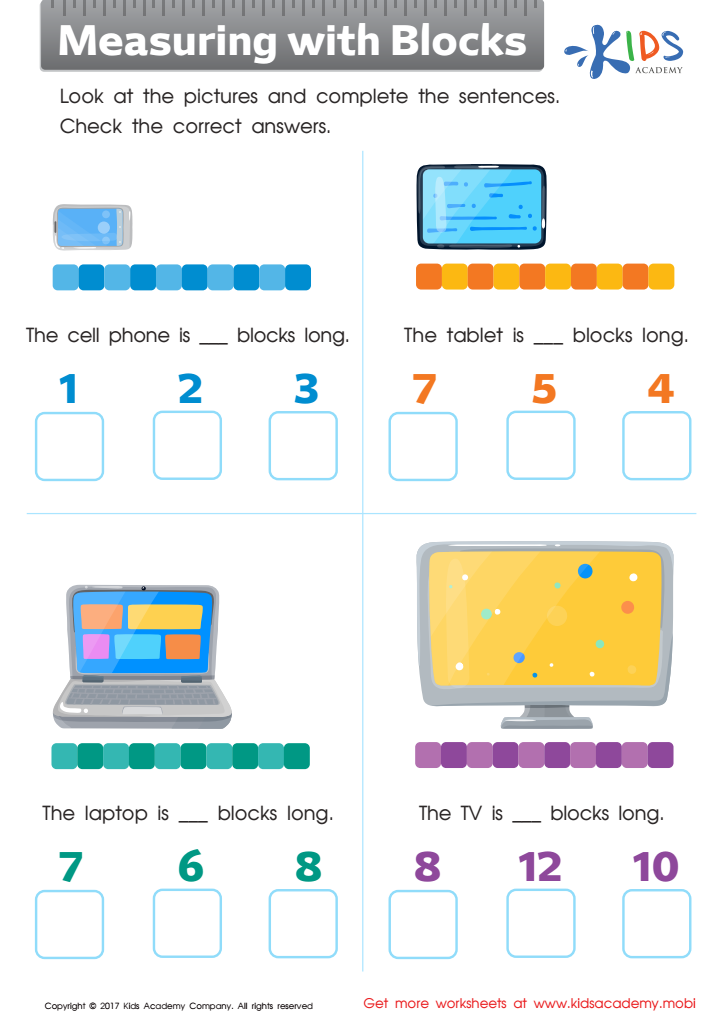
Measuring with Blocks Worksheet
Help your child get ready for math success with this Kids Academy worksheet. It provides colorful blocks to practice measuring objects. Coach them to count the boxes under each picture, then check the box with the right answer. It's a fun way to get acquainted with rulers!
Measuring with Blocks Worksheet
Worksheet
Let's Measure Animals! Worksheet
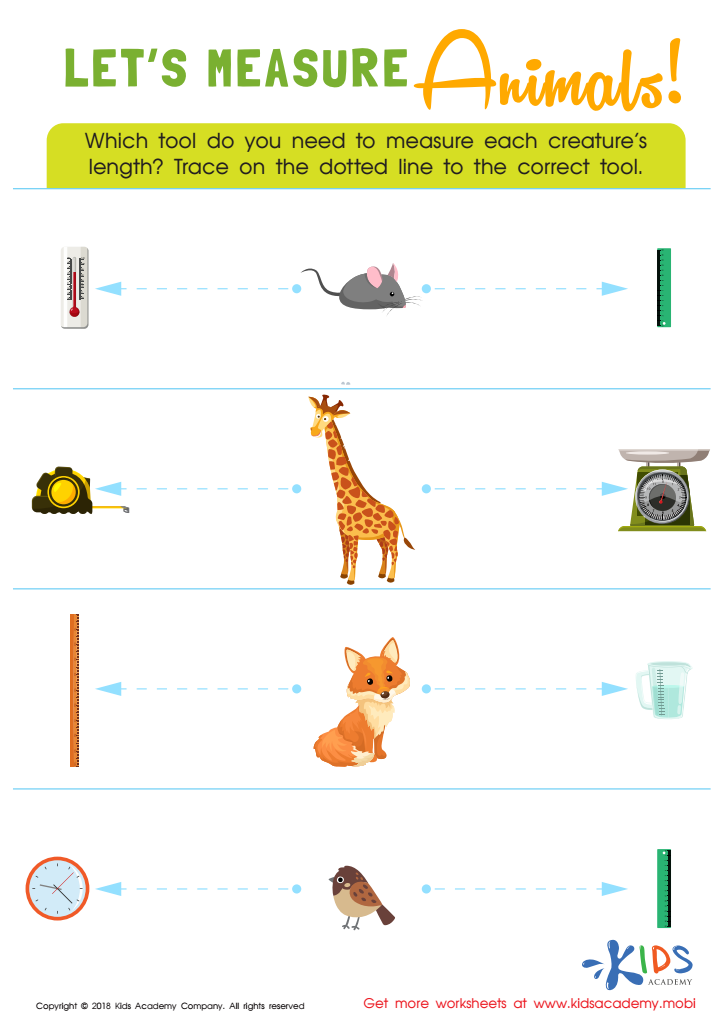
Have your students measure the length of animals like a mouse, giraffe, fox, and bird using this fun tracing sheet. They must carefully follow the dotted lines to the correct measuring tool, and by the end of the colorful worksheet, they'll know more about measuring and the different tools used.
Let's Measure Animals! Worksheet
Worksheet
Learning measuring objects in inches Worksheet
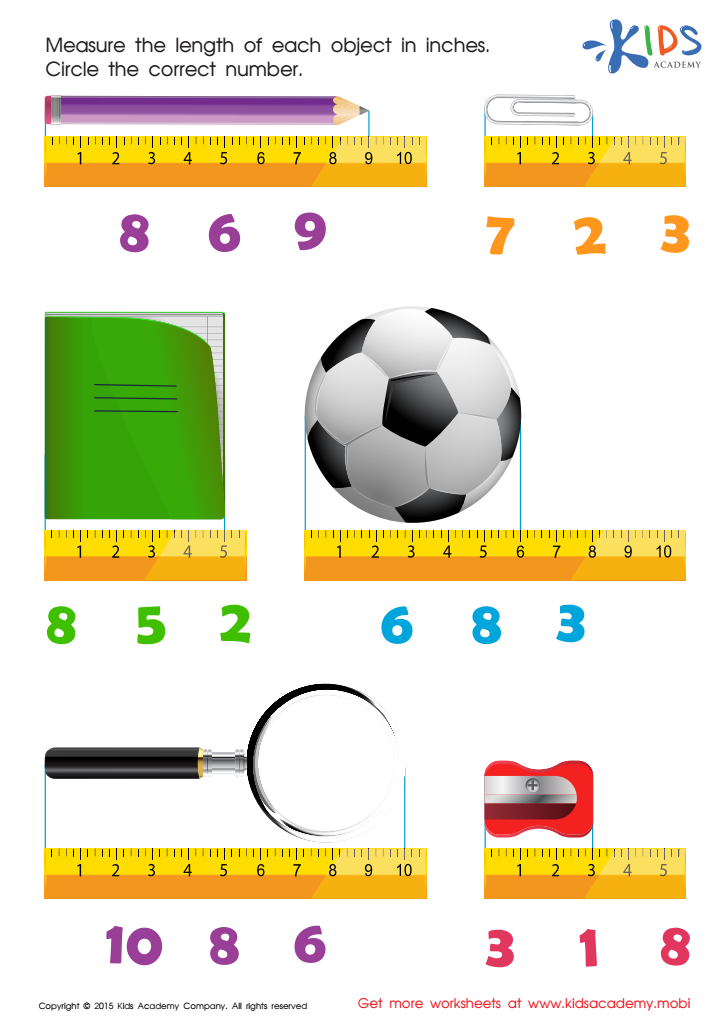
Help your little learners gain confidence in using a ruler! Print out our free worksheet, cut out the inch ruler, and let them measure and record objects' width and length. Kids Academy has a variety of math worksheets to make learning math fun! Check out our website for more free printables!
Learning measuring objects in inches Worksheet
Worksheet
Join Kids Academy for Free
Who is primarily going to use this learning content?








Comparing lengths is a fundamental aspect of early childhood math education and plays a vital role in developing critical thinking and problem-solving skills in children. Parents and teachers should care about this concept for several reasons.
Firstly, understanding length comparison helps children make sense of their world. From measuring objects around the house to understanding height or the length of their toys, these comparisons enable students to navigate their daily lives more effectively. When children learn to compare lengths, they develop spatial awareness and begin to comprehend concepts like 'longer,' 'shorter,' 'taller,' and 'smaller,' which are essential for future math skills.
Secondly, measuring lengths encourages logical reasoning. Children learn to use standardized units (like inches or centimeters) as they compare different objects. This critical thinking skill helps in science, technology, engineering, and math (STEM) fields, making it essential for holistic education.
Additionally, engaging in measurement activities fosters fine motor skills and provides opportunities for collaborative learning, as children often work in pairs or groups. By prioritizing comparing lengths, educators and parents lay a strong foundation for children’s mathematical understanding, helping them develop confidence and competence in mathematics as they grow.








