Comparing object weights Measurement Worksheets
3 filtered results
-
From - To
Enhance your child's measurement skills with our "Comparing Object Weights Measurement Worksheets"! Designed by experts, these engaging activities help young learners grasp the concept of weight comparison through fun, hands-on practice. Kids will enjoy comparing objects, understanding heavy vs. light, and developing critical thinking abilities. Each worksheet is crafted to align with grade-level standards, ensuring appropriate challenge and progression. With visually appealing graphics and interactive exercises, your little ones will master weight measurement in no time. Perfect for classroom or home use, our worksheets make learning math enjoyable and effective. Start your child's measurement journey today!
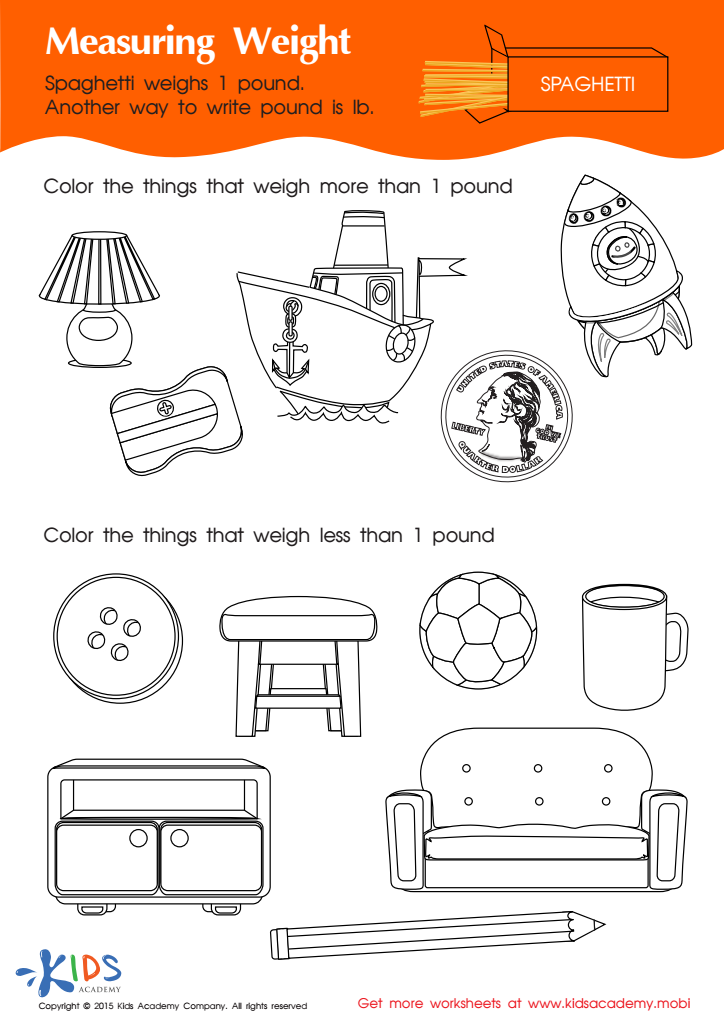
 Assign to My Students
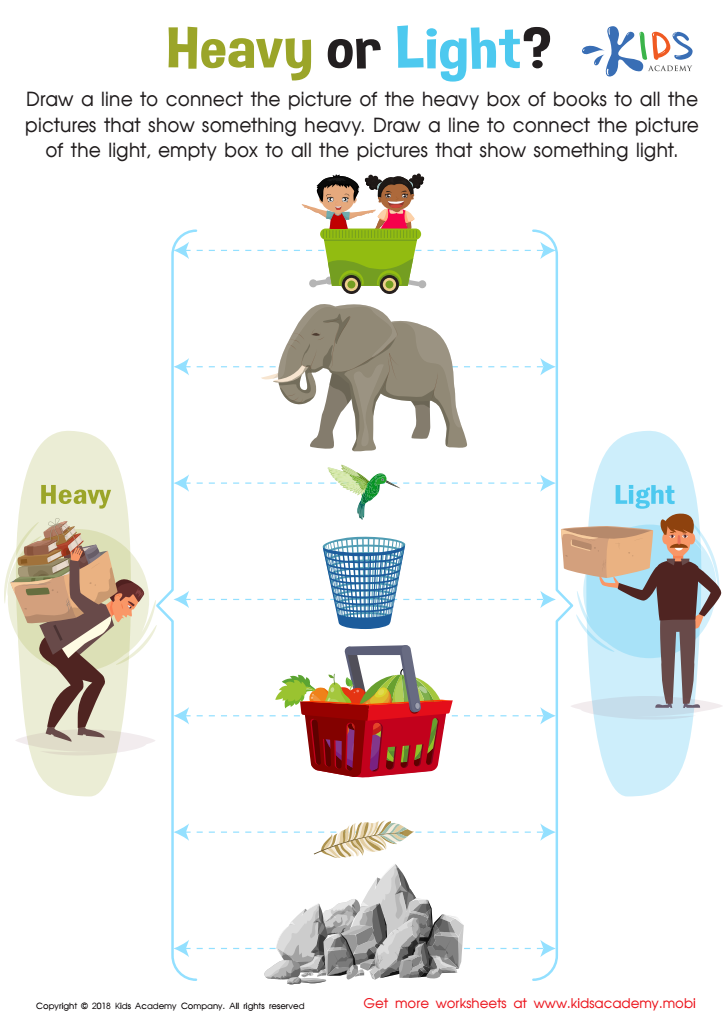
Heavy or Light? Worksheet
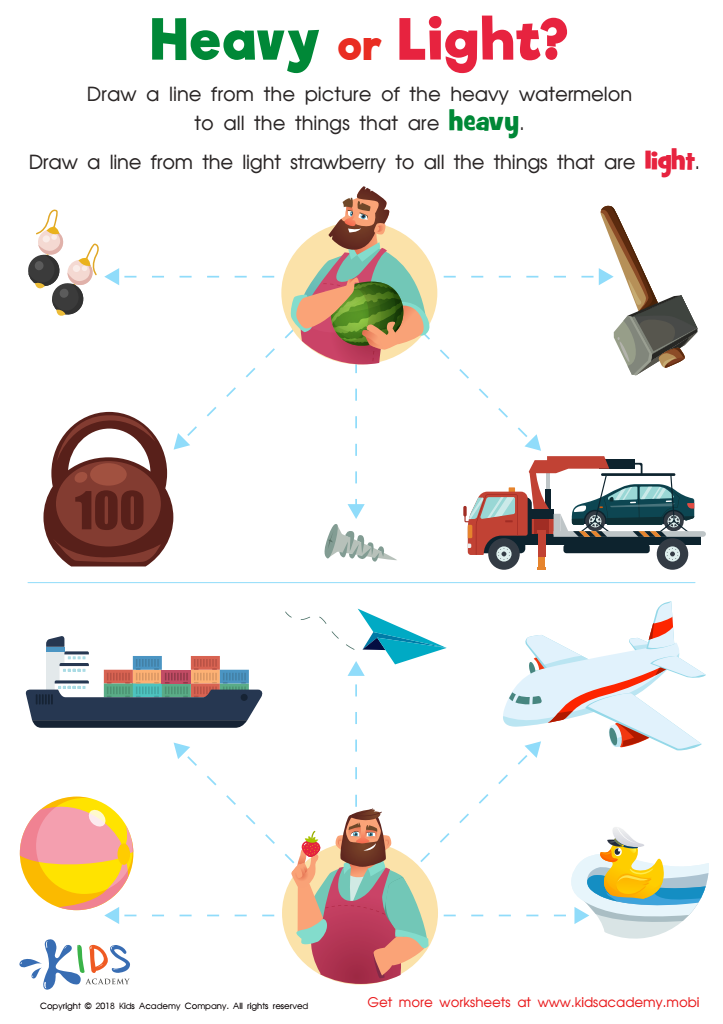
Heavy or Light? Worksheet








Understanding the concept of comparing object weights is fundamental for early cognitive development in children and serves as an essential building block for more complex scientific and mathematical learning. When parents and teachers focus on teaching this concept, they are instilling the principles of critical thinking and quantitative reasoning. Comparing weights helps children develop a sense of measurement, estimation, and balance — skills that are crucial not just academically but also in everyday life.
For instance, realizing that heavier objects take more effort to lift teaches children about physical properties and forces. This can further translate into understanding cause and effect, encouraging problem-solving as they figure out how to manage heavier items or balance uneven weights.
Furthermore, engaging with these comparisons helps improve fine motor skills since handling objects of varying weights necessitates careful coordination. Another benefit is the nurturing of language and vocabulary development as children describe what they observe – talking about heavy, light, heavier, and lighter strengthens communication abilities.
Parents and teachers who make this a part of learning allow children to explore and interact with the world more effectively, laying a solid foundation for future academic and extracurricular pursuits. It makes learning hands-on, relatable, and enjoyable, fostering a lifelong curiosity and enthusiasm for discovery.








