Problem-Solving Skills Tracing Shapes Worksheets
4 filtered results
-
From - To
Enhance your child's problem-solving abilities with our engaging "Problem-Solving Skills Tracing Shapes Worksheets." Designed for early learners, these worksheets offer a fun, interactive way to develop essential cognitive skills. As children trace various shapes, they'll improve their fine motor skills and spatial awareness, fostering critical thinking and analytical abilities. Each worksheet encourages exploration and creative thinking, allowing kids to discover connections between shapes and their surroundings. Perfect for classroom use or at-home learning, these worksheets will keep children entertained while building a strong foundation in geometry. Empower your child’s learning journey today with our beautifully designed tracing activities!
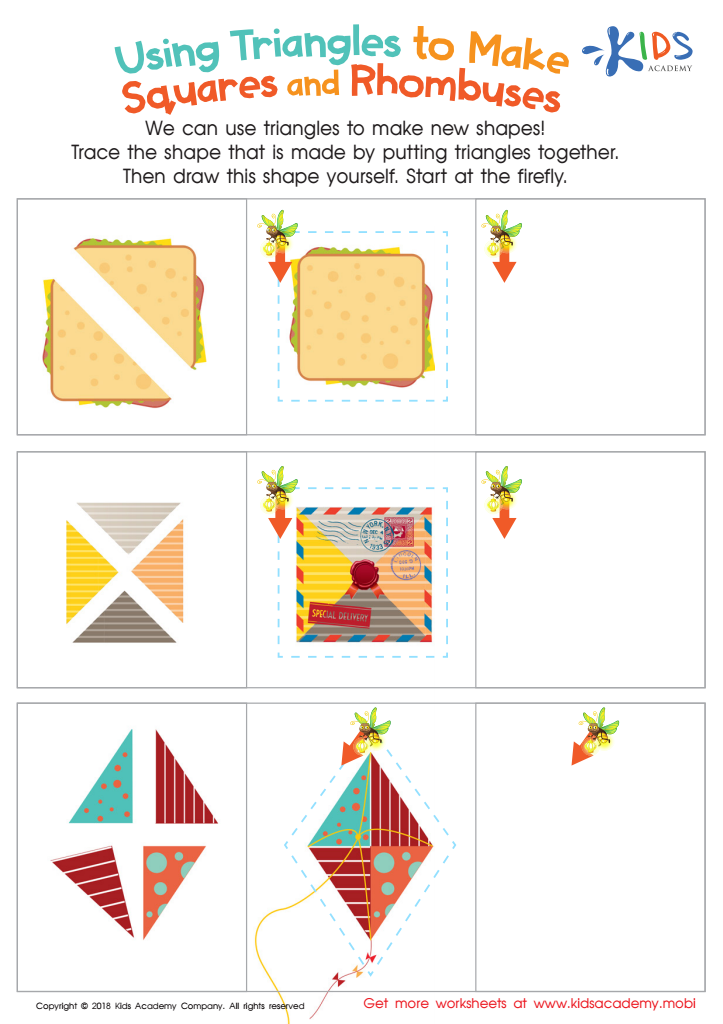
Using Triangles to Make Squares and Rhombuses Worksheet
 Assign to My Students
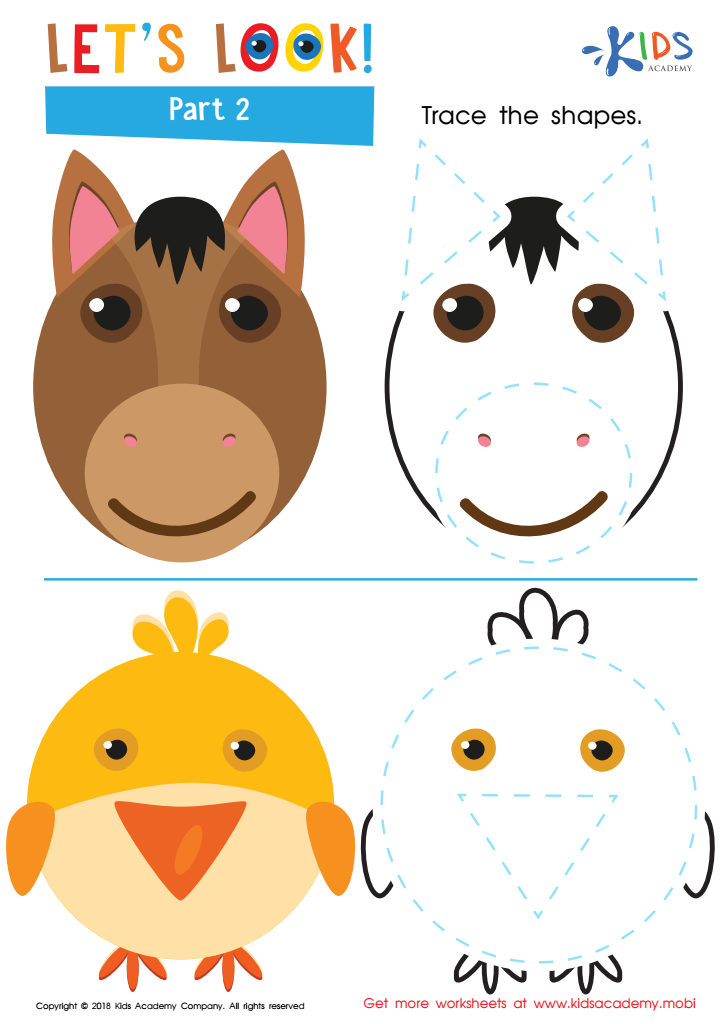
Let's Look! Part 2 Worksheet
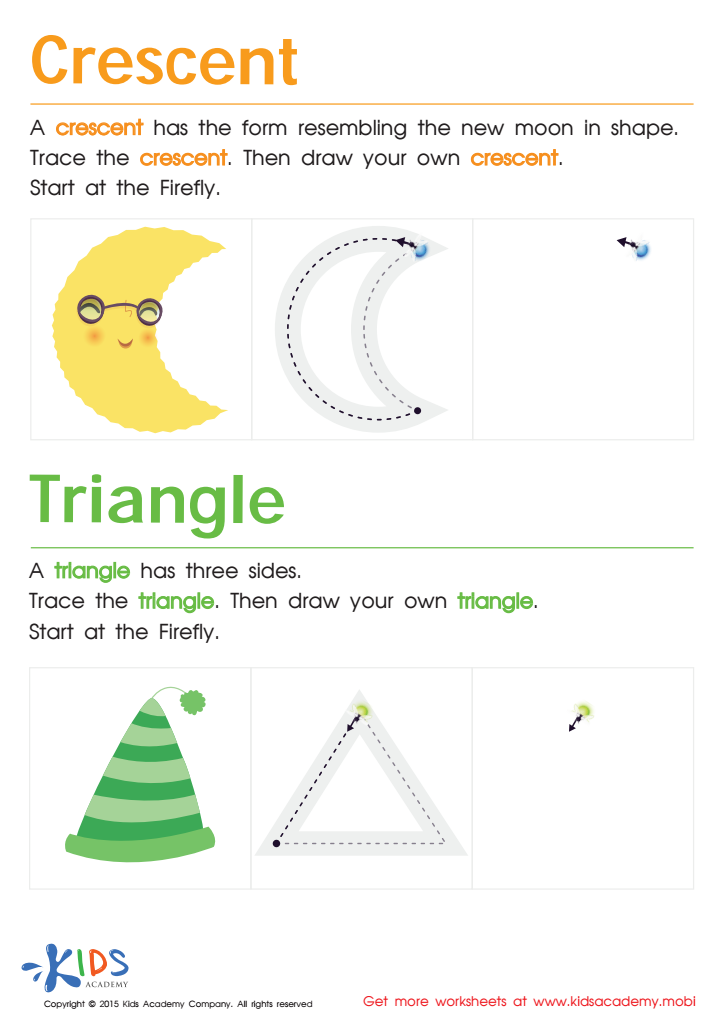
Learning to Draw Crescents And Triangles Worksheet

Matching 2D and 3D Shapes Worksheet








Problem-solving skills, particularly in tracing shapes, are essential for young learners and significantly contribute to their overall cognitive development. When parents or teachers emphasize these abilities, they help children enhance critical thinking and improve hand-eye coordination. Tracing shapes engages kids in tasks that require attention and concentration, fostering patience and persistence in overcoming challenges.
Additionally, tracing shapes lays the groundwork for more advanced skills, such as geometry and spatial reasoning, vital in mathematics and science. It equips children with the ability to recognize patterns and relationships between objects, which is instrumental as they progress in their education. Furthermore, these activities promote fine motor skills, necessary for writing and other daily tasks, thus boosting children's confidence and independence.
Emphasizing problem-solving skills also encourages creativity, allowing children to experiment with different ways of tracing and creating designs. Ultimately, parents and teachers play a crucial role in nurturing these abilities, providing children with the tools to think analytically and dynamically. By fostering such skills at an early age, we prepare them not only for academic success but also for life skills necessary for navigating real-world challenges. Investing attention in tracing shapes is, therefore, an act of empowering future learners.