
Alphabet familiarity Normal Alphabet Worksheets for Ages 3-4
7 filtered results
Difficulty Level
Grade
Age
-
From - To
Subject
Activity
Standards
Introduce your little ones to the delightful world of letters with our "Alphabet Familiarity Normal Alphabet Worksheets for Ages 3-4". These thoughtfully designed worksheets will help your preschoolers master the alphabet while having fun. Each sheet features engaging activities such as letter tracing, matching, and identification exercises that encourage interactive learning. Perfect for enhancing early literacy skills, these printables are suitable for both classroom settings and at-home practice. Foster a love for reading and writing from a young age with these essential educational tools. Explore our collection and set the foundation for your child’s academic success today!
Favorites
With answer key
Interactive
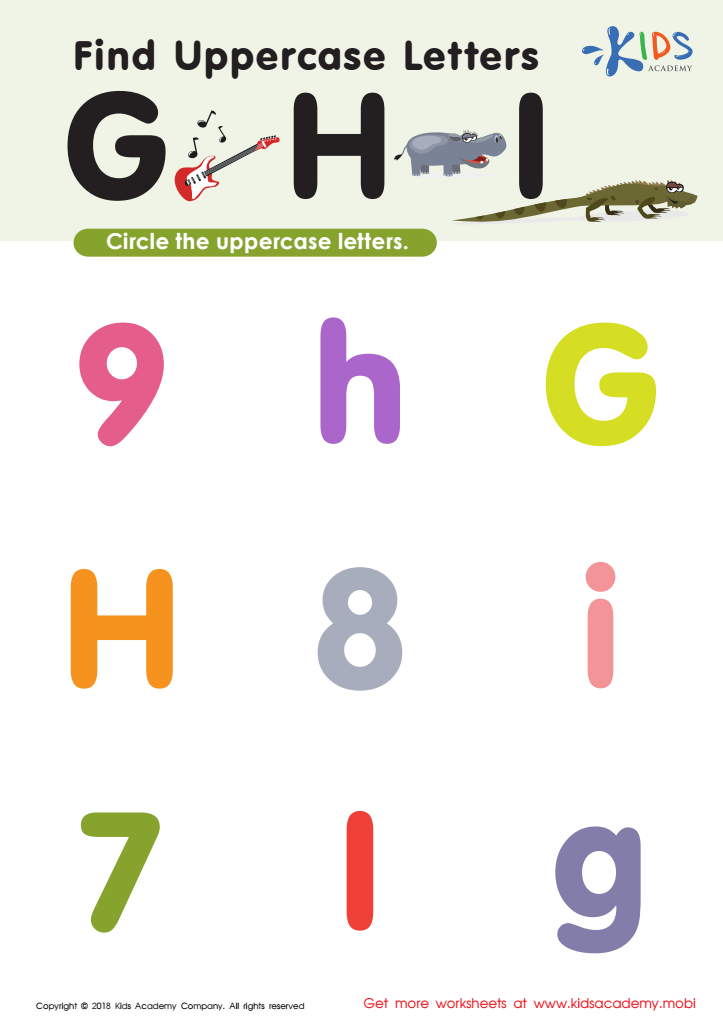
Find Uppercase Letters G, H, and I Worksheet
Find G, H, and I in uppercase with this downloadable worksheet! Numbers are included to challenge your kindergartener's letter recognition skills. Plus, practice G, H, and I sounds using the cute graphics. Perfect for learning letter case recognition!
 Assign to My Students
Find Uppercase Letters G, H, and I Worksheet
Worksheet
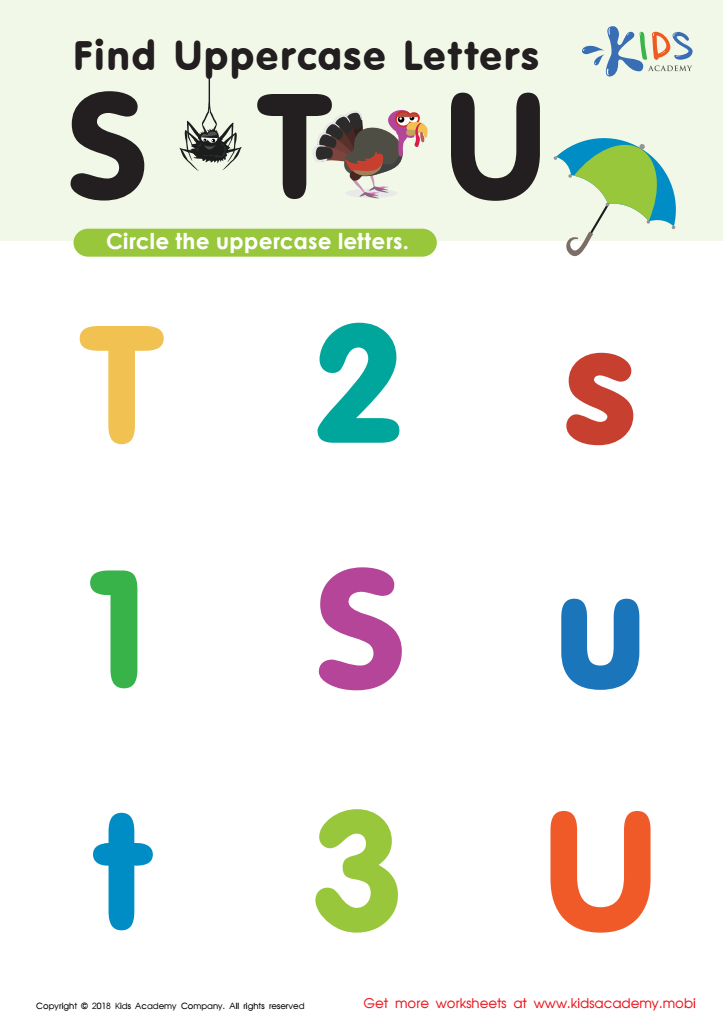
Find Uppercase Letters Worksheet
What level is your kid at now? Can they tell the difference between small and uppercase letters? Ask them to name words beginning with S, T and U, then help them find and circle the uppercase letters S, T and U in a mix of small letters, numbers and uppercase letters.
Find Uppercase Letters Worksheet
Worksheet
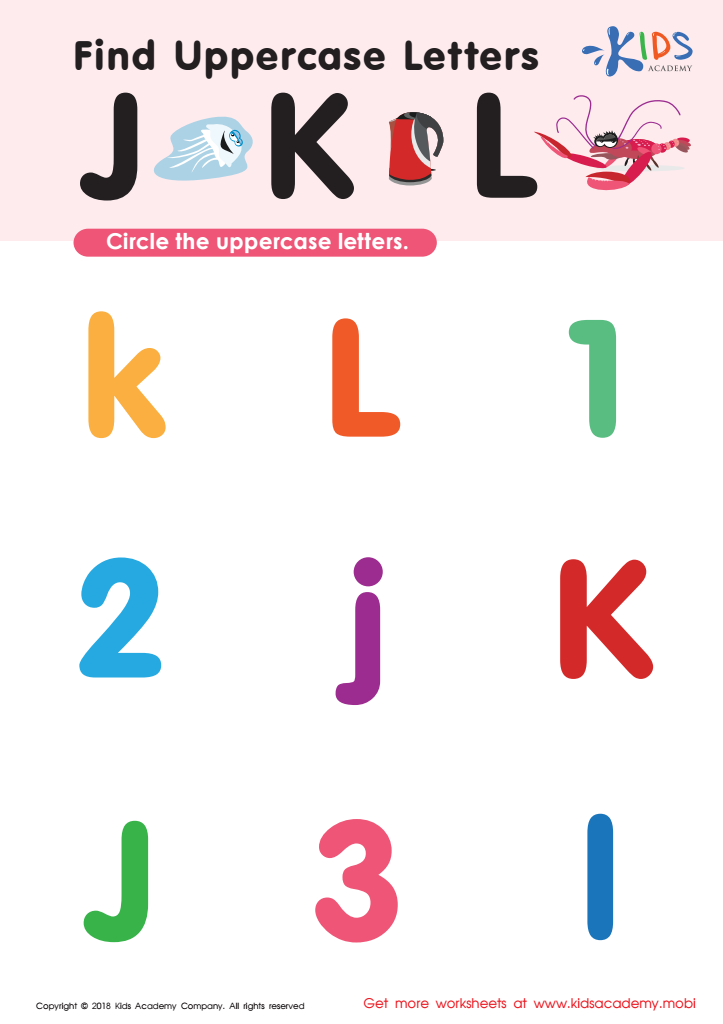
Find Uppercase Letters J, K, and L Worksheet
Search for the uppercase letters J, K, and L in this fun worksheet! Help your child identify the starting sound of each picture, then look for the letters. Keep an eye out for numbers that look like letters. Swim with the jellyfish and solve this delightful puzzle!
Find Uppercase Letters J, K, and L Worksheet
Worksheet
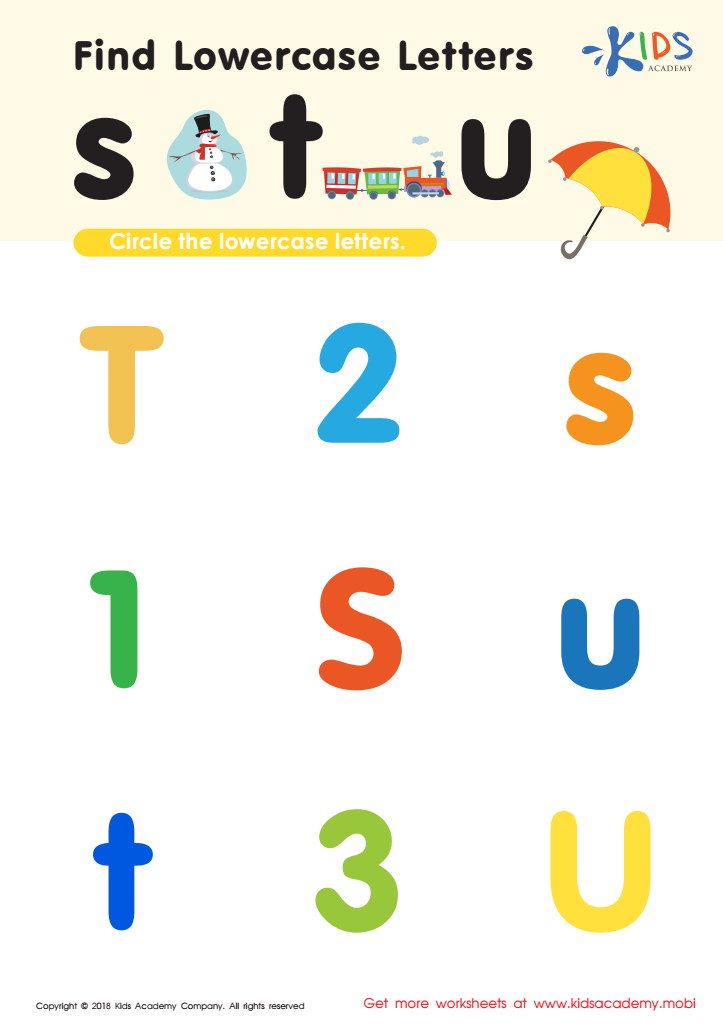
Find lowercase Letters s t u Worksheet
Puzzles are great for boosting your child's thinking skills. Can they identify lowercase letters s, t and u? This free printout contains the letters mixed in with uppercase letters and numbers, all presented in a fun, colorful format - sure to keep them entertained as they learn!
Find lowercase Letters s t u Worksheet
Worksheet
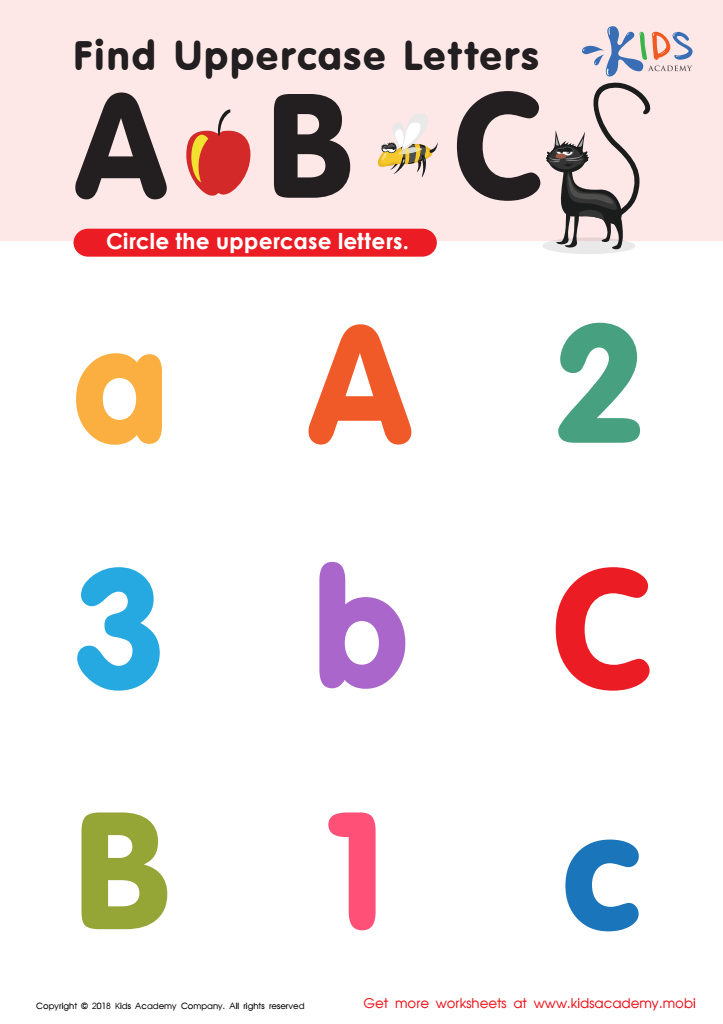
Find Uppercase Letters A, B, and C Worksheet
Check out this PDF worksheet and spot all the capital letters! Arranged as a puzzle, this exercise will test little learners to read and recognize uppercase letters and tell the difference between letters and numbers. To help them, use the pictures on top of the page to practice the sounds A, B and C make! 80 words.
Find Uppercase Letters A, B, and C Worksheet
Worksheet
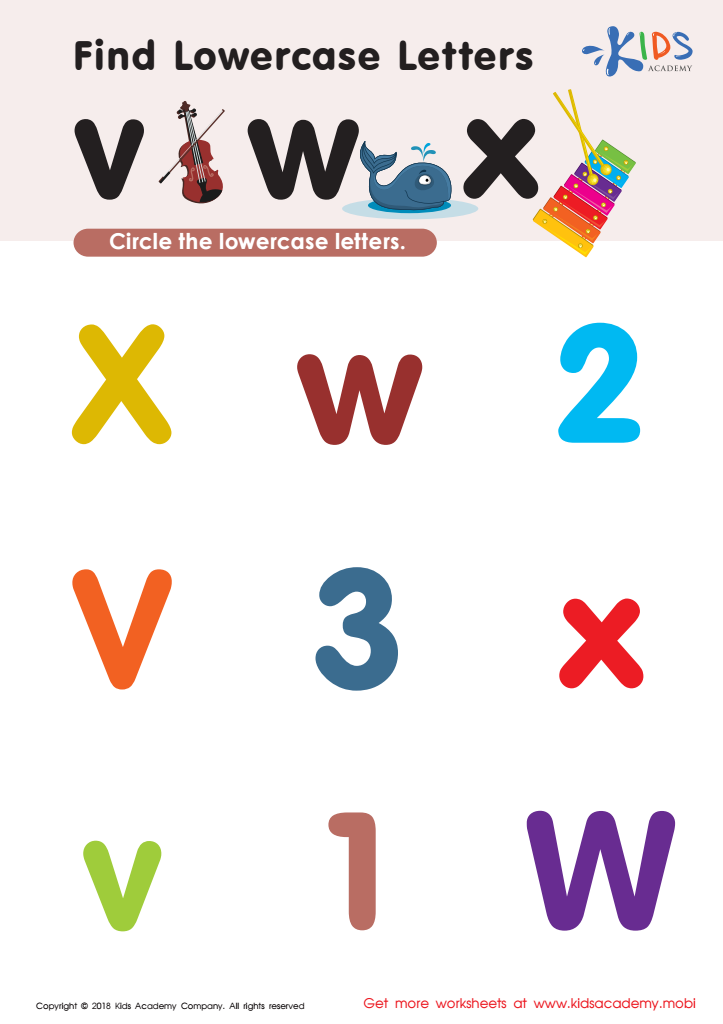
Find Lowercase Letters v w x Worksheet
If your child doesn't know the alphabet, get them this helpful worksheet. It's an easy exercise to build their understanding of the alphabet and lowercase letters. Find the letters v, w, and x among other uppercase letters and numbers in the downloadable PDF.
Find Lowercase Letters v w x Worksheet
Worksheet
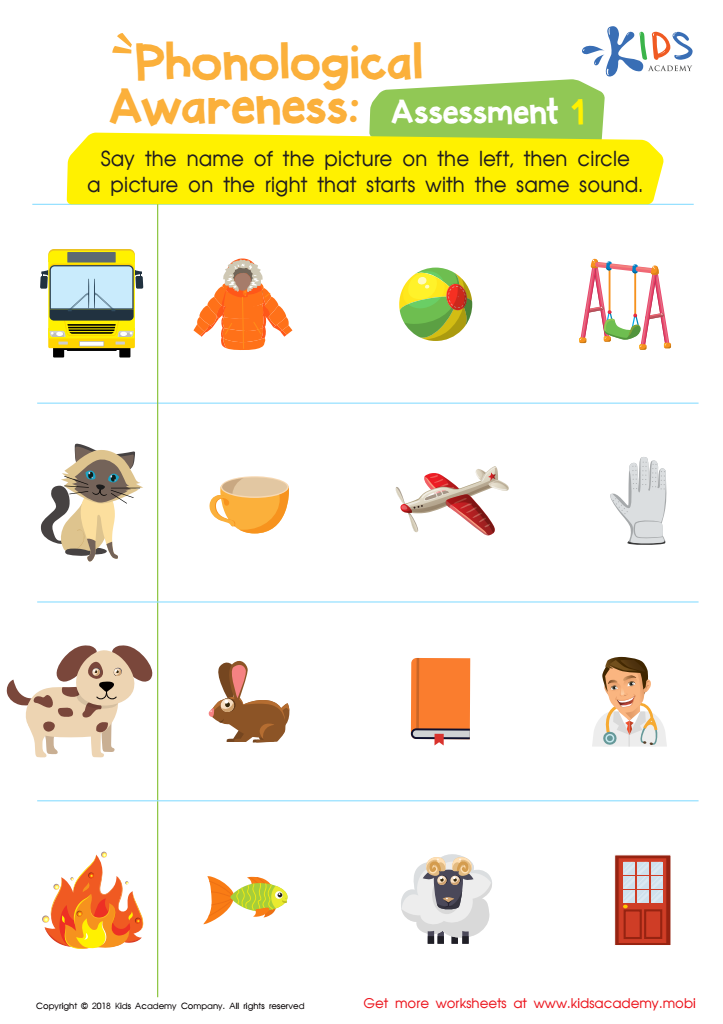
Phonological Awareness: Assessment 1 Worksheet
This worksheet helps kids build key phonics skills for pre-reading. They say each picture name aloud, focusing on the starting sound. Then, they match the sound with an image in the same row. Use as a checkpoint for kindergarten or grade 1 phonics readiness.
Phonological Awareness: Assessment 1 Worksheet
Worksheet
Join Kids Academy for Free
Who is primarily going to use this learning content?







Alphabet familiarity for children aged 3-4 is crucial as it lays the foundation for future reading and writing skills. During these formative years, children's brains are remarkably receptive to new information, making it an ideal period to introduce them to the alphabet. Understanding and recognizing letters are key components in developing literacy, which is essential for academic success.
Alphabet familiarity aids in language development; as children learn the names, shapes, and sounds of letters, they begin to decode words and understand how language works. This early exposure can spark a love for reading, a fundamental skill that supports learning across all subjects.
Moreover, knowing the alphabet enhances cognitive skills such as memory, visual and auditory discrimination, and sequencing. These skills contribute not only to reading fluency but also to broader academic abilities. Fun activities, like singing alphabet songs or playing matching games, make the learning process engaging, helping maintain children's natural curiosity and enthusiasm.
For parents and teachers, fostering alphabet familiarity means investing in the child's future learning achievements. It establishes a critical early literacy foundation, ensuring smoother transitions through preschool and kindergarten, and equips children with the necessary tools to succeed academically and beyond. By prioritizing this early learning milestone, we empower children to become confident, life-long learners.







