Animal Classification Normal Worksheets for Ages 3-4
5 filtered results
-
From - To
Introducing our "Animal Classification Normal Worksheets for Ages 3-4!" These engaging and educational worksheets are designed to captivate young minds while teaching them basic animal classification concepts. Ideal for preschoolers, the activities include matching animals to their habitats, identifying different animal families, and sorting exercises to enhance cognitive skills. With vibrant illustrations and simple tasks, children will enjoy learning about animals in a fun and interactive way. Perfect for parents and educators looking to support early learning and development. Download now to inspire a love for nature and science in your little ones!
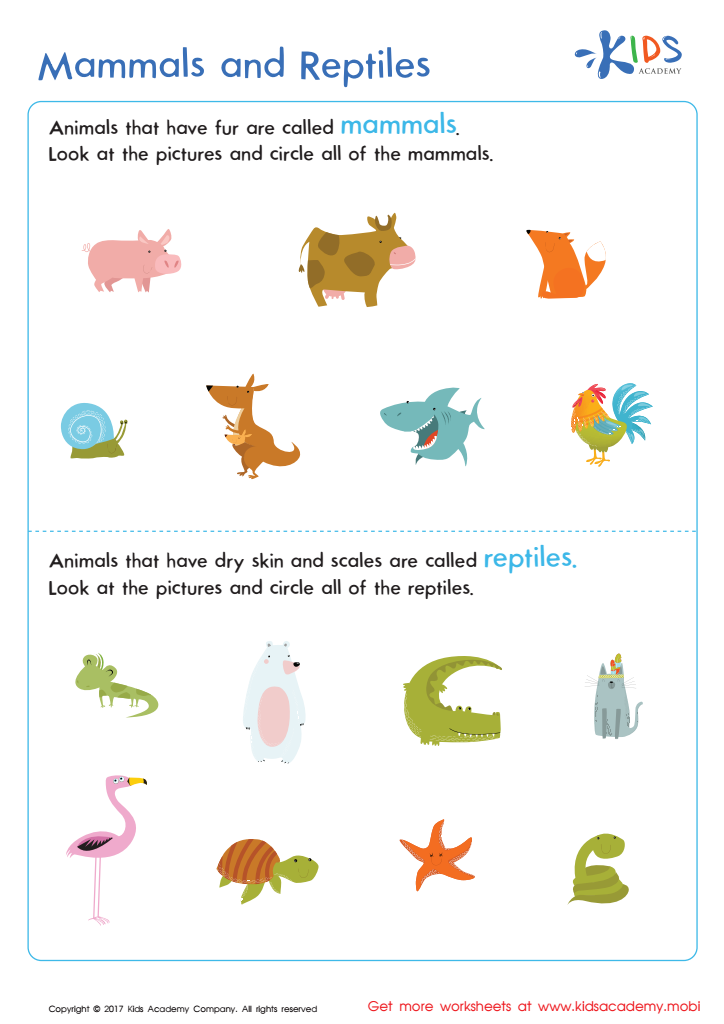
Mammals and Reptiles Worksheet
 Assign to My Students
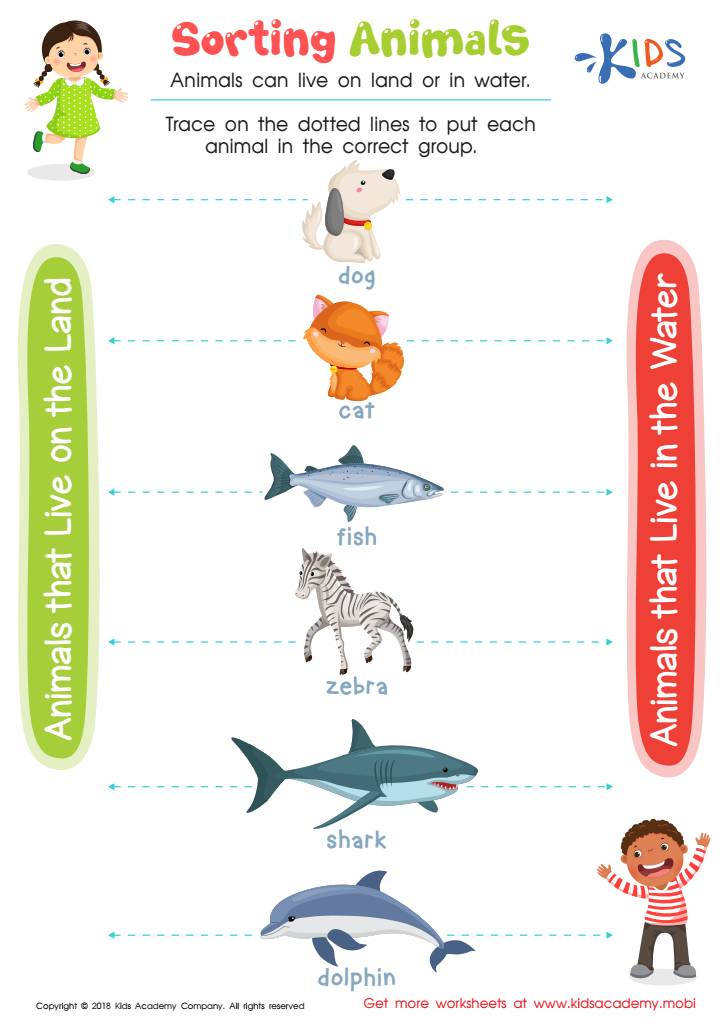
Sorting Animals Worksheet
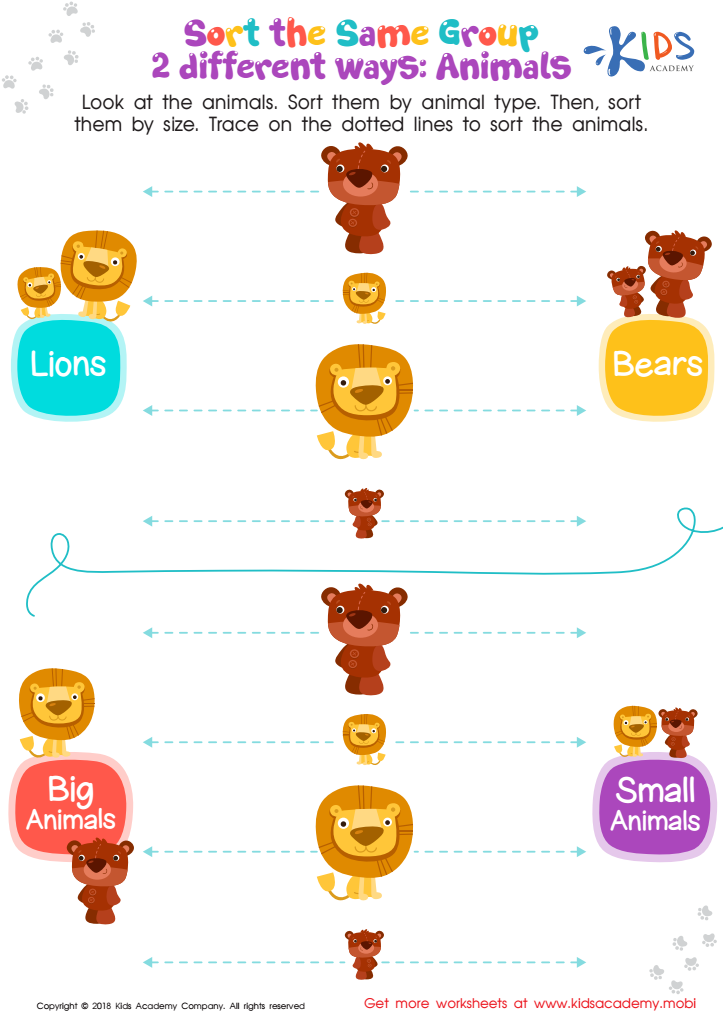
Sort the Same Group 2 Different Ways: Animals Worksheet
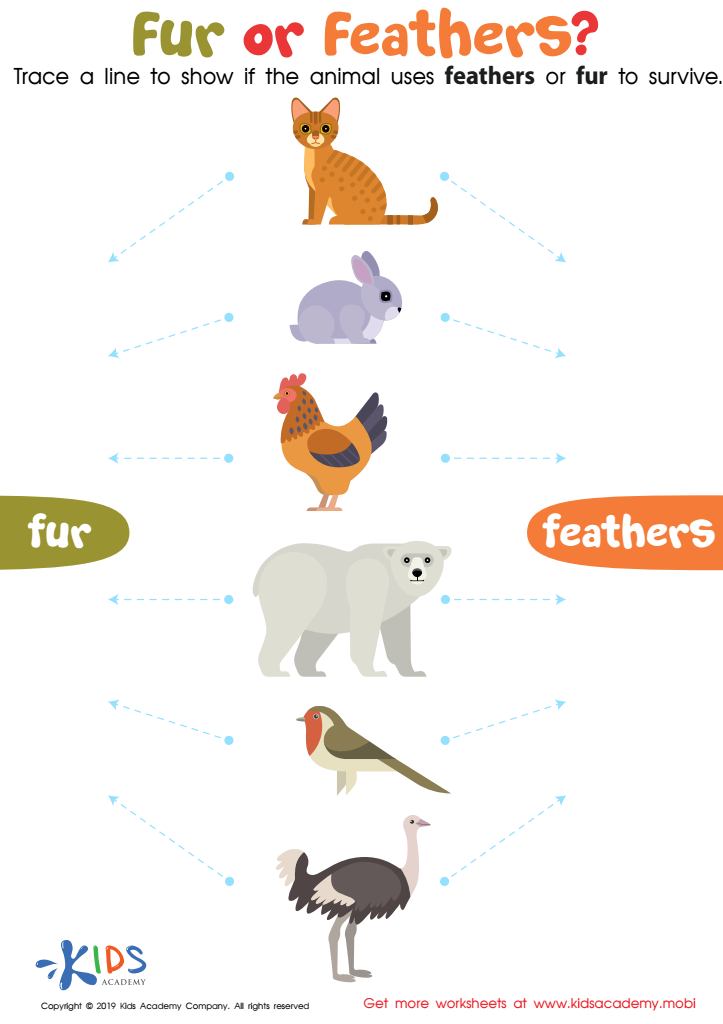
Fur or Feathers? Worksheet
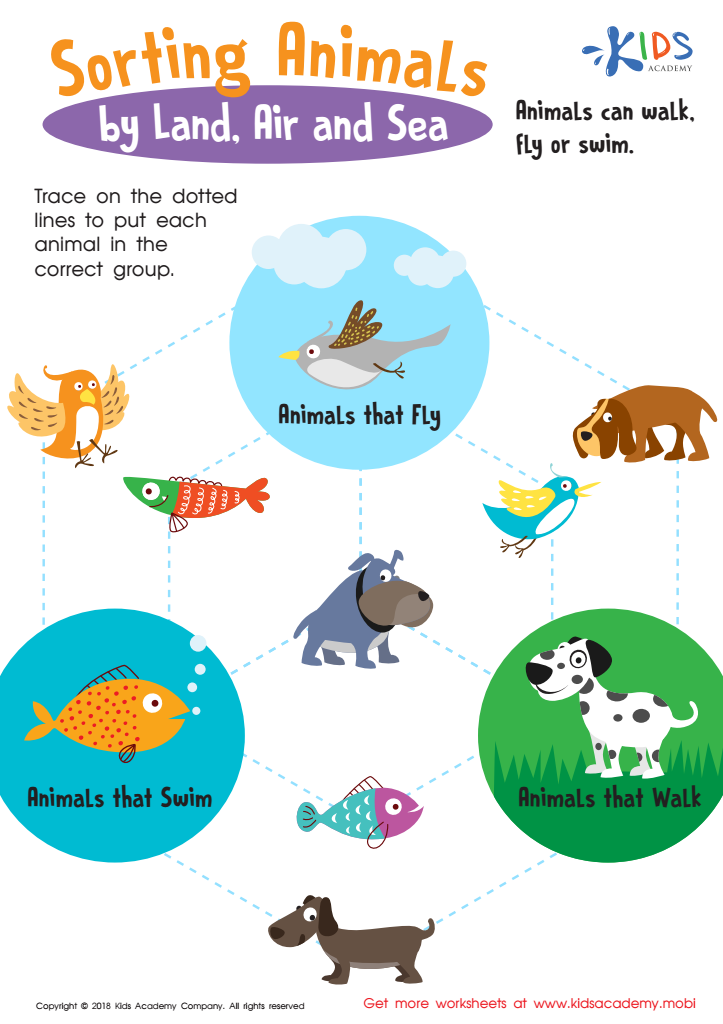
Sorting Animals by Land, Air and Sea Worksheet





Introducing the concept of Animal Classification to children aged 3-4 is beneficial for several developmental reasons. Firstly, it builds foundational cognitive skills. Sorting animals into groups based on traits such as habitat, movement, or diet enhances critical thinking, organization, and memory. These are key skills that support future academic learning across subjects.
Secondly, this topic fosters vocabulary development. Exposure to terms like "mammals," "birds," or "reptiles" helps expand children's language, promoting better communication skills. Engaging in discussions about animals encourages curiosity and questioning, sparking an interest in the natural world.
Additionally, learning about animal classification instills a sense of empathy and respect for living creatures. Understanding that animals fit into different categories due to their unique characteristics can promote a deeper appreciation for biodiversity and conservation efforts.
For both parents and teachers, discussing animal classification provides numerous opportunities for interactive and hands-on activities. It can be paired with stories, crafts, songs, or trips to zoos and parks, making learning a joyful and integrative experience.
Ultimately, early exposure to animal classification conceptually bridges play and education, setting a solid foundation for lifelong learning and a more nuanced understanding of the world.








