Lowercase identification Normal Worksheets for Ages 3-4
4 filtered results
-
From - To
Lowercase identification is essential for early childhood literacy development. Our "Lowercase Identification Normal Worksheets for Ages 3-4" are carefully designed to help young learners recognize and differentiate between lowercase letters in a fun and engaging manner. These printable worksheets offer a variety of activities, such as tracing, matching, and coloring exercises, that reinforce letter recognition and phonemic awareness. Perfect for preschoolers and tailored to their specific developmental needs, these worksheets provide an excellent foundation for reading and writing success. With our worksheets, learning lowercase letters becomes an enjoyable journey for your little ones.
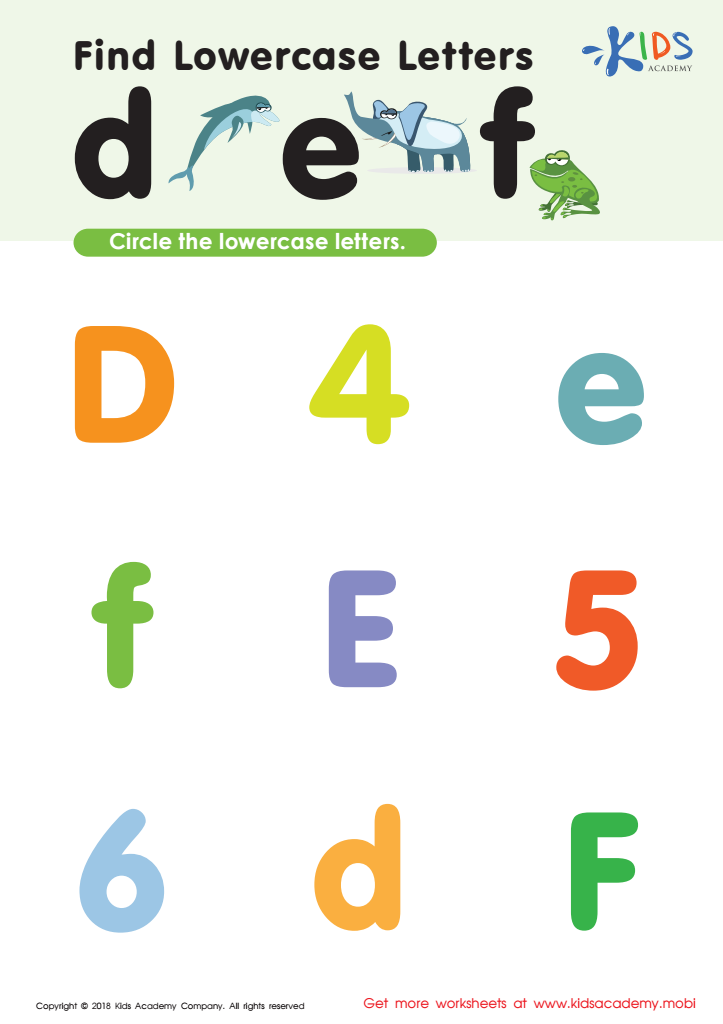
Find Lowercase Letters d e f Worksheet
 Assign to My Students
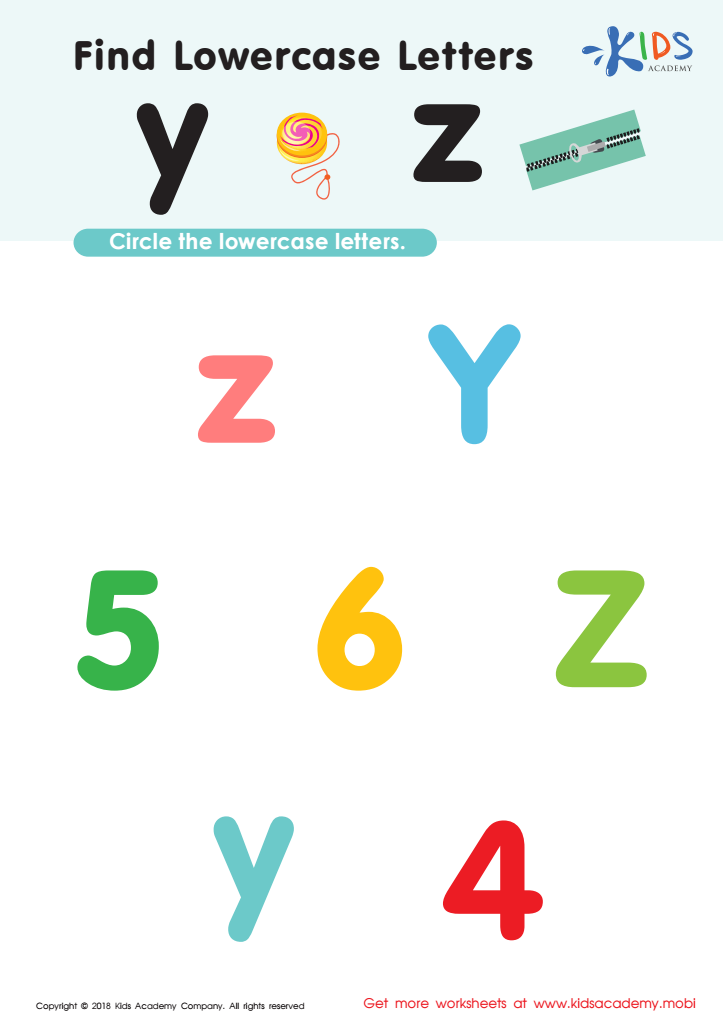
Find Lowercase Letters y z Worksheet
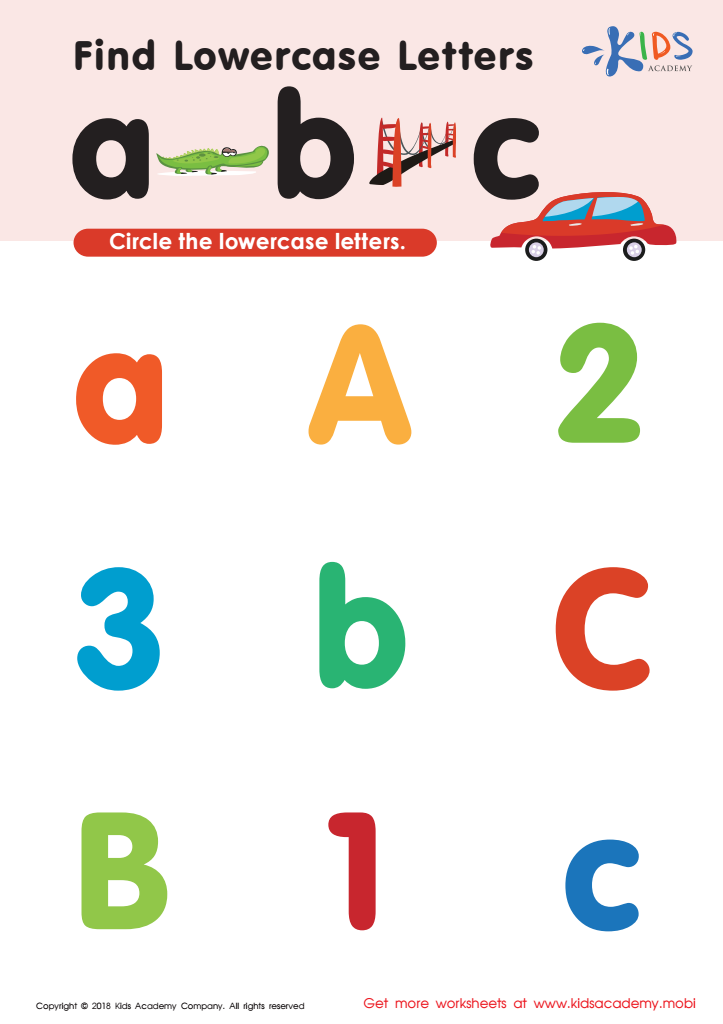
Find lowercase letters a b c Worksheet
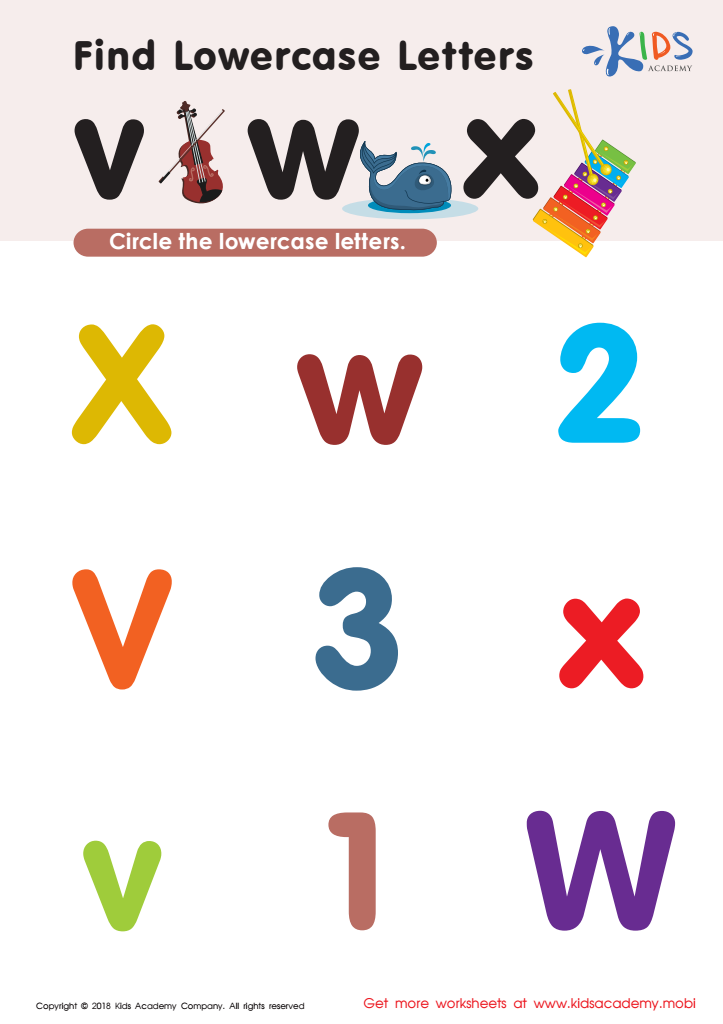
Find Lowercase Letters v w x Worksheet






Parents and teachers should prioritize lowercase identification for children aged 3-4 because it forms a foundation for literacy development. At this age, children's cognitive and motor skills are maturing, making it an ideal time to introduce the alphabet in a way that is meaningful and engaging.
Understanding lowercase letters is crucial because the majority of printed text is in lowercase. Familiarity with lowercase letters helps children recognize words and sentences more easily when they start reading. This early recognition plays a significant role in phonemic awareness, enabling them to connect sounds with letter shapes, which is a critical step in learning to read and write.
Moreover, learning lowercase letters supports fine motor skill development necessary for writing. Drawing the less complex shapes of these letters helps improve hand-eye coordination and pencil control, setting the stage for writing.
Lastly, integrating lowercase identification into learning activities fosters a sense of achievement and boosts confidence. Children who can identify letters early on are more likely to develop an interest in reading, laying the groundwork for a lifelong love of learning.
Ultimately, caring about lowercase identification equips children with essential skills, promotes early literacy, and empowers them to explore more complex concepts with confidence as they grow.








