Basic Arithmetic Normal Addition & Subtraction Worksheets for Ages 3-4
6 filtered results
-
From - To
Discover our engaging Basic Arithmetic Normal Addition & Subtraction Worksheets designed specifically for children ages 3-4. These worksheets provide young learners with foundational skills in adding and subtracting through fun, colorful activities that make math enjoyable. Using visual aids and playful themes, kids will develop number recognition, counting skills, and the ability to solve simple math problems. Each worksheet is tailored to suit preschoolers, ensuring the concepts are understandable and manageable. Help your child build confidence in math and foster a lifelong love for learning with our carefully crafted resources. Perfect for home or classroom use!
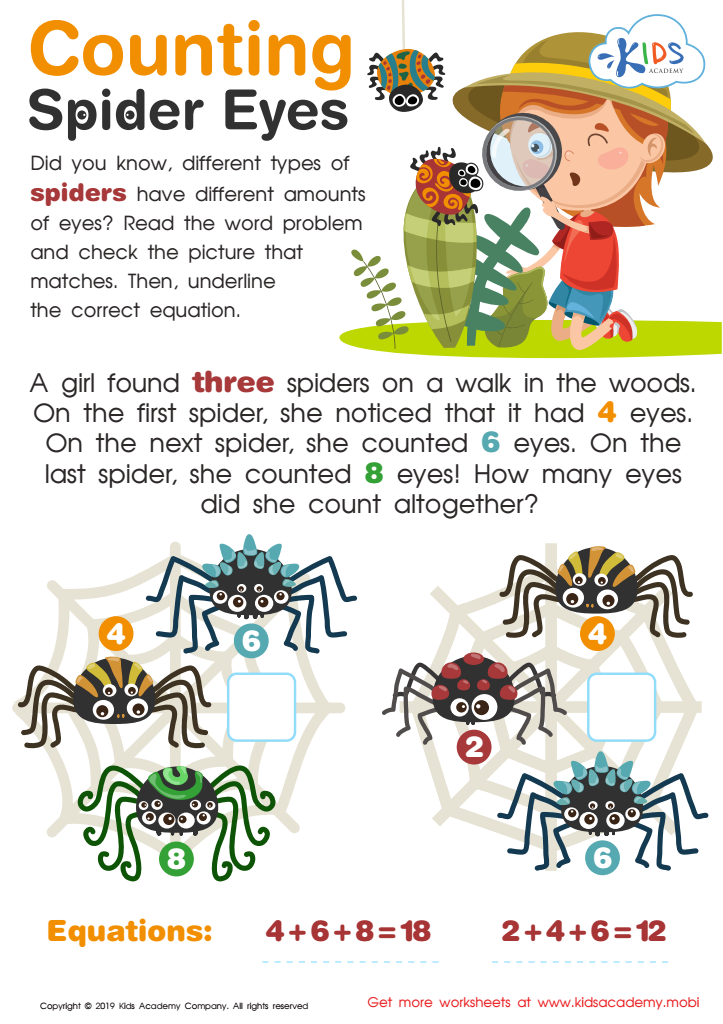
Counting Spider Eyes Worksheet
 Assign to My Students
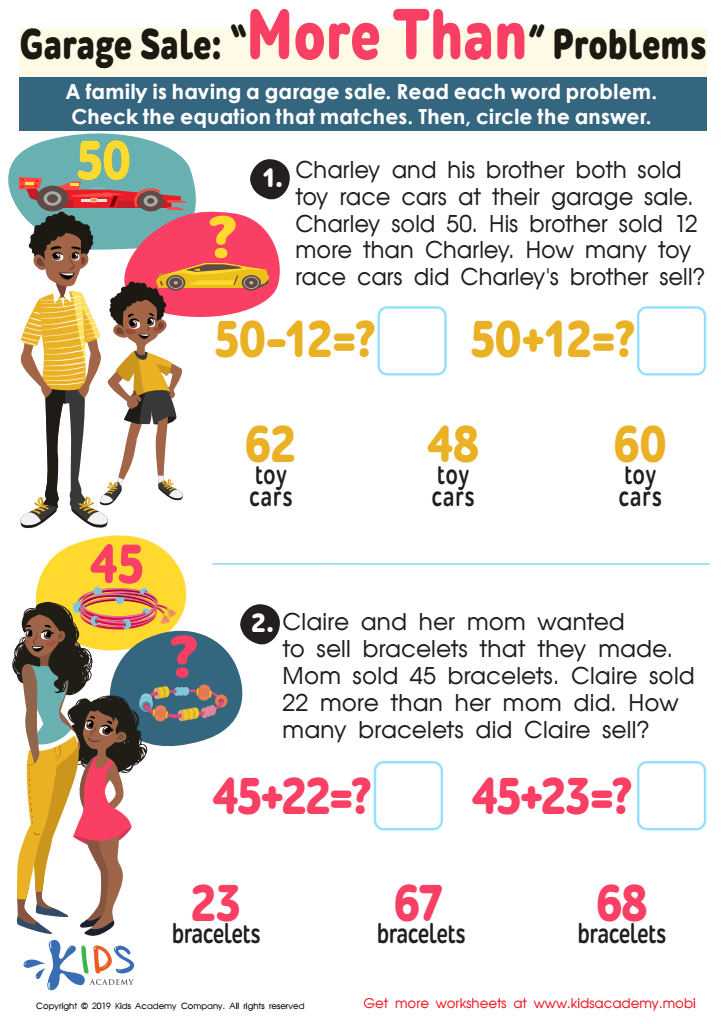
Garage Sale - More yhan Worksheet
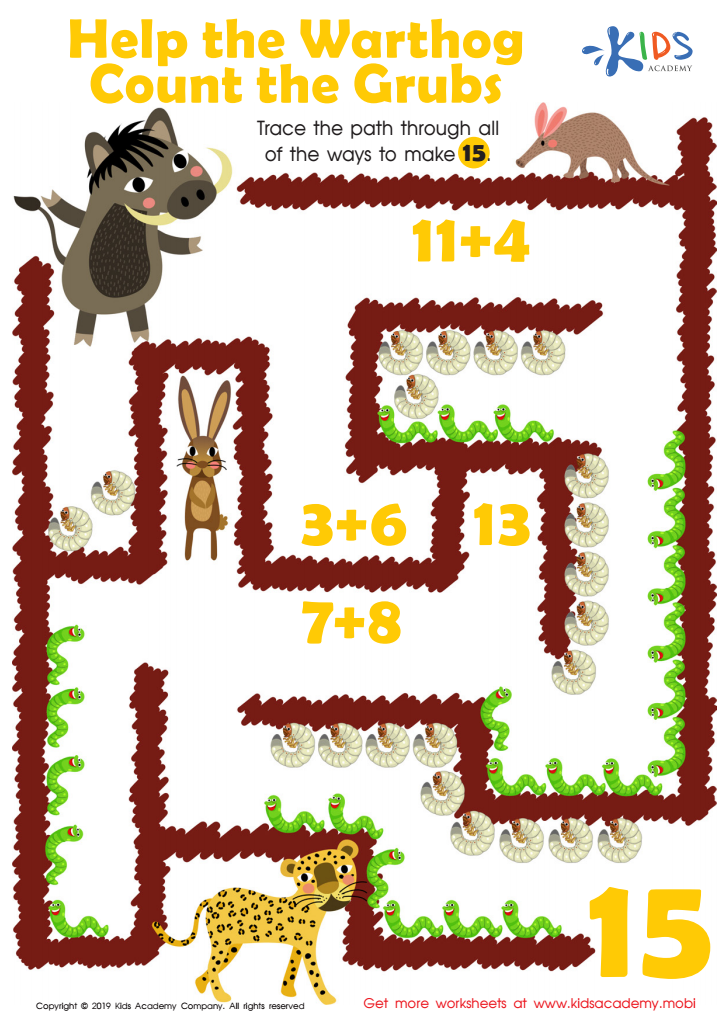
Help the Warthog Count the Grubs Worksheet
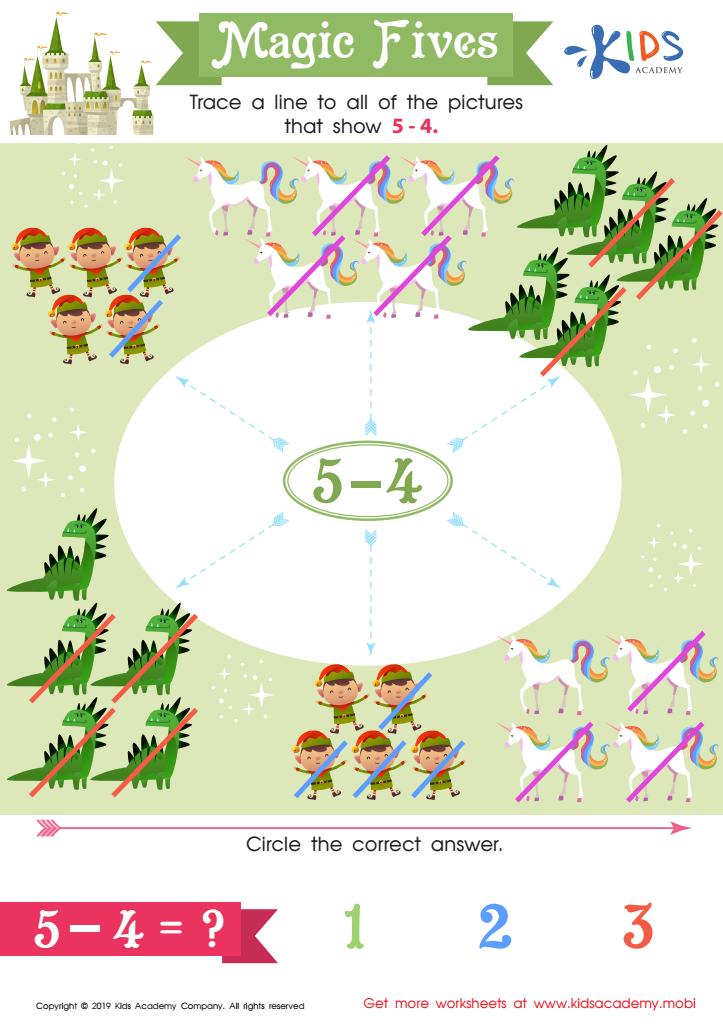
Magic Fives Worksheet
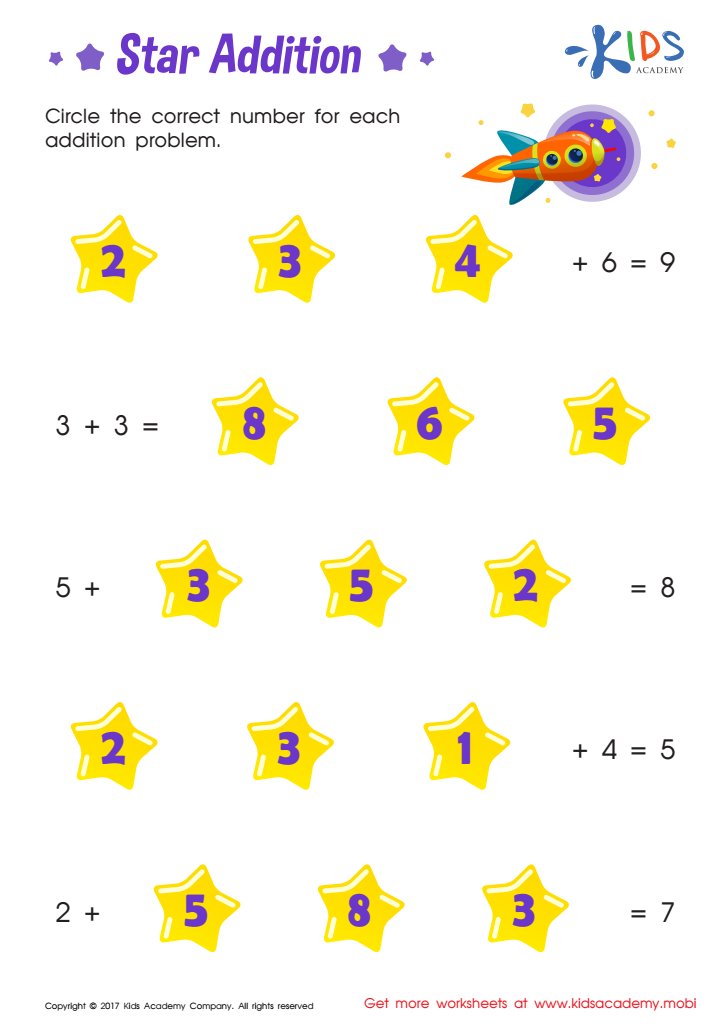
Star Addition Printable
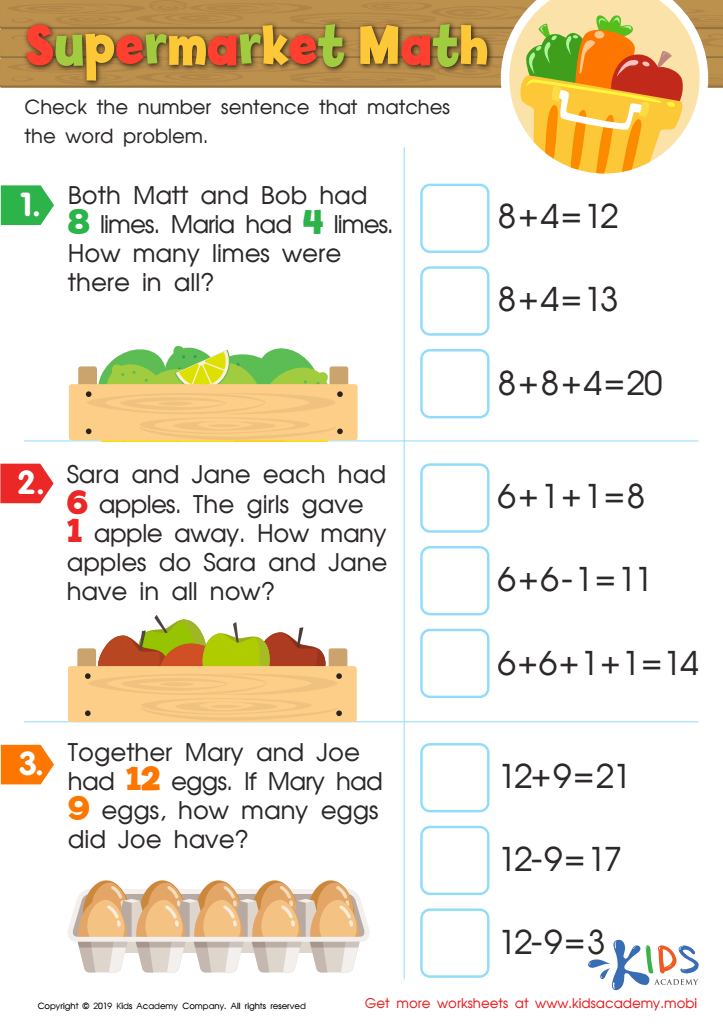
Supermarket Math Worksheet








Parents and teachers should care about basic arithmetic, specifically normal addition and subtraction, for ages 3-4 because it lays the foundation for future mathematical understanding. At this age, children are naturally curious and eager to explore numbers through play and everyday activities. Introducing basic addition and subtraction concepts helps develop critical cognitive skills, including problem-solving, critical thinking, and logical reasoning.
Moreover, learning basic arithmetic boosts a child’s confidence in numeracy, encouraging a positive attitude towards math, which can influence their academic journey. Engaging in simple activities, such as counting objects during playtime or sharing snacks equally, makes learning fun and meaningful. This interaction not only improves numerical skills but also enhances language development as children articulate their thought processes.
Incorporating basic arithmetic in early education fosters social skills as children often collaborate during these activities. Additionally, it helps them understand concepts of quantity and comparison, which are essential in real-life situations. By nurturing these skills early on, parents and teachers equip children with vital tools for makeup their academic foundation, instilling a lifelong love of learning and readiness to tackle more complex mathematical concepts in later years.








