
Matching skills Normal Geometry Worksheets for Ages 3-4
3 filtered results
Difficulty Level
Grade
Age
-
From - To
Subject
Activity
Standards
Help your little ones develop essential matching skills with our engaging Normal Geometry Worksheets, designed specifically for ages 3-4! These fun activities encourage young learners to identify shapes, colors, and patterns while fostering critical thinking and fine motor skills. Each worksheet is crafted to make learning enjoyable, featuring vibrant illustrations that captivate toddlers' attention. Kids will gain confidence as they connect similar shapes and complete exciting matching exercises that lay the foundation for future math success. Perfect for home or classroom use, our worksheets support early childhood development and prepare children for a bright educational journey ahead! Explore our collection today.
Favorites
With answer key
Interactive
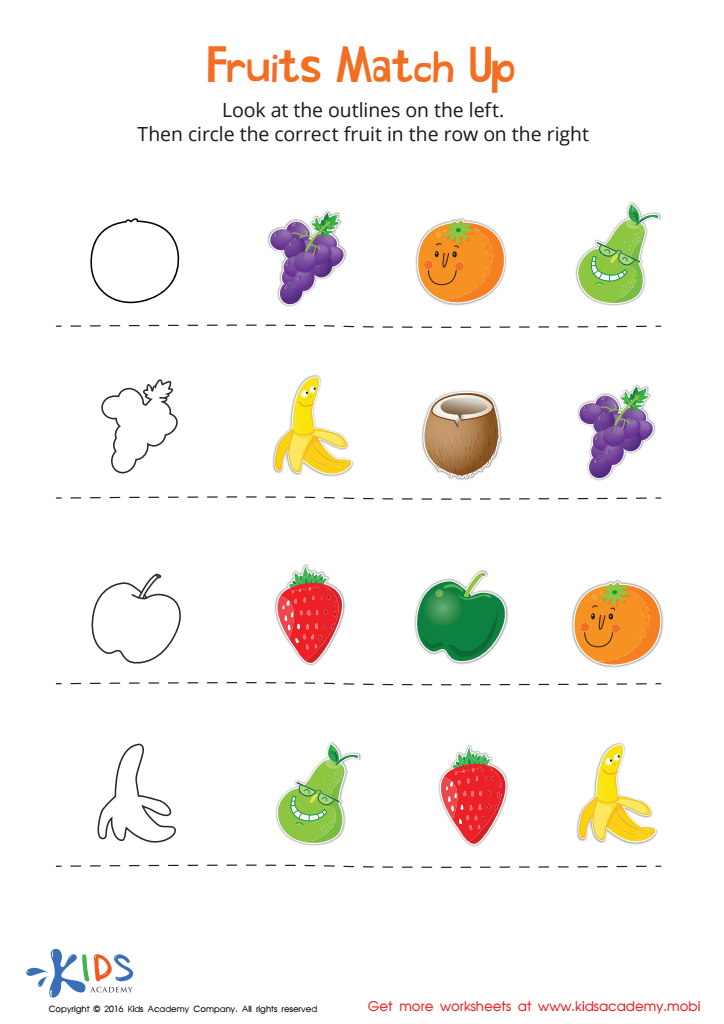
Fruits Match Up Worksheet
Motivate your child to count and sharpen their spatial reasoning skills with this vivid fruit worksheet.
 Assign to My Students
Fruits Match Up Worksheet
Worksheet











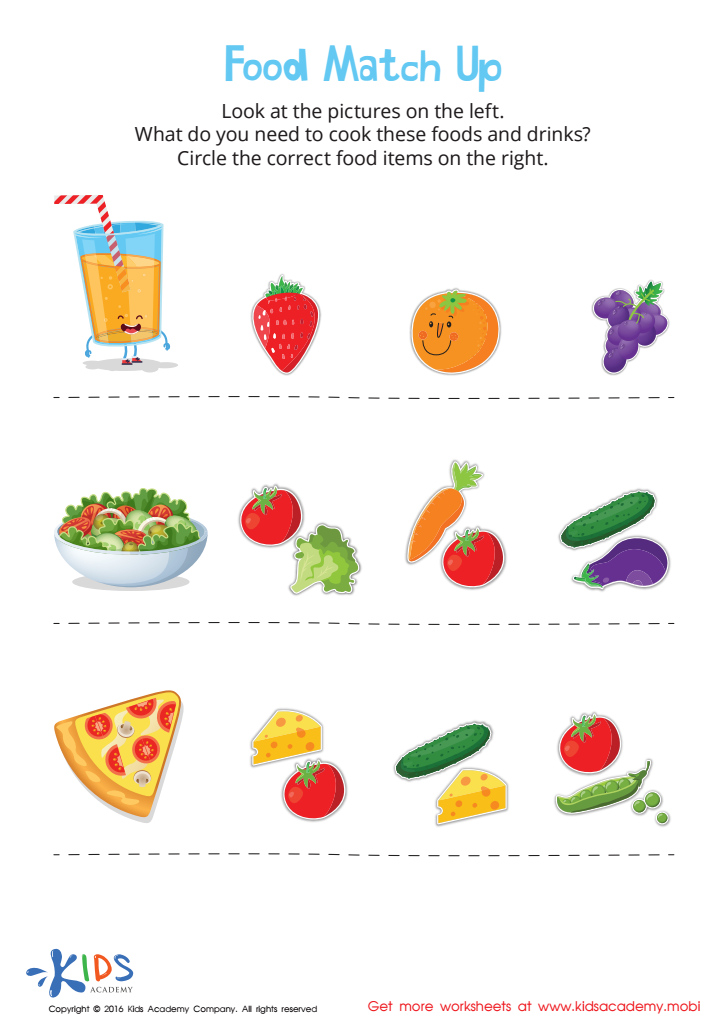
Food Match Up Worksheet
This worksheet will help your preschooler develop early math and cognitive skills. It challenges them to pay attention to details, understand how smaller parts make a whole, and increase important matching skills. Use it to give them a hands-on learning experience in the kitchen, and watch them understand how ingredients come together to make something delicious!
Food Match Up Worksheet
Worksheet
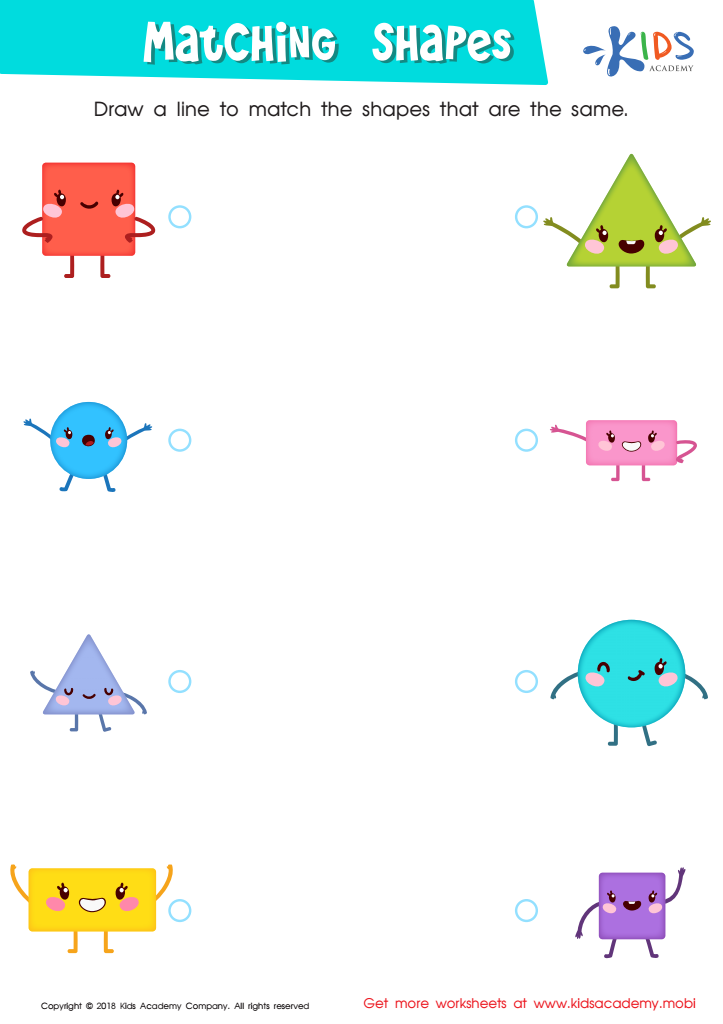
Matching Shapes Worksheet
Introduce your students to the 4 most common shapes: squares, triangles, rectangles and circles. When they progress, show them other shapes like rhombuses and parallelograms. Use this matching shapes worksheet to help them match two identical shapes. Print out the worksheet and instruct them to draw lines connecting them.
Matching Shapes Worksheet
Worksheet
Join Kids Academy for Free
Who is primarily going to use this learning content?








At ages 3-4, children are at a critical stage in their development where they are beginning to recognize patterns, shapes, and spatial relationships. Introducing matching skills within the context of normal geometry is vital for several reasons. First, these skills support cognitive development by encouraging critical thinking and problem-solving abilities. When children match shapes or objects, they learn to identify similarities and differences, which enhances their observational skills.
Second, understanding geometry at an early age helps lay the foundation for more advanced mathematical concepts. Early exposure to shapes and spatial awareness can foster a love for math and help prevent math anxiety later in life. Additionally, matching skills promote vocabulary growth, as children learn terms related to geometry such as "circle," "square," "triangle," and "rectangle," improving their overall language skills.
Finally, engaging parents and teachers in these activities can create enriching learning experiences through games and interactive lessons. This collaboration reinforces learning while allowing children to explore and experiment in a supportive environment. Ultimately, by focusing on matching skills in normal geometry, we equip young children with important tools for future academic success and lifelong learning.








